

Babyfood, cereal, high protein, with apple and orange, dry
Whole food · Baby Foods

Photo: Wikipedia
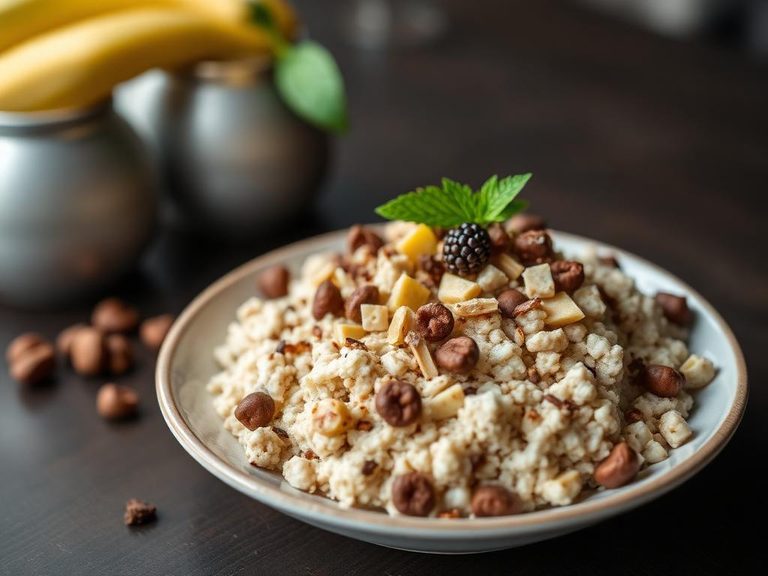
This is a finely milled, high-protein dry cereal blend designed for infants transitioning to solids, featuring a subtle, naturally sweet apple and orange flavor. The texture is a light, dissolvable powder that creates a smooth, creamy porridge when mixed with milk or water. Its standout feature is the exceptional protein density, providing a significant muscle-building boost in a gentle, easily digestible form.
Calorie split: 26% protein · 59% carbs · 15% fat
↓ Full nutrition💚 Why it's loved
Parents love it for its nutritional punch and mild, fruity taste that even picky eaters often accept. It's a versatile pantry staple that can be mixed into yogurt, applesauce, or baked into soft finger foods.
⚠️ Watch-outs & how to enjoy it better
The high protein content can be heavy on immature digestive systems, potentially causing constipation if introduced too quickly or in large portions. To counteract this, start with very small servings, ensure adequate water intake, and pair it with pureed fruits or vegetables that contain sorbitol (like pears or prunes) to promote regularity.
Key benefits
- Excellent source of complete protein for infant growth and development.
- Provides sustained energy from complex carbohydrates.
- Contains dietary fiber to support digestive health.
- Fortified with essential vitamins and minerals for early nutrition.
- Convenient, shelf-stable base for homemade baby meals.
🍽️ Popular dishes
🌍 Where it's eaten
💡 Did you know?
The 'high protein' designation in commercial baby cereals often means the protein content is at least 50% higher than standard infant cereals, which are typically rice-based and lower in protein.
Full nutrition (USDA data · scales with serving)
| Water | 5.3 g |
| Energy | 374 kcal |
| Energy | 1565 kj |
| Protein | 25.4 g |
| Total lipid (fat) | 6.5 g |
| Ash | 5.2 g |
| Carbohydrate, by difference | 57.6 g |
| Fiber, total dietary | 7.1 g |
| Calcium, Ca | 751 mg |
| Iron, Fe | 47.5 mg |
| Magnesium, Mg | 159 mg |
| Phosphorus, P | 539 mg |
| Potassium, K | 1330 mg |
| Sodium, Na | 104 mg |
| Zinc, Zn | 2.7 mg |
| Copper, Cu | 0.96 mg |
| Selenium, Se | 28.3 ug |
| Vitamin C, total ascorbic acid | 3.1 mg |
| Thiamin | 3.8 mg |
| Riboflavin | 4.3 mg |
| Niacin | 23.8 mg |
| Vitamin B-6 | 0.35 mg |
| Folate, total | 190 ug |
| Folic acid | 0.00 ug |
| Folate, food | 190 ug |
| Folate, DFE | 190 ug |
| Vitamin B-12 | 0.30 ug |
| Vitamin A, RAE | 3.0 ug |
| Retinol | 0.00 ug |
| Vitamin A, IU | 54.0 iu |
| Alcohol, ethyl | 0.00 g |
Fat & fatty acid profile (per 100g)
| Fatty acids, total saturated | 0.96 g |
| SFA 4:0 | 0.00 g |
| SFA 6:0 | 0.00 g |
| SFA 8:0 | 0.00 g |
| SFA 10:0 | 0.00 g |
| SFA 12:0 | 0.00 g |
| SFA 14:0 | 0.01 g |
| SFA 16:0 | 0.72 g |
| SFA 18:0 | 0.22 g |
| Fatty acids, total monounsaturated | 1.2 g |
| MUFA 16:1 | 0.02 g |
| MUFA 18:1 | 1.2 g |
| MUFA 20:1 | 0.00 g |
| MUFA 22:1 | 0.00 g |
| Fatty acids, total polyunsaturated | 3.4 g |
| PUFA 18:2 | 3.0 g |
| PUFA 18:3 | 0.40 g |
| PUFA 18:4 | 0.00 g |
| PUFA 20:4 | 0.00 g |
| PUFA 20:5 n-3 (EPA) | 0.00 g |
| PUFA 22:5 n-3 (DPA) | 0.00 g |
| PUFA 22:6 n-3 (DHA) | 0.00 g |
| Cholesterol | 0.00 mg |
Amino acid profile (per 100g)
Estimated from Babyfood, grape juice, no sugar, canned — USDA does not publish this profile for Babyfood.
| Threonine | 0.02 g |
| Isoleucine | 0.01 g |
| Leucine | 0.02 g |
| Lysine | 0.02 g |
| Methionine | 0.03 g |
| Cystine | 0.01 g |
| Phenylalanine | 0.02 g |
| Tyrosine | 0.02 g |
| Valine | 0.02 g |
| Arginine | 0.06 g |
| Histidine | 0.03 g |
| Alanine | 0.04 g |
| Aspartic acid | 0.10 g |
| Glutamic acid | 0.18 g |
| Glycine | 0.03 g |
| Proline | 0.03 g |
| Serine | 0.04 g |
FAQ
How is this different from regular baby rice cereal?
This cereal has significantly more protein (often from sources like soy or whey) and a more complex carbohydrate profile than rice cereal, which is primarily starch. It also contains added fruit powders for flavor.
Can I mix this with formula or breastmilk?
Yes, that's the intended preparation method. Mixing with formula or breastmilk adds additional nutrients and familiar flavors, making the new texture more acceptable to the baby.
Is the protein from a common allergen?
It depends on the brand. Common protein sources include soy, whey (from milk), or sometimes oat. Always check the ingredient list if your family has a history of food allergies.
Nutrient density (calculated · NRF9.3)
Nutrient Rich Foods index: beneficial nutrients (protein, fiber, vitamins, minerals) minus saturated fat, added sugar & sodium, per 100 kcal.
NRF9.3 index — Fulgoni, Keast & Drewnowski, 2009. Computed from USDA nutrients.
Weight-loss friendliness (composite index)
Energy density 3.74 kcal/g · 27% calories from protein · 7.1 g fiber · 0.0 g sugar per 100 g.
Composite of energy density (Rolls et al., 1999), protein & fiber satiety, minus sugar. A calculated heuristic — ranks satiety-per-calorie, not a clinical measure.
Dietary load (calculated from USDA values)
Potential renal acid load. Positive = acid-forming, negative = alkaline-forming.
Sodium-to-potassium ratio: 0.08 (lower is better — aim for ≤ 1)
Sodium:potassium per WHO potassium guidance. Computed from USDA nutrients.