

Apples, frozen, unsweetened, heated (Includes foods for USDA's Food Distribution Program)
Whole food · Fruits and Fruit Juices

Photo: Wikipedia
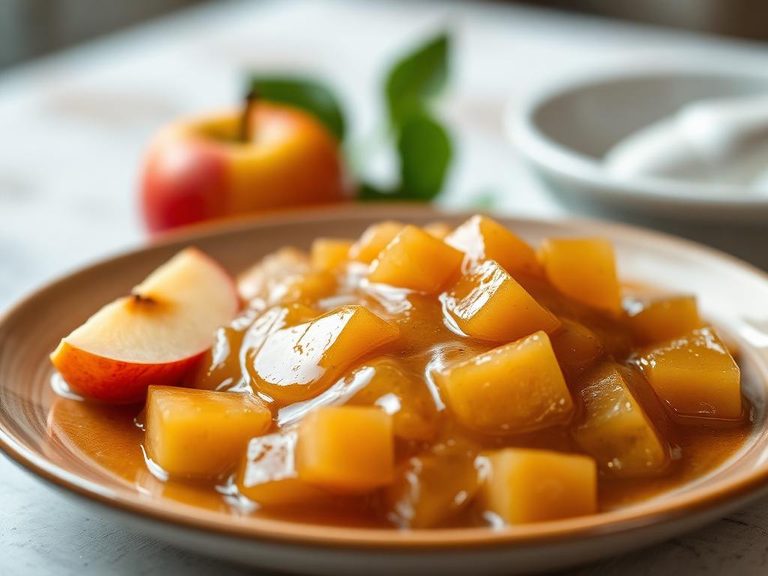
This is a simple, wholesome preparation of unsweetened apples that have been frozen and then heated, resulting in a soft, tender texture with a concentrated, mildly tart apple flavor. The heating process breaks down the cell walls, creating a compote-like consistency without any added sugars. Nutritionally, it's a low-calorie, fiber-rich option, providing about 47 calories and 1.3g of fiber per 100g, making it a light yet satisfying snack or ingredient.
Calorie split: 2% protein · 92% carbs · 6% fat
↓ Full nutrition💚 Why it's loved
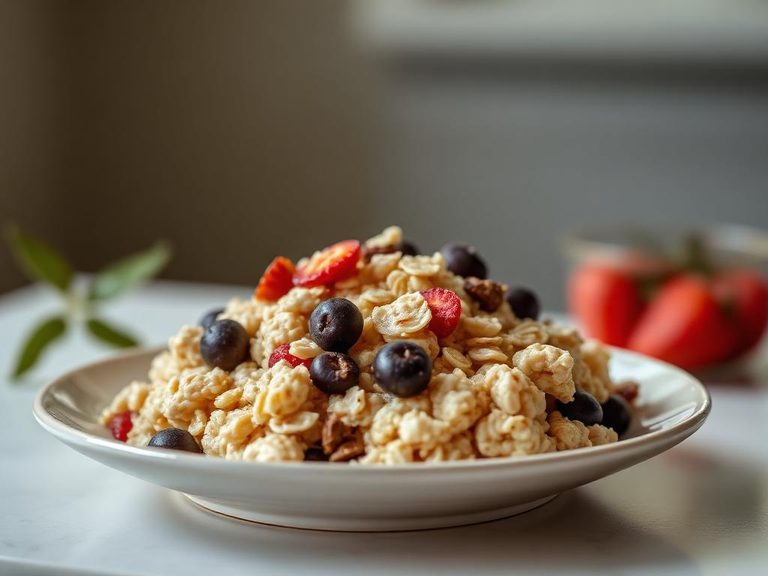
People love this preparation for its comforting, warm, and naturally sweet flavor that evokes the taste of homemade applesauce without the added sugar. It's incredibly versatile, serving as a quick dessert, a topping for oatmeal or yogurt, or a simple side dish that appeals to both children and adults.
⚠️ Watch-outs & how to enjoy it better
The primary downside is its high natural sugar content (12g carbs per 100g), which can cause blood-sugar spikes if consumed in large quantities, especially for individuals with diabetes or insulin resistance. To counteract this, pair it with a source of protein (like Greek yogurt or nuts) or healthy fat (like a sprinkle of chia seeds) to slow sugar absorption, and practice portion control by sticking to a 1/2 cup serving.
Key benefits
- Low in calories (47 kcal per 100g)
- Good source of dietary fiber (1.3g per 100g)
- Contains no added sugars
- Provides a convenient, shelf-stable fruit option
- Suitable for USDA Food Distribution Programs
🍽️ Popular dishes
🌍 Where it's eaten
💡 Did you know?
Freezing apples causes their cell walls to rupture, which, when heated, results in a much softer, more sauce-like texture compared to fresh apples cooked the same way—this is why frozen apples are often used to make instant applesauce.
Full nutrition (USDA data · scales with serving)
| Water | 87.2 g |
| Energy | 47.0 kcal |
| Energy | 197 kj |
| Protein | 0.29 g |
| Total lipid (fat) | 0.33 g |
| Ash | 0.23 g |
| Carbohydrate, by difference | 12.0 g |
| Fiber, total dietary | 1.3 g |
| Calcium, Ca | 5.0 mg |
| Iron, Fe | 0.19 mg |
| Magnesium, Mg | 3.0 mg |
| Phosphorus, P | 8.0 mg |
| Potassium, K | 76.0 mg |
| Sodium, Na | 3.0 mg |
| Zinc, Zn | 0.05 mg |
| Copper, Cu | 0.07 mg |
| Manganese, Mn | 0.15 mg |
| Selenium, Se | 0.20 ug |
| Vitamin C, total ascorbic acid | 0.40 mg |
| Thiamin | 0.01 mg |
| Riboflavin | 0.01 mg |
| Niacin | 0.04 mg |
| Pantothenic acid | 0.06 mg |
| Vitamin B-6 | 0.03 mg |
| Folate, total | 1.0 ug |
| Folic acid | 0.00 ug |
| Folate, food | 1.0 ug |
| Folate, DFE | 1.0 ug |
| Vitamin B-12 | 0.00 ug |
| Retinol | 0.00 ug |
| Vitamin A, IU | 20.0 iu |
| Vitamin D (D2 + D3), International Units | 0.00 iu |
| Vitamin D (D2 + D3) | 0.00 ug |
Fat & fatty acid profile (per 100g)
| Fatty acids, total saturated | 0.05 g |
| SFA 12:0 | 0.00 g |
| SFA 14:0 | 0.00 g |
| SFA 16:0 | 0.04 g |
| SFA 18:0 | 0.01 g |
| Fatty acids, total monounsaturated | 0.01 g |
| MUFA 16:1 | 0.00 g |
| MUFA 18:1 | 0.01 g |
| Fatty acids, total polyunsaturated | 0.10 g |
| PUFA 18:2 | 0.08 g |
| PUFA 18:3 | 0.02 g |
| Fatty acids, total trans | 0.00 g |
| Cholesterol | 0.00 mg |
Amino acid profile (per 100g)
| Tryptophan | 0.00 g |
| Threonine | 0.01 g |
| Isoleucine | 0.01 g |
| Leucine | 0.02 g |
| Lysine | 0.02 g |
| Methionine | 0.00 g |
| Cystine | 0.00 g |
| Phenylalanine | 0.01 g |
| Tyrosine | 0.01 g |
| Valine | 0.01 g |
| Arginine | 0.01 g |
| Histidine | 0.01 g |
| Alanine | 0.01 g |
| Aspartic acid | 0.05 g |
| Glutamic acid | 0.03 g |
| Glycine | 0.01 g |
| Proline | 0.01 g |
| Serine | 0.01 g |
FAQ
Is this the same as applesauce?
Not exactly. While both are cooked apples, this is simply frozen, unsweetened apples that have been heated, often retaining some texture. Applesauce is typically cooked down further and may be sweetened, though unsweetened versions exist.
Can I use this in baking?
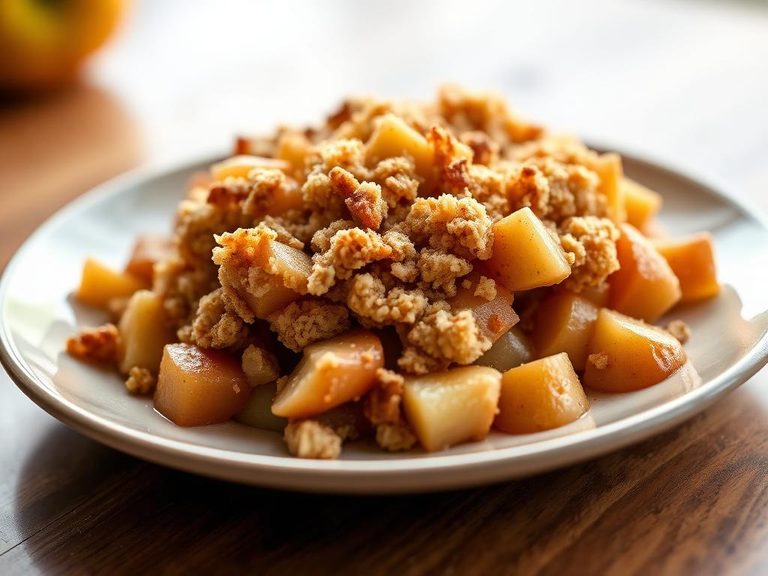
Yes, it works well as a substitute for oil or eggs in some recipes, adding moisture and natural sweetness. It can also be used in pies, crumbles, or muffins.
How long does it last after heating?
Once heated, it should be refrigerated and consumed within 3-5 days. It can also be refrozen for up to 3 months, though the texture may become slightly softer upon thawing.
Nutrient density (calculated · NRF9.3)
Nutrient Rich Foods index: beneficial nutrients (protein, fiber, vitamins, minerals) minus saturated fat, added sugar & sodium, per 100 kcal.
NRF9.3 index — Fulgoni, Keast & Drewnowski, 2009. Computed from USDA nutrients.
Weight-loss friendliness (composite index)
Energy density 0.47 kcal/g · 2% calories from protein · 1.3 g fiber · 0.0 g sugar per 100 g.
Composite of energy density (Rolls et al., 1999), protein & fiber satiety, minus sugar. A calculated heuristic — ranks satiety-per-calorie, not a clinical measure.
Dietary load (calculated from USDA values)
Potential renal acid load. Positive = acid-forming, negative = alkaline-forming.
Sodium-to-potassium ratio: 0.04 (lower is better — aim for ≤ 1)
Sodium:potassium per WHO potassium guidance. Computed from USDA nutrients.