

Veal, sirloin, separable lean only, cooked, braised
Whole food · Lamb, Veal, and Game Products

Photo: Wikipedia
Braised veal sirloin is a culinary classic, transforming a lean cut into a succulent, fork-tender masterpiece through slow, moist heat. The result is a deeply savory, subtly sweet meat with a velvety texture that practically melts in the mouth. Nutritionally, it's a powerhouse of high-quality protein with minimal fat, making it a lean yet satisfying choice.
Calorie split: 70% protein · 0% carbs · 30% fat
↓ Full nutrition💚 Why it's loved
People adore braised veal sirloin for its refined, delicate flavor that serves as a perfect canvas for rich sauces and aromatics. It's a centerpiece of celebratory meals, embodying both comfort and elegance in European culinary traditions.
⚠️ Watch-outs & how to enjoy it better
The primary downside is its low fat content, which can make it dry if not braised properly; it requires sufficient liquid and time to become tender. To counteract this, always braise it in a flavorful liquid (like stock or wine) with added fat (like butter or oil) and ensure it's cooked until it easily pulls apart. Those watching sodium intake should be mindful of added salt in braising liquids and sauces.
Key benefits
- Exceptionally high in protein (nearly 34g per 100g) for muscle maintenance.
- Very low in carbohydrates and sugars, suitable for low-carb diets.
- Provides essential B vitamins, particularly B12, for nerve function.
- Rich in minerals like zinc and selenium, supporting immune health.
- Low in fat compared to many other red meats, especially after braising.
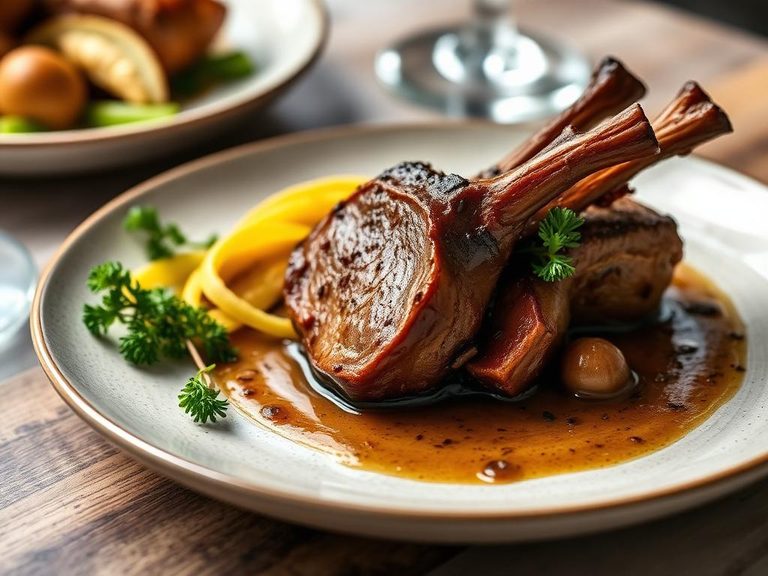
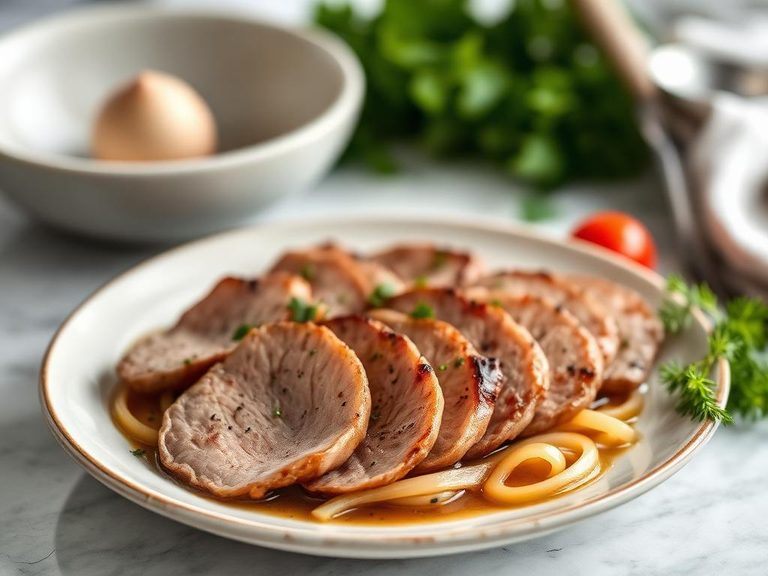
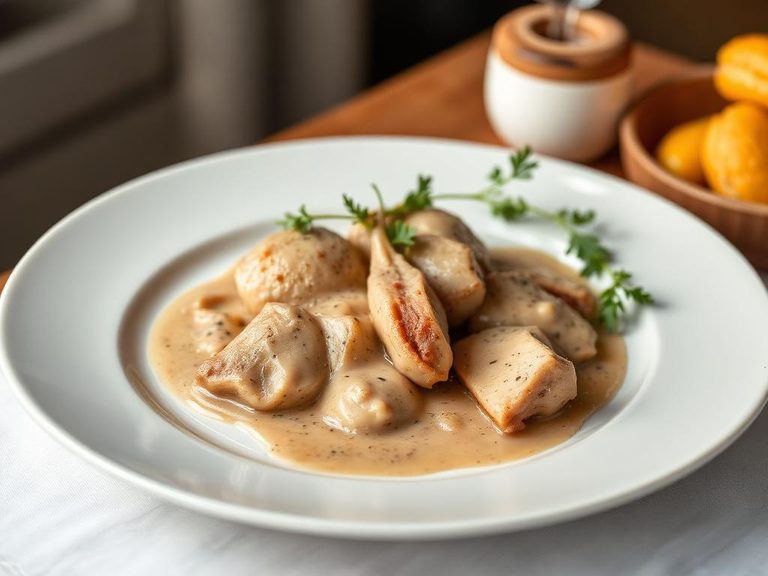
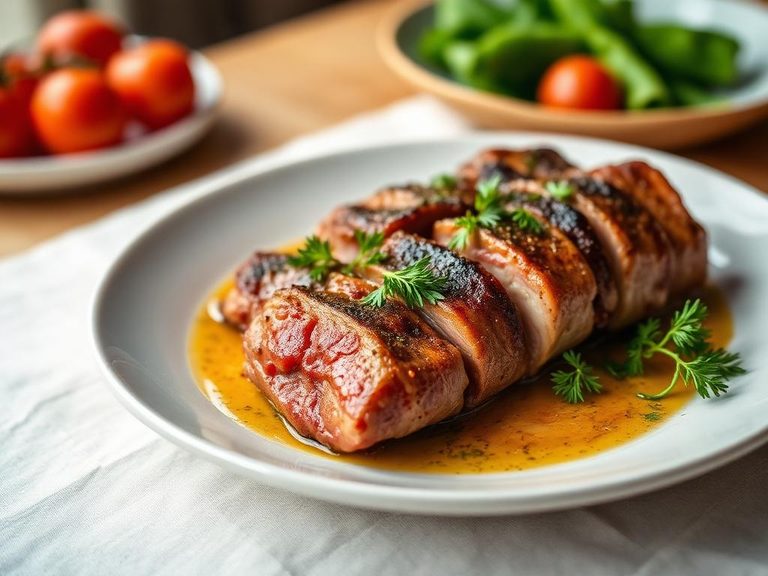
🍽️ Popular dishes
🌍 Where it's eaten
💡 Did you know?
The term 'braising' comes from the French word 'braiser,' which originally referred to cooking over live coals (braise), a method that predates the modern oven.
Full nutrition (USDA data · scales with serving)
| Water | 58.5 g |
| Energy | 204 kcal |
| Energy | 854 kj |
| Protein | 34.0 g |
| Total lipid (fat) | 6.5 g |
| Ash | 1.2 g |
| Carbohydrate, by difference | 0.00 g |
| Fiber, total dietary | 0.00 g |
| Calcium, Ca | 19.0 mg |
| Iron, Fe | 1.2 mg |
| Magnesium, Mg | 29.0 mg |
| Phosphorus, P | 259 mg |
| Potassium, K | 339 mg |
| Sodium, Na | 81.0 mg |
| Zinc, Zn | 4.8 mg |
| Copper, Cu | 0.14 mg |
| Manganese, Mn | 0.04 mg |
| Selenium, Se | 15.0 ug |
| Vitamin C, total ascorbic acid | 0.00 mg |
| Thiamin | 0.06 mg |
| Riboflavin | 0.38 mg |
| Niacin | 7.0 mg |
| Pantothenic acid | 1.1 mg |
| Vitamin B-6 | 0.38 mg |
| Folate, total | 16.0 ug |
| Folic acid | 0.00 ug |
| Folate, food | 16.0 ug |
| Folate, DFE | 16.0 ug |
| Vitamin B-12 | 1.6 ug |
| Vitamin A, RAE | 0.00 ug |
| Retinol | 0.00 ug |
| Vitamin A, IU | 0.00 iu |
| Vitamin E (alpha-tocopherol) | 0.44 mg |
Fat & fatty acid profile (per 100g)
| Fatty acids, total saturated | 1.8 g |
| SFA 10:0 | 0.00 g |
| SFA 12:0 | 0.01 g |
| SFA 14:0 | 0.12 g |
| SFA 16:0 | 1.1 g |
| SFA 18:0 | 0.62 g |
| Fatty acids, total monounsaturated | 2.3 g |
| MUFA 16:1 | 0.21 g |
| MUFA 18:1 | 2.1 g |
| Fatty acids, total polyunsaturated | 0.58 g |
| PUFA 18:2 | 0.45 g |
| PUFA 18:3 | 0.03 g |
| PUFA 20:4 | 0.11 g |
| Cholesterol | 113 mg |
Amino acid profile (per 100g)
| Tryptophan | 0.34 g |
| Threonine | 1.5 g |
| Isoleucine | 1.7 g |
| Leucine | 2.7 g |
| Lysine | 2.8 g |
| Methionine | 0.79 g |
| Cystine | 0.38 g |
| Phenylalanine | 1.4 g |
| Tyrosine | 1.1 g |
| Valine | 1.9 g |
| Arginine | 2.0 g |
| Histidine | 1.2 g |
| Alanine | 2.0 g |
| Aspartic acid | 2.9 g |
| Glutamic acid | 5.4 g |
| Glycine | 1.7 g |
| Proline | 1.4 g |
| Serine | 1.3 g |
FAQ
Is braised veal sirloin considered a red meat?
Yes, veal is classified as red meat, but it is generally leaner and has a milder flavor than beef from older cattle.
How does braising affect the nutritional profile?
Braising is a moist-heat cooking method that helps tenderize the meat without adding significant fat, though the cooking liquid can absorb some nutrients and flavors.
Can I substitute braised veal sirloin with another cut?
Yes, other lean veal cuts like the shoulder or shank work well for braising, but the sirloin offers a particularly tender result.
Nutrient density (calculated · NRF9.3)
Nutrient Rich Foods index: beneficial nutrients (protein, fiber, vitamins, minerals) minus saturated fat, added sugar & sodium, per 100 kcal.
NRF9.3 index — Fulgoni, Keast & Drewnowski, 2009. Computed from USDA nutrients.
Weight-loss friendliness (composite index)
Energy density 2.04 kcal/g · 67% calories from protein · 0.0 g fiber · 0.0 g sugar per 100 g.
Composite of energy density (Rolls et al., 1999), protein & fiber satiety, minus sugar. A calculated heuristic — ranks satiety-per-calorie, not a clinical measure.
Dietary load (calculated from USDA values)
Potential renal acid load. Positive = acid-forming, negative = alkaline-forming.
Sodium-to-potassium ratio: 0.24 (lower is better — aim for ≤ 1)
Sodium:potassium per WHO potassium guidance. Computed from USDA nutrients.