

Turnip greens, canned, solids and liquids
Whole food · Vegetables and Vegetable Products

Photo: Wikipedia
Canned turnip greens are tender, dark leafy greens preserved in their own savory, slightly briny liquor. They offer a concentrated dose of earthy, peppery flavor with a soft, cooked texture ready to eat straight from the can. Nutritionally, they are a low-calorie powerhouse, delivering significant fiber and plant-based protein for their weight.
Calorie split: 31% protein · 54% carbs · 15% fat
↓ Full nutrition💚 Why it's loved
People love them for their deep, savory flavor that forms a robust base for Southern-style dishes and stews. Their convenience and long shelf life make them a beloved pantry staple for quick, nutritious meals.
⚠️ Watch-outs & how to enjoy it better
The canning process can significantly increase sodium content, which is a concern for those monitoring blood pressure. To counteract this, rinse the greens thoroughly under cold water before use. They may also contain oxalates, so individuals prone to kidney stones should consume them in moderation and consult a healthcare provider.
Key benefits
- Excellent source of dietary fiber for digestive health.
- Provides plant-based protein with minimal calories.
- Rich in vitamins K and A, essential for bone and vision health.
- Contains antioxidants like glucosinolates from the cruciferous family.
- Convenient, shelf-stable source of leafy greens year-round.
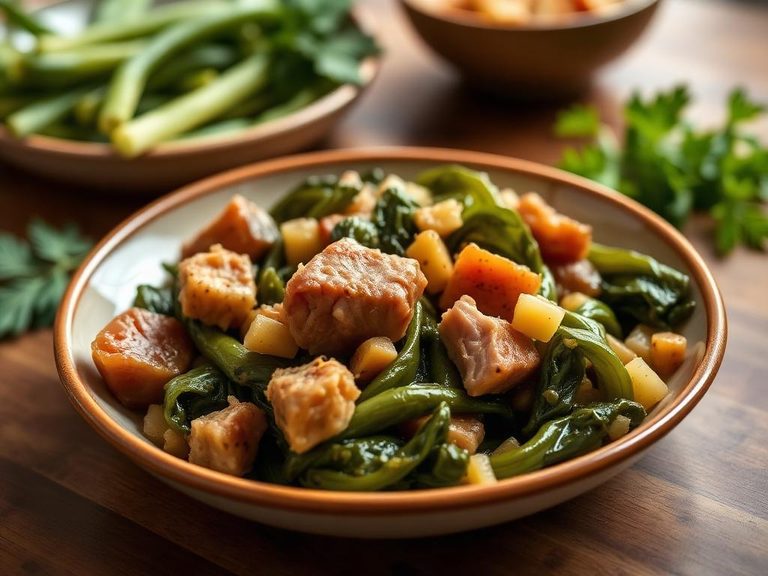
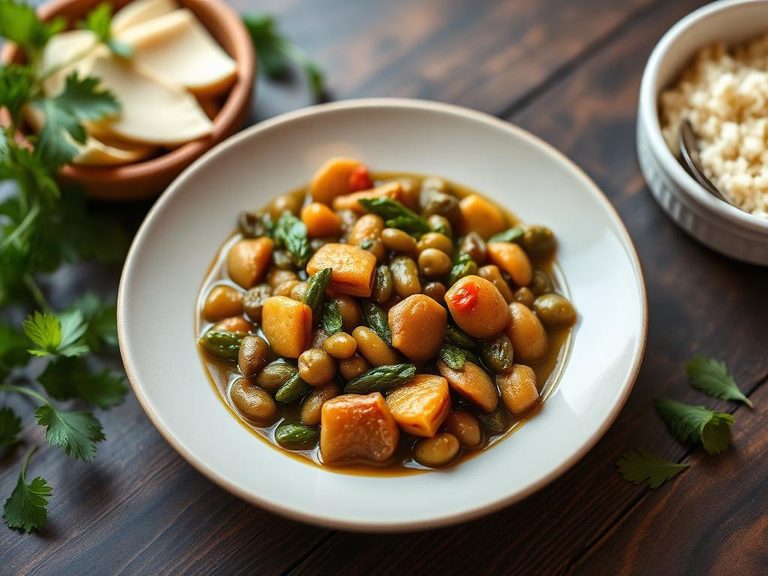
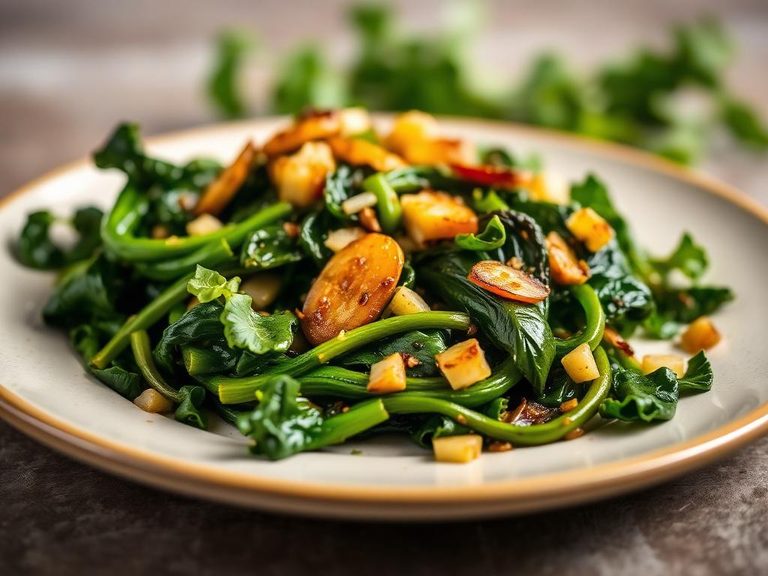
🍽️ Popular dishes

🌍 Where it's eaten
💡 Did you know?
The flavorful, nutrient-rich liquid left in the can is called 'potlikker' and is traditionally sopped up with cornbread or used as a soup base.
Full nutrition (USDA data · scales with serving)
| Water | 94.7 g |
| Energy | 14.0 kcal |
| Energy | 59.0 kj |
| Protein | 1.4 g |
| Total lipid (fat) | 0.30 g |
| Ash | 1.2 g |
| Carbohydrate, by difference | 2.4 g |
| Fiber, total dietary | 1.7 g |
| Calcium, Ca | 118 mg |
| Iron, Fe | 1.5 mg |
| Magnesium, Mg | 20.0 mg |
| Phosphorus, P | 21.0 mg |
| Potassium, K | 141 mg |
| Sodium, Na | 277 mg |
| Zinc, Zn | 0.23 mg |
| Copper, Cu | 0.08 mg |
| Manganese, Mn | 0.28 mg |
| Selenium, Se | 0.70 ug |
| Vitamin C, total ascorbic acid | 15.5 mg |
| Thiamin | 0.01 mg |
| Riboflavin | 0.06 mg |
| Niacin | 0.36 mg |
| Pantothenic acid | 0.04 mg |
| Vitamin B-6 | 0.04 mg |
| Folate, total | 41.0 ug |
| Folic acid | 0.00 ug |
| Folate, food | 41.0 ug |
| Folate, DFE | 41.0 ug |
| Vitamin B-12 | 0.00 ug |
| Vitamin A, RAE | 179 ug |
| Retinol | 0.00 ug |
| Vitamin A, IU | 3586 iu |
| Vitamin D (D2 + D3), International Units | 0.00 iu |
| Vitamin D (D2 + D3) | 0.00 ug |
Fat & fatty acid profile (per 100g)
| Fatty acids, total saturated | 0.07 g |
| SFA 8:0 | 0.00 g |
| SFA 10:0 | 0.00 g |
| SFA 12:0 | 0.00 g |
| SFA 14:0 | 0.00 g |
| SFA 16:0 | 0.05 g |
| SFA 18:0 | 0.01 g |
| Fatty acids, total monounsaturated | 0.02 g |
| MUFA 16:1 | 0.01 g |
| MUFA 18:1 | 0.01 g |
| Fatty acids, total polyunsaturated | 0.12 g |
| PUFA 18:2 | 0.04 g |
| PUFA 18:3 | 0.08 g |
| Fatty acids, total trans | 0.00 g |
| Cholesterol | 0.00 mg |
Amino acid profile (per 100g)
| Tryptophan | 0.02 g |
| Threonine | 0.07 g |
| Isoleucine | 0.07 g |
| Leucine | 0.12 g |
| Lysine | 0.09 g |
| Methionine | 0.03 g |
| Cystine | 0.01 g |
| Phenylalanine | 0.08 g |
| Tyrosine | 0.05 g |
| Valine | 0.09 g |
| Arginine | 0.09 g |
| Histidine | 0.03 g |
| Alanine | 0.09 g |
| Aspartic acid | 0.14 g |
| Glutamic acid | 0.18 g |
| Glycine | 0.08 g |
| Proline | 0.06 g |
| Serine | 0.06 g |
FAQ
How do I reduce the sodium in canned turnip greens?
Rinse the greens thoroughly under cold running water in a colander for about a minute. This can remove a significant portion of the surface sodium from the canning liquid.
Can I eat the liquid from the can?
Yes, the liquid (potlikker) is edible and flavorful. It contains nutrients leached from the greens but is also high in sodium. You can use it as a base for soups or stews, or simply enjoy it as is.
Are canned turnip greens as nutritious as fresh?
Canning can reduce some heat-sensitive vitamins like Vitamin C, but it preserves and may even concentrate other nutrients like fiber, Vitamin K, and minerals. They remain a very nutritious choice.
Nutrient density (calculated · NRF9.3)
Nutrient Rich Foods index: beneficial nutrients (protein, fiber, vitamins, minerals) minus saturated fat, added sugar & sodium, per 100 kcal.
NRF9.3 index — Fulgoni, Keast & Drewnowski, 2009. Computed from USDA nutrients.
Weight-loss friendliness (composite index)
Energy density 0.14 kcal/g · 39% calories from protein · 1.7 g fiber · 0.0 g sugar per 100 g.
Composite of energy density (Rolls et al., 1999), protein & fiber satiety, minus sugar. A calculated heuristic — ranks satiety-per-calorie, not a clinical measure.
Dietary load (calculated from USDA values)
Potential renal acid load. Positive = acid-forming, negative = alkaline-forming.
Sodium-to-potassium ratio: 1.96 (lower is better — aim for ≤ 1)
Sodium:potassium per WHO potassium guidance. Computed from USDA nutrients.