

Squash, winter, butternut, frozen, cooked, boiled, with salt
Whole food · Vegetables and Vegetable Products

Photo: Wikipedia
This is butternut squash that has been peeled, cubed, boiled until tender, and lightly salted. It offers a sweet, nutty flavor with a smooth, creamy texture that becomes wonderfully velvety when cooked. Despite its rich taste, it's remarkably low in calories, providing a satisfying, nutrient-dense base for many dishes.
Calorie split: 11% protein · 88% carbs · 1% fat
↓ Full nutrition💚 Why it's loved
People love its natural sweetness and versatile, mild flavor that pairs well with both savory herbs and warm spices. It's a comforting, foundational ingredient in soups, purées, and side dishes across many cuisines.
⚠️ Watch-outs & how to enjoy it better
The added salt increases sodium content, which can be a concern for those monitoring blood pressure. To counteract this, rinse the boiled squash briefly or use it in dishes where you control the final seasoning. Its high glycemic load can cause blood-sugar spikes; pairing it with protein (like chicken or beans) or healthy fats (like olive oil or nuts) can help blunt this effect.
Key benefits
- Excellent source of vitamin A (beta-carotene) for vision and immune health.
- Provides potassium, which supports healthy blood pressure levels.
- Low in calories and fat, making it a weight-management-friendly food.
- Contains antioxidants like lutein and zeaxanthin.
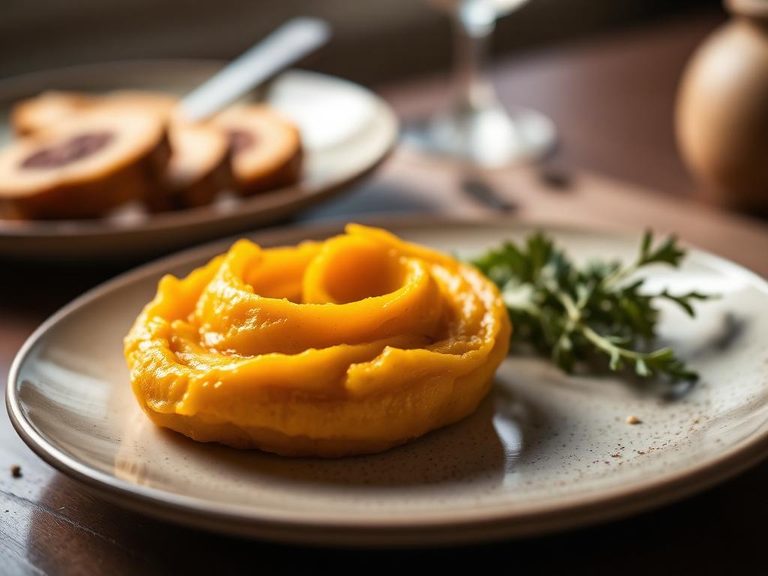
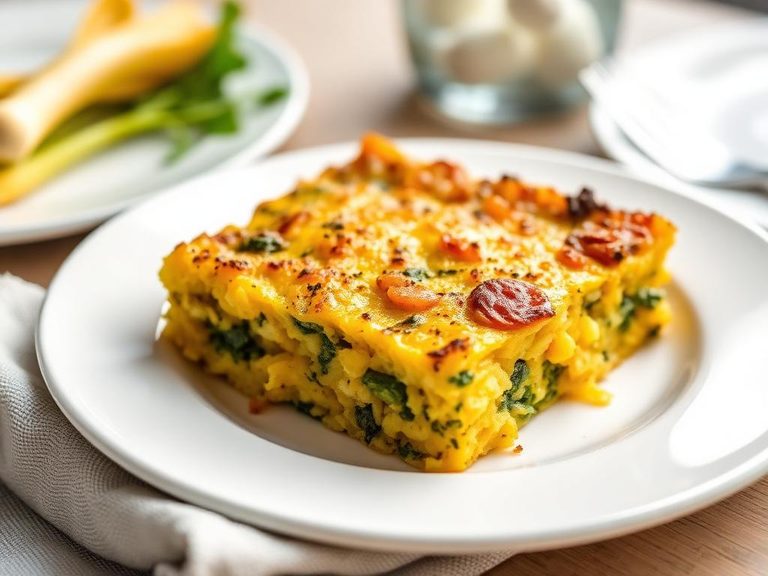
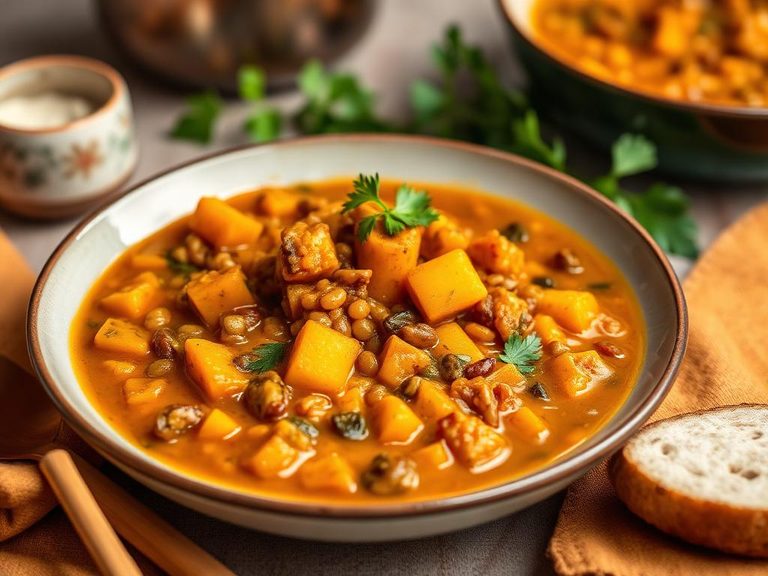
🍽️ Popular dishes


🌍 Where it's eaten
💡 Did you know?
Butternut squash is technically a fruit, not a vegetable, as it develops from the flower of the plant and contains seeds.
Full nutrition (USDA data · scales with serving)
| Water | 87.8 g |
| Energy | 39.0 kcal |
| Energy | 165 kj |
| Protein | 1.2 g |
| Total lipid (fat) | 0.07 g |
| Ash | 0.86 g |
| Carbohydrate, by difference | 10.0 g |
| Calcium, Ca | 19.0 mg |
| Iron, Fe | 0.58 mg |
| Magnesium, Mg | 9.0 mg |
| Phosphorus, P | 14.0 mg |
| Potassium, K | 133 mg |
| Sodium, Na | 238 mg |
| Zinc, Zn | 0.12 mg |
| Copper, Cu | 0.04 mg |
| Manganese, Mn | 0.17 mg |
| Selenium, Se | 0.50 ug |
| Vitamin C, total ascorbic acid | 3.5 mg |
| Thiamin | 0.05 mg |
| Riboflavin | 0.04 mg |
| Niacin | 0.46 mg |
| Pantothenic acid | 0.15 mg |
| Vitamin B-6 | 0.07 mg |
| Folate, total | 16.0 ug |
| Folic acid | 0.00 ug |
| Folate, food | 16.0 ug |
| Folate, DFE | 16.0 ug |
| Vitamin B-12 | 0.00 ug |
| Vitamin A, RAE | 167 ug |
| Retinol | 0.00 ug |
| Vitamin A, IU | 3339 iu |
| Vitamin D (D2 + D3), International Units | 0.00 iu |
| Vitamin D (D2 + D3) | 0.00 ug |
Fat & fatty acid profile (per 100g)
| Fatty acids, total saturated | 0.01 g |
| SFA 12:0 | 0.00 g |
| SFA 14:0 | 0.00 g |
| SFA 16:0 | 0.01 g |
| SFA 18:0 | 0.00 g |
| Fatty acids, total monounsaturated | 0.01 g |
| MUFA 16:1 | 0.00 g |
| MUFA 18:1 | 0.01 g |
| Fatty acids, total polyunsaturated | 0.03 g |
| PUFA 18:2 | 0.01 g |
| PUFA 18:3 | 0.02 g |
| Fatty acids, total trans | 0.00 g |
| Cholesterol | 0.00 mg |
Amino acid profile (per 100g)
| Tryptophan | 0.02 g |
| Threonine | 0.04 g |
| Isoleucine | 0.05 g |
| Leucine | 0.07 g |
| Lysine | 0.04 g |
| Methionine | 0.01 g |
| Cystine | 0.01 g |
| Phenylalanine | 0.05 g |
| Tyrosine | 0.04 g |
| Valine | 0.05 g |
| Arginine | 0.07 g |
| Histidine | 0.02 g |
| Alanine | 0.05 g |
| Aspartic acid | 0.13 g |
| Glutamic acid | 0.21 g |
| Glycine | 0.04 g |
| Proline | 0.04 g |
| Serine | 0.05 g |
FAQ
Is frozen cooked butternut squash as nutritious as fresh?
Generally, yes. Flash-freezing preserves most nutrients, especially fat-soluble vitamins like A. The boiling process may leach some water-soluble vitamins, but the overall nutritional profile remains strong.
Why is my boiled butternut squash watery?
Over-boiling or using too much water can cause it to become waterlogged. Use minimal water, steam if possible, and drain thoroughly after cooking to concentrate flavor and texture.
Can I use this in baking?
Absolutely. Its smooth texture and natural sweetness make it a great substitute for pumpkin purée in pies, muffins, and breads, adding moisture and nutrients.
Nutrient density (calculated · NRF9.3)
Nutrient Rich Foods index: beneficial nutrients (protein, fiber, vitamins, minerals) minus saturated fat, added sugar & sodium, per 100 kcal.
NRF9.3 index — Fulgoni, Keast & Drewnowski, 2009. Computed from USDA nutrients.
Weight-loss friendliness (composite index)
Energy density 0.39 kcal/g · 13% calories from protein · 0.0 g fiber · 0.0 g sugar per 100 g.
Composite of energy density (Rolls et al., 1999), protein & fiber satiety, minus sugar. A calculated heuristic — ranks satiety-per-calorie, not a clinical measure.
Dietary load (calculated from USDA values)
Potential renal acid load. Positive = acid-forming, negative = alkaline-forming.
Sodium-to-potassium ratio: 1.79 (lower is better — aim for ≤ 1)
Sodium:potassium per WHO potassium guidance. Computed from USDA nutrients.