

Squash, winter, acorn, cooked, boiled, mashed, with salt
Whole food · Vegetables and Vegetable Products

Photo: Wikipedia
Mashed acorn squash is a velvety, subtly sweet winter squash with a deep orange flesh and a mild, nutty flavor reminiscent of roasted chestnuts. Its smooth, dense texture makes it a comforting, low-calorie side dish, and it's a notable source of dietary fiber and beta-carotene.
Calorie split: 7% protein · 91% carbs · 2% fat
↓ Full nutrition💚 Why it's loved
People love its naturally sweet, earthy flavor that pairs beautifully with both savory herbs like sage and sweet spices like cinnamon. It's a versatile, comforting staple in autumn and winter cooking, often serving as a healthier, nutrient-dense alternative to mashed potatoes.
⚠️ Watch-outs & how to enjoy it better
While nutritious, the mashed preparation can have a high glycemic impact, potentially causing blood sugar spikes, especially when made with added sugar. To counteract this, pair it with a source of protein (like roasted chicken) or healthy fat (like a drizzle of olive oil or a pat of butter) to slow digestion. Be mindful of added salt, which can increase sodium intake.
Key benefits
- High in fiber for digestive health
- Rich in beta-carotene (vitamin A precursor)
- Very low in fat and calories
- Good source of potassium
- Naturally gluten-free
🍽️ Popular dishes
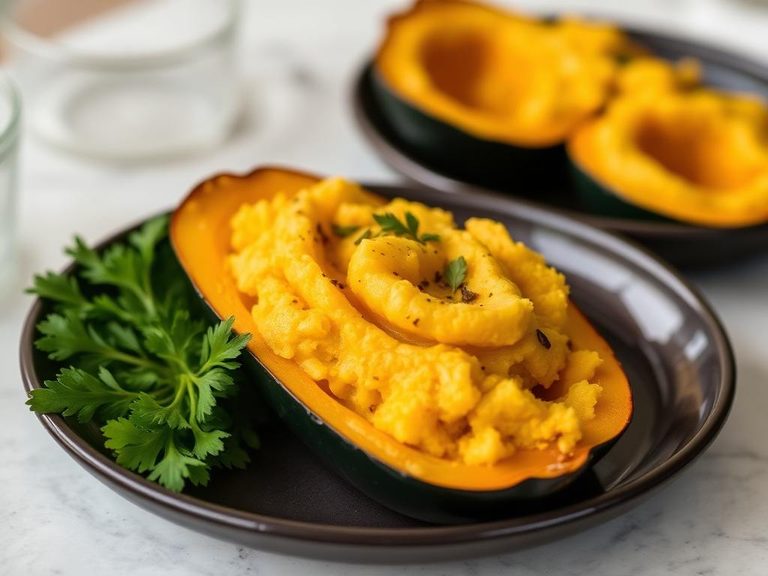
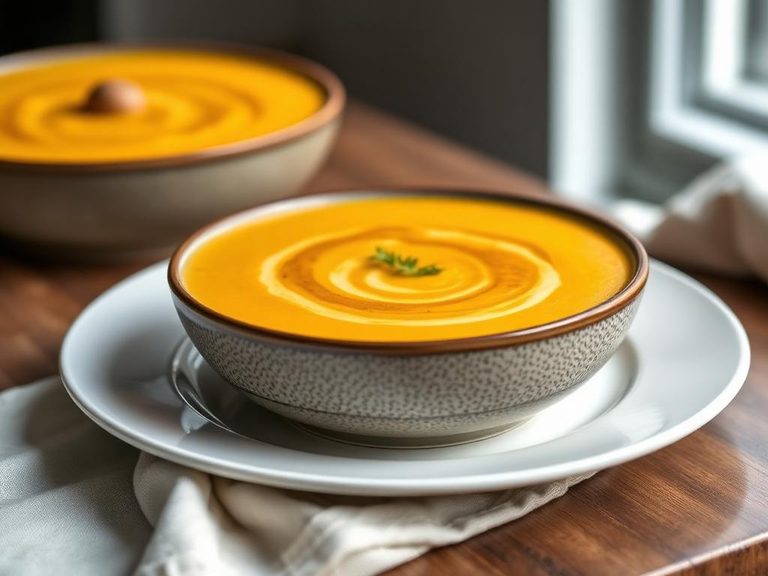
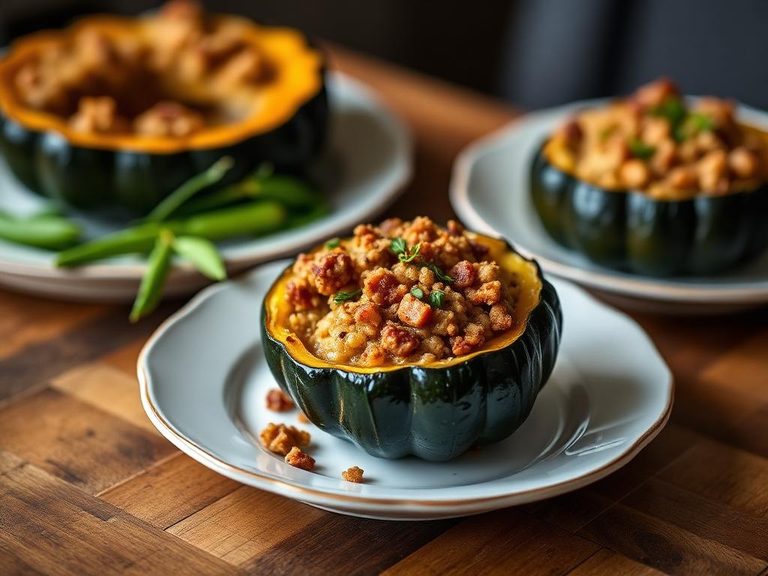
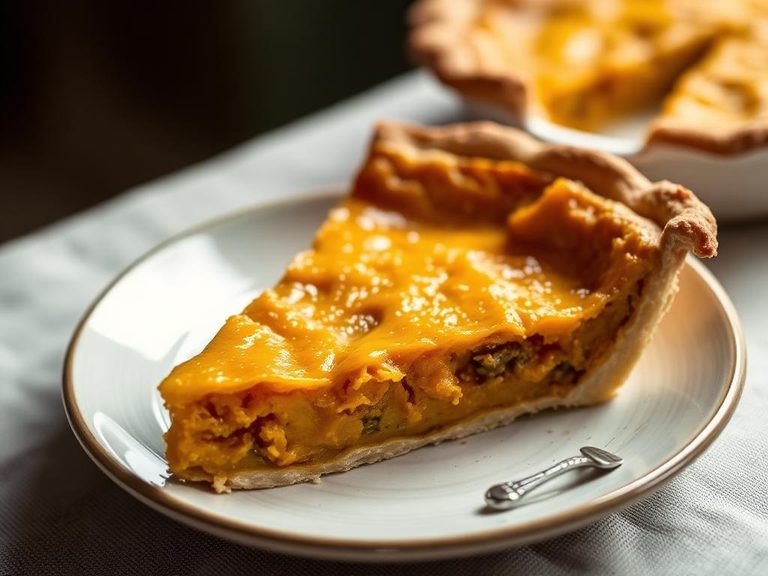
🌍 Where it's eaten
💡 Did you know?
Acorn squash gets its name from its shape, which resembles a large acorn, and it was a staple food for many Native American tribes long before European colonization.
Full nutrition (USDA data · scales with serving)
| Water | 89.7 g |
| Energy | 34.0 kcal |
| Energy | 141 kj |
| Protein | 0.67 g |
| Total lipid (fat) | 0.08 g |
| Ash | 0.76 g |
| Carbohydrate, by difference | 8.8 g |
| Fiber, total dietary | 2.6 g |
| Calcium, Ca | 26.0 mg |
| Iron, Fe | 0.56 mg |
| Magnesium, Mg | 26.0 mg |
| Phosphorus, P | 27.0 mg |
| Potassium, K | 263 mg |
| Sodium, Na | 239 mg |
| Zinc, Zn | 0.11 mg |
| Copper, Cu | 0.05 mg |
| Manganese, Mn | 0.15 mg |
| Selenium, Se | 0.40 ug |
| Vitamin C, total ascorbic acid | 6.5 mg |
| Thiamin | 0.10 mg |
| Riboflavin | 0.01 mg |
| Niacin | 0.53 mg |
| Pantothenic acid | 0.30 mg |
| Vitamin B-6 | 0.12 mg |
| Folate, total | 11.0 ug |
| Folic acid | 0.00 ug |
| Folate, food | 11.0 ug |
| Folate, DFE | 11.0 ug |
| Vitamin B-12 | 0.00 ug |
| Vitamin A, RAE | 13.0 ug |
| Retinol | 0.00 ug |
| Vitamin A, IU | 258 iu |
| Vitamin D (D2 + D3), International Units | 0.00 iu |
| Vitamin D (D2 + D3) | 0.00 ug |
Fat & fatty acid profile (per 100g)
| Fatty acids, total saturated | 0.02 g |
| SFA 12:0 | 0.00 g |
| SFA 14:0 | 0.00 g |
| SFA 16:0 | 0.01 g |
| SFA 18:0 | 0.00 g |
| Fatty acids, total monounsaturated | 0.01 g |
| MUFA 16:1 | 0.00 g |
| MUFA 18:1 | 0.01 g |
| Fatty acids, total polyunsaturated | 0.04 g |
| PUFA 18:2 | 0.01 g |
| PUFA 18:3 | 0.02 g |
| Fatty acids, total trans | 0.00 g |
| Cholesterol | 0.00 mg |
Amino acid profile (per 100g)
| Tryptophan | 0.01 g |
| Threonine | 0.02 g |
| Isoleucine | 0.03 g |
| Leucine | 0.04 g |
| Lysine | 0.03 g |
| Methionine | 0.01 g |
| Cystine | 0.01 g |
| Phenylalanine | 0.03 g |
| Tyrosine | 0.02 g |
| Valine | 0.03 g |
| Arginine | 0.04 g |
| Histidine | 0.01 g |
| Alanine | 0.03 g |
| Aspartic acid | 0.07 g |
| Glutamic acid | 0.12 g |
| Glycine | 0.03 g |
| Proline | 0.02 g |
| Serine | 0.03 g |
FAQ
Is mashed acorn squash the same as pumpkin puree?
No. While both are winter squashes, acorn squash has a milder, nuttier flavor and a denser texture. Pumpkin puree is typically thinner and more fibrous. They can often be substituted, but the taste and texture of the final dish will differ.
Can I freeze mashed acorn squash?
Yes. Let it cool completely, then store in airtight containers or freezer bags. It will keep for up to 3 months. Thaw in the refrigerator before reheating.
How do I reduce the wateriness of mashed acorn squash?
After boiling or steaming, let the cooked squash sit in a colander for a few minutes to drain excess moisture. You can also mash it in a dry pot over low heat for a minute to evaporate some liquid.
Nutrient density (calculated · NRF9.3)
Nutrient Rich Foods index: beneficial nutrients (protein, fiber, vitamins, minerals) minus saturated fat, added sugar & sodium, per 100 kcal.
NRF9.3 index — Fulgoni, Keast & Drewnowski, 2009. Computed from USDA nutrients.
Weight-loss friendliness (composite index)
Energy density 0.34 kcal/g · 8% calories from protein · 2.6 g fiber · 0.0 g sugar per 100 g.
Composite of energy density (Rolls et al., 1999), protein & fiber satiety, minus sugar. A calculated heuristic — ranks satiety-per-calorie, not a clinical measure.
Dietary load (calculated from USDA values)
Potential renal acid load. Positive = acid-forming, negative = alkaline-forming.
Sodium-to-potassium ratio: 0.91 (lower is better — aim for ≤ 1)
Sodium:potassium per WHO potassium guidance. Computed from USDA nutrients.