

Spearmint, fresh
Whole food · Spices and Herbs

Photo: Wikipedia
Fresh spearmint is a vibrant, aromatic herb with soft, serrated leaves and a sweet, cooling flavor distinct from its sharper cousin, peppermint. Its low-calorie profile (44 kcal/100g) is bolstered by a notable 6.8g of fiber per 100g, making it a surprisingly fiber-rich addition to dishes. The taste is bright, slightly grassy, and refreshing, with a signature menthol sweetness that lingers on the palate.
Calorie split: 25% protein · 63% carbs · 12% fat
↓ Full nutrition💚 Why it's loved
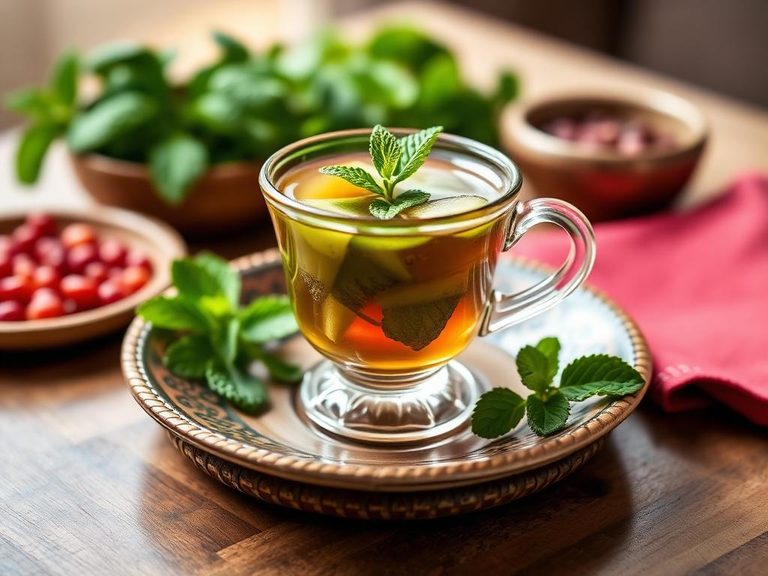
People adore spearmint for its uniquely sweet, cooling aroma that transforms both sweet and savory dishes, from Moroccan tagines to mint juleps. Its versatility as a fresh garnish, tea base, or flavoring agent makes it a beloved staple in kitchens worldwide.
⚠️ Watch-outs & how to enjoy it better
While generally safe, excessive consumption of spearmint tea (over 3-4 cups daily) has been linked to potential hormonal effects in some individuals, particularly regarding testosterone levels. To mitigate, moderate intake and consult a healthcare provider if you have hormone-sensitive conditions. Its strong flavor can also overpower delicate dishes, so use it judiciously.
Key benefits
- Rich in dietary fiber (6.8g per 100g) to support digestive health.
- Contains rosmarinic acid, a potent antioxidant.
- May help soothe digestive discomfort like bloating.
- Provides a fresh, low-calorie flavor boost without added sugar.
- Source of vitamins A and C, which support immune function.
🍽️ Popular dishes

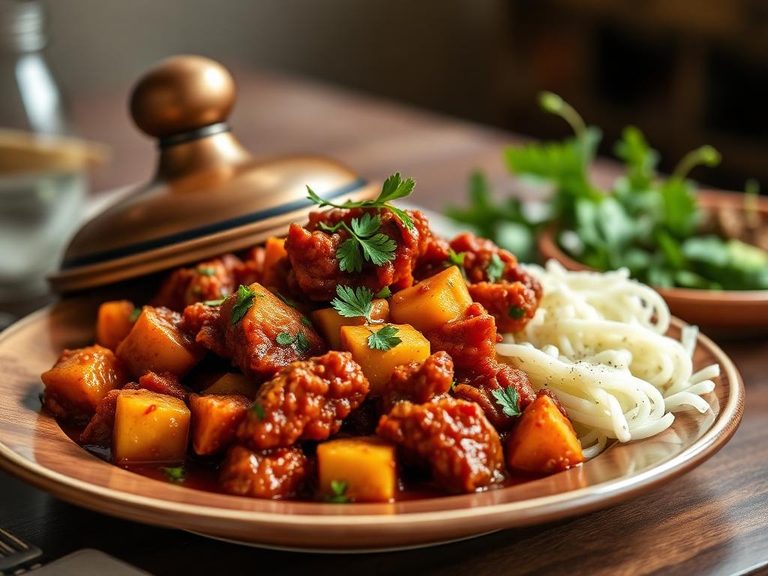
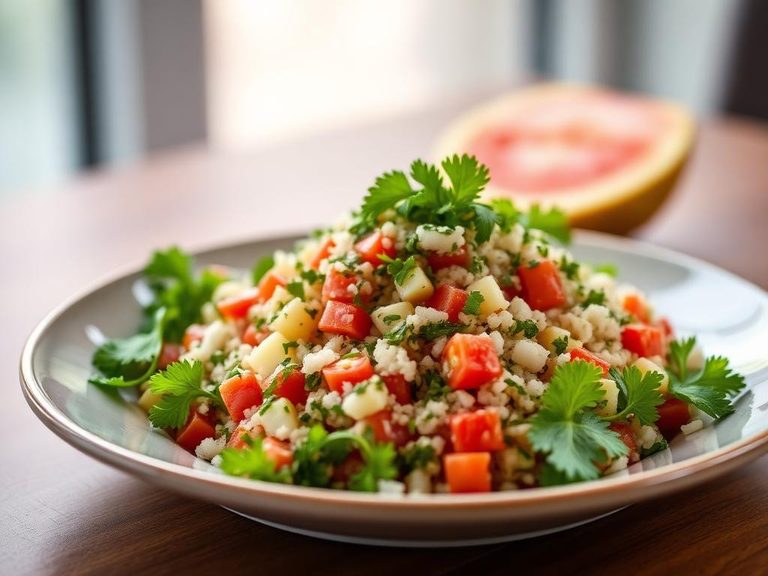
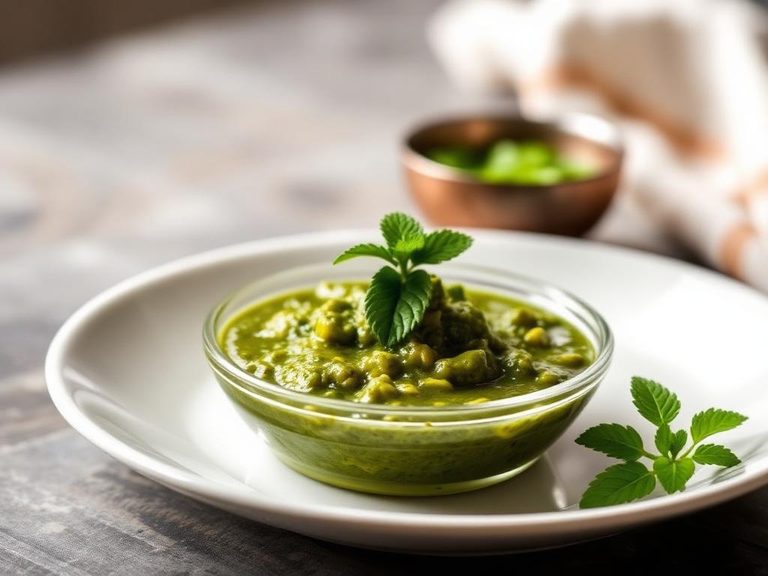
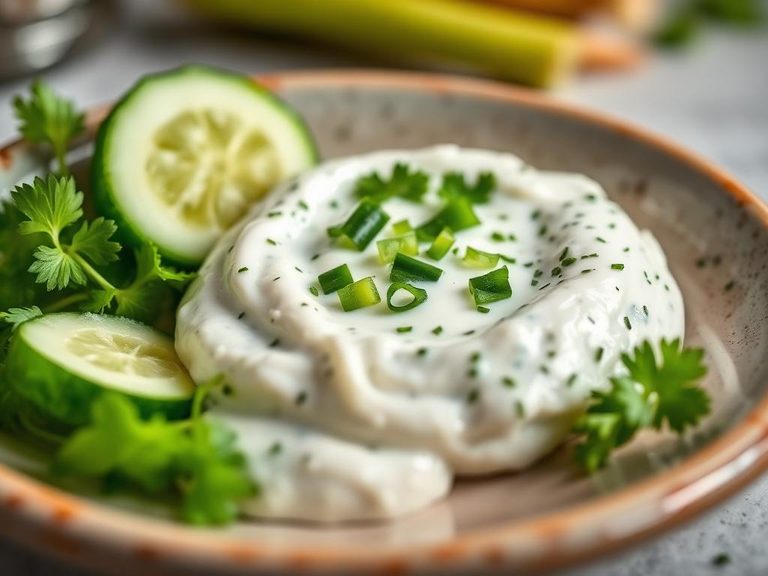
🌍 Where it's eaten
💡 Did you know?
Spearmint gets its name from the pointed, spear-shaped tips of its leaves, and it contains a compound called carvone, which gives it a sweeter, less intense flavor than peppermint's menthol.
Full nutrition (USDA data · scales with serving)
| Water | 85.5 g |
| Energy | 44.0 kcal |
| Energy | 184 kj |
| Protein | 3.3 g |
| Total lipid (fat) | 0.73 g |
| Ash | 2.0 g |
| Carbohydrate, by difference | 8.4 g |
| Fiber, total dietary | 6.8 g |
| Calcium, Ca | 199 mg |
| Iron, Fe | 11.9 mg |
| Magnesium, Mg | 63.0 mg |
| Phosphorus, P | 60.0 mg |
| Potassium, K | 458 mg |
| Sodium, Na | 30.0 mg |
| Zinc, Zn | 1.1 mg |
| Copper, Cu | 0.24 mg |
| Manganese, Mn | 1.1 mg |
| Vitamin C, total ascorbic acid | 13.3 mg |
| Thiamin | 0.08 mg |
| Riboflavin | 0.17 mg |
| Niacin | 0.95 mg |
| Pantothenic acid | 0.25 mg |
| Vitamin B-6 | 0.16 mg |
| Folate, total | 105 ug |
| Folic acid | 0.00 ug |
| Folate, food | 105 ug |
| Folate, DFE | 105 ug |
| Vitamin B-12 | 0.00 ug |
| Vitamin A, RAE | 203 ug |
| Retinol | 0.00 ug |
| Vitamin A, IU | 4054 iu |
| Vitamin D (D2 + D3), International Units | 0.00 iu |
| Vitamin D (D2 + D3) | 0.00 ug |
Fat & fatty acid profile (per 100g)
| Fatty acids, total saturated | 0.19 g |
| SFA 14:0 | 0.00 g |
| SFA 16:0 | 0.14 g |
| SFA 18:0 | 0.02 g |
| Fatty acids, total monounsaturated | 0.03 g |
| MUFA 16:1 | 0.00 g |
| MUFA 18:1 | 0.02 g |
| Fatty acids, total polyunsaturated | 0.39 g |
| PUFA 18:2 | 0.05 g |
| PUFA 18:3 | 0.34 g |
| Fatty acids, total trans | 0.00 g |
| Cholesterol | 0.00 mg |
| Phytosterols | 10.0 mg |
Amino acid profile (per 100g)
| Tryptophan | 0.05 g |
| Threonine | 0.14 g |
| Isoleucine | 0.14 g |
| Leucine | 0.25 g |
| Lysine | 0.14 g |
| Methionine | 0.05 g |
| Cystine | 0.04 g |
| Phenylalanine | 0.17 g |
| Tyrosine | 0.10 g |
| Valine | 0.16 g |
| Arginine | 0.15 g |
| Histidine | 0.07 g |
| Alanine | 0.17 g |
| Aspartic acid | 0.39 g |
| Glutamic acid | 0.36 g |
| Glycine | 0.16 g |
| Proline | 0.14 g |
| Serine | 0.13 g |
FAQ
What is the difference between spearmint and peppermint?
Spearmint has a sweeter, milder flavor due to carvone, while peppermint is stronger and more menthol-forward due to higher menthol content. They are different species (Mentha spicata vs. Mentha × piperita).
Can I use dried spearmint instead of fresh?
Yes, but use about 1/3 the amount of dried spearmint for fresh, as drying concentrates the flavor. Fresh spearmint is preferred for its bright, aromatic quality in salads and garnishes.
Is spearmint safe for children?
In culinary amounts, spearmint is generally safe for children. However, avoid giving large quantities of spearmint tea to young children, and consult a pediatrician if you have concerns about herbal teas.
Nutrient density (calculated · NRF9.3)
Nutrient Rich Foods index: beneficial nutrients (protein, fiber, vitamins, minerals) minus saturated fat, added sugar & sodium, per 100 kcal.
NRF9.3 index — Fulgoni, Keast & Drewnowski, 2009. Computed from USDA nutrients.
Weight-loss friendliness (composite index)
Energy density 0.44 kcal/g · 30% calories from protein · 6.8 g fiber · 0.0 g sugar per 100 g.
Composite of energy density (Rolls et al., 1999), protein & fiber satiety, minus sugar. A calculated heuristic — ranks satiety-per-calorie, not a clinical measure.
Dietary load (calculated from USDA values)
Potential renal acid load. Positive = acid-forming, negative = alkaline-forming.
Sodium-to-potassium ratio: 0.07 (lower is better — aim for ≤ 1)
Sodium:potassium per WHO potassium guidance. Computed from USDA nutrients.