

Soybeans, green, cooked, boiled, drained, with salt
Whole food · Vegetables and Vegetable Products

Photo: Wikipedia
These are the immature, bright green pods of the soybean plant, harvested before they fully ripen. When boiled, they offer a tender, slightly crunchy texture and a subtly sweet, nutty, and grassy flavor. Nutritionally, they are a standout for packing over 12 grams of complete protein and a good dose of fiber into a low-calorie package.
Calorie split: 33% protein · 29% carbs · 38% fat
↓ Full nutrition💚 Why it's loved
People love them for their fresh, vibrant taste and satisfying snap, which makes them a delightful snack or addition to meals. They are celebrated for their versatility, easily fitting into stir-fries, salads, or simply being enjoyed on their own with a pinch of salt.
⚠️ Watch-outs & how to enjoy it better
As a common allergen, soy can cause reactions in sensitive individuals. The sodium from added salt during boiling can be a concern for those monitoring intake. To counteract, choose low-sodium preparation or rinse lightly, and pair with other protein sources if soy allergy is a concern.
Key benefits
- Excellent source of complete plant-based protein
- High in dietary fiber for digestive health
- Provides essential minerals like iron, manganese, and folate
- Naturally low in calories and contains no sugar
- Rich in antioxidants like isoflavones
🍽️ Popular dishes
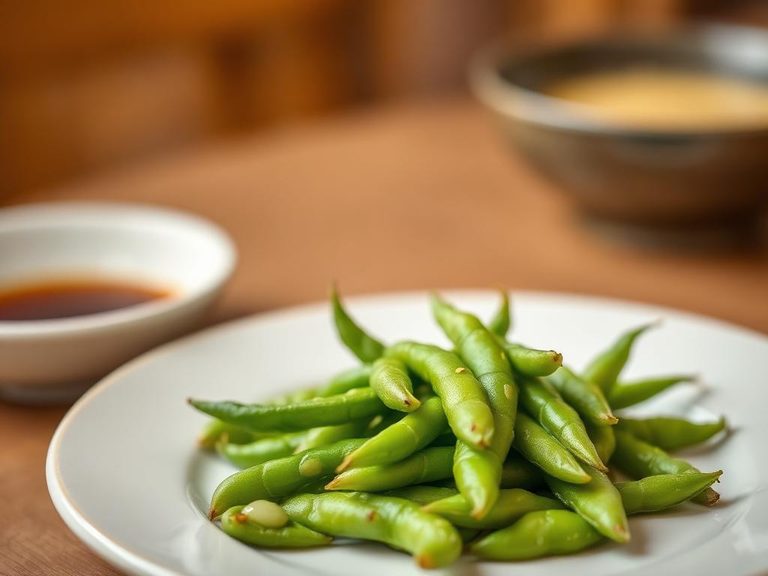
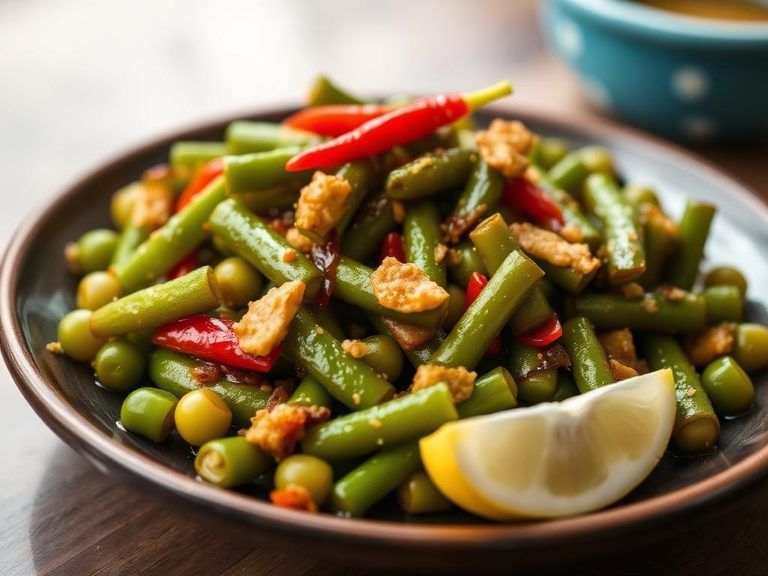
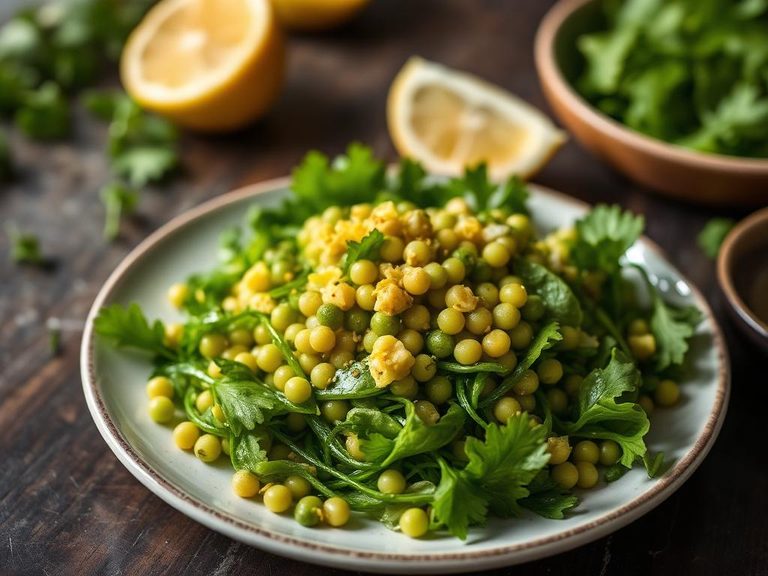
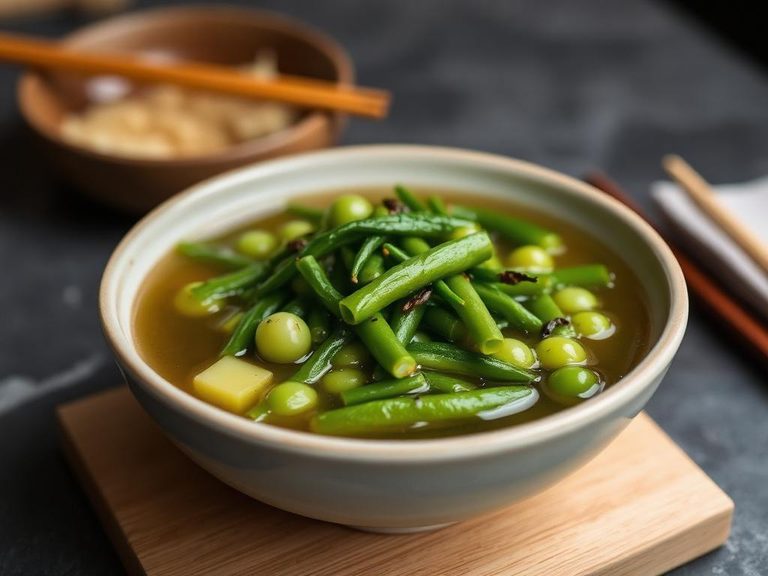
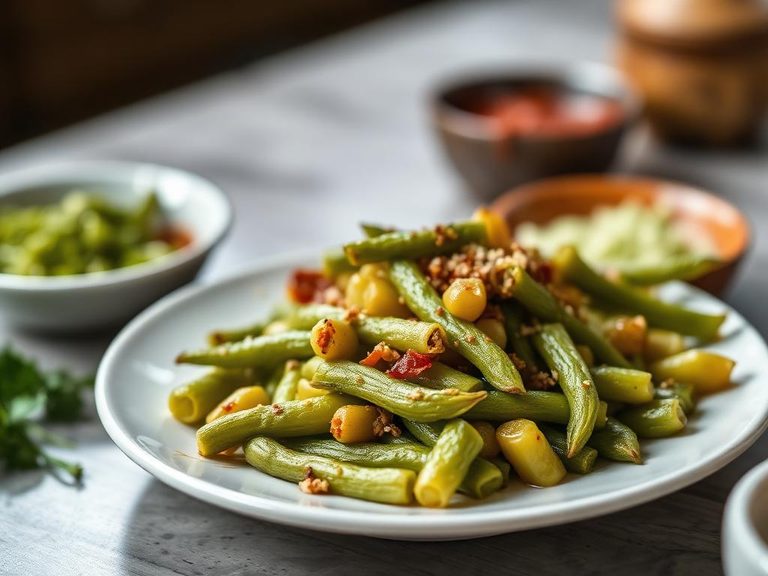
🌍 Where it's eaten
💡 Did you know?
Edamame pods are one of the few foods that are a complete protein, containing all nine essential amino acids, a trait more commonly associated with animal products.
Full nutrition (USDA data · scales with serving)
| Water | 68.6 g |
| Energy | 141 kcal |
| Energy | 592 kj |
| Protein | 12.3 g |
| Total lipid (fat) | 6.4 g |
| Ash | 1.6 g |
| Carbohydrate, by difference | 11.1 g |
| Fiber, total dietary | 4.2 g |
| Calcium, Ca | 145 mg |
| Iron, Fe | 2.5 mg |
| Magnesium, Mg | 60.0 mg |
| Phosphorus, P | 158 mg |
| Potassium, K | 539 mg |
| Sodium, Na | 250 mg |
| Zinc, Zn | 0.91 mg |
| Copper, Cu | 0.12 mg |
| Manganese, Mn | 0.50 mg |
| Selenium, Se | 1.4 ug |
| Vitamin C, total ascorbic acid | 17.0 mg |
| Thiamin | 0.26 mg |
| Riboflavin | 0.15 mg |
| Niacin | 1.3 mg |
| Pantothenic acid | 0.13 mg |
| Vitamin B-6 | 0.06 mg |
| Folate, total | 111 ug |
| Folic acid | 0.00 ug |
| Folate, food | 111 ug |
| Folate, DFE | 111 ug |
| Vitamin B-12 | 0.00 ug |
| Vitamin A, RAE | 8.0 ug |
| Retinol | 0.00 ug |
| Vitamin A, IU | 156 iu |
| Vitamin D (D2 + D3), International Units | 0.00 iu |
| Vitamin D (D2 + D3) | 0.00 ug |
Fat & fatty acid profile (per 100g)
| Fatty acids, total saturated | 0.74 g |
| SFA 14:0 | 0.01 g |
| SFA 16:0 | 0.54 g |
| SFA 18:0 | 0.20 g |
| Fatty acids, total monounsaturated | 1.2 g |
| MUFA 16:1 | 0.01 g |
| MUFA 18:1 | 1.2 g |
| MUFA 20:1 | 0.01 g |
| Fatty acids, total polyunsaturated | 3.0 g |
| PUFA 18:2 | 2.7 g |
| PUFA 18:3 | 0.35 g |
| Fatty acids, total trans | 0.00 g |
| Cholesterol | 0.00 mg |
| Phytosterols | 50.0 mg |
Amino acid profile (per 100g)
| Tryptophan | 0.15 g |
| Threonine | 0.49 g |
| Isoleucine | 0.54 g |
| Leucine | 0.88 g |
| Lysine | 0.74 g |
| Methionine | 0.15 g |
| Cystine | 0.11 g |
| Phenylalanine | 0.56 g |
| Tyrosine | 0.44 g |
| Valine | 0.55 g |
| Arginine | 0.99 g |
| Histidine | 0.33 g |
| Alanine | 0.56 g |
| Aspartic acid | 1.4 g |
| Glutamic acid | 2.3 g |
| Glycine | 0.51 g |
| Proline | 0.58 g |
| Serine | 0.69 g |
FAQ
Are green soybeans the same as edamame?
Yes, they are the same food. 'Edamame' is the Japanese name for immature soybeans in the pod, typically served steamed or boiled and salted.
How do I eat them?
Hold the pod by the stem end, bring it to your mouth, and gently squeeze or pop the beans out with your teeth into your mouth. The empty pod is not eaten.
Can I eat the shells?
The shells are very fibrous and not typically eaten. The tender, green beans inside are the edible part.
Nutrient density (calculated · NRF9.3)
Nutrient Rich Foods index: beneficial nutrients (protein, fiber, vitamins, minerals) minus saturated fat, added sugar & sodium, per 100 kcal.
NRF9.3 index — Fulgoni, Keast & Drewnowski, 2009. Computed from USDA nutrients.
Weight-loss friendliness (composite index)
Energy density 1.41 kcal/g · 35% calories from protein · 4.2 g fiber · 0.0 g sugar per 100 g.
Composite of energy density (Rolls et al., 1999), protein & fiber satiety, minus sugar. A calculated heuristic — ranks satiety-per-calorie, not a clinical measure.
Dietary load (calculated from USDA values)
Potential renal acid load. Positive = acid-forming, negative = alkaline-forming.
Sodium-to-potassium ratio: 0.46 (lower is better — aim for ≤ 1)
Sodium:potassium per WHO potassium guidance. Computed from USDA nutrients.