

Pineapple, raw, traditional varieties
Whole food · Fruits and Fruit Juices
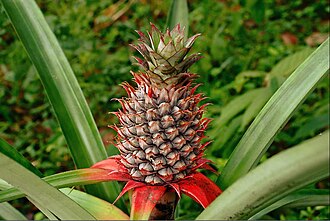
Photo: Wikipedia
Raw traditional pineapple is a fragrant, golden-fleshed tropical fruit with a vibrant balance of sweet and tart flavors. Its juicy, fibrous texture is both refreshing and slightly chewy, offering a burst of tropical sunshine in every bite. Nutritionally, it's a low-calorie, high-vitamin C source with a notable sugar content that provides quick energy.
Calorie split: 4% protein · 93% carbs · 2% fat
↓ Full nutrition💚 Why it's loved
People adore pineapple for its uniquely sweet-tart flavor that instantly evokes tropical warmth and sunshine. Its versatility shines in everything from fresh salsas and grilled kebabs to cocktails and desserts, making it a beloved ingredient across global cuisines.
⚠️ Watch-outs & how to enjoy it better
The high natural sugar content can cause blood-sugar spikes, especially for those with diabetes or insulin resistance. To mitigate this, pair pineapple with protein (like yogurt or nuts) or healthy fats (like coconut cream) to slow sugar absorption. The bromelain enzyme can also cause mouth irritation or allergic reactions in some individuals; if sensitive, opt for canned pineapple (heat deactivates bromelain) or limit portion size.
Key benefits
- Excellent source of vitamin C for immune support
- Contains bromelain, an enzyme that aids protein digestion
- Low in calories and fat, suitable for weight management
- Provides manganese for bone health and metabolism
- Natural source of antioxidants like flavonoids
🍽️ Popular dishes
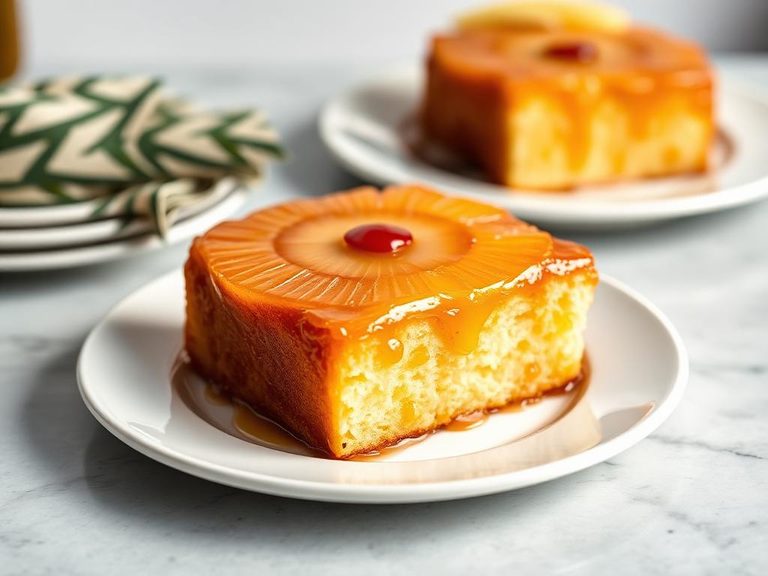
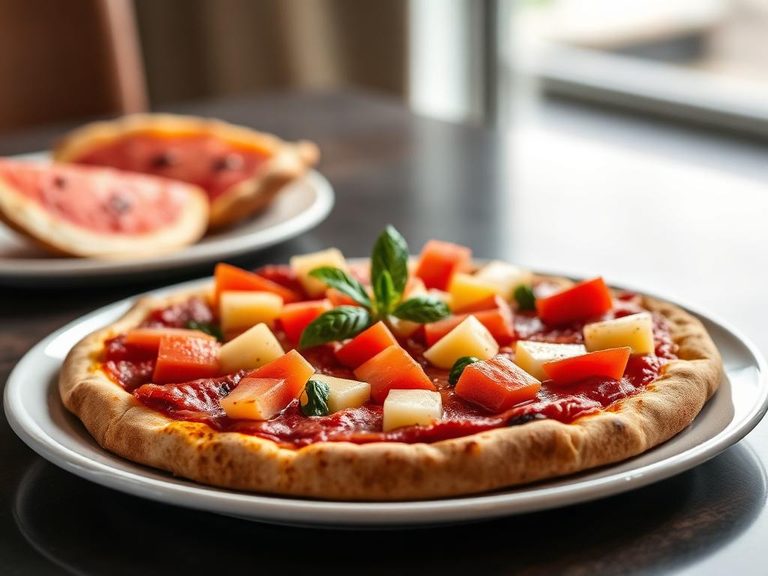
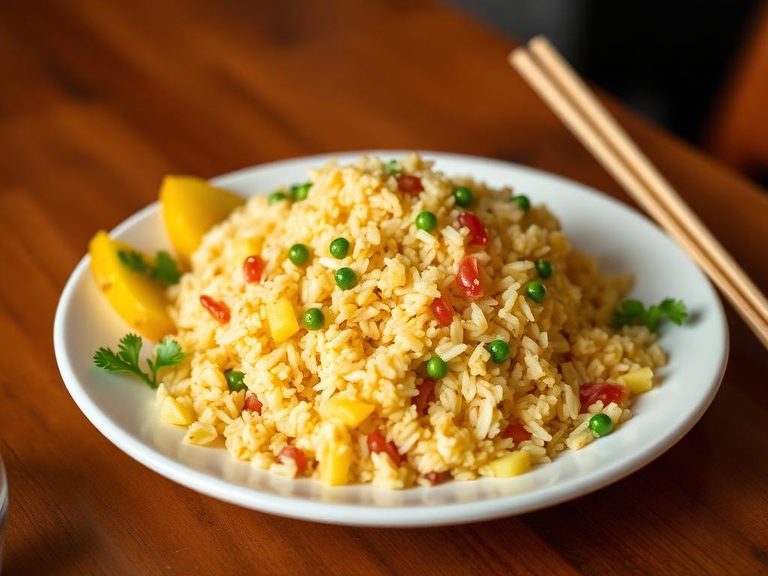
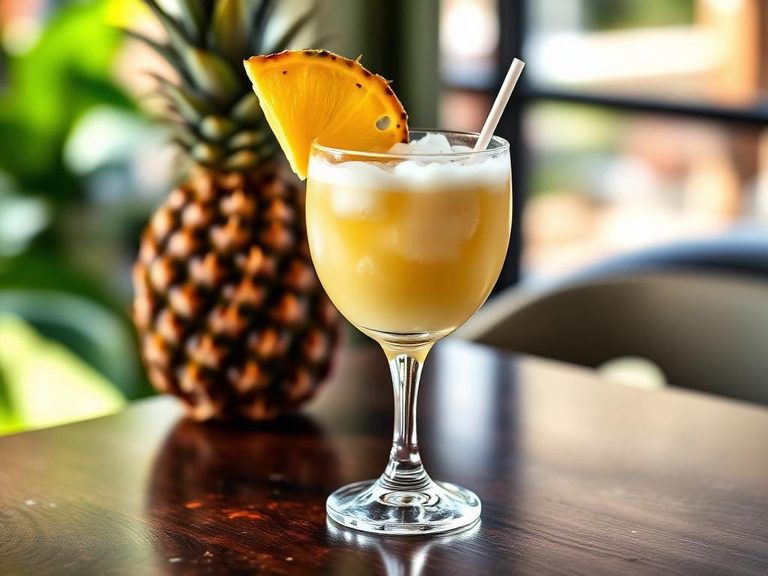
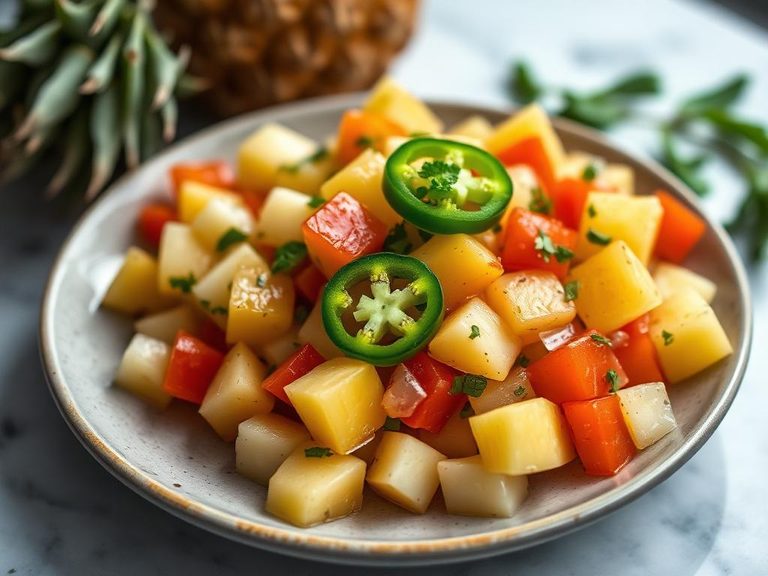
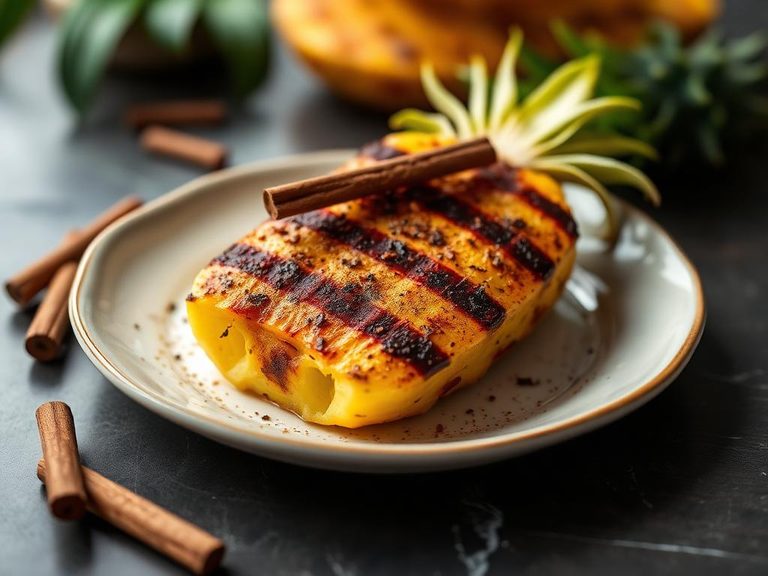
🌍 Where it's eaten
💡 Did you know?
A single pineapple plant takes about three years to produce just one fruit, and each fruit is actually a fusion of 100-200 individual flowers.
Full nutrition (USDA data · scales with serving)
| Water | 87.2 g |
| Energy | 45.0 kcal |
| Energy | 190 kj |
| Protein | 0.55 g |
| Total lipid (fat) | 0.13 g |
| Ash | 0.27 g |
| Carbohydrate, by difference | 11.8 g |
| Total Sugars | 8.3 g |
| Sucrose | 4.6 g |
| Glucose | 1.8 g |
| Fructose | 1.9 g |
| Lactose | 0.00 g |
| Maltose | 0.00 g |
| Galactose | 0.00 g |
| Calcium, Ca | 13.0 mg |
| Iron, Fe | 0.25 mg |
| Magnesium, Mg | 12.0 mg |
| Phosphorus, P | 9.0 mg |
| Potassium, K | 125 mg |
| Sodium, Na | 1.0 mg |
| Zinc, Zn | 0.08 mg |
| Copper, Cu | 0.08 mg |
| Manganese, Mn | 1.6 mg |
| Selenium, Se | 0.00 ug |
| Vitamin C, total ascorbic acid | 16.9 mg |
| Thiamin | 0.08 mg |
| Riboflavin | 0.03 mg |
| Niacin | 0.47 mg |
| Pantothenic acid | 0.19 mg |
| Vitamin B-6 | 0.11 mg |
| Folate, total | 11.0 ug |
| Folate, food | 11.0 ug |
| Choline, total | 5.6 mg |
| Betaine | 0.10 mg |
| Vitamin A, RAE | 3.0 ug |
| Carotene, beta | 31.0 ug |
| Carotene, alpha | 0.00 ug |
| Cryptoxanthin, beta | 0.00 ug |
| Vitamin A, IU | 52.0 iu |
| Lycopene | 0.00 ug |
| Lutein + zeaxanthin | 0.00 ug |
| Vitamin D (D2 + D3), International Units | 0.00 iu |
| Vitamin D (D2 + D3) | 0.00 ug |
| Vitamin K (phylloquinone) | 0.70 ug |
| Vitamin K (Dihydrophylloquinone) | 0.00 ug |
Fat & fatty acid profile (per 100g)
| Fatty acids, total trans | 0.00 g |
Amino acid profile (per 100g)
Estimated from Pineapple, frozen, chunks, sweetened — USDA does not publish this profile for Pineapple.
| Tryptophan | 0.01 g |
| Threonine | 0.01 g |
| Isoleucine | 0.01 g |
| Leucine | 0.02 g |
| Lysine | 0.03 g |
| Methionine | 0.01 g |
| Cystine | 0.00 g |
| Phenylalanine | 0.01 g |
| Tyrosine | 0.01 g |
| Valine | 0.02 g |
| Arginine | 0.02 g |
| Histidine | 0.01 g |
| Alanine | 0.02 g |
| Aspartic acid | 0.06 g |
| Glutamic acid | 0.05 g |
| Glycine | 0.02 g |
| Proline | 0.01 g |
| Serine | 0.03 g |
FAQ
Is raw pineapple healthier than canned pineapple?
Raw pineapple retains more vitamin C and bromelain, but canned pineapple (in juice, not syrup) can be a convenient alternative with similar nutrients. However, canned versions often have added sugars.
Why does pineapple sometimes make my mouth feel tingly or sore?
This is due to bromelain, a proteolytic enzyme that breaks down proteins. The sensation is usually harmless and temporary; cooking or canning the pineapple deactivates the enzyme.
How can I tell if a pineapple is ripe?
Look for a golden-yellow color at the base, a sweet aroma at the bottom, and leaves that pull out easily with a gentle tug. Avoid green or overly brown pineapples.
Nutrient density (calculated · NRF9.3)
Nutrient Rich Foods index: beneficial nutrients (protein, fiber, vitamins, minerals) minus saturated fat, added sugar & sodium, per 100 kcal.
NRF9.3 index — Fulgoni, Keast & Drewnowski, 2009. Computed from USDA nutrients.
Weight-loss friendliness (composite index)
Energy density 0.45 kcal/g · 5% calories from protein · 0.0 g fiber · 8.3 g sugar per 100 g.
Composite of energy density (Rolls et al., 1999), protein & fiber satiety, minus sugar. A calculated heuristic — ranks satiety-per-calorie, not a clinical measure.
Dietary load (calculated from USDA values)
Potential renal acid load. Positive = acid-forming, negative = alkaline-forming.
Sodium-to-potassium ratio: 0.01 (lower is better — aim for ≤ 1)
Sodium:potassium per WHO potassium guidance. Computed from USDA nutrients.