

Lamb, shoulder, blade, separable lean and fat, trimmed to 1/4" fat, choice, cooked, braised
Whole food · Lamb, Veal, and Game Products
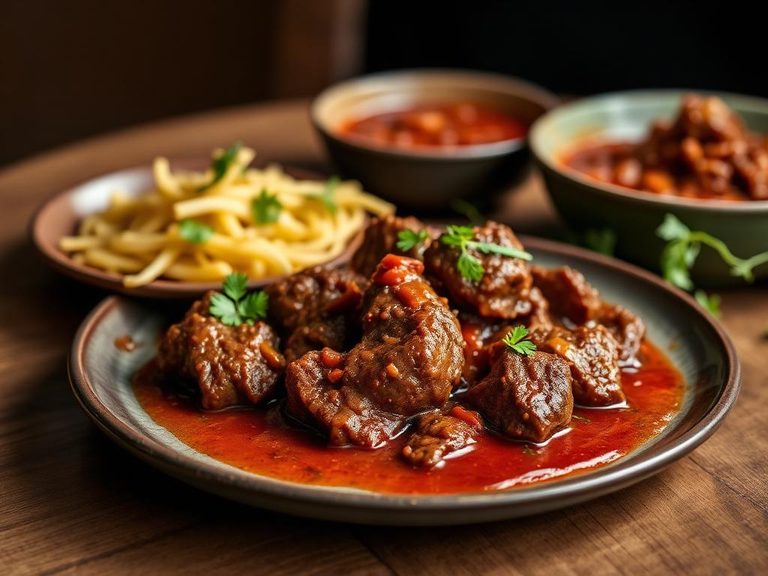
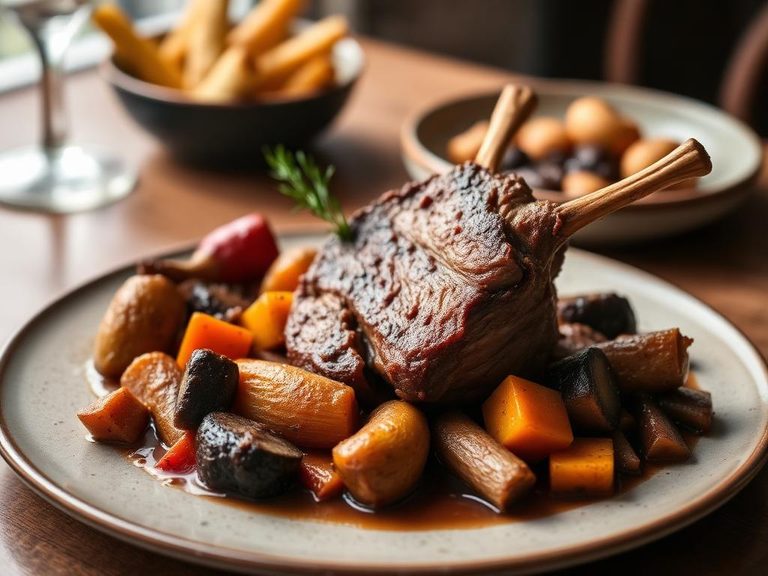
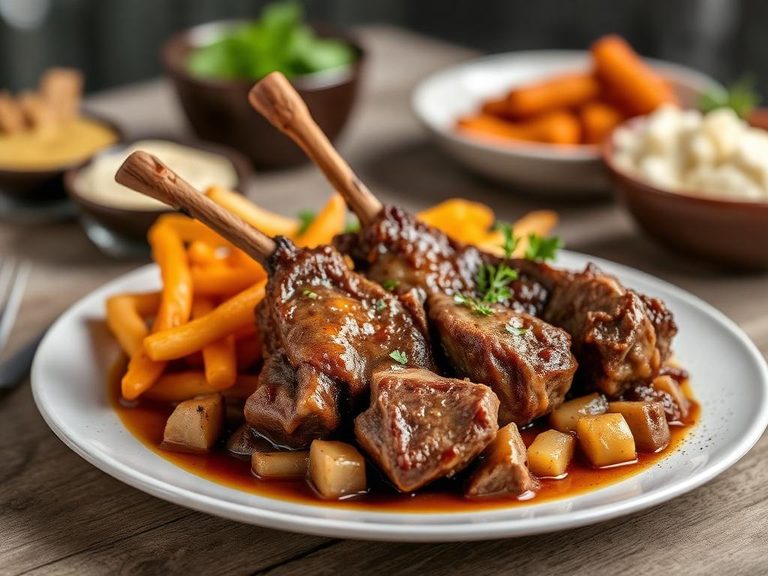
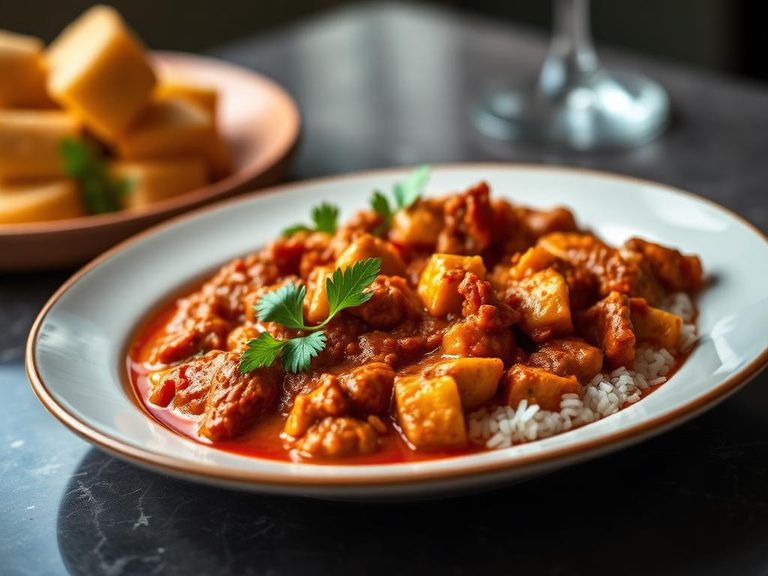
This is a cut from the upper portion of the lamb shoulder, slow-cooked until the connective tissue melts into a rich, unctuous sauce. The braising process yields incredibly tender, succulent meat with a deep, savory flavor and a luxuriously soft texture. It's a powerhouse of protein and healthy fats, providing sustained energy without any carbohydrates.
Calorie split: 34% protein · 0% carbs · 66% fat
↓ Full nutrition💚 Why it's loved
People adore it for its profound, meaty flavor and fall-apart tenderness that comes from patient, low-and-slow cooking. It's the ultimate comfort food, capable of being transformed into a vast array of hearty, aromatic dishes from stews to curries.
⚠️ Watch-outs & how to enjoy it better
The high fat content (nearly 25g per 100g) makes it a very calorie-dense choice, which requires mindful portion control for those managing weight. The braising process often involves added salt, so individuals monitoring sodium intake should opt for low-sodium broths or season with herbs and acids like lemon juice instead. Pairing it with a large portion of non-starchy vegetables can balance the meal.
Key benefits
- Excellent source of high-quality protein for muscle maintenance and repair.
- Rich in iron, zinc, and B vitamins, especially B12, crucial for energy and nerve function.
- Provides conjugated linoleic acid (CLA), a fatty acid studied for potential metabolic benefits.
- The slow-cooking method makes nutrients highly bioavailable and easy to digest.
- A zero-carb, nutrient-dense option for low-carb or ketogenic dietary patterns.
🍽️ Popular dishes
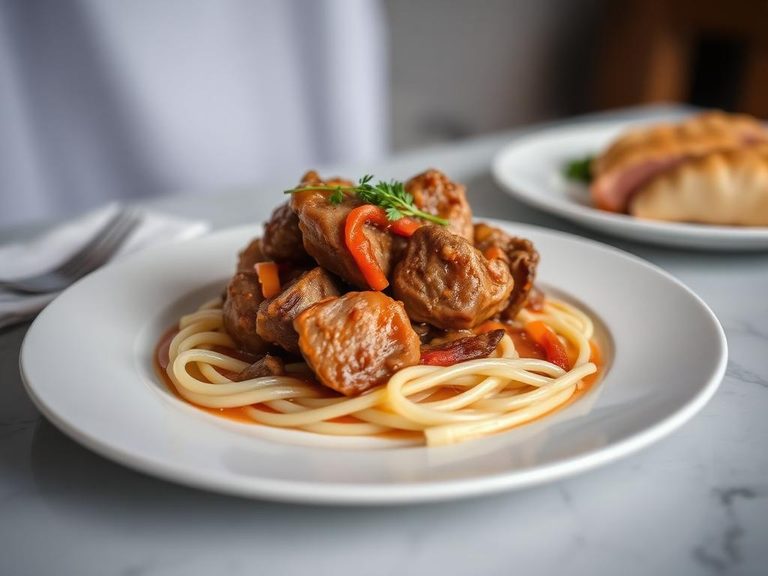
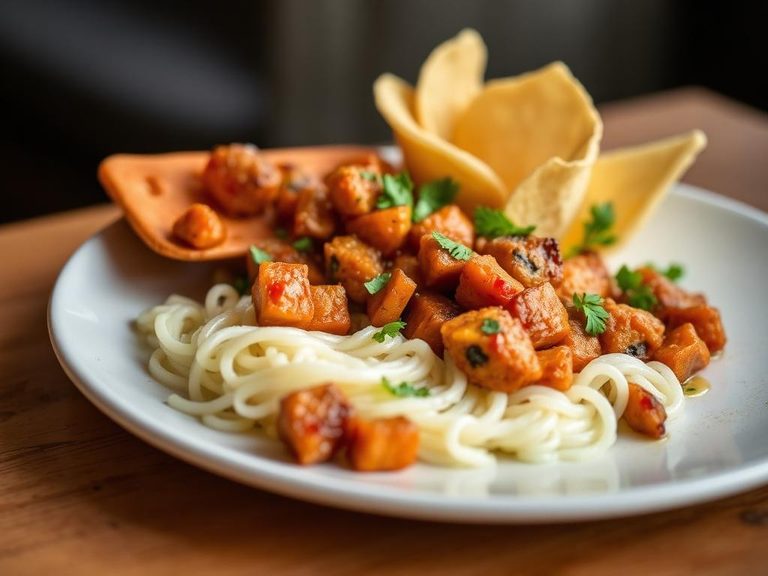
🌍 Where it's eaten
💡 Did you know?
The term 'blade' refers to the specific, flat bone within this shoulder cut, which is often left in during braising to add flavor and gelatin to the cooking liquid, creating a naturally thick sauce.
Full nutrition (USDA data · scales with serving)
| Water | 45.2 g |
| Energy | 345 kcal |
| Energy | 1443 kj |
| Protein | 28.5 g |
| Total lipid (fat) | 24.7 g |
| Ash | 1.5 g |
| Carbohydrate, by difference | 0.00 g |
| Fiber, total dietary | 0.00 g |
| Calcium, Ca | 27.0 mg |
| Iron, Fe | 2.4 mg |
| Magnesium, Mg | 24.0 mg |
| Phosphorus, P | 185 mg |
| Potassium, K | 243 mg |
| Sodium, Na | 75.0 mg |
| Zinc, Zn | 6.9 mg |
| Copper, Cu | 0.12 mg |
| Manganese, Mn | 0.03 mg |
| Selenium, Se | 33.1 ug |
| Vitamin C, total ascorbic acid | 0.00 mg |
| Thiamin | 0.06 mg |
| Riboflavin | 0.21 mg |
| Niacin | 6.0 mg |
| Pantothenic acid | 0.61 mg |
| Vitamin B-6 | 0.11 mg |
| Folate, total | 18.0 ug |
| Folic acid | 0.00 ug |
| Folate, food | 18.0 ug |
| Folate, DFE | 18.0 ug |
| Vitamin B-12 | 2.8 ug |
| Vitamin A, RAE | 0.00 ug |
| Retinol | 0.00 ug |
| Vitamin A, IU | 0.00 iu |
| Vitamin E (alpha-tocopherol) | 0.16 mg |
Fat & fatty acid profile (per 100g)
| Fatty acids, total saturated | 10.3 g |
| SFA 10:0 | 0.06 g |
| SFA 12:0 | 0.10 g |
| SFA 14:0 | 0.90 g |
| SFA 16:0 | 5.3 g |
| SFA 18:0 | 3.3 g |
| Fatty acids, total monounsaturated | 10.1 g |
| MUFA 16:1 | 0.73 g |
| MUFA 18:1 | 9.1 g |
| Fatty acids, total polyunsaturated | 2.0 g |
| PUFA 18:2 | 1.5 g |
| PUFA 18:3 | 0.41 g |
| PUFA 20:4 | 0.12 g |
| Cholesterol | 116 mg |
Amino acid profile (per 100g)
| Tryptophan | 0.33 g |
| Threonine | 1.2 g |
| Isoleucine | 1.4 g |
| Leucine | 2.2 g |
| Lysine | 2.5 g |
| Methionine | 0.73 g |
| Cystine | 0.34 g |
| Phenylalanine | 1.2 g |
| Tyrosine | 0.96 g |
| Valine | 1.5 g |
| Arginine | 1.7 g |
| Histidine | 0.90 g |
| Alanine | 1.7 g |
| Aspartic acid | 2.5 g |
| Glutamic acid | 4.1 g |
| Glycine | 1.4 g |
| Proline | 1.2 g |
| Serine | 1.1 g |
FAQ
What's the best way to cook this cut for maximum tenderness?
Braising is the ideal method. Sear the meat first, then simmer it slowly in liquid (like stock, wine, or tomatoes) at a low temperature (around 300°F/150°C) for 2-3 hours, or until the meat is easily pierced with a fork.
Is the fat content a concern?
While it is a fatty cut, much of the fat is monounsaturated (similar to olive oil) and renders out during cooking. You can easily skim excess fat from the cooking liquid before serving to reduce overall fat intake.
How does it differ from a lamb leg roast?
The shoulder blade has more intramuscular fat and connective tissue, which makes it more flavorful and forgiving for slow-cooking methods. A leg roast is leaner and more suited to dry-heat roasting for a medium-rare to medium result.
Nutrient density (calculated · NRF9.3)
Nutrient Rich Foods index: beneficial nutrients (protein, fiber, vitamins, minerals) minus saturated fat, added sugar & sodium, per 100 kcal.
NRF9.3 index — Fulgoni, Keast & Drewnowski, 2009. Computed from USDA nutrients.
Weight-loss friendliness (composite index)
Energy density 3.45 kcal/g · 33% calories from protein · 0.0 g fiber · 0.0 g sugar per 100 g.
Composite of energy density (Rolls et al., 1999), protein & fiber satiety, minus sugar. A calculated heuristic — ranks satiety-per-calorie, not a clinical measure.
Dietary load (calculated from USDA values)
Potential renal acid load. Positive = acid-forming, negative = alkaline-forming.
Sodium-to-potassium ratio: 0.31 (lower is better — aim for ≤ 1)
Sodium:potassium per WHO potassium guidance. Computed from USDA nutrients.