

Lamb, New Zealand, imported, frozen, shoulder, whole (arm and blade), separable lean only, cooked, braised
Whole food · Lamb, Veal, and Game Products
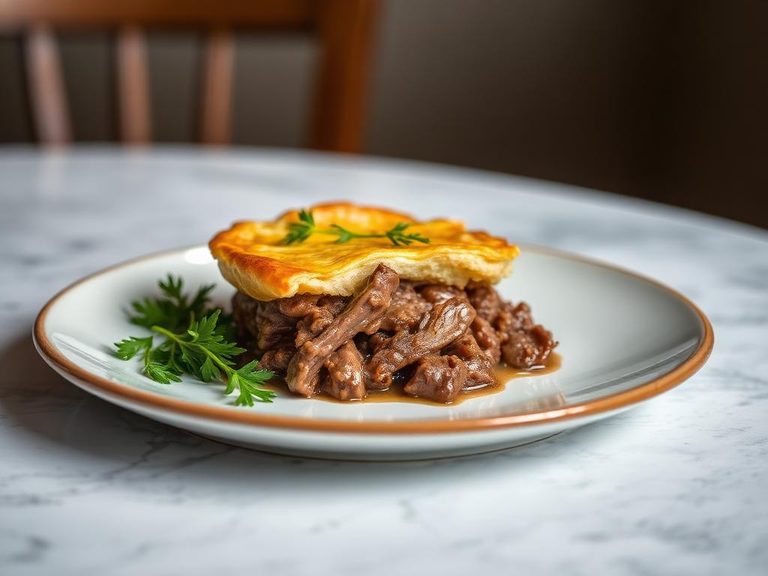
This is a lean, boneless cut from the shoulder of New Zealand lamb, slow-braised until tender. The cooking method transforms the muscle into succulent, pull-apart shreds with a deep, savory, and slightly gamey flavor. Nutritionally, it's a powerhouse of high-quality protein with virtually no carbohydrates.
Calorie split: 49% protein · 0% carbs · 51% fat
↓ Full nutrition💚 Why it's loved
People adore it for its rich, pronounced lamb flavor that becomes incredibly tender and versatile when braised. It's a cultural staple in many cuisines, representing comfort food from Sunday roasts to festive stews.
⚠️ Watch-outs & how to enjoy it better
The strong, gamey flavor can be off-putting to those accustomed to milder meats. As a red meat, it is higher in saturated fat than poultry or fish, so portion control is advised for heart-health-conscious individuals. Tip: Pair it with fiber-rich vegetables like roasted root vegetables or a fresh salad to balance the meal and aid satiety.
Key benefits
- Excellent source of complete protein for muscle maintenance.
- Rich in essential minerals like iron and zinc.
- Provides B vitamins, particularly B12, for energy metabolism.
- Contains conjugated linoleic acid (CLA), a naturally occurring fatty acid.
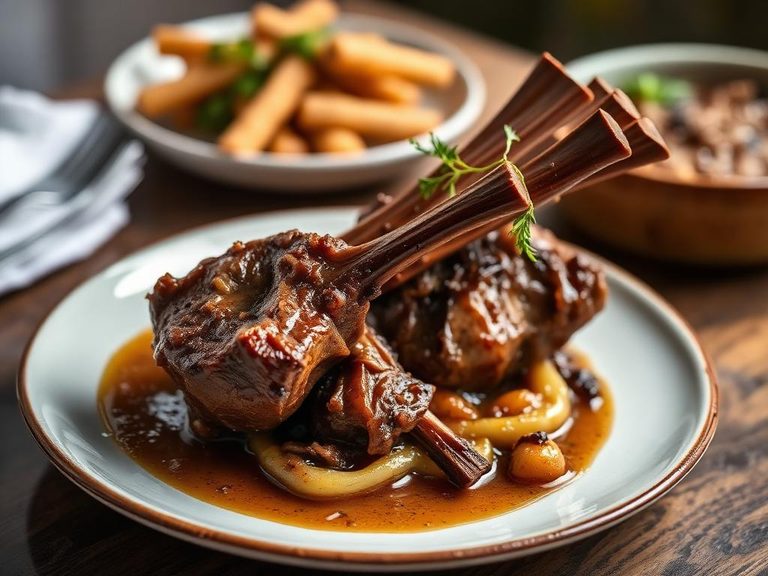
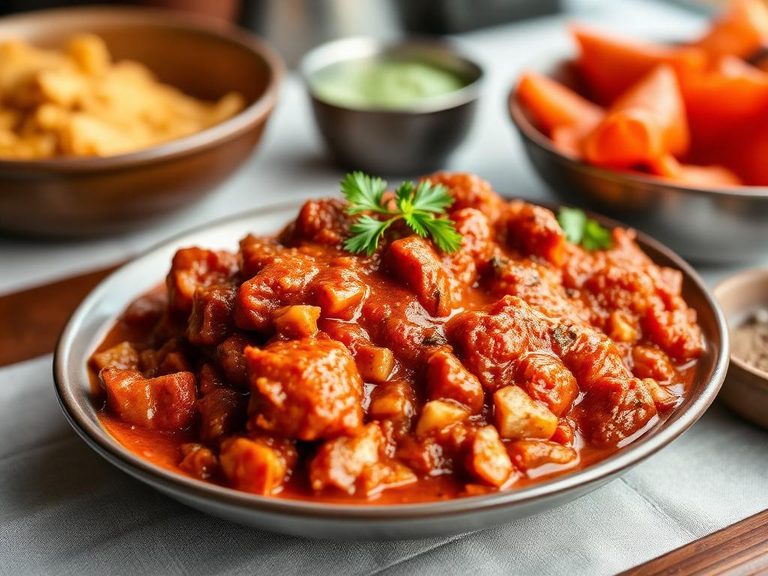
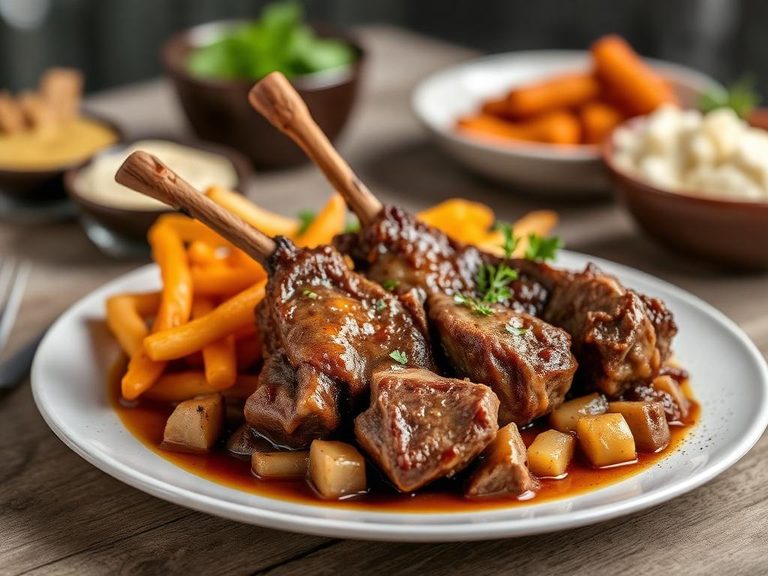
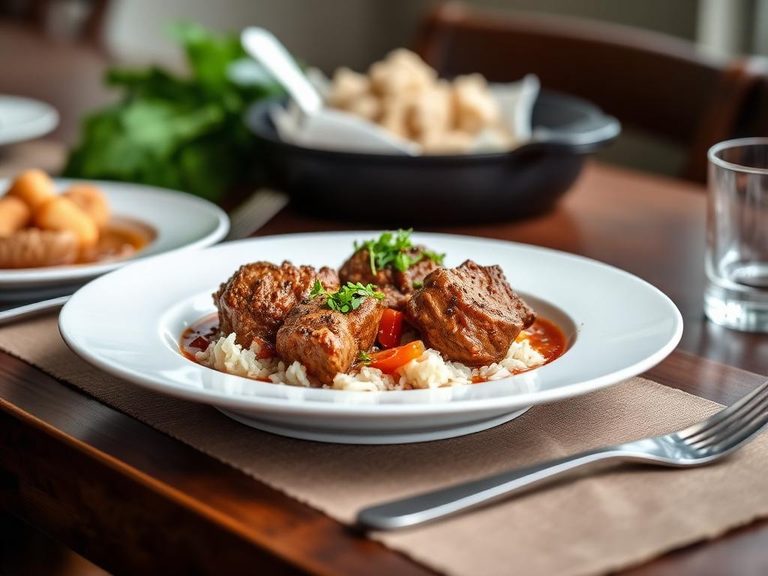
🍽️ Popular dishes
🌍 Where it's eaten
💡 Did you know?
New Zealand's sheep population once outnumbered its human population by more than 10 to 1, a legacy that firmly established lamb as a national culinary icon.
Full nutrition (USDA data · scales with serving)
| Water | 47.9 g |
| Energy | 285 kcal |
| Energy | 1192 kj |
| Protein | 34.1 g |
| Total lipid (fat) | 15.5 g |
| Ash | 1.9 g |
| Carbohydrate, by difference | 0.00 g |
| Fiber, total dietary | 0.00 g |
| Calcium, Ca | 27.0 mg |
| Iron, Fe | 2.3 mg |
| Magnesium, Mg | 20.0 mg |
| Phosphorus, P | 215 mg |
| Potassium, K | 166 mg |
| Sodium, Na | 56.0 mg |
| Zinc, Zn | 5.6 mg |
| Copper, Cu | 0.12 mg |
| Manganese, Mn | 0.03 mg |
| Selenium, Se | 5.3 ug |
| Vitamin C, total ascorbic acid | 0.00 mg |
| Thiamin | 0.08 mg |
| Riboflavin | 0.36 mg |
| Niacin | 5.8 mg |
| Pantothenic acid | 0.50 mg |
| Vitamin B-6 | 0.08 mg |
| Folate, total | 0.00 ug |
| Folic acid | 0.00 ug |
| Folate, food | 0.00 ug |
| Folate, DFE | 0.00 ug |
| Vitamin B-12 | 3.7 ug |
| Vitamin A, RAE | 0.00 ug |
| Retinol | 0.00 ug |
| Vitamin A, IU | 0.00 iu |
Fat & fatty acid profile (per 100g)
| Fatty acids, total saturated | 6.8 g |
| SFA 10:0 | 0.04 g |
| SFA 12:0 | 0.05 g |
| SFA 14:0 | 0.48 g |
| SFA 16:0 | 3.3 g |
| SFA 18:0 | 2.4 g |
| Fatty acids, total monounsaturated | 6.1 g |
| MUFA 16:1 | 0.35 g |
| MUFA 18:1 | 5.7 g |
| MUFA 20:1 | 0.00 g |
| Fatty acids, total polyunsaturated | 0.95 g |
| PUFA 18:2 | 0.64 g |
| PUFA 18:3 | 0.26 g |
| PUFA 20:4 | 0.05 g |
| Cholesterol | 127 mg |
Amino acid profile (per 100g)
| Tryptophan | 0.40 g |
| Threonine | 1.5 g |
| Isoleucine | 1.6 g |
| Leucine | 2.6 g |
| Lysine | 3.0 g |
| Methionine | 0.87 g |
| Cystine | 0.41 g |
| Phenylalanine | 1.4 g |
| Tyrosine | 1.1 g |
| Valine | 1.8 g |
| Arginine | 2.0 g |
| Histidine | 1.1 g |
| Alanine | 2.0 g |
| Aspartic acid | 3.0 g |
| Glutamic acid | 4.9 g |
| Glycine | 1.7 g |
| Proline | 1.4 g |
| Serine | 1.3 g |
FAQ
What's the difference between the shoulder and leg for braising?
The shoulder has more connective tissue and marbling, which breaks down during braising to create a richer, more gelatinous sauce and more flavorful, tender meat compared to the leaner leg.
Is the 'separable lean only' part important?
Yes, it means all visible fat has been trimmed before cooking, resulting in a leaner final product with the nutritional values listed, though some intramuscular fat remains for flavor.
How do I store leftover braised lamb?
Cool it quickly, store in an airtight container in the refrigerator for up to 3 days, or freeze for up to 3 months. The flavors often improve after a day as they meld.
Nutrient density (calculated · NRF9.3)
Nutrient Rich Foods index: beneficial nutrients (protein, fiber, vitamins, minerals) minus saturated fat, added sugar & sodium, per 100 kcal.
NRF9.3 index — Fulgoni, Keast & Drewnowski, 2009. Computed from USDA nutrients.
Weight-loss friendliness (composite index)
Energy density 2.85 kcal/g · 48% calories from protein · 0.0 g fiber · 0.0 g sugar per 100 g.
Composite of energy density (Rolls et al., 1999), protein & fiber satiety, minus sugar. A calculated heuristic — ranks satiety-per-calorie, not a clinical measure.
Dietary load (calculated from USDA values)
Potential renal acid load. Positive = acid-forming, negative = alkaline-forming.
Sodium-to-potassium ratio: 0.34 (lower is better — aim for ≤ 1)
Sodium:potassium per WHO potassium guidance. Computed from USDA nutrients.