

Lamb, foreshank, separable lean and fat, trimmed to 1/8" fat, choice, raw
Whole food · Lamb, Veal, and Game Products

Photo: Wikipedia
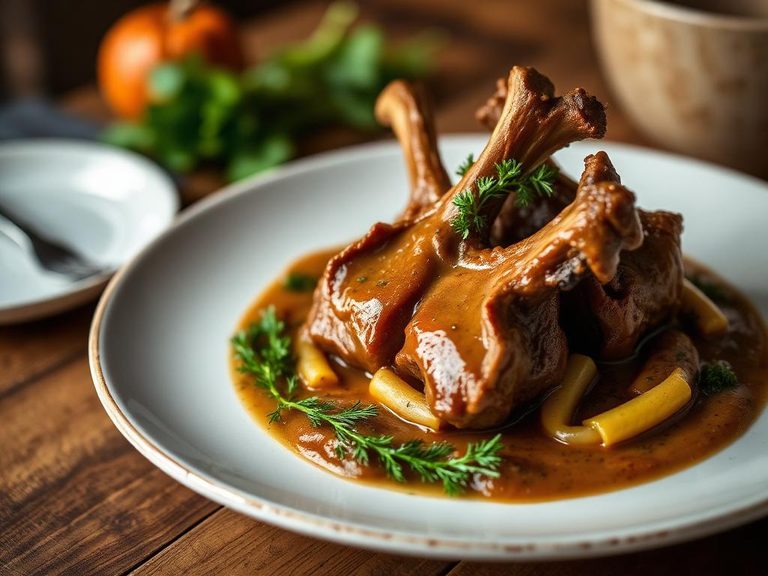
This is the lower leg cut of lamb, prized for its deep, robust flavor and rich marbling of fat and connective tissue. When raw, it appears as a dense, dark red muscle with a firm texture and a distinct cap of fat. Nutritionally, it's a powerhouse of protein and provides a significant source of iron and B vitamins, particularly B12.
Calorie split: 39% protein · 0% carbs · 61% fat
↓ Full nutrition💚 Why it's loved
People love it for its intensely savory, gamey flavor that stands up to bold spices and long cooking. Its high collagen content melts into a luscious, gelatinous sauce, making it the star of comforting, slow-cooked stews and braises.
⚠️ Watch-outs & how to enjoy it better
The high saturated fat content may be a concern for those managing cholesterol or heart health. To counteract this, trim external fat before cooking and skim rendered fat from sauces. The tough, sinewy texture is unpalatable if undercooked; it requires low-and-slow, moist-heat cooking methods like braising to become tender.
Key benefits
- Excellent source of high-quality protein for muscle maintenance.
- Rich in heme iron, which is highly absorbable.
- Provides significant vitamin B12 for nerve function and red blood cell formation.
- Contains zinc, important for immune health.
- A good source of selenium, an antioxidant mineral.
🍽️ Popular dishes
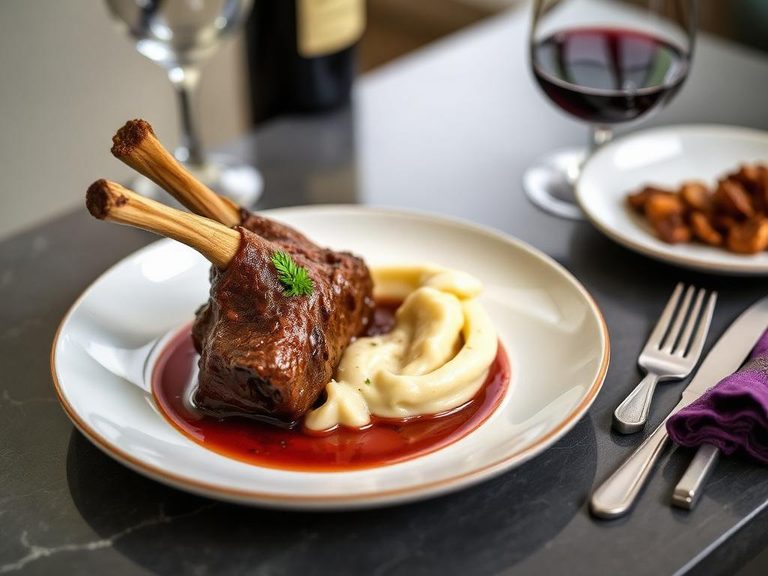
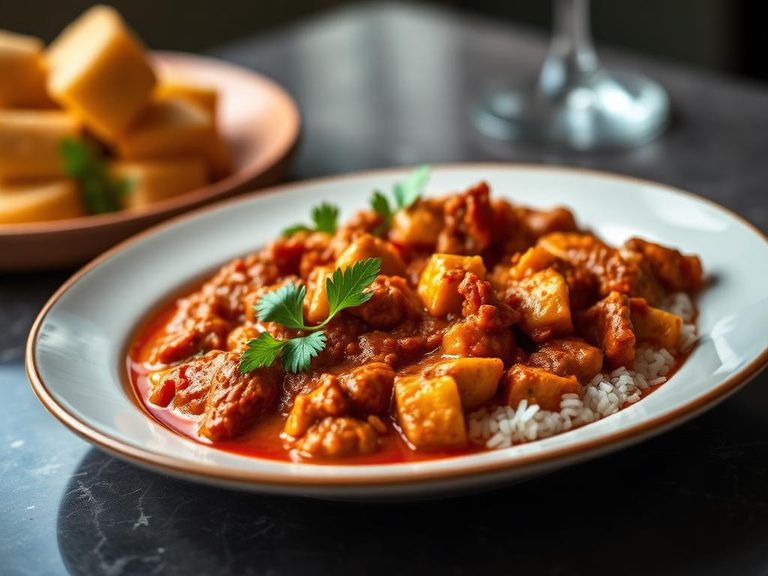
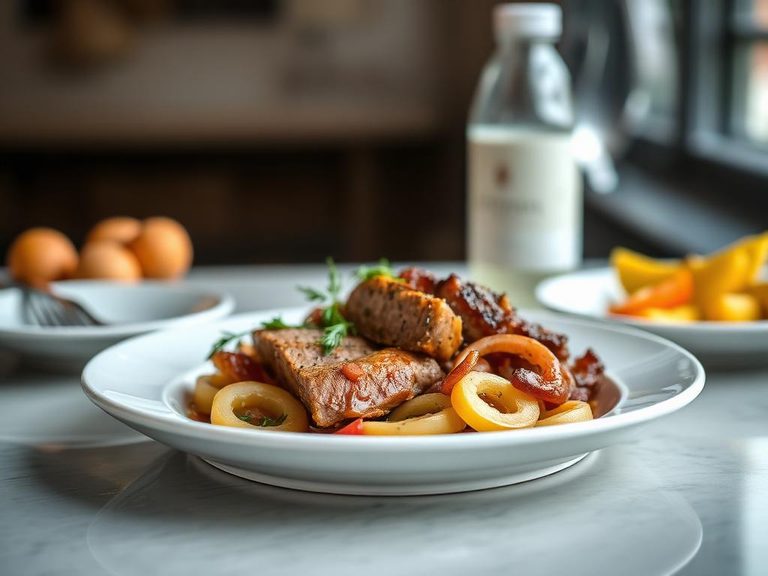
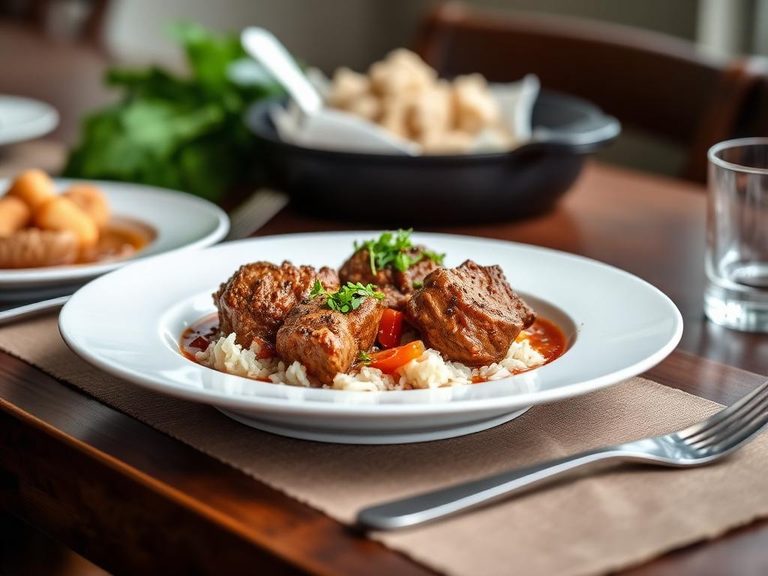
🌍 Where it's eaten
💡 Did you know?
A lamb shank is a working muscle, so it's packed with collagen that converts to gelatin during cooking, which is why a perfectly braised shank gives the sauce a rich, sticky, lip-smacking quality.
Full nutrition (USDA data · scales with serving)
| Water | 67.0 g |
| Energy | 201 kcal |
| Energy | 841 kj |
| Protein | 18.9 g |
| Total lipid (fat) | 13.4 g |
| Ash | 0.95 g |
| Carbohydrate, by difference | 0.00 g |
| Fiber, total dietary | 0.00 g |
| Calcium, Ca | 11.0 mg |
| Iron, Fe | 1.7 mg |
| Magnesium, Mg | 22.0 mg |
| Phosphorus, P | 170 mg |
| Potassium, K | 214 mg |
| Sodium, Na | 72.0 mg |
| Zinc, Zn | 5.2 mg |
| Copper, Cu | 0.10 mg |
| Manganese, Mn | 0.02 mg |
| Selenium, Se | 19.9 ug |
| Vitamin C, total ascorbic acid | 0.00 mg |
| Thiamin | 0.10 mg |
| Riboflavin | 0.19 mg |
| Niacin | 5.5 mg |
| Pantothenic acid | 0.69 mg |
| Vitamin B-6 | 0.15 mg |
| Folate, total | 19.0 ug |
| Folic acid | 0.00 ug |
| Folate, food | 19.0 ug |
| Folate, DFE | 19.0 ug |
| Vitamin B-12 | 2.3 ug |
| Vitamin A, RAE | 0.00 ug |
| Retinol | 0.00 ug |
| Vitamin A, IU | 0.00 iu |
Fat & fatty acid profile (per 100g)
| Fatty acids, total saturated | 5.8 g |
| SFA 10:0 | 0.03 g |
| SFA 12:0 | 0.06 g |
| SFA 14:0 | 0.53 g |
| SFA 16:0 | 2.9 g |
| SFA 18:0 | 1.8 g |
| Fatty acids, total monounsaturated | 5.5 g |
| MUFA 16:1 | 0.39 g |
| MUFA 18:1 | 4.9 g |
| MUFA 20:1 | 0.00 g |
| Fatty acids, total polyunsaturated | 1.1 g |
| PUFA 18:2 | 0.77 g |
| PUFA 18:3 | 0.24 g |
| PUFA 20:4 | 0.04 g |
| Cholesterol | 72.0 mg |
Amino acid profile (per 100g)
| Tryptophan | 0.22 g |
| Threonine | 0.81 g |
| Isoleucine | 0.91 g |
| Leucine | 1.5 g |
| Lysine | 1.7 g |
| Methionine | 0.48 g |
| Cystine | 0.23 g |
| Phenylalanine | 0.77 g |
| Tyrosine | 0.64 g |
| Valine | 1.0 g |
| Arginine | 1.1 g |
| Histidine | 0.60 g |
| Alanine | 1.1 g |
| Aspartic acid | 1.7 g |
| Glutamic acid | 2.7 g |
| Glycine | 0.92 g |
| Proline | 0.79 g |
| Serine | 0.70 g |
FAQ
What's the best way to cook a lamb shank?
Braising is ideal. Sear the shank, then simmer it slowly in liquid (like stock, wine, or tomatoes) at a low temperature (around 325°F / 160°C) for 2-3 hours until the meat is fork-tender and pulls away from the bone.
Is lamb shank fatty?
Yes, it's a relatively fatty cut, with both intramuscular fat and a thick external fat cap. The fat contributes greatly to flavor and moisture during cooking but can be trimmed or skimmed to reduce final fat content.
How do I know when it's done?
It's done when the meat is very tender and can be easily shredded with a fork. The internal temperature should reach at least 145°F (63°C) for safety, but for tenderness, you're aiming for the collagen to break down, which happens at higher temperatures over time.
Nutrient density (calculated · NRF9.3)
Nutrient Rich Foods index: beneficial nutrients (protein, fiber, vitamins, minerals) minus saturated fat, added sugar & sodium, per 100 kcal.
NRF9.3 index — Fulgoni, Keast & Drewnowski, 2009. Computed from USDA nutrients.
Weight-loss friendliness (composite index)
Energy density 2.01 kcal/g · 38% calories from protein · 0.0 g fiber · 0.0 g sugar per 100 g.
Composite of energy density (Rolls et al., 1999), protein & fiber satiety, minus sugar. A calculated heuristic — ranks satiety-per-calorie, not a clinical measure.
Dietary load (calculated from USDA values)
Potential renal acid load. Positive = acid-forming, negative = alkaline-forming.
Sodium-to-potassium ratio: 0.34 (lower is better — aim for ≤ 1)
Sodium:potassium per WHO potassium guidance. Computed from USDA nutrients.