

Grapefruit juice, pink, raw
Whole food · Fruits and Fruit Juices
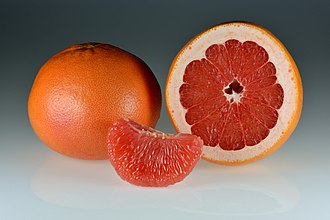
Photo: Wikipedia
Pink grapefruit juice is a vibrant, ruby-hued liquid pressed from the pink-fleshed variety of the citrus fruit. It offers a distinctive flavor profile that is simultaneously tart, tangy, and subtly sweet, with a refreshing, thin texture. Nutritionally, it's a low-calorie source of vitamin C and provides a quick, natural energy boost from its carbohydrate content.
Calorie split: 5% protein · 93% carbs · 2% fat
↓ Full nutrition💚 Why it's loved
People love its bold, invigorating flavor that cuts through sweetness and pairs beautifully with both savory and sweet dishes. It's a cultural staple in breakfasts and brunches, symbolizing a fresh, sunny start to the day.
⚠️ Watch-outs & how to enjoy it better
Its high acidity can erode tooth enamel over time and may trigger heartburn or acid reflux in sensitive individuals. The natural sugars, while not added, can still cause a rapid blood-sugar rise if consumed alone. To counteract, drink it through a straw, rinse your mouth with water afterward, and consider pairing it with a source of protein or fat (like eggs or yogurt) to slow sugar absorption.
Key benefits
- Excellent source of immune-supporting vitamin C.
- Low in calories, making it a light beverage option.
- Provides natural electrolytes like potassium.
- Contains antioxidants like lycopene responsible for its pink color.
- May aid hydration due to high water content.
🍽️ Popular dishes

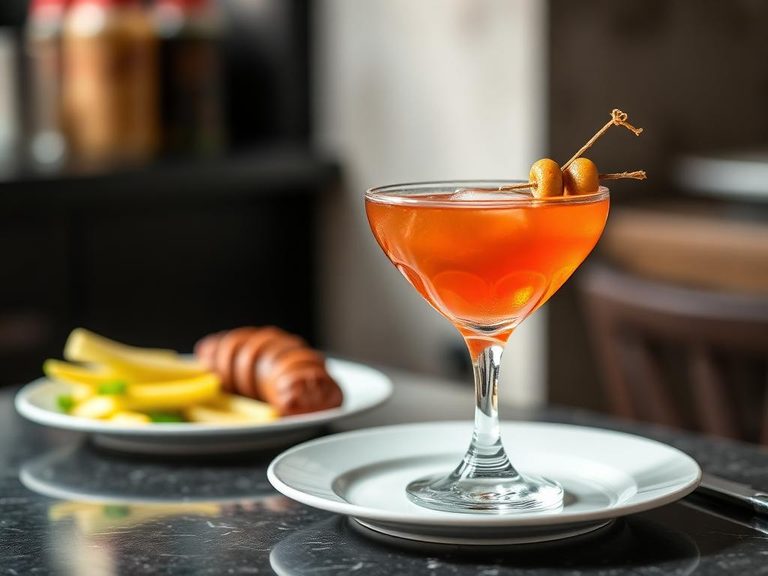
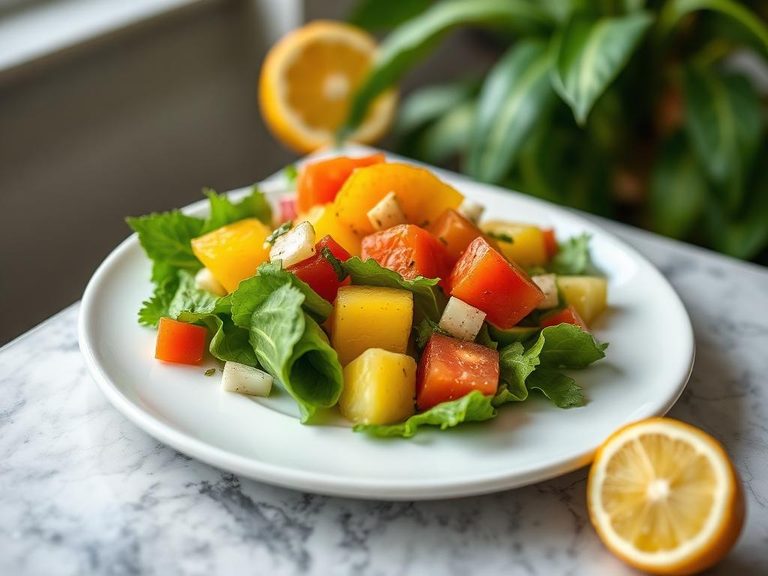
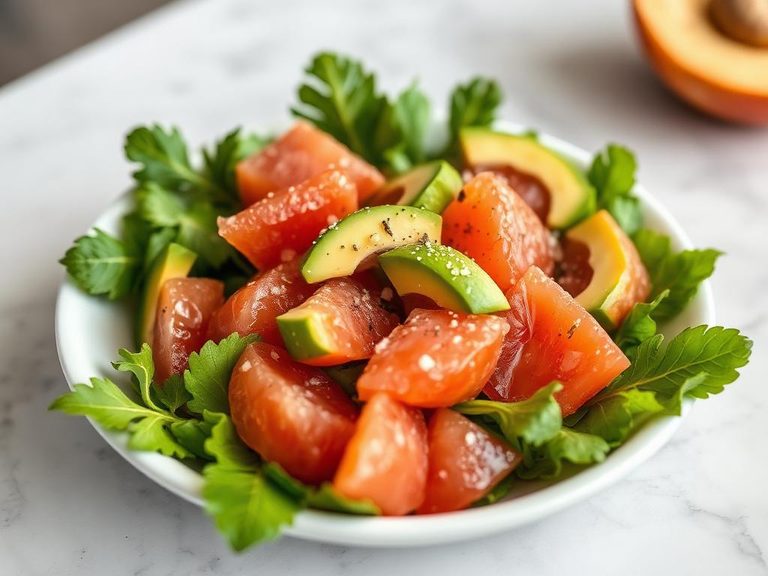

🌍 Where it's eaten
💡 Did you know?
The pink color comes from lycopene, the same antioxidant that gives tomatoes and watermelons their red hue.
Full nutrition (USDA data · scales with serving)
| Water | 90.0 g |
| Energy | 39.0 kcal |
| Energy | 163 kj |
| Protein | 0.50 g |
| Total lipid (fat) | 0.10 g |
| Ash | 0.20 g |
| Carbohydrate, by difference | 9.2 g |
| Calcium, Ca | 9.0 mg |
| Iron, Fe | 0.20 mg |
| Magnesium, Mg | 12.0 mg |
| Phosphorus, P | 15.0 mg |
| Potassium, K | 162 mg |
| Sodium, Na | 1.0 mg |
| Zinc, Zn | 0.05 mg |
| Copper, Cu | 0.03 mg |
| Manganese, Mn | 0.02 mg |
| Vitamin C, total ascorbic acid | 38.0 mg |
| Thiamin | 0.04 mg |
| Riboflavin | 0.02 mg |
| Niacin | 0.20 mg |
| Pantothenic acid | 0.19 mg |
| Vitamin B-6 | 0.04 mg |
| Folate, total | 10.0 ug |
| Folic acid | 0.00 ug |
| Folate, food | 10.0 ug |
| Folate, DFE | 10.0 ug |
| Vitamin B-12 | 0.00 ug |
| Vitamin A, RAE | 22.0 ug |
| Retinol | 0.00 ug |
| Vitamin A, IU | 440 iu |
| Vitamin D (D2 + D3), International Units | 0.00 iu |
| Vitamin D (D2 + D3) | 0.00 ug |
Fat & fatty acid profile (per 100g)
| Fatty acids, total saturated | 0.01 g |
| SFA 16:0 | 0.01 g |
| SFA 18:0 | 0.00 g |
| Fatty acids, total monounsaturated | 0.01 g |
| MUFA 16:1 | 0.00 g |
| MUFA 18:1 | 0.01 g |
| Fatty acids, total polyunsaturated | 0.02 g |
| PUFA 18:2 | 0.02 g |
| PUFA 18:3 | 0.01 g |
| Fatty acids, total trans | 0.00 g |
| Cholesterol | 0.00 mg |
Amino acid profile (per 100g)
Estimated from Grapefruit, sections, canned, juice pack, solids and liquids — USDA does not publish this profile for Grapefruit juice.
| Tryptophan | 0.01 g |
| Threonine | 0.01 g |
| Isoleucine | 0.01 g |
| Leucine | 0.01 g |
| Lysine | 0.02 g |
| Methionine | 0.01 g |
| Cystine | 0.01 g |
| Phenylalanine | 0.04 g |
| Tyrosine | 0.01 g |
| Valine | 0.01 g |
| Arginine | 0.08 g |
| Histidine | 0.01 g |
| Alanine | 0.02 g |
| Aspartic acid | 0.13 g |
| Glutamic acid | 0.18 g |
| Glycine | 0.01 g |
| Proline | 0.06 g |
| Serine | 0.03 g |
FAQ
Is pink grapefruit juice the same as red grapefruit juice?
They are very similar and often used interchangeably. 'Pink' and 'red' refer to the flesh color of the grapefruit variety used, with red varieties typically being slightly sweeter and deeper in color.
Why is it often recommended to avoid grapefruit juice with certain medications?
Grapefruit contains compounds called furanocoumarins that can interfere with enzymes in your gut, potentially increasing the concentration of many common medications in your bloodstream to dangerous levels. Always consult a doctor or pharmacist.
Does the juice have the same fiber as the whole fruit?
No. Juicing removes most of the pulp and fiber, which is why whole fruit is generally more filling and has a lower glycemic impact than its juice.
Nutrient density (calculated · NRF9.3)
Nutrient Rich Foods index: beneficial nutrients (protein, fiber, vitamins, minerals) minus saturated fat, added sugar & sodium, per 100 kcal.
NRF9.3 index — Fulgoni, Keast & Drewnowski, 2009. Computed from USDA nutrients.
Weight-loss friendliness (composite index)
Energy density 0.39 kcal/g · 5% calories from protein · 0.0 g fiber · 0.0 g sugar per 100 g.
Composite of energy density (Rolls et al., 1999), protein & fiber satiety, minus sugar. A calculated heuristic — ranks satiety-per-calorie, not a clinical measure.
Dietary load (calculated from USDA values)
Potential renal acid load. Positive = acid-forming, negative = alkaline-forming.
Sodium-to-potassium ratio: 0.01 (lower is better — aim for ≤ 1)
Sodium:potassium per WHO potassium guidance. Computed from USDA nutrients.