

Fish, tuna salad
Whole food · Finfish and Shellfish Products

Photo: Wikipedia
A classic pantry staple, tuna salad is a savory, creamy blend of flaked canned tuna, mayonnaise, and often crisp celery or onion. It offers a satisfying, protein-rich texture that's both flaky and moist, making it a quick, nutrient-dense meal option. With a balanced profile of protein and healthy fats, it's a go-to for those seeking a filling, low-carb dish.
Calorie split: 35% protein · 20% carbs · 45% fat
↓ Full nutrition💚 Why it's loved
People love tuna salad for its convenient, no-cook preparation and its ability to be customized with endless mix-ins like pickles, herbs, or avocado. It's a nostalgic comfort food often associated with picnics, sandwiches, and quick lunches, offering a satisfying blend of savory and creamy flavors.
⚠️ Watch-outs & how to enjoy it better
Canned tuna can be high in sodium, and some varieties may contain trace mercury, which is a concern for pregnant women or young children. To counteract sodium, opt for low-sodium tuna and rinse it, and pair with potassium-rich foods like leafy greens. For mercury, choose light tuna over albacore and limit portions to 2-3 servings per week.
Key benefits
- High in lean protein for muscle maintenance and satiety
- Rich in omega-3 fatty acids for heart and brain health
- Quick and versatile meal prep option
- Low in carbohydrates, suitable for low-carb diets
- Good source of selenium and B vitamins
🍽️ Popular dishes
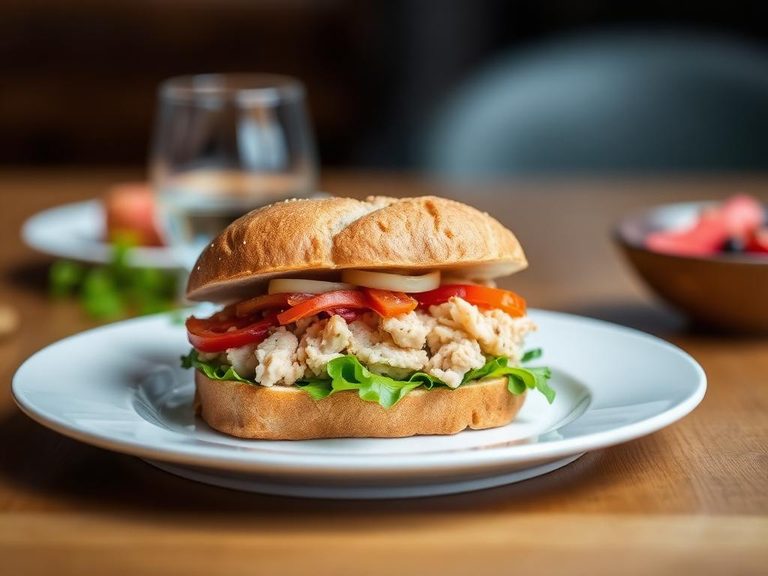

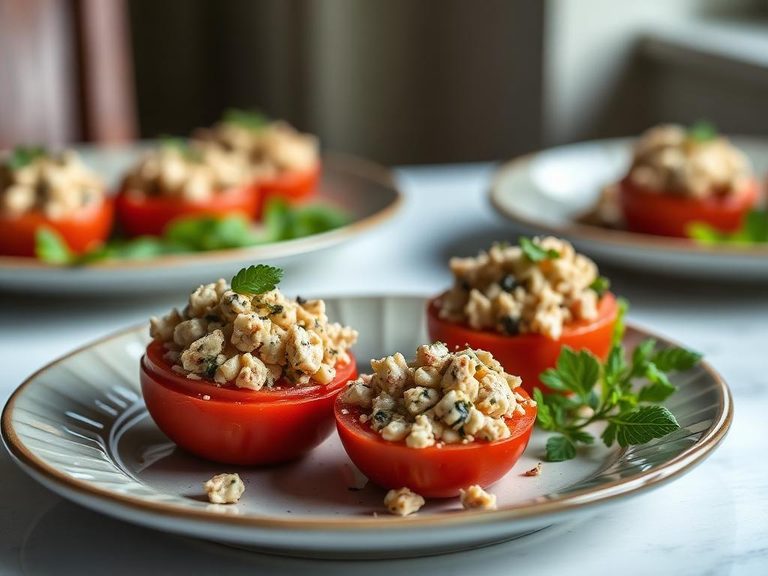
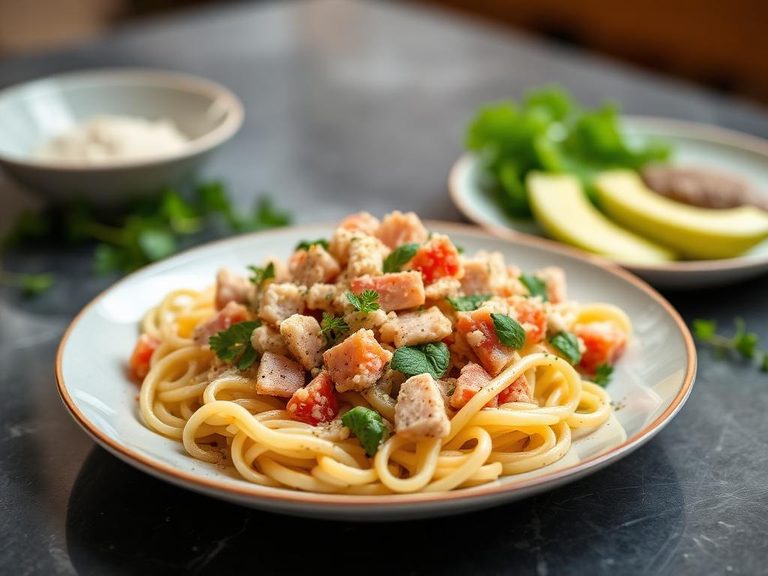
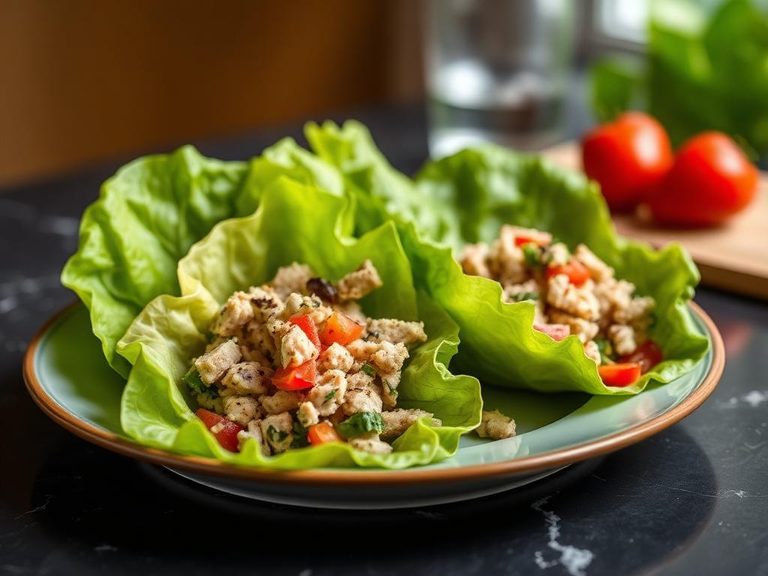
🌍 Where it's eaten
💡 Did you know?
Canned tuna became a staple during World War II, as it was a non-perishable, protein-rich food for soldiers, leading to its widespread popularity in post-war American households.
Full nutrition (USDA data · scales with serving)
| Water | 63.2 g |
| Energy | 187 kcal |
| Energy | 782 kj |
| Protein | 16.0 g |
| Total lipid (fat) | 9.3 g |
| Ash | 2.1 g |
| Carbohydrate, by difference | 9.4 g |
| Fiber, total dietary | 0.00 g |
| Calcium, Ca | 17.0 mg |
| Iron, Fe | 1.0 mg |
| Magnesium, Mg | 19.0 mg |
| Phosphorus, P | 178 mg |
| Potassium, K | 178 mg |
| Sodium, Na | 402 mg |
| Zinc, Zn | 0.56 mg |
| Copper, Cu | 0.14 mg |
| Manganese, Mn | 0.04 mg |
| Selenium, Se | 41.2 ug |
| Vitamin C, total ascorbic acid | 2.2 mg |
| Thiamin | 0.03 mg |
| Riboflavin | 0.07 mg |
| Niacin | 6.7 mg |
| Pantothenic acid | 0.26 mg |
| Vitamin B-6 | 0.08 mg |
| Folate, total | 8.0 ug |
| Folic acid | 0.00 ug |
| Folate, food | 8.0 ug |
| Folate, DFE | 8.0 ug |
| Vitamin B-12 | 1.2 ug |
| Vitamin A, RAE | 24.0 ug |
| Retinol | 22.0 ug |
| Vitamin A, IU | 97.0 iu |
Fat & fatty acid profile (per 100g)
| Fatty acids, total saturated | 1.5 g |
| SFA 14:0 | 0.01 g |
| SFA 16:0 | 1.3 g |
| SFA 18:0 | 0.25 g |
| Fatty acids, total monounsaturated | 2.9 g |
| MUFA 16:1 | 0.04 g |
| MUFA 18:1 | 2.8 g |
| MUFA 20:1 | 0.01 g |
| Fatty acids, total polyunsaturated | 4.1 g |
| PUFA 18:2 | 3.7 g |
| PUFA 18:3 | 0.33 g |
| PUFA 20:5 n-3 (EPA) | 0.01 g |
| PUFA 22:6 n-3 (DHA) | 0.06 g |
| Cholesterol | 13.0 mg |
Amino acid profile (per 100g)
| Tryptophan | 0.18 g |
| Threonine | 0.70 g |
| Isoleucine | 0.74 g |
| Leucine | 1.3 g |
| Lysine | 1.5 g |
| Methionine | 0.47 g |
| Cystine | 0.17 g |
| Phenylalanine | 0.63 g |
| Tyrosine | 0.54 g |
| Valine | 0.82 g |
| Arginine | 0.97 g |
| Histidine | 0.47 g |
| Alanine | 0.96 g |
| Aspartic acid | 1.6 g |
| Glutamic acid | 2.4 g |
| Glycine | 0.77 g |
| Proline | 0.56 g |
| Serine | 0.66 g |
FAQ
Is tuna salad healthy?
Yes, tuna salad is a healthy option due to its high protein and omega-3 content, but it can be high in sodium and fat from mayonnaise. Opt for low-sodium tuna and use Greek yogurt or avocado as a healthier binder.
How long does tuna salad last in the fridge?
Tuna salad can be stored in an airtight container in the refrigerator for up to 3 days. It's best consumed fresh to maintain flavor and texture.
Can tuna salad be frozen?
Freezing tuna salad is not recommended as the texture may become watery and the mayonnaise can separate. It's best enjoyed fresh or refrigerated.
Nutrient density (calculated · NRF9.3)
Nutrient Rich Foods index: beneficial nutrients (protein, fiber, vitamins, minerals) minus saturated fat, added sugar & sodium, per 100 kcal.
NRF9.3 index — Fulgoni, Keast & Drewnowski, 2009. Computed from USDA nutrients.
Weight-loss friendliness (composite index)
Energy density 1.87 kcal/g · 34% calories from protein · 0.0 g fiber · 0.0 g sugar per 100 g.
Composite of energy density (Rolls et al., 1999), protein & fiber satiety, minus sugar. A calculated heuristic — ranks satiety-per-calorie, not a clinical measure.
Dietary load (calculated from USDA values)
Potential renal acid load. Positive = acid-forming, negative = alkaline-forming.
Sodium-to-potassium ratio: 2.26 (lower is better — aim for ≤ 1)
Sodium:potassium per WHO potassium guidance. Computed from USDA nutrients.