

Dandelion greens, raw
Whole food · Vegetables and Vegetable Products

Photo: Wikipedia
Dandelion greens are the young, tender leaves of the common dandelion plant, offering a bold, bitter flavor with a slightly peppery, earthy finish and a tender, leafy texture. Nutritionally, they are a powerhouse, exceptionally rich in vitamins A and K, and provide a good amount of vitamin C and iron for very few calories.
Calorie split: 20% protein · 68% carbs · 12% fat
↓ Full nutrition💚 Why it's loved
People love dandelion greens for their assertive, complex bitterness that cuts through rich dishes, and their versatility in both raw salads and cooked preparations. They hold deep cultural significance in many cuisines, symbolizing resilience and foraged, seasonal eating.
⚠️ Watch-outs & how to enjoy it better
The strong bitterness can be off-putting to some palates. They contain oxalates, which can be a concern for individuals prone to kidney stones; pairing with calcium-rich foods like cheese or yogurt can help bind oxalates. They are also a known allergen for those sensitive to plants in the Asteraceae family (like ragweed).
Key benefits
- Excellent source of vitamin K for bone health.
- High in antioxidants like beta-carotene and polyphenols.
- Provides prebiotic fiber to support gut health.
- Very low in calories and carbohydrates.
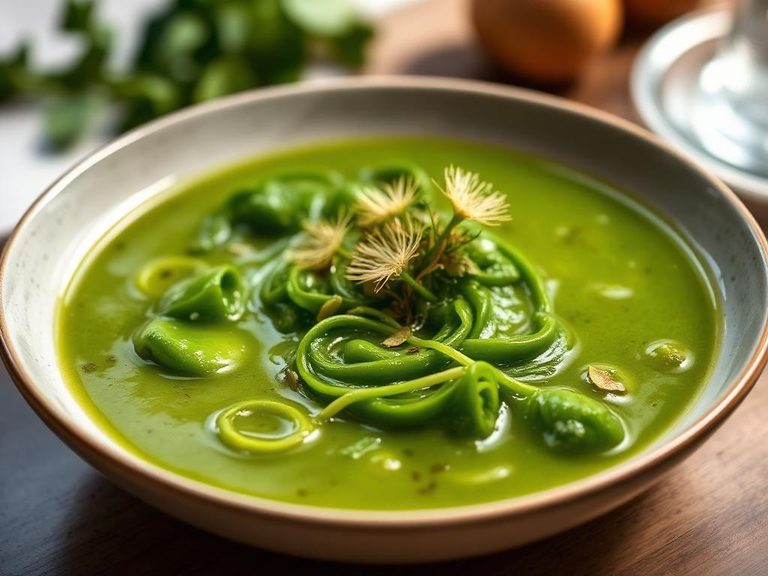
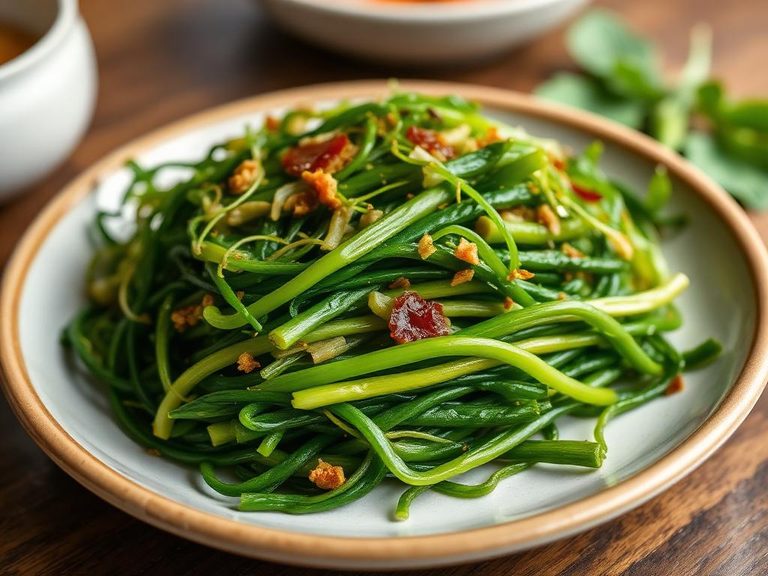
🍽️ Popular dishes
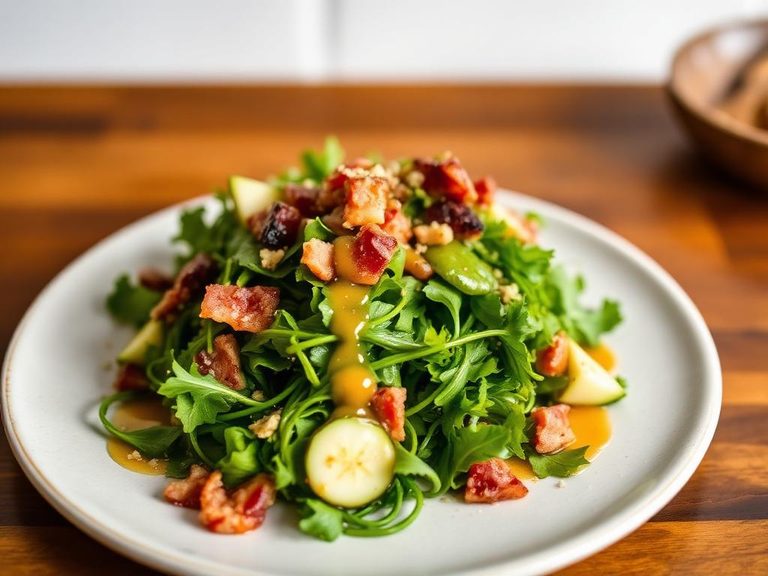
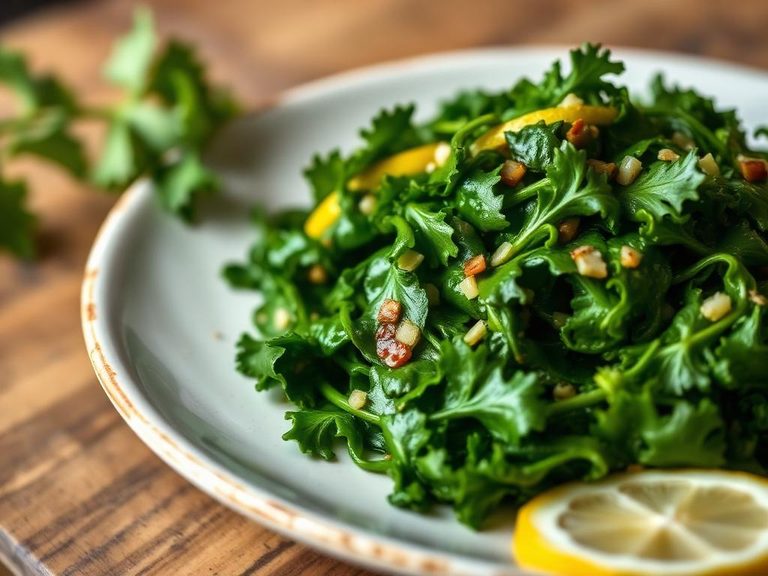
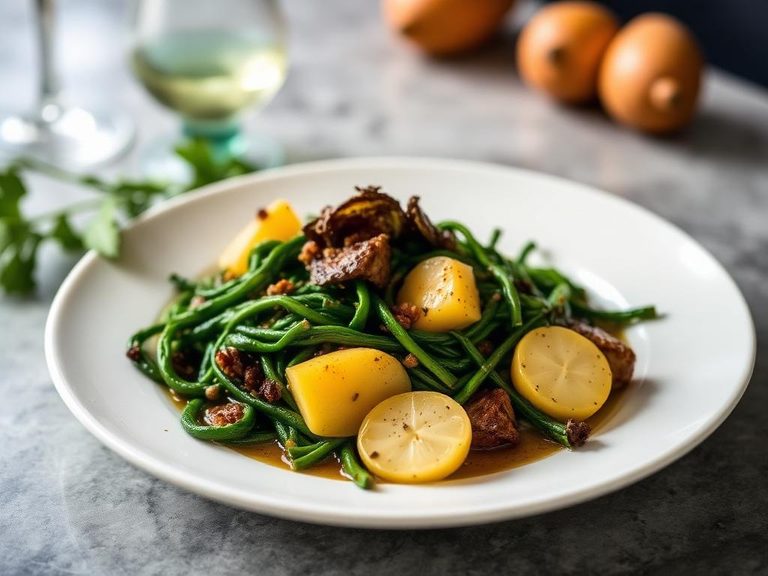
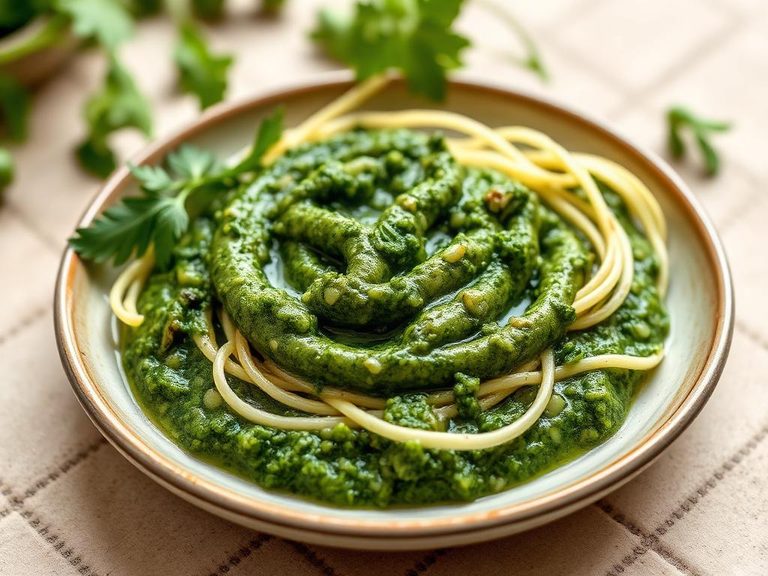
🌍 Where it's eaten
💡 Did you know?
During World War II, the British government encouraged citizens to forage for dandelion greens in public parks to supplement rations, as the leaves are a surprisingly good source of vitamin C.
Full nutrition (USDA data · scales with serving)
| Water | 85.6 g |
| Energy | 45.0 kcal |
| Energy | 188 kj |
| Protein | 2.7 g |
| Total lipid (fat) | 0.70 g |
| Ash | 1.8 g |
| Carbohydrate, by difference | 9.2 g |
| Fiber, total dietary | 3.5 g |
| Total Sugars | 0.71 g |
| Calcium, Ca | 187 mg |
| Iron, Fe | 3.1 mg |
| Magnesium, Mg | 36.0 mg |
| Phosphorus, P | 66.0 mg |
| Potassium, K | 397 mg |
| Sodium, Na | 76.0 mg |
| Zinc, Zn | 0.41 mg |
| Copper, Cu | 0.17 mg |
| Manganese, Mn | 0.34 mg |
| Selenium, Se | 0.50 ug |
| Vitamin C, total ascorbic acid | 35.0 mg |
| Thiamin | 0.19 mg |
| Riboflavin | 0.26 mg |
| Niacin | 0.81 mg |
| Pantothenic acid | 0.08 mg |
| Vitamin B-6 | 0.25 mg |
| Folate, total | 27.0 ug |
| Folic acid | 0.00 ug |
| Folate, food | 27.0 ug |
| Folate, DFE | 27.0 ug |
| Choline, total | 35.3 mg |
| Vitamin B-12 | 0.00 ug |
| Vitamin B-12, added | 0.00 ug |
| Vitamin A, RAE | 508 ug |
| Retinol | 0.00 ug |
| Carotene, beta | 5854 ug |
| Carotene, alpha | 363 ug |
| Cryptoxanthin, beta | 121 ug |
| Vitamin A, IU | 10161 iu |
| Lycopene | 0.00 ug |
| Lutein + zeaxanthin | 13610 ug |
| Vitamin E (alpha-tocopherol) | 3.4 mg |
| Vitamin E, added | 0.00 mg |
| Vitamin D (D2 + D3), International Units | 0.00 iu |
| Vitamin D (D2 + D3) | 0.00 ug |
| Vitamin K (phylloquinone) | 778 ug |
| Alcohol, ethyl | 0.00 g |
| Caffeine | 0.00 mg |
| Theobromine | 0.00 mg |
Fat & fatty acid profile (per 100g)
| Fatty acids, total saturated | 0.17 g |
| SFA 4:0 | 0.00 g |
| SFA 6:0 | 0.00 g |
| SFA 8:0 | 0.00 g |
| SFA 10:0 | 0.00 g |
| SFA 12:0 | 0.00 g |
| SFA 14:0 | 0.01 g |
| SFA 16:0 | 0.14 g |
| SFA 18:0 | 0.01 g |
| Fatty acids, total monounsaturated | 0.01 g |
| MUFA 16:1 | 0.00 g |
| MUFA 18:1 | 0.01 g |
| MUFA 20:1 | 0.00 g |
| MUFA 22:1 | 0.00 g |
| Fatty acids, total polyunsaturated | 0.31 g |
| PUFA 18:2 | 0.26 g |
| PUFA 18:3 | 0.04 g |
| PUFA 18:4 | 0.00 g |
| PUFA 20:4 | 0.00 g |
| PUFA 20:5 n-3 (EPA) | 0.00 g |
| PUFA 22:5 n-3 (DPA) | 0.00 g |
| PUFA 22:6 n-3 (DHA) | 0.00 g |
| Fatty acids, total trans | 0.00 g |
| Cholesterol | 0.00 mg |
FAQ
How do I reduce the bitterness of raw dandelion greens?
Soak the leaves in ice water for 30 minutes before using. This can help mellow the sharp flavor. Also, choose very young, small leaves, which are less bitter than mature ones.
Can I cook dandelion greens like spinach?
Yes, cooking tames the bitterness significantly. Sauté them quickly with garlic and olive oil, or braise them slowly with broth and aromatics until tender.
Are dandelion greens the same as the weeds in my lawn?
They are the same plant (Taraxacum officinale), but for culinary use, it's best to harvest young leaves from areas you know are free of pesticides, herbicides, and pollutants.
Nutrient density (calculated · NRF9.3)
Nutrient Rich Foods index: beneficial nutrients (protein, fiber, vitamins, minerals) minus saturated fat, added sugar & sodium, per 100 kcal.
NRF9.3 index — Fulgoni, Keast & Drewnowski, 2009. Computed from USDA nutrients.
Weight-loss friendliness (composite index)
Energy density 0.45 kcal/g · 24% calories from protein · 3.5 g fiber · 0.7 g sugar per 100 g.
Composite of energy density (Rolls et al., 1999), protein & fiber satiety, minus sugar. A calculated heuristic — ranks satiety-per-calorie, not a clinical measure.
Dietary load (calculated from USDA values)
Potential renal acid load. Positive = acid-forming, negative = alkaline-forming.
Sodium-to-potassium ratio: 0.19 (lower is better — aim for ≤ 1)
Sodium:potassium per WHO potassium guidance. Computed from USDA nutrients.