

Cereals ready-to-eat, QUAKER, QUAKER CRUNCHY BRAN
Whole food · Breakfast Cereals

Photo: Wikipedia
QUAKER CRUNCHY BRAN is a ready-to-eat cereal made from toasted bran flakes, offering a satisfyingly crisp texture and a subtly sweet, nutty flavor. It's a fiber powerhouse, delivering over 15 grams of fiber per 100 grams, which is a standout feature for digestive health. The cereal balances its high carbohydrate content with a notable amount of sugar, making it a quick-energy breakfast option.
Calorie split: 6% protein · 84% carbs · 9% fat
↓ Full nutrition💚 Why it's loved
People love it for its satisfying, crunchy texture that holds up well in milk without getting soggy too quickly. Its mild, toasted bran flavor is versatile, pairing equally well with fresh fruit, a drizzle of honey, or simply on its own for a nostalgic, comforting breakfast.
⚠️ Watch-outs & how to enjoy it better
The relatively high sugar content (20.66g per 100g) can lead to a rapid blood-sugar spike, especially if eaten alone. To counteract this, pair it with a source of protein (like Greek yogurt or milk) and healthy fat (like nuts or seeds) to slow digestion. Those watching their sugar intake should be mindful of portion size.
Key benefits
- Excellent source of dietary fiber (15.3g per 100g)
- Provides a quick source of energy from carbohydrates
- Contains a moderate amount of plant-based protein (6.37g per 100g)
- Convenient, no-cook breakfast or snack option
- Typically fortified with essential vitamins and minerals
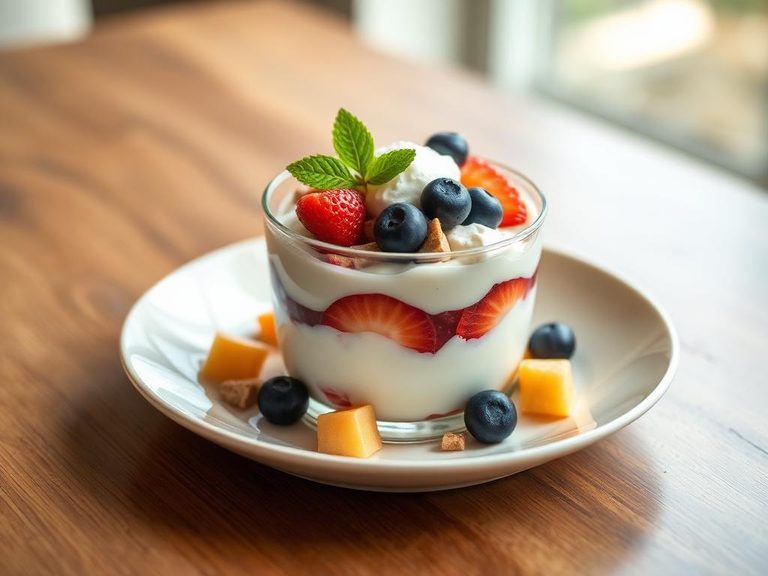
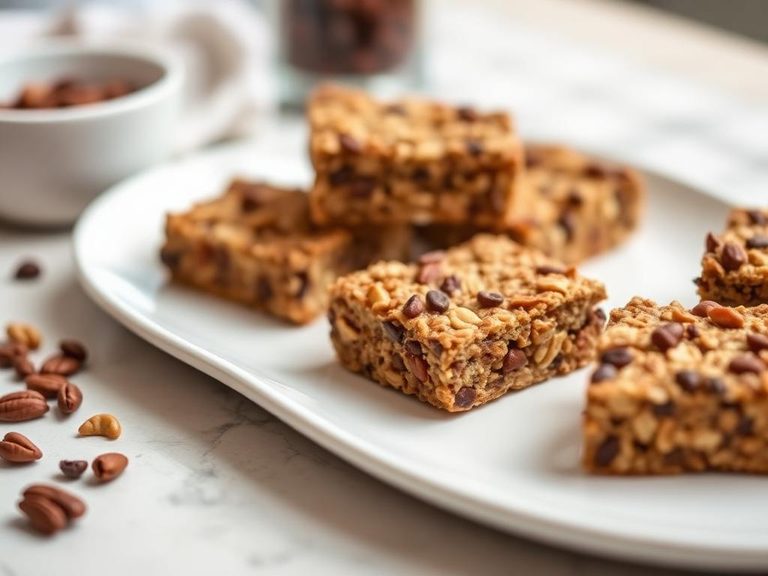
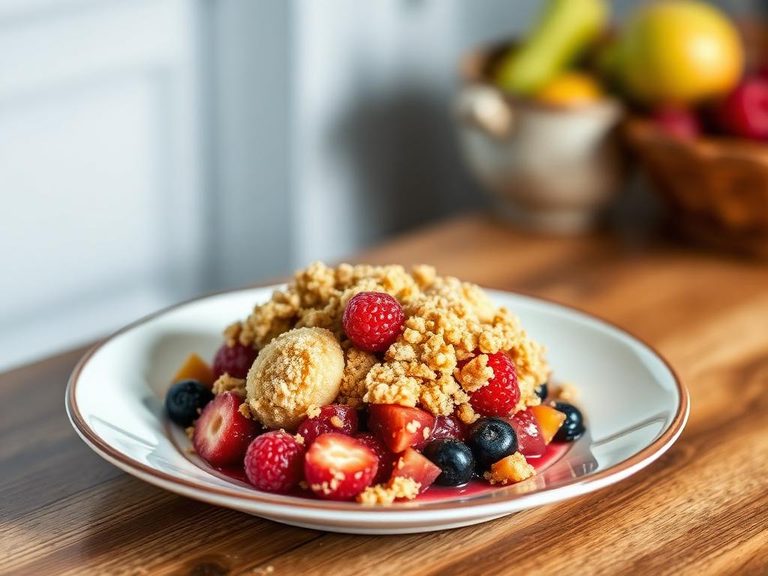
🍽️ Popular dishes
🌍 Where it's eaten
💡 Did you know?
Quaker Oats Company, the maker of this cereal, was one of the first food companies to print nutritional advice and recipes on its product packaging in the early 1900s.
Full nutrition (USDA data · scales with serving)
| Water | 2.5 g |
| Energy | 331 kcal |
| Energy | 1385 kj |
| Protein | 6.4 g |
| Total lipid (fat) | 4.1 g |
| Ash | 3.4 g |
| Carbohydrate, by difference | 83.7 g |
| Fiber, total dietary | 15.3 g |
| Total Sugars | 20.7 g |
| Calcium, Ca | 71.0 mg |
| Iron, Fe | 31.0 mg |
| Magnesium, Mg | 61.0 mg |
| Phosphorus, P | 186 mg |
| Potassium, K | 239 mg |
| Sodium, Na | 759 mg |
| Zinc, Zn | 15.3 mg |
| Copper, Cu | 0.12 mg |
| Manganese, Mn | 0.36 mg |
| Selenium, Se | 11.1 ug |
| Vitamin C, total ascorbic acid | 0.00 mg |
| Thiamin | 0.51 mg |
| Riboflavin | 1.7 mg |
| Niacin | 20.4 mg |
| Pantothenic acid | 0.27 mg |
| Vitamin B-6 | 2.0 mg |
| Folate, total | 1554 ug |
| Folic acid | 1535 ug |
| Folate, food | 19.0 ug |
| Folate, DFE | 2629 ug |
| Choline, total | 9.5 mg |
| Vitamin B-12 | 0.00 ug |
| Vitamin B-12, added | 0.00 ug |
| Vitamin A, RAE | 8.0 ug |
| Retinol | 0.00 ug |
| Carotene, beta | 70.0 ug |
| Carotene, alpha | 46.0 ug |
| Cryptoxanthin, beta | 0.00 ug |
| Vitamin A, IU | 154 iu |
| Lycopene | 0.00 ug |
| Lutein + zeaxanthin | 1060 ug |
| Vitamin E (alpha-tocopherol) | 0.67 mg |
| Vitamin E, added | 0.00 mg |
| Vitamin D (D2 + D3), International Units | 0.00 iu |
| Vitamin D (D2 + D3) | 0.00 ug |
| Vitamin K (phylloquinone) | 0.30 ug |
| Alcohol, ethyl | 0.00 g |
| Caffeine | 0.00 mg |
| Theobromine | 0.00 mg |
Fat & fatty acid profile (per 100g)
| Fatty acids, total saturated | 2.0 g |
| SFA 4:0 | 0.00 g |
| SFA 6:0 | 0.01 g |
| SFA 8:0 | 0.16 g |
| SFA 10:0 | 0.13 g |
| SFA 12:0 | 0.95 g |
| SFA 14:0 | 0.36 g |
| SFA 16:0 | 0.33 g |
| SFA 18:0 | 0.08 g |
| Fatty acids, total monounsaturated | 0.78 g |
| MUFA 16:1 | 0.00 g |
| MUFA 18:1 | 0.77 g |
| MUFA 20:1 | 0.00 g |
| MUFA 22:1 | 0.00 g |
| Fatty acids, total polyunsaturated | 1.2 g |
| PUFA 18:2 | 1.2 g |
| PUFA 18:3 | 0.04 g |
| PUFA 18:4 | 0.00 g |
| PUFA 20:4 | 0.00 g |
| PUFA 20:5 n-3 (EPA) | 0.00 g |
| PUFA 22:5 n-3 (DPA) | 0.00 g |
| PUFA 22:6 n-3 (DHA) | 0.00 g |
| Fatty acids, total trans | 0.01 g |
| Cholesterol | 0.00 mg |
FAQ
Is this cereal gluten-free?
No. Bran cereals like this typically contain wheat bran, which contains gluten. Individuals with celiac disease or gluten sensitivity should avoid it.
How does it compare to regular bran flakes?
QUAKER CRUNCHY BRAN is specifically marketed for its extra-crunchy texture. Nutritionally, it is similar to other bran flakes, being high in fiber and often fortified, but may have a slightly different sugar and fat profile.
Can I eat this on a low-carb diet?
It is not suitable for a low-carb diet. With over 83g of carbohydrates per 100g, it is a high-carbohydrate food.
Nutrient density (calculated · NRF9.3)
Nutrient Rich Foods index: beneficial nutrients (protein, fiber, vitamins, minerals) minus saturated fat, added sugar & sodium, per 100 kcal.
NRF9.3 index — Fulgoni, Keast & Drewnowski, 2009. Computed from USDA nutrients.
Weight-loss friendliness (composite index)
Energy density 3.31 kcal/g · 8% calories from protein · 15.3 g fiber · 20.7 g sugar per 100 g.
Composite of energy density (Rolls et al., 1999), protein & fiber satiety, minus sugar. A calculated heuristic — ranks satiety-per-calorie, not a clinical measure.
Dietary load (calculated from USDA values)
Potential renal acid load. Positive = acid-forming, negative = alkaline-forming.
Sodium-to-potassium ratio: 3.18 (lower is better — aim for ≤ 1)
Sodium:potassium per WHO potassium guidance. Computed from USDA nutrients.