

Cereals ready-to-eat, POST, GRAPE-NUTS Flakes
Whole food · Breakfast Cereals

Photo: Wikipedia
Grape-Nuts Flakes are a crunchy, toasted cereal made from whole wheat and barley malt, delivering a distinctive nutty, slightly sweet, and earthy flavor with a satisfying, coarse texture. Nutritionally, they are a fiber powerhouse, packing over 10g per 100g, and offer a solid protein boost for a cereal. They are a classic American breakfast staple known for their unique, hearty bite.
Calorie split: 9% protein · 82% carbs · 8% fat
↓ Full nutrition💚 Why it's loved
People love Grape-Nuts Flakes for their unmistakable, robust crunch and deep, malty flavor that stands up well to milk without getting soggy. They are a nostalgic comfort food for many and are prized for their versatility, working well in both hot and cold preparations.
⚠️ Watch-outs & how to enjoy it better
The cereal's high carbohydrate and sugar content (15.2g per 100g) can lead to blood-sugar spikes if eaten alone. To counteract this, pair it with a source of protein or healthy fat, like Greek yogurt, nuts, or seeds, and practice portion control by sticking to a single serving. Its dense, crunchy texture can also be a challenge for some.
Key benefits
- Excellent source of dietary fiber (10.2g per 100g)
- Good plant-based protein content (9.4g per 100g)
- Low in fat (3.7g per 100g)
- Provides whole grains from wheat and barley malt
- Fortified with essential vitamins and minerals
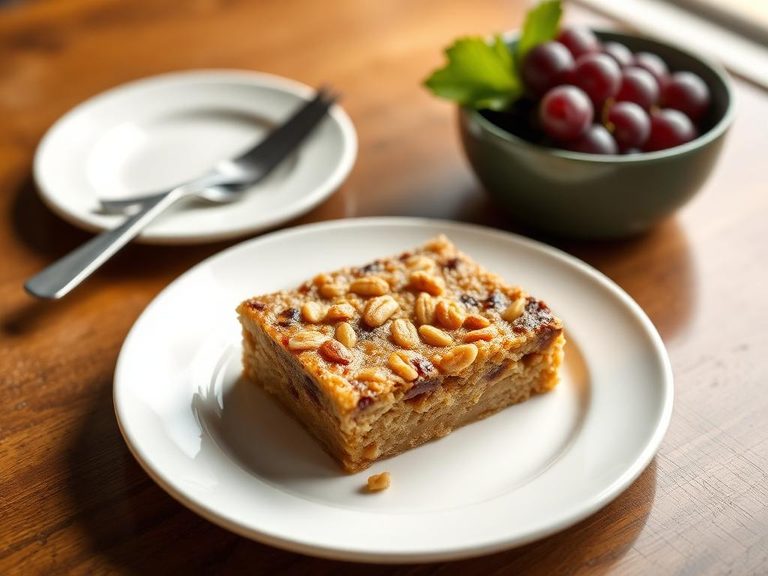
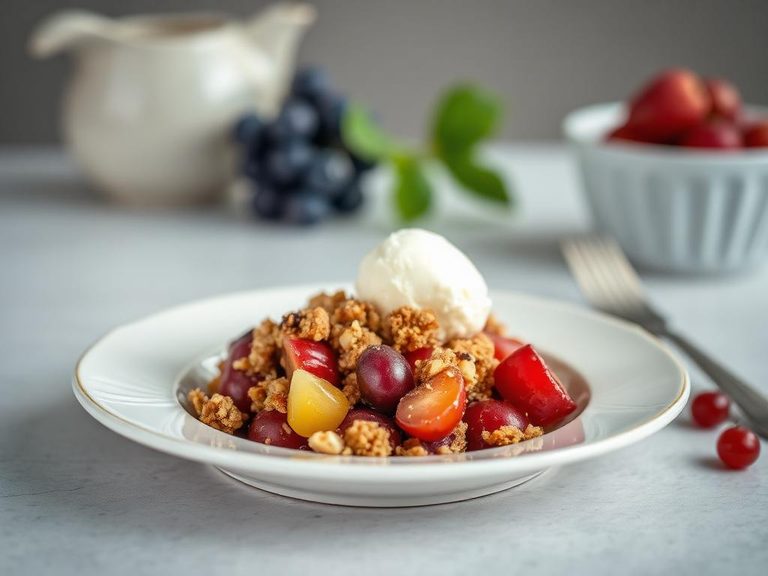
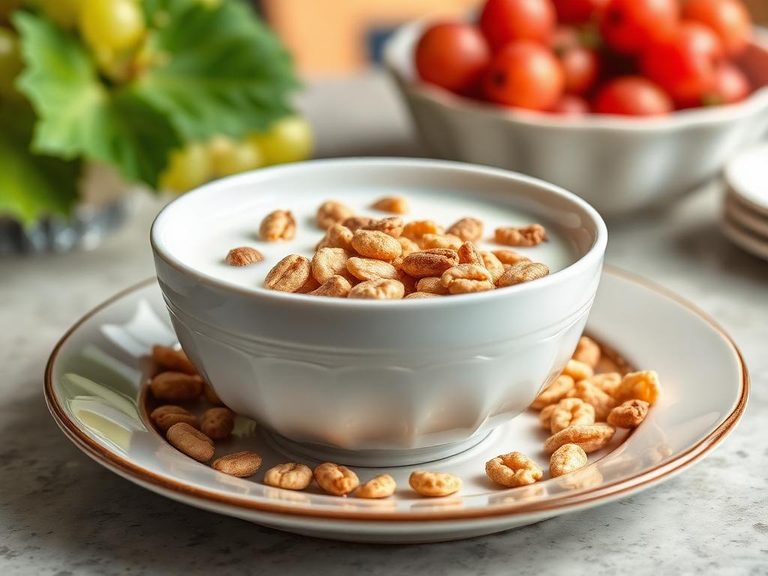
🍽️ Popular dishes


🌍 Where it's eaten
💡 Did you know?
Despite the name, Grape-Nuts contain no grapes or nuts; the name was coined by inventor C.W. Post, who believed the grape sugar formed during the baking process resembled tiny nuts.
Full nutrition (USDA data · scales with serving)
| Water | 3.3 g |
| Energy | 376 kcal |
| Energy | 1573 kj |
| Protein | 9.4 g |
| Total lipid (fat) | 3.7 g |
| Ash | 1.6 g |
| Carbohydrate, by difference | 82.0 g |
| Fiber, total dietary | 10.2 g |
| Total Sugars | 15.2 g |
| Calcium, Ca | 36.0 mg |
| Iron, Fe | 27.9 mg |
| Magnesium, Mg | 101 mg |
| Phosphorus, P | 280 mg |
| Potassium, K | 336 mg |
| Sodium, Na | 470 mg |
| Zinc, Zn | 7.8 mg |
| Copper, Cu | 0.30 mg |
| Selenium, Se | 47.8 ug |
| Vitamin C, total ascorbic acid | 0.00 mg |
| Thiamin | 1.3 mg |
| Riboflavin | 1.5 mg |
| Niacin | 17.2 mg |
| Vitamin B-6 | 1.7 mg |
| Folate, total | 690 ug |
| Folic acid | 671 ug |
| Folate, food | 19.0 ug |
| Folate, DFE | 1159 ug |
| Choline, total | 29.0 mg |
| Vitamin B-12 | 5.2 ug |
| Vitamin B-12, added | 5.2 ug |
| Vitamin A, RAE | 775 ug |
| Retinol | 775 ug |
| Carotene, beta | 3.0 ug |
| Carotene, alpha | 0.00 ug |
| Cryptoxanthin, beta | 0.00 ug |
| Vitamin A, IU | 2586 iu |
| Lycopene | 0.00 ug |
| Lutein + zeaxanthin | 136 ug |
| Vitamin E (alpha-tocopherol) | 0.81 mg |
| Vitamin E, added | 0.00 mg |
| Vitamin D (D2 + D3), International Units | 138 iu |
| Vitamin D (D2 + D3) | 3.4 ug |
| Vitamin D3 (cholecalciferol) | 3.4 ug |
| Vitamin K (phylloquinone) | 2.6 ug |
| Alcohol, ethyl | 0.00 g |
| Caffeine | 0.00 mg |
| Theobromine | 0.00 mg |
Fat & fatty acid profile (per 100g)
| Fatty acids, total saturated | 0.50 g |
| SFA 4:0 | 0.00 g |
| SFA 6:0 | 0.00 g |
| SFA 8:0 | 0.00 g |
| SFA 10:0 | 0.00 g |
| SFA 12:0 | 0.00 g |
| SFA 14:0 | 0.00 g |
| SFA 16:0 | 0.42 g |
| SFA 18:0 | 0.06 g |
| Fatty acids, total monounsaturated | 1.5 g |
| MUFA 16:1 | 0.00 g |
| MUFA 18:1 | 1.5 g |
| MUFA 20:1 | 0.02 g |
| MUFA 22:1 | 0.00 g |
| Fatty acids, total polyunsaturated | 1.5 g |
| PUFA 18:2 | 1.4 g |
| PUFA 18:3 | 0.13 g |
| PUFA 18:4 | 0.00 g |
| PUFA 20:4 | 0.00 g |
| PUFA 20:5 n-3 (EPA) | 0.00 g |
| PUFA 22:5 n-3 (DPA) | 0.00 g |
| PUFA 22:6 n-3 (DHA) | 0.00 g |
| Fatty acids, total trans | 0.00 g |
| Cholesterol | 0.00 mg |
FAQ
Are Grape-Nuts Flakes the same as regular Grape-Nuts?
No. Grape-Nuts Flakes are a lighter, flakier, and crispier version of the original Grape-Nuts, which are much harder, denser, and pebble-like in texture.
Is Grape-Nuts Flakes a healthy cereal?
It is a good source of fiber and protein and is made with whole grains, but it also contains added sugar. It's a healthy choice when paired with protein or fat and consumed in appropriate portions.
Can I eat Grape-Nuts Flakes if I have a gluten intolerance?
No. Grape-Nuts Flakes are made from wheat and barley, which contain gluten and are not suitable for individuals with celiac disease or gluten sensitivity.
Nutrient density (calculated · NRF9.3)
Nutrient Rich Foods index: beneficial nutrients (protein, fiber, vitamins, minerals) minus saturated fat, added sugar & sodium, per 100 kcal.
NRF9.3 index — Fulgoni, Keast & Drewnowski, 2009. Computed from USDA nutrients.
Weight-loss friendliness (composite index)
Energy density 3.76 kcal/g · 10% calories from protein · 10.2 g fiber · 15.2 g sugar per 100 g.
Composite of energy density (Rolls et al., 1999), protein & fiber satiety, minus sugar. A calculated heuristic — ranks satiety-per-calorie, not a clinical measure.
Dietary load (calculated from USDA values)
Potential renal acid load. Positive = acid-forming, negative = alkaline-forming.
Sodium-to-potassium ratio: 1.40 (lower is better — aim for ≤ 1)
Sodium:potassium per WHO potassium guidance. Computed from USDA nutrients.