

Beverages, OCEAN SPRAY, Light Cranberry and Raspberry Flavored Juice
Whole food · Beverages

Photo: Wikipedia
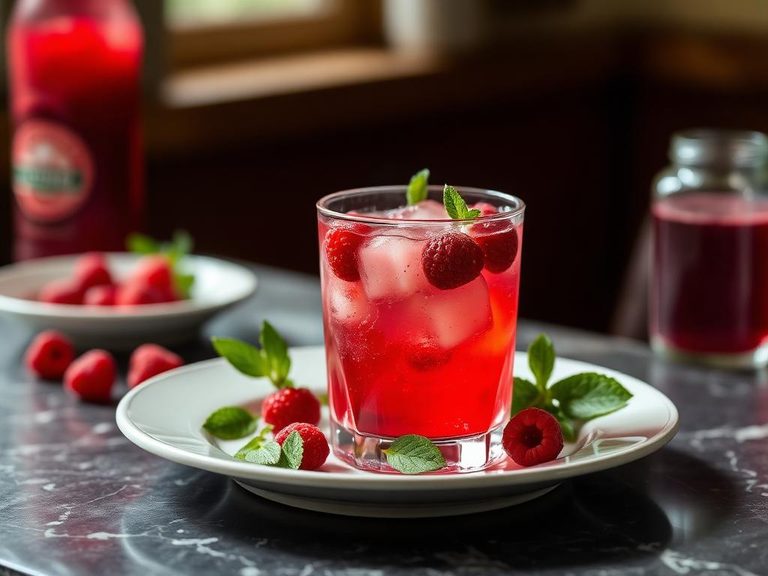
This is a light, refreshing juice drink blending the tartness of cranberry with the sweet, floral notes of raspberry. It has a thin, smooth texture and a vibrant ruby-red color. Nutritionally, it's a low-calorie option with minimal sugar compared to full-strength juices.
Calorie split: 11% protein · 89% carbs · 0% fat
↓ Full nutrition💚 Why it's loved
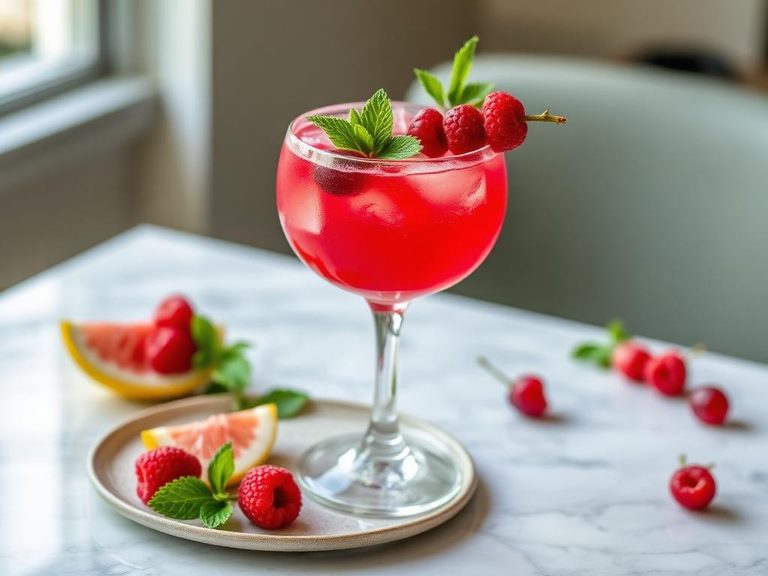
People love it for its crisp, tangy-sweet balance that's more complex than plain cranberry juice. It's a versatile mixer for cocktails and mocktails, and its light profile makes it a popular choice for a hydrating, flavorful non-alcoholic beverage.
⚠️ Watch-outs & how to enjoy it better
The added sugars (5.02g per 100g) can contribute to blood sugar spikes, especially when consumed in large quantities. It is also a processed beverage, lacking the full nutritional profile of whole fruit. To mitigate, pair it with a source of protein or fat (like nuts or yogurt) to slow sugar absorption, and practice portion control by diluting it with sparkling water.
Key benefits
- Low in calories (26 kcal per 100g)
- Source of dietary fiber (0.7g per 100g)
- Contains no fat
- Provides a quick source of carbohydrates for energy
- Offers the characteristic flavors of cranberry and raspberry
🍽️ Popular dishes
🌍 Where it's eaten
💡 Did you know?
Ocean Spray is a cooperative of over 700 cranberry farmers in the US and Canada, and the cranberry is one of only a few commercially grown fruits native to North America.
Full nutrition (USDA data · scales with serving)
| Water | 93.8 g |
| Energy | 26.0 kcal |
| Energy | 109 kj |
| Protein | 0.73 g |
| Total lipid (fat) | 0.00 g |
| Ash | 0.07 g |
| Carbohydrate, by difference | 5.8 g |
| Fiber, total dietary | 0.70 g |
| Total Sugars | 5.0 g |
| Sucrose | 0.20 g |
| Glucose | 1.7 g |
| Fructose | 2.9 g |
| Lactose | 0.00 g |
| Maltose | 0.00 g |
| Galactose | 0.00 g |
| Calcium, Ca | 4.0 mg |
| Iron, Fe | 0.04 mg |
| Magnesium, Mg | 3.0 mg |
| Phosphorus, P | 4.0 mg |
| Potassium, K | 47.0 mg |
| Sodium, Na | 2.0 mg |
| Zinc, Zn | 0.02 mg |
| Copper, Cu | 0.01 mg |
| Manganese, Mn | 0.03 mg |
| Selenium, Se | 0.00 ug |
| Vitamin C, total ascorbic acid | 32.9 mg |
| Thiamin | 0.00 mg |
| Riboflavin | 0.00 mg |
| Niacin | 0.03 mg |
| Vitamin B-6 | 0.00 mg |
| Choline, total | 0.40 mg |
| Vitamin B-12 | 0.00 ug |
| Vitamin B-12, added | 0.00 ug |
| Vitamin A, RAE | 1.0 ug |
| Retinol | 0.00 ug |
| Carotene, beta | 0.00 ug |
| Carotene, alpha | 31.0 ug |
| Cryptoxanthin, beta | 0.00 ug |
| Vitamin A, IU | 26.0 iu |
| Lycopene | 0.00 ug |
| Lutein + zeaxanthin | 19.0 ug |
| Vitamin E (alpha-tocopherol) | 0.00 mg |
| Vitamin E, added | 0.00 mg |
| Vitamin D (D2 + D3), International Units | 0.00 iu |
| Vitamin D (D2 + D3) | 0.00 ug |
| Vitamin K (phylloquinone) | 0.10 ug |
| Alcohol, ethyl | 0.00 g |
| Caffeine | 0.00 mg |
| Theobromine | 0.00 mg |
Fat & fatty acid profile (per 100g)
| Fatty acids, total saturated | 0.00 g |
| Fatty acids, total monounsaturated | 0.00 g |
| Fatty acids, total polyunsaturated | 0.00 g |
| Fatty acids, total trans | 0.00 g |
| Cholesterol | 0.00 mg |
Amino acid profile (per 100g)
Estimated from Beverages, carbonated, tonic water — USDA does not publish this profile for Beverages.
| Tryptophan | 0.00 g |
| Threonine | 0.00 g |
| Isoleucine | 0.00 g |
| Leucine | 0.00 g |
| Lysine | 0.00 g |
| Methionine | 0.00 g |
| Cystine | 0.00 g |
| Phenylalanine | 0.00 g |
| Tyrosine | 0.00 g |
| Valine | 0.00 g |
| Arginine | 0.00 g |
| Histidine | 0.00 g |
| Alanine | 0.00 g |
| Aspartic acid | 0.00 g |
| Glutamic acid | 0.00 g |
| Glycine | 0.00 g |
| Proline | 0.00 g |
| Serine | 0.00 g |
FAQ
Is this the same as 100% cranberry-raspberry juice?
No, this is a 'flavored juice drink,' meaning it contains juice but is diluted with water and typically has added sugars or sweeteners, resulting in fewer calories and less sugar than a full-strength, 100% juice blend.
Does it contain real fruit juice?
Yes, it contains cranberry and raspberry juice or juice concentrates as key ingredients, but the exact percentage of juice can vary and is listed on the product label.
Is it a good source of vitamins?
While it may contain some naturally occurring vitamins from the fruit juices, it is not typically a significant source of essential vitamins like Vitamin C unless fortified. Its primary nutritional contribution is from carbohydrates.
Nutrient density (calculated · NRF9.3)
Nutrient Rich Foods index: beneficial nutrients (protein, fiber, vitamins, minerals) minus saturated fat, added sugar & sodium, per 100 kcal.
NRF9.3 index — Fulgoni, Keast & Drewnowski, 2009. Computed from USDA nutrients.
Weight-loss friendliness (composite index)
Energy density 0.26 kcal/g · 11% calories from protein · 0.7 g fiber · 5.0 g sugar per 100 g.
Composite of energy density (Rolls et al., 1999), protein & fiber satiety, minus sugar. A calculated heuristic — ranks satiety-per-calorie, not a clinical measure.
Dietary load (calculated from USDA values)
Potential renal acid load. Positive = acid-forming, negative = alkaline-forming.
Sodium-to-potassium ratio: 0.04 (lower is better — aim for ≤ 1)
Sodium:potassium per WHO potassium guidance. Computed from USDA nutrients.