

Beverages, Carob-flavor beverage mix, powder, prepared with whole milk
Whole food · Beverages

Photo: Wikipedia
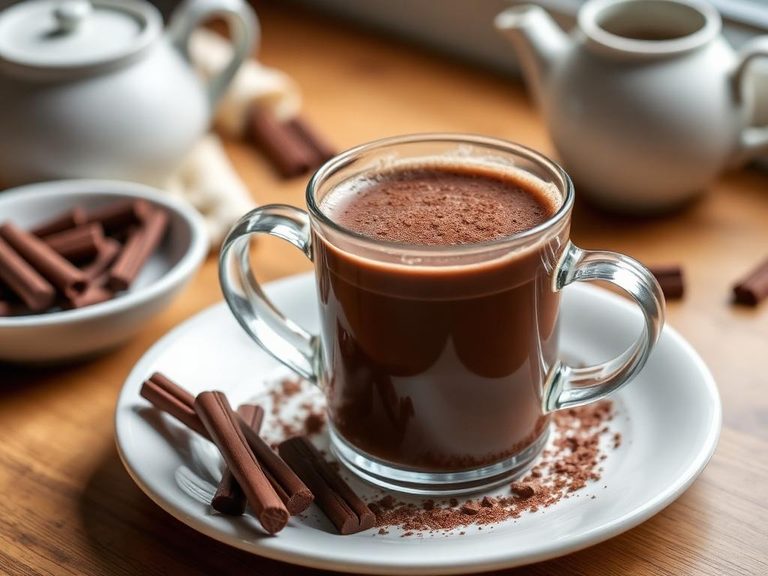
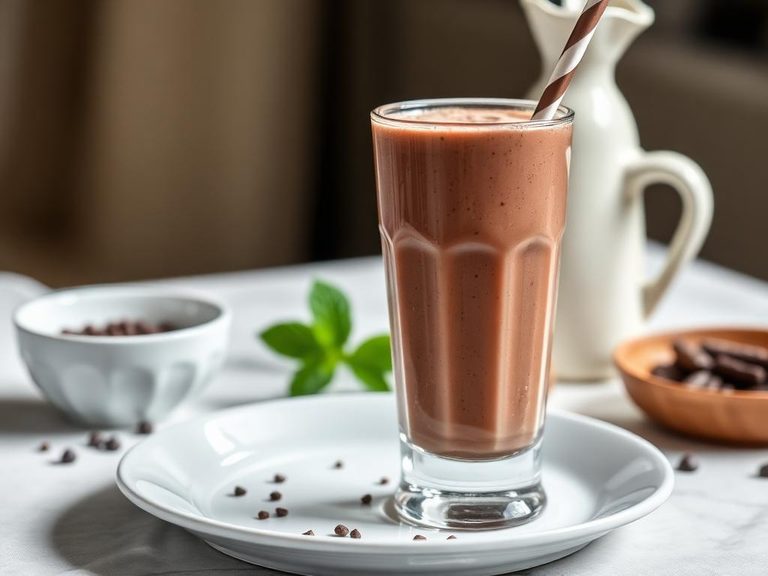
A smooth, comforting beverage made from carob powder blended with whole milk, offering a naturally sweet, chocolate-like flavor without the caffeine. Its texture is creamy and velvety, with a mild, earthy sweetness. Nutritionally, it provides a balanced mix of protein and healthy fats from the milk, with a modest calorie count.
Calorie split: 17% protein · 46% carbs · 37% fat
↓ Full nutrition💚 Why it's loved
People love its rich, chocolatey flavor profile that's both comforting and familiar, making it a beloved alternative for those avoiding caffeine. It's cherished as a warm, nostalgic drink in many cultures, often associated with childhood and home cooking.
⚠️ Watch-outs & how to enjoy it better
While generally mild, some may find its flavor overly earthy or less complex than chocolate. Those monitoring blood sugar should be aware that the carbohydrates can cause a spike if consumed in large quantities without balancing foods. Tip: Pair it with a source of protein or healthy fat (like nuts or a piece of cheese) to slow digestion and stabilize blood sugar response.
Key benefits
- Naturally caffeine-free and low in fat
- Source of calcium and protein from whole milk
- Contains fiber from carob powder
- Naturally sweet, reducing need for added sugar
- Good source of antioxidants like polyphenols
🍽️ Popular dishes

🌍 Where it's eaten
💡 Did you know?
Carob pods were historically used as a unit of weight for precious stones and gems, which is the origin of the term 'carat' for measuring diamonds.
Full nutrition (USDA data · scales with serving)
| Water | 84.3 g |
| Energy | 75.0 kcal |
| Energy | 313 kj |
| Protein | 3.2 g |
| Total lipid (fat) | 3.1 g |
| Ash | 0.75 g |
| Carbohydrate, by difference | 8.7 g |
| Fiber, total dietary | 0.40 g |
| Calcium, Ca | 98.0 mg |
| Iron, Fe | 0.25 mg |
| Magnesium, Mg | 10.0 mg |
| Phosphorus, P | 80.0 mg |
| Potassium, K | 131 mg |
| Sodium, Na | 46.0 mg |
| Zinc, Zn | 0.37 mg |
| Copper, Cu | 0.03 mg |
| Manganese, Mn | 0.01 mg |
| Selenium, Se | 3.6 ug |
| Vitamin C, total ascorbic acid | 0.00 mg |
| Thiamin | 0.04 mg |
| Riboflavin | 0.17 mg |
| Niacin | 0.14 mg |
| Pantothenic acid | 0.35 mg |
| Vitamin B-6 | 0.04 mg |
| Folate, total | 5.0 ug |
| Folic acid | 0.00 ug |
| Folate, food | 5.0 ug |
| Folate, DFE | 5.0 ug |
| Vitamin B-12 | 0.42 ug |
| Vitamin A, RAE | 27.0 ug |
| Retinol | 27.0 ug |
| Vitamin A, IU | 97.0 iu |
Fat & fatty acid profile (per 100g)
| Fatty acids, total saturated | 1.8 g |
| SFA 4:0 | 0.07 g |
| SFA 6:0 | 0.07 g |
| SFA 8:0 | 0.07 g |
| SFA 10:0 | 0.07 g |
| SFA 12:0 | 0.07 g |
| SFA 14:0 | 0.28 g |
| SFA 16:0 | 0.79 g |
| SFA 18:0 | 0.35 g |
| Fatty acids, total monounsaturated | 0.78 g |
| MUFA 16:1 | 0.00 g |
| MUFA 18:1 | 0.78 g |
| Fatty acids, total polyunsaturated | 0.19 g |
| PUFA 18:2 | 0.12 g |
| PUFA 18:3 | 0.07 g |
| Cholesterol | 10.0 mg |
Amino acid profile (per 100g)
| Tryptophan | 0.07 g |
| Threonine | 0.14 g |
| Isoleucine | 0.16 g |
| Leucine | 0.25 g |
| Lysine | 0.13 g |
| Methionine | 0.07 g |
| Cystine | 0.02 g |
| Phenylalanine | 0.14 g |
| Tyrosine | 0.14 g |
| Valine | 0.18 g |
| Arginine | 0.07 g |
| Histidine | 0.07 g |
| Alanine | 0.10 g |
| Aspartic acid | 0.23 g |
| Glutamic acid | 0.62 g |
| Glycine | 0.07 g |
| Proline | 0.33 g |
| Serine | 0.10 g |
FAQ
How does it differ from chocolate milk?
It's made from carob powder, not cocoa, so it's caffeine-free and has a naturally sweeter, less bitter taste. The nutritional profile is similar but carob has more fiber and less fat.
Is it suitable for people with chocolate allergies?
Yes, carob is a legume and is not related to cocoa, making it a safe alternative for those with chocolate or caffeine sensitivities.
Can I make it with plant-based milk?
Absolutely. It works well with oat, almond, or soy milk. The nutrition facts will change based on the milk used, but the flavor remains delicious.
Nutrient density (calculated · NRF9.3)
Nutrient Rich Foods index: beneficial nutrients (protein, fiber, vitamins, minerals) minus saturated fat, added sugar & sodium, per 100 kcal.
NRF9.3 index — Fulgoni, Keast & Drewnowski, 2009. Computed from USDA nutrients.
Weight-loss friendliness (composite index)
Energy density 0.75 kcal/g · 17% calories from protein · 0.4 g fiber · 0.0 g sugar per 100 g.
Composite of energy density (Rolls et al., 1999), protein & fiber satiety, minus sugar. A calculated heuristic — ranks satiety-per-calorie, not a clinical measure.
Dietary load (calculated from USDA values)
Potential renal acid load. Positive = acid-forming, negative = alkaline-forming.
Sodium-to-potassium ratio: 0.35 (lower is better — aim for ≤ 1)
Sodium:potassium per WHO potassium guidance. Computed from USDA nutrients.