

Beef, rib, large end (ribs 6-9), separable lean and fat, trimmed to 1/8" fat, prime, raw
Whole food · Beef Products

Photo: Wikipedia
This is a prime-grade cut from the upper portion of the beef rib, prized for its exceptional marbling. When raw, the meat is a deep ruby red with intricate white fat veins, promising a rich, beefy flavor and a tender, buttery texture once cooked. Nutritionally, it's a calorie-dense powerhouse, delivering substantial protein alongside a significant amount of fat, with virtually no carbohydrates.
Calorie split: 17% protein · 0% carbs · 83% fat
↓ Full nutrition💚 Why it's loved
People adore this cut for its unmatched flavor depth and tenderness, which come from the generous intramuscular fat. It's the star of celebratory meals and steakhouse menus, symbolizing indulgence and culinary craftsmanship.
⚠️ Watch-outs & how to enjoy it better
Its high fat and calorie content make it unsuitable for low-fat diets or those monitoring saturated fat intake. To counteract this, practice strict portion control and pair it with large servings of non-starchy vegetables or a fresh salad to add volume and fiber without significant calories.
Key benefits
- Excellent source of high-quality protein for muscle maintenance.
- Rich in heme iron, which is highly absorbable.
- Provides essential B vitamins like B12 and niacin.
- Contains zinc, important for immune function.
- Fat provides a concentrated source of energy.
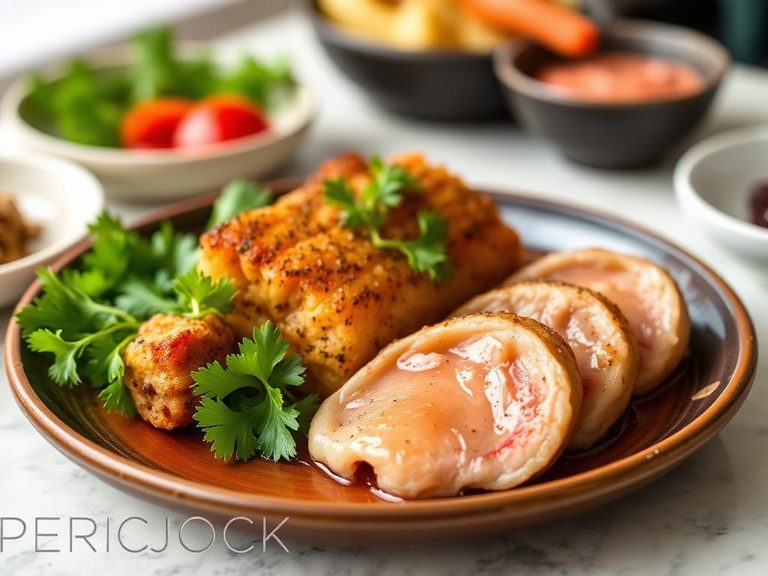
🍽️ Popular dishes
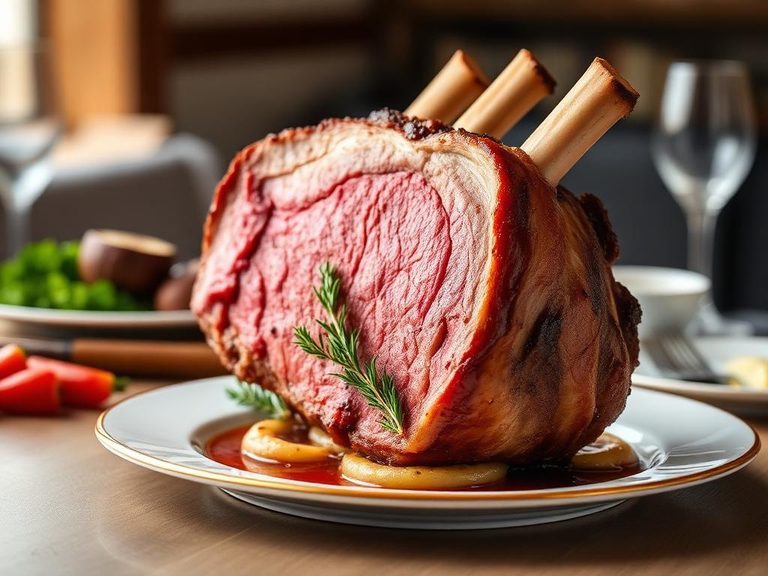
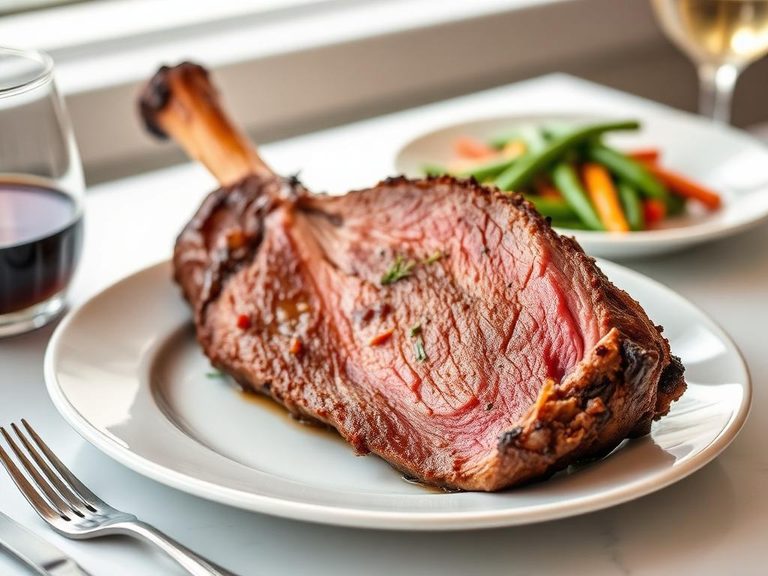
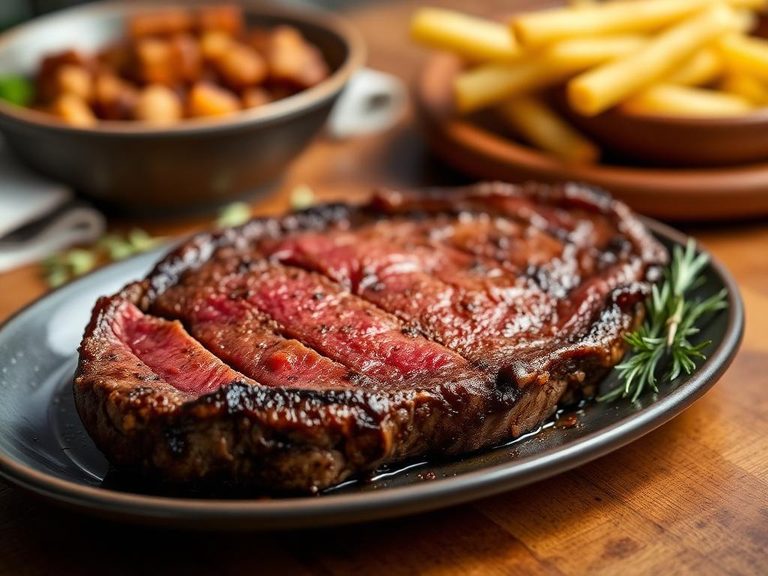
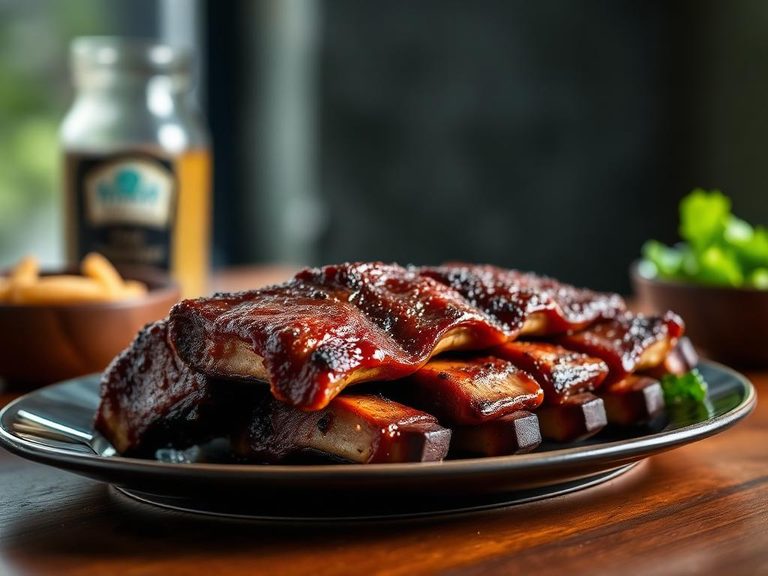
🌍 Where it's eaten
💡 Did you know?
The 'large end' (ribs 6-9) is typically more marbled and flavorful than the 'small end' (ribs 10-12) because those muscles do less work.
Full nutrition (USDA data · scales with serving)
| Water | 50.4 g |
| Energy | 367 kcal |
| Energy | 1536 kj |
| Protein | 15.8 g |
| Total lipid (fat) | 33.3 g |
| Ash | 0.73 g |
| Carbohydrate, by difference | 0.00 g |
| Fiber, total dietary | 0.00 g |
| Calcium, Ca | 8.0 mg |
| Iron, Fe | 1.6 mg |
| Magnesium, Mg | 15.0 mg |
| Phosphorus, P | 147 mg |
| Potassium, K | 248 mg |
| Sodium, Na | 53.0 mg |
| Zinc, Zn | 3.6 mg |
| Copper, Cu | 0.06 mg |
| Manganese, Mn | 0.01 mg |
| Selenium, Se | 16.2 ug |
| Vitamin C, total ascorbic acid | 0.00 mg |
| Thiamin | 0.08 mg |
| Riboflavin | 0.13 mg |
| Niacin | 2.5 mg |
| Pantothenic acid | 0.31 mg |
| Vitamin B-6 | 0.28 mg |
| Folate, total | 5.0 ug |
| Folic acid | 0.00 ug |
| Folate, food | 5.0 ug |
| Folate, DFE | 5.0 ug |
| Vitamin B-12 | 2.6 ug |
| Vitamin A, RAE | 0.00 ug |
| Retinol | 0.00 ug |
| Vitamin A, IU | 0.00 iu |
Fat & fatty acid profile (per 100g)
| Fatty acids, total saturated | 14.0 g |
| SFA 10:0 | 0.11 g |
| SFA 12:0 | 0.08 g |
| SFA 14:0 | 1.1 g |
| SFA 16:0 | 8.3 g |
| SFA 18:0 | 4.2 g |
| Fatty acids, total monounsaturated | 14.4 g |
| MUFA 16:1 | 1.7 g |
| MUFA 18:1 | 12.5 g |
| MUFA 20:1 | 0.05 g |
| Fatty acids, total polyunsaturated | 1.2 g |
| PUFA 18:2 | 0.79 g |
| PUFA 18:3 | 0.39 g |
| PUFA 20:4 | 0.03 g |
| Cholesterol | 73.0 mg |
Amino acid profile (per 100g)
| Tryptophan | 0.18 g |
| Threonine | 0.69 g |
| Isoleucine | 0.71 g |
| Leucine | 1.2 g |
| Lysine | 1.3 g |
| Methionine | 0.40 g |
| Cystine | 0.18 g |
| Phenylalanine | 0.62 g |
| Tyrosine | 0.53 g |
| Valine | 0.77 g |
| Arginine | 1.00 g |
| Histidine | 0.54 g |
| Alanine | 0.95 g |
| Aspartic acid | 1.4 g |
| Glutamic acid | 2.4 g |
| Glycine | 0.86 g |
| Proline | 0.70 g |
| Serine | 0.60 g |
FAQ
What's the difference between 'prime' and 'choice' grade for this cut?
Prime grade has the highest degree of marbling (intramuscular fat), resulting in superior flavor, juiciness, and tenderness. Choice grade has less marbling and is leaner, making it a more economical but still high-quality option.
How should I cook this cut for the best results?
For steaks, high-heat methods like grilling or pan-searing are ideal. For a roast, a low-and-slow oven method followed by a high-heat sear creates a perfect crust and even doneness. Always use a meat thermometer.
Is the fat on this cut supposed to be eaten?
Yes, the marbling and the fat cap are integral to the flavor and juiciness of the meat. While you might trim excess external fat before cooking, the internal fat should be consumed as part of the steak or roast.
Nutrient density (calculated · NRF9.3)
Nutrient Rich Foods index: beneficial nutrients (protein, fiber, vitamins, minerals) minus saturated fat, added sugar & sodium, per 100 kcal.
NRF9.3 index — Fulgoni, Keast & Drewnowski, 2009. Computed from USDA nutrients.
Weight-loss friendliness (composite index)
Energy density 3.67 kcal/g · 17% calories from protein · 0.0 g fiber · 0.0 g sugar per 100 g.
Composite of energy density (Rolls et al., 1999), protein & fiber satiety, minus sugar. A calculated heuristic — ranks satiety-per-calorie, not a clinical measure.
Dietary load (calculated from USDA values)
Potential renal acid load. Positive = acid-forming, negative = alkaline-forming.
Sodium-to-potassium ratio: 0.21 (lower is better — aim for ≤ 1)
Sodium:potassium per WHO potassium guidance. Computed from USDA nutrients.