

Wine, rice
Common food

Photo: Wikipedia
Rice wine is a clear, slightly viscous alcoholic beverage fermented from glutinous or regular rice, offering a subtly sweet, floral aroma with a clean, mildly tangy finish. Nutritionally, it is a source of simple carbohydrates, providing quick energy with minimal protein or fat.
Calorie split: 9% protein · 91% carbs · 0% fat
↓ Full nutrition💚 Why it's loved
People love rice wine for its delicate, nuanced sweetness that complements both savory and sweet dishes, and its deep cultural significance in East Asian and Southeast Asian cuisines, where it symbolizes celebration and hospitality.
⚠️ Watch-outs & how to enjoy it better
As an alcoholic beverage, it can contribute to blood sugar spikes due to its carbohydrate content and should be avoided by those with alcohol sensitivities, liver conditions, or during pregnancy. To counteract, consume in strict moderation and always pair with protein or fiber-rich foods to slow sugar absorption.
Key benefits
- Provides quick, easily digestible energy from carbohydrates.
- Contains trace minerals like magnesium and B vitamins from fermentation.
- Used in traditional medicine to aid circulation and digestion.
- Acts as a flavor enhancer in cooking, tenderizing meats.
- Low in fat and contains no cholesterol.
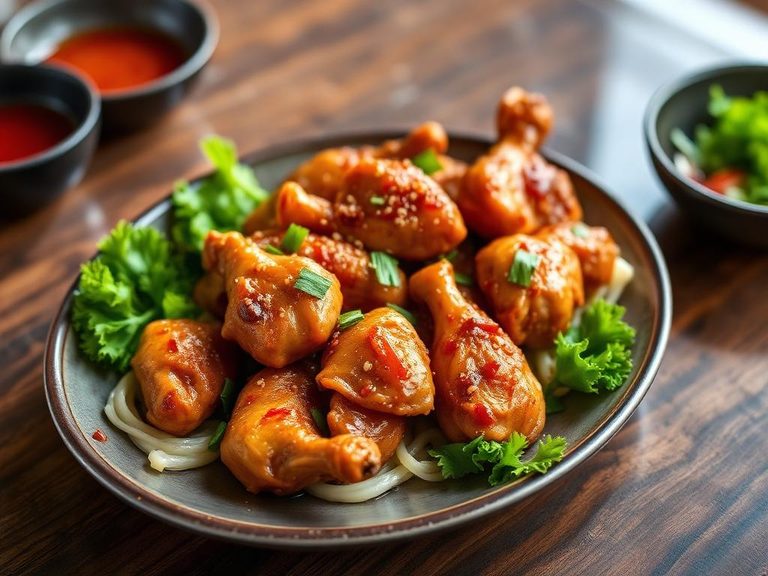
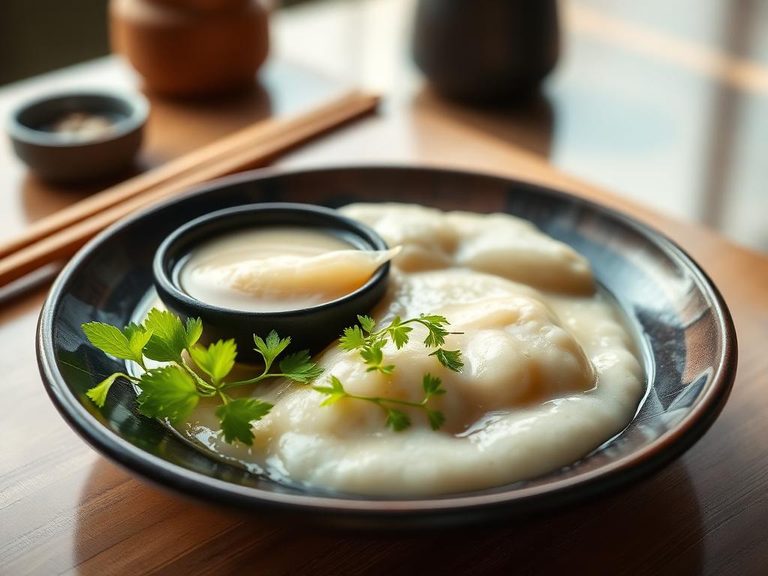
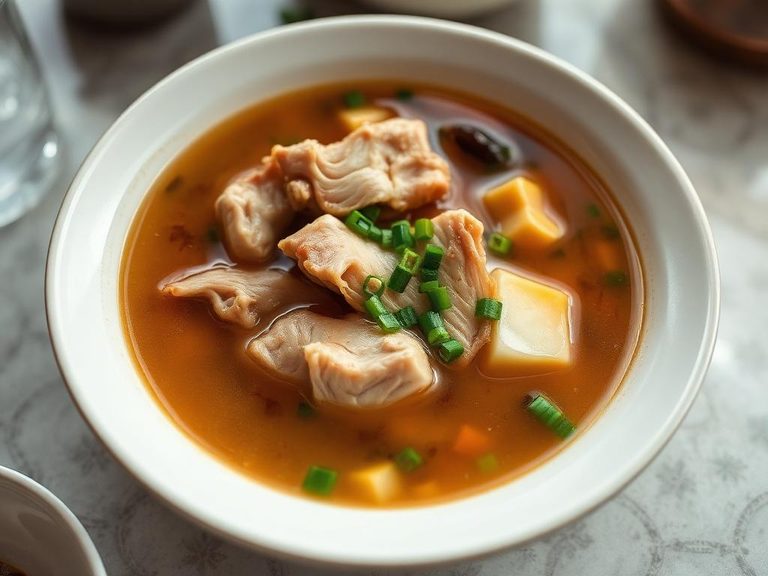
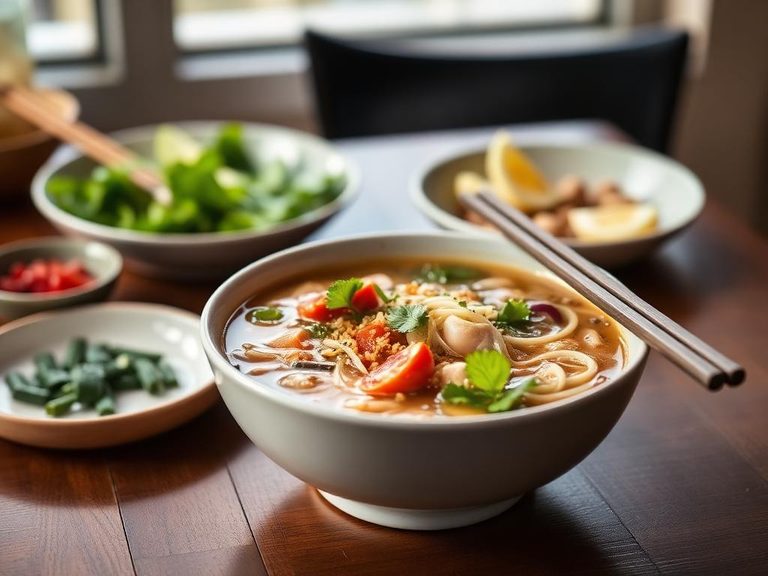
🍽️ Popular dishes
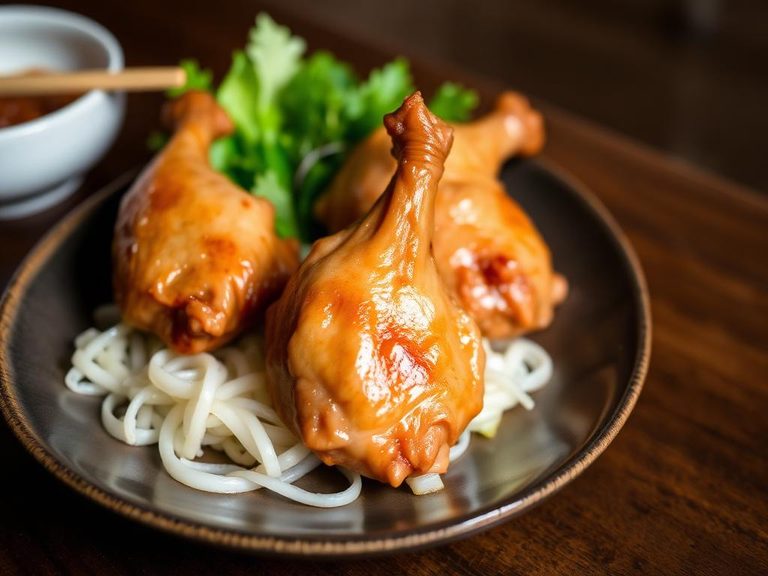
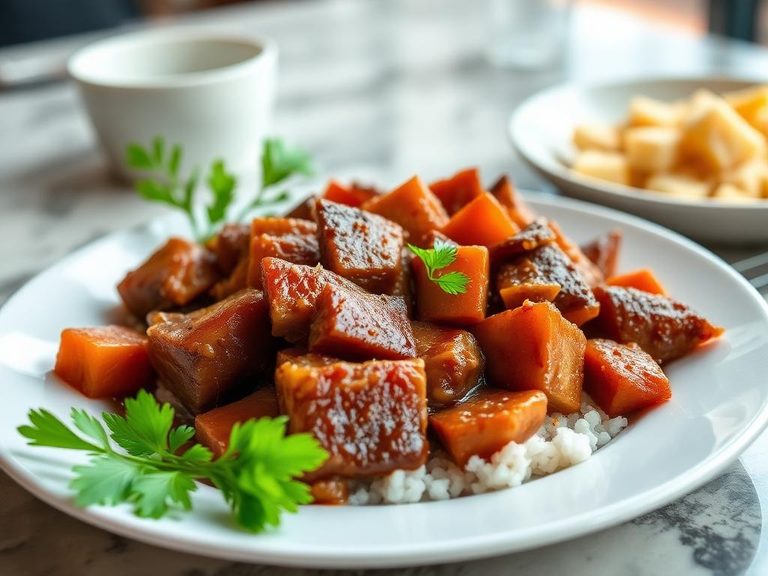
🌍 Where it's eaten
💡 Did you know?
In ancient China, rice wine was so integral to ritual and daily life that its production was a state monopoly, and the term for 'wine' (jiǔ) is a radical in many Chinese characters related to fermentation and intoxication.
Full nutrition (USDA data · scales with serving)
| Water | 78.4 g |
| Energy | 134 kcal |
| Protein | 0.50 g |
| Total lipid (fat) | 0.00 g |
| Carbohydrate, by difference | 5.0 g |
| Fiber, total dietary | 0.00 g |
| Total Sugars | 0.00 g |
| Calcium, Ca | 5.0 mg |
| Iron, Fe | 0.10 mg |
| Magnesium, Mg | 6.0 mg |
| Phosphorus, P | 6.0 mg |
| Potassium, K | 25.0 mg |
| Sodium, Na | 2.0 mg |
| Zinc, Zn | 0.02 mg |
| Copper, Cu | 0.01 mg |
| Selenium, Se | 1.4 ug |
| Vitamin C, total ascorbic acid | 0.00 mg |
| Thiamin | 0.00 mg |
| Riboflavin | 0.00 mg |
| Niacin | 0.00 mg |
| Vitamin B-6 | 0.00 mg |
| Folate, total | 0.00 ug |
| Folic acid | 0.00 ug |
| Folate, food | 0.00 ug |
| Folate, DFE | 0.00 ug |
| Choline, total | 0.00 mg |
| Vitamin B-12 | 0.00 ug |
| Vitamin B-12, added | 0.00 ug |
| Vitamin A, RAE | 0.00 ug |
| Retinol | 0.00 ug |
| Carotene, beta | 0.00 ug |
| Carotene, alpha | 0.00 ug |
| Cryptoxanthin, beta | 0.00 ug |
| Lycopene | 0.00 ug |
| Lutein + zeaxanthin | 0.00 ug |
| Vitamin E (alpha-tocopherol) | 0.00 mg |
| Vitamin E, added | 0.00 mg |
| Vitamin D (D2 + D3) | 0.00 ug |
| Vitamin K (phylloquinone) | 0.00 ug |
| Alcohol, ethyl | 16.1 g |
| Caffeine | 0.00 mg |
| Theobromine | 0.00 mg |
Fat & fatty acid profile (per 100g)
| Fatty acids, total saturated | 0.00 g |
| SFA 4:0 | 0.00 g |
| SFA 6:0 | 0.00 g |
| SFA 8:0 | 0.00 g |
| SFA 10:0 | 0.00 g |
| SFA 12:0 | 0.00 g |
| SFA 14:0 | 0.00 g |
| SFA 16:0 | 0.00 g |
| SFA 18:0 | 0.00 g |
| Fatty acids, total monounsaturated | 0.00 g |
| MUFA 16:1 | 0.00 g |
| MUFA 18:1 | 0.00 g |
| MUFA 20:1 | 0.00 g |
| MUFA 22:1 | 0.00 g |
| Fatty acids, total polyunsaturated | 0.00 g |
| PUFA 18:2 | 0.00 g |
| PUFA 18:3 | 0.00 g |
| PUFA 18:4 | 0.00 g |
| PUFA 20:4 | 0.00 g |
| PUFA 20:5 n-3 (EPA) | 0.00 g |
| PUFA 22:5 n-3 (DPA) | 0.00 g |
| PUFA 22:6 n-3 (DHA) | 0.00 g |
| Cholesterol | 0.00 mg |
FAQ
How is rice wine different from sake?
Rice wine (like Chinese Shaoxing) is typically made from glutinous rice and fermented with a mold-based starter (qu), while sake is a Japanese brew made from polished non-glutinous rice, using a parallel fermentation process with specific koji mold.
Can rice wine be used as a substitute for dry sherry in recipes?
Yes, Chinese Shaoxing wine is a common and often preferred substitute for dry sherry in savory cooking, as it provides a similar depth and acidity. Avoid 'rice wine vinegar' which is a different product.
What does 'cooked' or 'seasoned' rice wine mean?
This refers to rice wine that has been boiled with salt and sometimes soy sauce or caramel, making it shelf-stable and ready for direct table use or dipping, unlike raw rice wine which is primarily for cooking.
Nutrient density (calculated · NRF9.3)
Nutrient Rich Foods index: beneficial nutrients (protein, fiber, vitamins, minerals) minus saturated fat, added sugar & sodium, per 100 kcal.
NRF9.3 index — Fulgoni, Keast & Drewnowski, 2009. Computed from USDA nutrients.
Weight-loss friendliness (composite index)
Energy density 1.34 kcal/g · 1% calories from protein · 0.0 g fiber · 0.0 g sugar per 100 g.
Composite of energy density (Rolls et al., 1999), protein & fiber satiety, minus sugar. A calculated heuristic — ranks satiety-per-calorie, not a clinical measure.
Dietary load (calculated from USDA values)
Potential renal acid load. Positive = acid-forming, negative = alkaline-forming.
Sodium-to-potassium ratio: 0.08 (lower is better — aim for ≤ 1)
Sodium:potassium per WHO potassium guidance. Computed from USDA nutrients.