

Watermelon, seedless, flesh only, raw
Whole food · Fruits and Fruit Juices
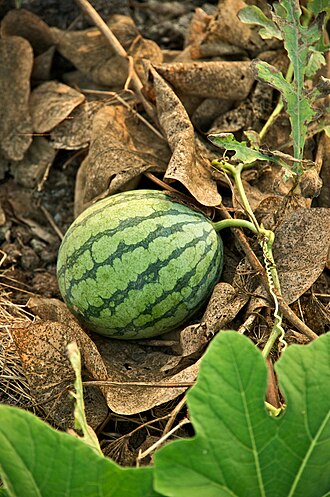
Photo: Wikipedia
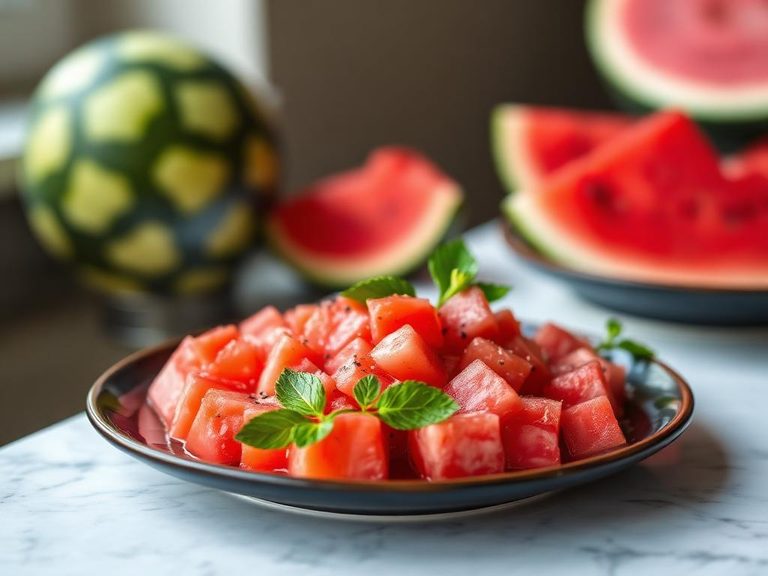
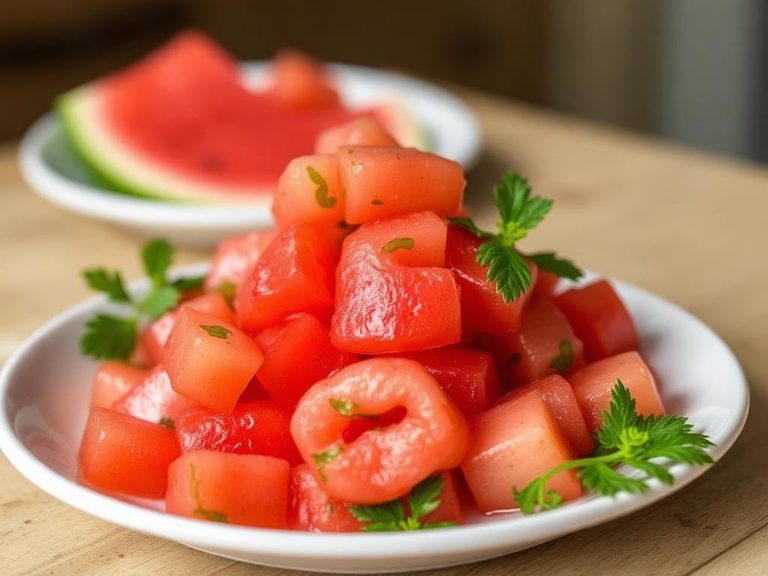
Seedless watermelon flesh is the crisp, juicy heart of the fruit, prized for its vibrant pink-red color and high water content. It offers a sweet, refreshing taste with a tender, melt-in-the-mouth texture, making it a hydrating summer staple. Nutritionally, it's virtually a calorie-free food, providing hydration and small amounts of vitamins A and C without sugars, fats, or proteins.
Calorie split: 100% protein · 0% carbs · 0% fat
↓ Full nutrition💚 Why it's loved
People adore it for its intensely sweet, thirst-quenching flavor and satisfying crunch, which makes it the ultimate hot-weather treat. Its versatility allows it to be eaten fresh, blended into drinks, or paired with salty cheeses, embodying summer celebrations and picnics.
⚠️ Watch-outs & how to enjoy it better
The high water and sugar content can lead to frequent urination and, for some, digestive discomfort if eaten in large quantities. Those monitoring blood sugar should be mindful of portion size. Tip: Pair a slice with a handful of nuts or a piece of cheese to add protein and fat, which can help moderate the glycemic response.
Key benefits
- Extremely hydrating (over 90% water)
- Low in calories, supporting weight management
- Source of lycopene, a powerful antioxidant
- Provides vitamin C for immune support
- Contains citrulline, which may aid circulation
🍽️ Popular dishes
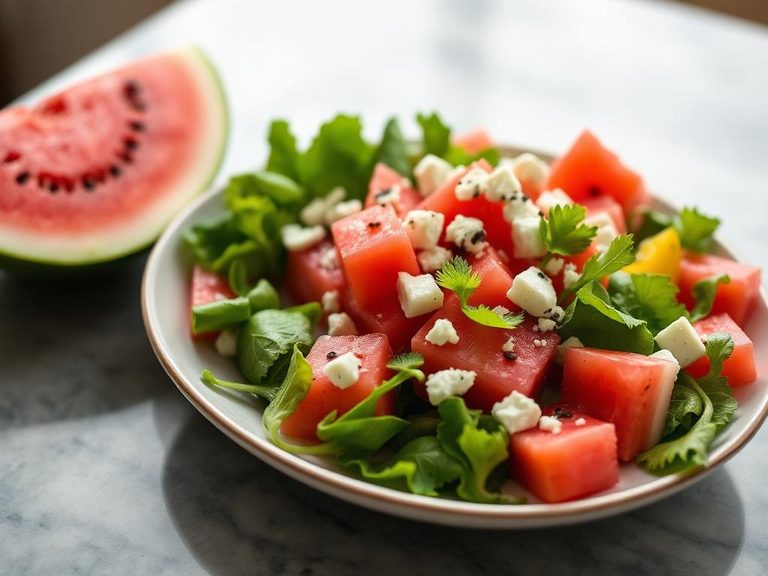
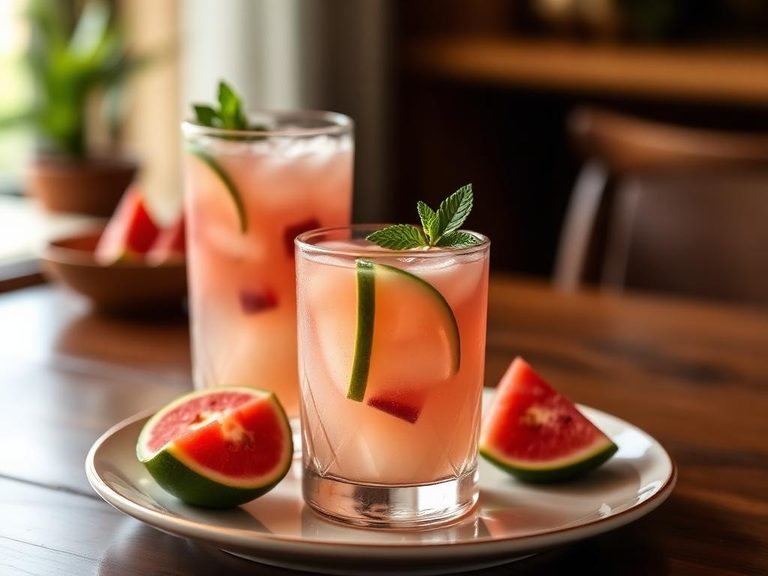
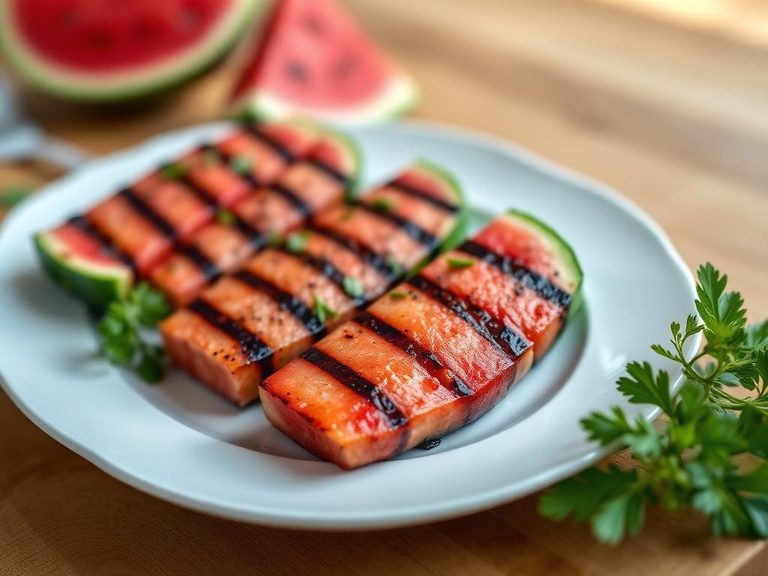
🌍 Where it's eaten
💡 Did you know?
Seedless watermelons are not genetically modified but are created through a natural breeding process that results in sterile, triploid plants with three sets of chromosomes.
Full nutrition (USDA data · scales with serving)
| Water | 90.9 g |
| Nitrogen | 0.14 g |
| Protein | 0.87 g |
| Ash | 0.27 g |
| Sugars, Total | 7.2 g |
| Sucrose | 2.5 g |
| Glucose | 1.5 g |
| Fructose | 3.2 g |
| Lactose | 0.00 g |
| Maltose | 0.00 g |
| Calcium, Ca | 7.9 mg |
| Iron, Fe | 0.02 mg |
| Magnesium, Mg | 11.4 mg |
| Phosphorus, P | 17.1 mg |
| Potassium, K | 117 mg |
| Sodium, Na | 0.00 mg |
| Zinc, Zn | 0.10 mg |
| Copper, Cu | 0.05 mg |
| Manganese, Mn | 0.07 mg |
| Vitamin C, total ascorbic acid | 6.5 mg |
| Folate, total | 11.9 ug |
Fat & fatty acid profile (per 100g)
Estimated from Watermelon, raw — USDA does not publish this profile for Watermelon.
| Fatty acids, total saturated | 0.02 g |
| SFA 4:0 | 0.00 g |
| SFA 6:0 | 0.00 g |
| SFA 8:0 | 0.00 g |
| SFA 10:0 | 0.00 g |
| SFA 12:0 | 0.00 g |
| SFA 14:0 | 0.00 g |
| SFA 16:0 | 0.01 g |
| SFA 18:0 | 0.01 g |
| Fatty acids, total monounsaturated | 0.04 g |
| MUFA 16:1 | 0.00 g |
| MUFA 18:1 | 0.04 g |
| MUFA 20:1 | 0.00 g |
| MUFA 22:1 | 0.00 g |
| Fatty acids, total polyunsaturated | 0.05 g |
| PUFA 18:2 | 0.05 g |
| PUFA 18:3 | 0.00 g |
| PUFA 18:4 | 0.00 g |
| PUFA 20:4 | 0.00 g |
| PUFA 20:5 n-3 (EPA) | 0.00 g |
| PUFA 22:5 n-3 (DPA) | 0.00 g |
| PUFA 22:6 n-3 (DHA) | 0.00 g |
| Fatty acids, total trans | 0.00 g |
| Cholesterol | 0.00 mg |
| Phytosterols | 2.0 mg |
Amino acid profile (per 100g)
Estimated from Watermelon, raw — USDA does not publish this profile for Watermelon.
| Tryptophan | 0.01 g |
| Threonine | 0.03 g |
| Isoleucine | 0.02 g |
| Leucine | 0.02 g |
| Lysine | 0.06 g |
| Methionine | 0.01 g |
| Cystine | 0.00 g |
| Phenylalanine | 0.01 g |
| Tyrosine | 0.01 g |
| Valine | 0.02 g |
| Arginine | 0.06 g |
| Histidine | 0.01 g |
| Alanine | 0.02 g |
| Aspartic acid | 0.04 g |
| Glutamic acid | 0.06 g |
| Glycine | 0.01 g |
| Proline | 0.02 g |
| Serine | 0.02 g |
FAQ
Why is seedless watermelon often more expensive?
The production process is more labor-intensive and complex, requiring the cross-pollination of two different watermelon varieties, which results in a lower yield per acre compared to seeded varieties.
Does seedless watermelon have any seeds at all?
Yes, it contains small, soft, white, and undeveloped seed coats that are edible and typically go unnoticed, unlike the hard black seeds of traditional watermelon.
How can I pick a ripe seedless watermelon?
Look for a creamy yellow field spot (where it sat on the ground), a dull rind finish, and a heavy feel for its size. A hollow sound when thumped is also a classic indicator of ripeness.
Dietary load (calculated from USDA values)
Potential renal acid load. Positive = acid-forming, negative = alkaline-forming.
Sodium-to-potassium ratio: 0.00 (lower is better — aim for ≤ 1)
Sodium:potassium per WHO potassium guidance. Computed from USDA nutrients.