

Water, bottled, generic
Whole food · Beverages
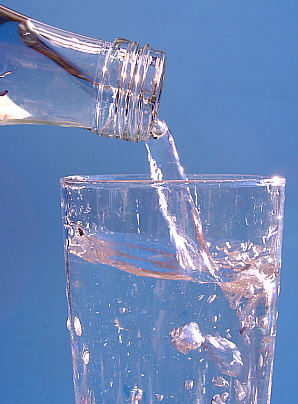
Photo: Wikipedia
Bottled water is purified water, often sourced from springs or municipal supplies, then filtered and sealed for purity and convenience. It has a clean, neutral taste and a smooth, refreshing texture, with a nutritional profile of absolute zeros—no calories, macros, or electrolytes. It's the ultimate blank slate for hydration, free from the minerals that give tap water its characteristic taste.
💚 Why it's loved
People love it for its pure, unadulterated taste and the peace of mind that comes with a sealed, tamper-evident container. Its ultimate versatility makes it the universal mixer, the silent partner in a morning coffee, and the essential companion for any meal or adventure.
⚠️ Watch-outs & how to enjoy it better
The primary downsides are the environmental impact of plastic waste and the cost premium over tap water. For those monitoring mineral intake, it lacks the electrolytes (like sodium or potassium) found in mineral water, which can be a drawback during intense exercise. To counteract the environmental cost, choose glass bottles or a reusable bottle with a filter. To add electrolytes, a pinch of salt or a splash of coconut water can be mixed in.
Key benefits
- Provides essential hydration without calories or sugar
- Offers a consistent, neutral taste free from chlorine or mineral notes
- Convenient for on-the-go consumption and emergency preparedness
- Serves as a clean base for mixing drinks, from coffee to cocktails
- Shelf-stable and portable for travel and outdoor activities
🍽️ Popular dishes
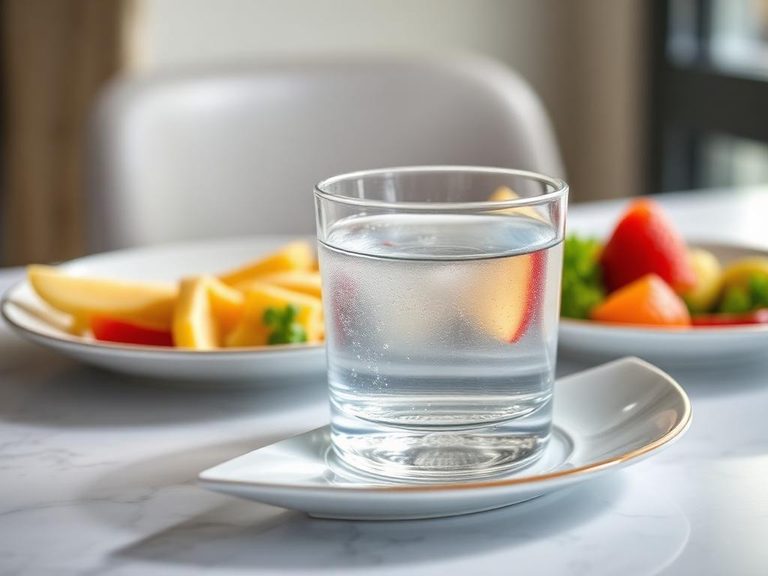
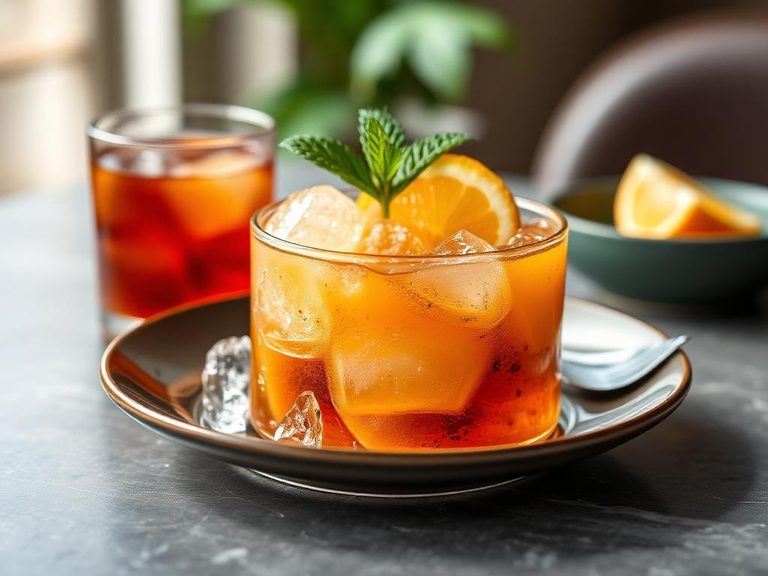
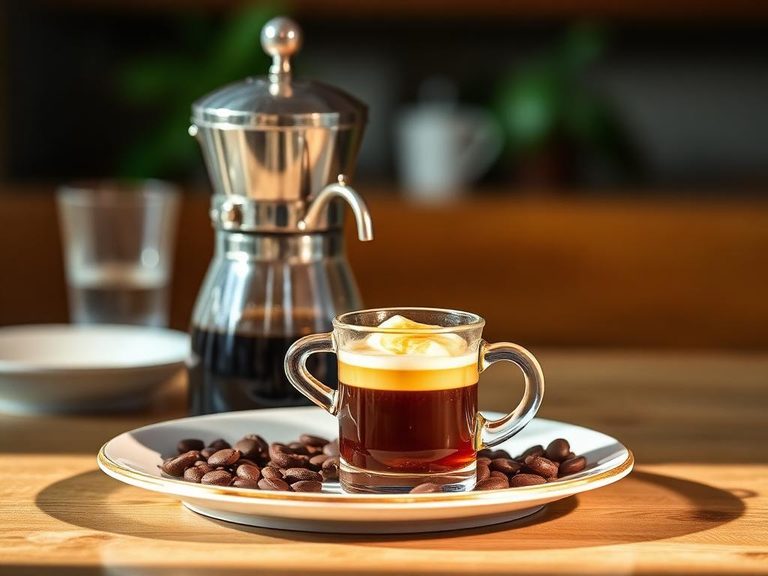
🌍 Where it's eaten
💡 Did you know?
The 'sell-by' or 'best-by' date on bottled water is legally required for plastic containers, not because the water spoils, but because the plastic can slowly leach into the water, subtly altering its taste over time.
Full nutrition (USDA data · scales with serving)
| Water | 100.0 g |
| Energy | 0.00 kcal |
| Energy | 0.00 kj |
| Protein | 0.00 g |
| Total lipid (fat) | 0.00 g |
| Ash | 0.07 g |
| Carbohydrate, by difference | 0.00 g |
| Fiber, total dietary | 0.00 g |
| Total Sugars | 0.00 g |
| Calcium, Ca | 10.0 mg |
| Iron, Fe | 0.00 mg |
| Magnesium, Mg | 2.0 mg |
| Phosphorus, P | 0.00 mg |
| Potassium, K | 0.00 mg |
| Sodium, Na | 2.0 mg |
| Zinc, Zn | 0.00 mg |
| Copper, Cu | 0.01 mg |
| Selenium, Se | 0.00 ug |
| Vitamin C, total ascorbic acid | 0.00 mg |
| Thiamin | 0.00 mg |
| Riboflavin | 0.00 mg |
| Niacin | 0.00 mg |
| Pantothenic acid | 0.00 mg |
| Vitamin B-6 | 0.00 mg |
| Folate, total | 0.00 ug |
| Folic acid | 0.00 ug |
| Folate, food | 0.00 ug |
| Folate, DFE | 0.00 ug |
| Choline, total | 0.00 mg |
| Vitamin B-12 | 0.00 ug |
| Vitamin B-12, added | 0.00 ug |
| Vitamin A, RAE | 0.00 ug |
| Retinol | 0.00 ug |
| Carotene, beta | 0.00 ug |
| Carotene, alpha | 0.00 ug |
| Cryptoxanthin, beta | 0.00 ug |
| Vitamin A, IU | 0.00 iu |
| Lycopene | 0.00 ug |
| Lutein + zeaxanthin | 0.00 ug |
| Vitamin E (alpha-tocopherol) | 0.00 mg |
| Vitamin E, added | 0.00 mg |
| Vitamin D (D2 + D3), International Units | 0.00 iu |
| Vitamin D (D2 + D3) | 0.00 ug |
| Vitamin K (phylloquinone) | 0.00 ug |
| Alcohol, ethyl | 0.00 g |
| Caffeine | 0.00 mg |
| Theobromine | 0.00 mg |
Fat & fatty acid profile (per 100g)
| Fatty acids, total saturated | 0.00 g |
| SFA 4:0 | 0.00 g |
| SFA 6:0 | 0.00 g |
| SFA 8:0 | 0.00 g |
| SFA 10:0 | 0.00 g |
| SFA 12:0 | 0.00 g |
| SFA 14:0 | 0.00 g |
| SFA 16:0 | 0.00 g |
| SFA 18:0 | 0.00 g |
| Fatty acids, total monounsaturated | 0.00 g |
| MUFA 16:1 | 0.00 g |
| MUFA 18:1 | 0.00 g |
| MUFA 20:1 | 0.00 g |
| MUFA 22:1 | 0.00 g |
| Fatty acids, total polyunsaturated | 0.00 g |
| PUFA 18:2 | 0.00 g |
| PUFA 18:3 | 0.00 g |
| PUFA 18:4 | 0.00 g |
| PUFA 20:4 | 0.00 g |
| PUFA 20:5 n-3 (EPA) | 0.00 g |
| PUFA 22:5 n-3 (DPA) | 0.00 g |
| PUFA 22:6 n-3 (DHA) | 0.00 g |
| Fatty acids, total trans | 0.00 g |
| Cholesterol | 0.00 mg |
FAQ
Is bottled water safer than tap water?
In most developed countries, both are safe. Bottled water is regulated by the FDA, while tap water is regulated by the EPA, which has stricter standards. Bottled water's main safety advantage is in areas with compromised infrastructure or boil-water advisories.
Does bottled water have minerals?
It depends on the type. Purified or distilled water has virtually no minerals. Spring water and mineral water contain naturally occurring minerals like calcium and magnesium, which can affect taste.
Why does some bottled water taste different?
Taste differences come from the source and mineral content. Spring water has a distinct 'terroir' from its source, while purified water has a neutral taste. The plastic bottle itself can also impart a slight taste over time.
Dietary load (calculated from USDA values)
Potential renal acid load. Positive = acid-forming, negative = alkaline-forming.
Sodium:potassium per WHO potassium guidance. Computed from USDA nutrients.