

Veal, shank (fore and hind), separable lean only, cooked, braised
Whole food · Lamb, Veal, and Game Products

Photo: Wikipedia
Braised veal shank is the luxurious, fall-apart tender centerpiece of dishes like osso buco. Its lean meat, cooked low and slow in liquid, develops a deep, savory flavor with a silky, collagen-rich mouthfeel. Nutritionally, it's a powerhouse of high-quality protein with minimal fat.
Calorie split: 77% protein · 0% carbs · 23% fat
↓ Full nutrition💚 Why it's loved
People adore it for its profound, meaty flavor and the luxurious, melt-in-your-mouth texture that only slow braising can achieve. It's the star of celebratory, comforting meals across many cultures.
⚠️ Watch-outs & how to enjoy it better
As a red meat, it can be high in cholesterol and saturated fat, which some should moderate. To balance this, pair it with fiber-rich vegetables like braised greens or a fresh salad, and practice portion control. The cooking liquid (like a wine-based sauce) can be high in sodium, so use low-sodium broth and season carefully at the end.
Key benefits
- Exceptionally high in complete protein for muscle maintenance.
- Very low in carbohydrates, suitable for ketogenic diets.
- Source of minerals like zinc and iron from red meat.
- Collagen from the connective tissue supports joint and skin health when cooked into the sauce.
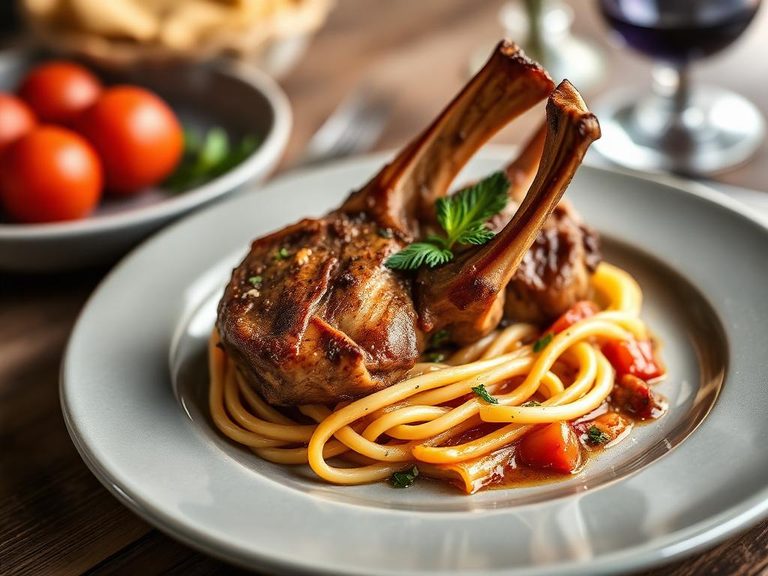
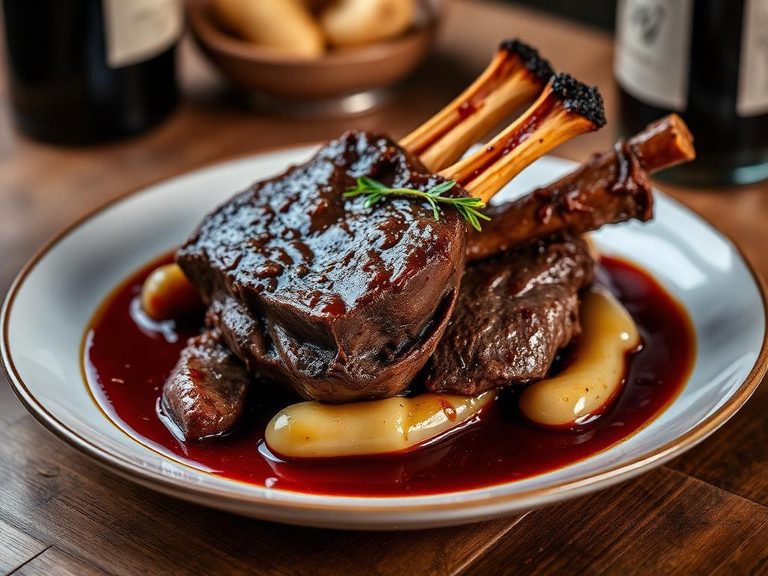
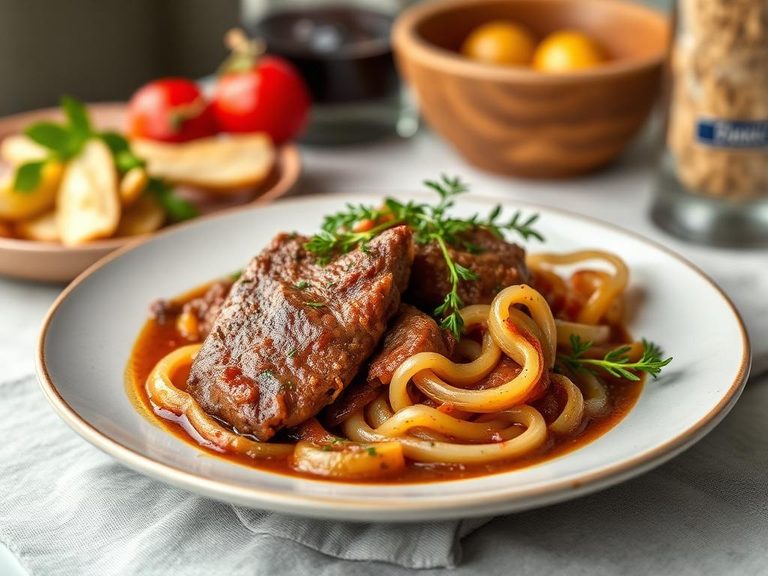
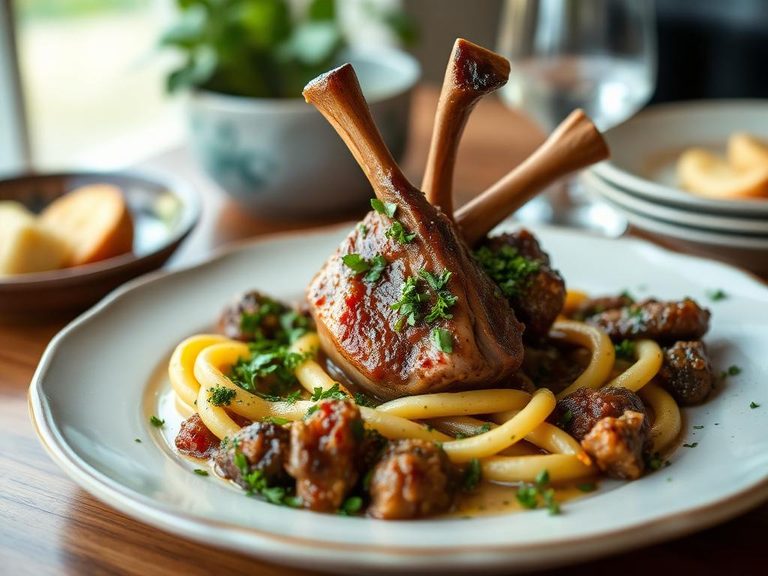
🍽️ Popular dishes
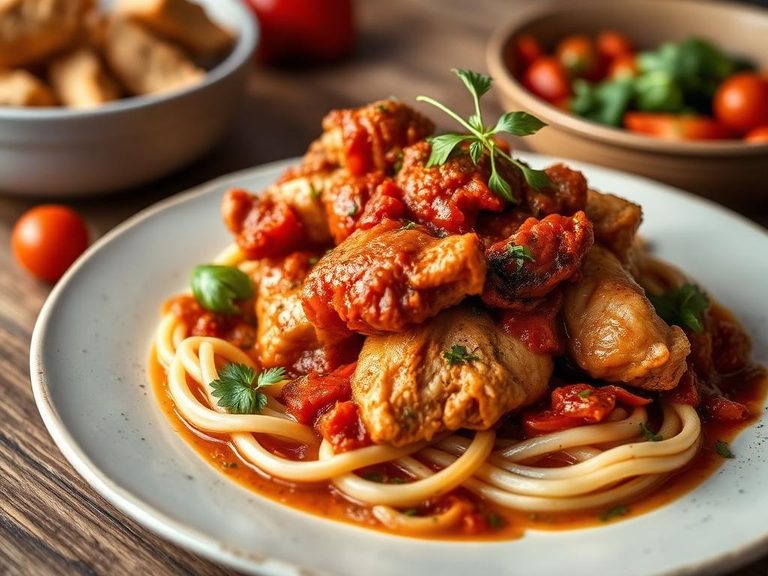
🌍 Where it's eaten
💡 Did you know?
The name 'osso buco' literally means 'bone with a hole' in Italian, referring to the marrow hole in the cross-cut shank, which is considered the dish's most prized, savory treasure.
Full nutrition (USDA data · scales with serving)
| Water | 63.0 g |
| Energy | 177 kcal |
| Energy | 741 kj |
| Protein | 32.2 g |
| Total lipid (fat) | 4.3 g |
| Ash | 1.1 g |
| Carbohydrate, by difference | 0.00 g |
| Fiber, total dietary | 0.00 g |
| Calcium, Ca | 34.0 mg |
| Iron, Fe | 1.3 mg |
| Magnesium, Mg | 25.0 mg |
| Phosphorus, P | 228 mg |
| Potassium, K | 309 mg |
| Sodium, Na | 94.0 mg |
| Zinc, Zn | 6.8 mg |
| Copper, Cu | 0.11 mg |
| Manganese, Mn | 0.01 mg |
| Selenium, Se | 13.7 ug |
| Thiamin | 0.05 mg |
| Riboflavin | 0.30 mg |
| Niacin | 9.7 mg |
| Pantothenic acid | 1.3 mg |
| Vitamin B-6 | 0.27 mg |
| Folate, total | 17.0 ug |
| Folic acid | 0.00 ug |
| Folate, food | 17.0 ug |
| Folate, DFE | 17.0 ug |
| Vitamin B-12 | 1.6 ug |
| Vitamin A, RAE | 0.00 ug |
| Retinol | 0.00 ug |
| Vitamin A, IU | 0.00 iu |
Fat & fatty acid profile (per 100g)
| Fatty acids, total saturated | 1.1 g |
| SFA 12:0 | 0.02 g |
| SFA 14:0 | 0.13 g |
| SFA 16:0 | 0.64 g |
| SFA 18:0 | 0.33 g |
| Fatty acids, total monounsaturated | 1.5 g |
| MUFA 16:1 | 0.14 g |
| MUFA 18:1 | 1.4 g |
| MUFA 20:1 | 0.01 g |
| Fatty acids, total polyunsaturated | 0.46 g |
| PUFA 18:2 | 0.35 g |
| PUFA 18:3 | 0.01 g |
| PUFA 20:4 | 0.09 g |
| Cholesterol | 126 mg |
Amino acid profile (per 100g)
| Tryptophan | 0.33 g |
| Threonine | 1.4 g |
| Isoleucine | 1.6 g |
| Leucine | 2.6 g |
| Lysine | 2.7 g |
| Methionine | 0.75 g |
| Cystine | 0.37 g |
| Phenylalanine | 1.3 g |
| Tyrosine | 1.0 g |
| Valine | 1.8 g |
| Arginine | 1.9 g |
| Histidine | 1.2 g |
| Alanine | 1.9 g |
| Aspartic acid | 2.8 g |
| Glutamic acid | 5.1 g |
| Glycine | 1.7 g |
| Proline | 1.3 g |
| Serine | 1.2 g |
FAQ
What's the difference between braising and roasting for veal shank?
Braising involves searing the meat then simmering it slowly in liquid (like broth or wine) in a covered pot, which breaks down tough connective tissue into gelatin for a tender, saucy result. Roasting uses dry heat in an oven, which is less suitable for this cut as it can dry it out.
Why is veal shank often sold with the bone in?
The bone, especially the marrow, adds immense flavor and body to the braising liquid. The marrow itself is a delicacy, and the bone helps conduct heat evenly during the long cooking process.
Can I use a slow cooker for veal shank?
Yes, it's an excellent method. After browning the shanks, transfer them to a slow cooker with your braising liquid and aromatics. Cook on low for 6-8 hours until fork-tender.
Nutrient density (calculated · NRF9.3)
Nutrient Rich Foods index: beneficial nutrients (protein, fiber, vitamins, minerals) minus saturated fat, added sugar & sodium, per 100 kcal.
NRF9.3 index — Fulgoni, Keast & Drewnowski, 2009. Computed from USDA nutrients.
Weight-loss friendliness (composite index)
Energy density 1.77 kcal/g · 73% calories from protein · 0.0 g fiber · 0.0 g sugar per 100 g.
Composite of energy density (Rolls et al., 1999), protein & fiber satiety, minus sugar. A calculated heuristic — ranks satiety-per-calorie, not a clinical measure.
Dietary load (calculated from USDA values)
Potential renal acid load. Positive = acid-forming, negative = alkaline-forming.
Sodium-to-potassium ratio: 0.30 (lower is better — aim for ≤ 1)
Sodium:potassium per WHO potassium guidance. Computed from USDA nutrients.