

Tofu, dried-frozen (koyadofu)
Whole food · Legumes and Legume Products

Photo: Wikipedia
Koyadofu is a Japanese dried-frozen tofu, created by repeatedly freezing and thawing firm tofu to expel water and create a dense, chewy, sponge-like texture. It has a rich, savory, umami-forward flavor and a uniquely satisfying, meaty bite that absorbs sauces beautifully. Nutritionally, it's a protein powerhouse, packing over 52 grams of protein per 100g in its dried form.
Calorie split: 40% protein · 8% carbs · 52% fat
↓ Full nutrition💚 Why it's loved
People love it for its incredible ability to soak up broths, sauces, and seasonings, transforming into a flavor-packed morsel. Its chewy, meat-like texture makes it a beloved staple in Japanese simmered dishes and hot pots, offering a satisfying, hearty element to vegetarian and omnivore meals alike.
⚠️ Watch-outs & how to enjoy it better
Its extremely low moisture content means it can be tough and unpalatable if not rehydrated properly. Those watching their sodium intake should be cautious, as it's often simmered in salty broths; to counteract this, use low-sodium dashi or broth for soaking and cooking, and rinse it briefly after rehydrating. It is a soy product, a common allergen.
Key benefits
- Extremely high in plant-based protein
- Good source of dietary fiber
- Low in carbohydrates and sugar-free
- Dense texture promotes satiety
- Long shelf life when dried
🍽️ Popular dishes
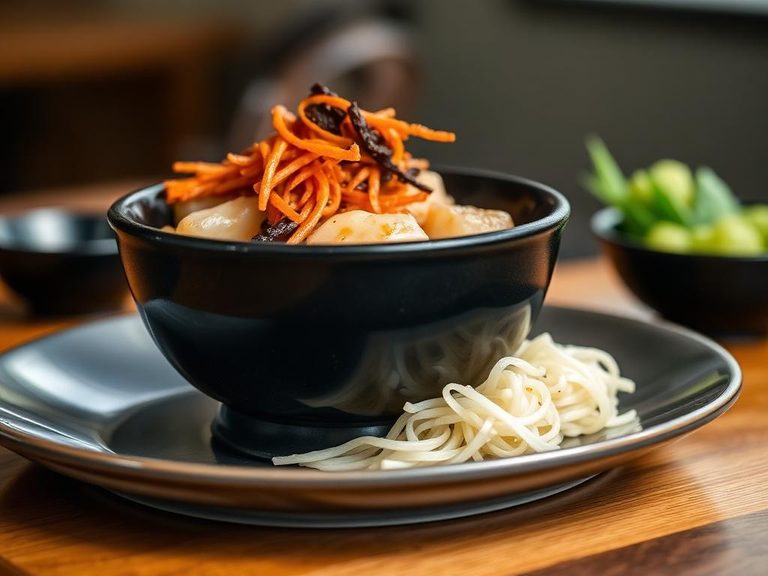
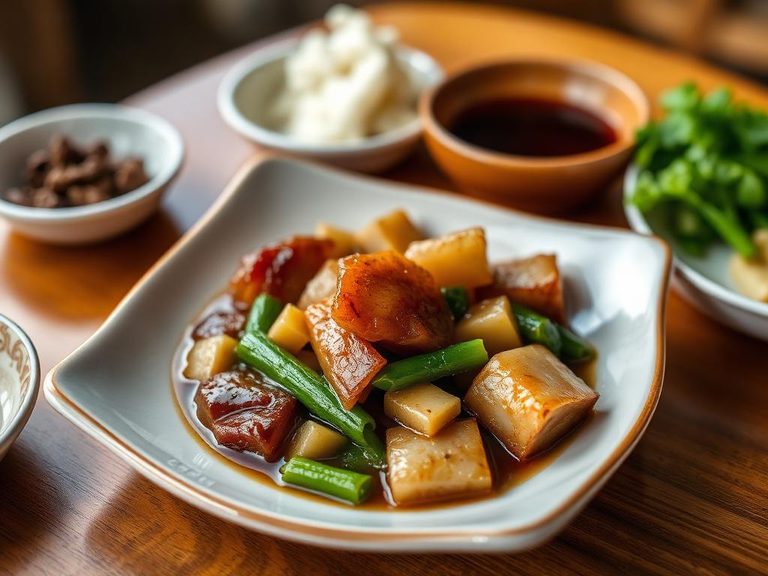
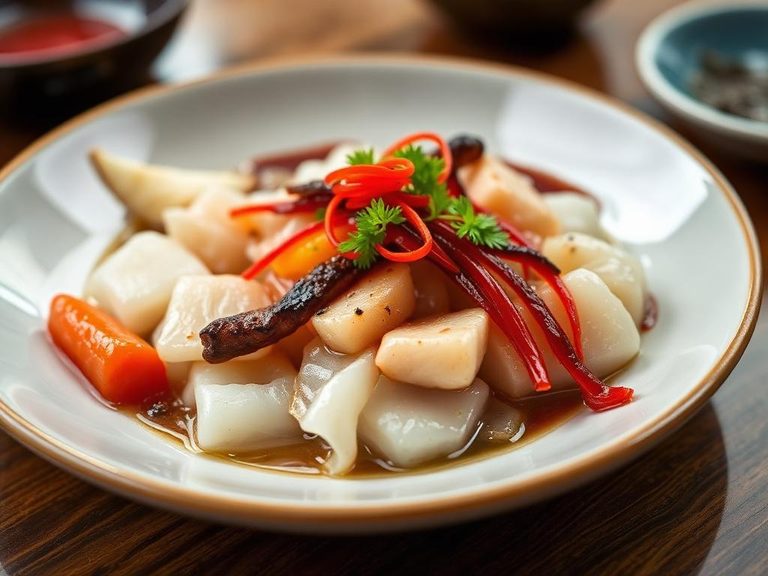
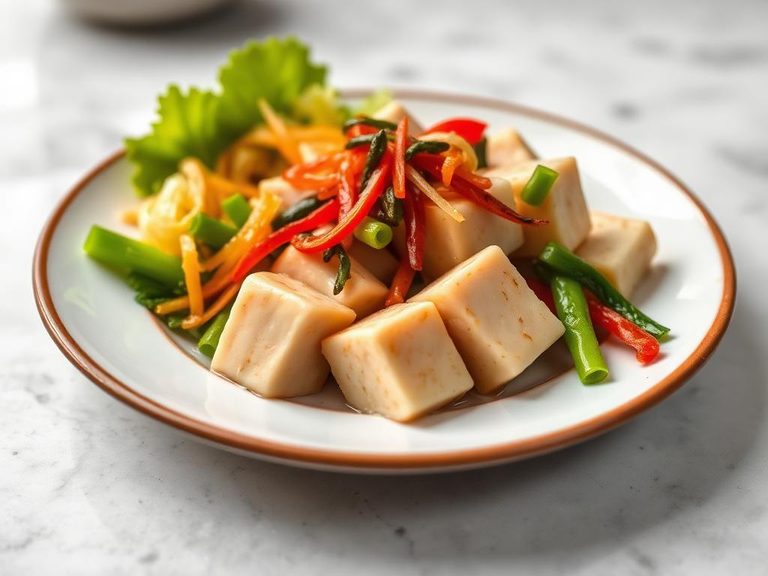
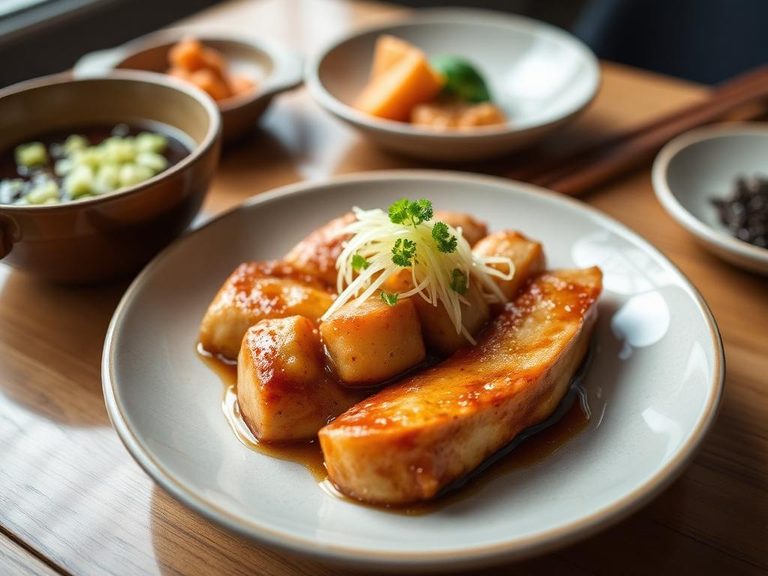
🌍 Where it's eaten
💡 Did you know?
The unique texture of koyadofu is created by a natural process where ice crystals form during freezing, puncturing the tofu's structure and creating tiny channels that allow water to escape, leaving behind its signature porous, chewy form.
Full nutrition (USDA data · scales with serving)
| Water | 5.8 g |
| Energy | 477 kcal |
| Energy | 1995 kj |
| Protein | 52.5 g |
| Total lipid (fat) | 30.3 g |
| Ash | 1.4 g |
| Carbohydrate, by difference | 10.0 g |
| Fiber, total dietary | 7.2 g |
| Calcium, Ca | 364 mg |
| Iron, Fe | 9.7 mg |
| Magnesium, Mg | 59.0 mg |
| Phosphorus, P | 483 mg |
| Potassium, K | 20.0 mg |
| Sodium, Na | 6.0 mg |
| Zinc, Zn | 4.9 mg |
| Copper, Cu | 1.2 mg |
| Manganese, Mn | 3.7 mg |
| Selenium, Se | 54.3 ug |
| Vitamin C, total ascorbic acid | 0.70 mg |
| Thiamin | 0.49 mg |
| Riboflavin | 0.32 mg |
| Niacin | 1.2 mg |
| Pantothenic acid | 0.41 mg |
| Vitamin B-6 | 0.29 mg |
| Folate, total | 92.0 ug |
| Folic acid | 0.00 ug |
| Folate, food | 92.0 ug |
| Folate, DFE | 92.0 ug |
| Vitamin B-12 | 0.00 ug |
| Vitamin A, RAE | 26.0 ug |
| Retinol | 0.00 ug |
| Vitamin A, IU | 518 iu |
| Vitamin D (D2 + D3), International Units | 0.00 iu |
| Vitamin D (D2 + D3) | 0.00 ug |
Fat & fatty acid profile (per 100g)
| Fatty acids, total saturated | 4.4 g |
| SFA 14:0 | 0.08 g |
| SFA 16:0 | 3.2 g |
| SFA 18:0 | 1.1 g |
| Fatty acids, total monounsaturated | 6.7 g |
| MUFA 16:1 | 0.08 g |
| MUFA 18:1 | 6.6 g |
| Fatty acids, total polyunsaturated | 17.1 g |
| PUFA 18:2 | 15.1 g |
| PUFA 18:3 | 2.0 g |
| Fatty acids, total trans | 0.00 g |
| Cholesterol | 0.00 mg |
Amino acid profile (per 100g)
| Tryptophan | 0.75 g |
| Threonine | 2.0 g |
| Isoleucine | 2.4 g |
| Leucine | 3.6 g |
| Lysine | 3.2 g |
| Methionine | 0.61 g |
| Cystine | 0.66 g |
| Phenylalanine | 2.3 g |
| Tyrosine | 1.6 g |
| Valine | 2.4 g |
| Arginine | 3.2 g |
| Histidine | 1.4 g |
| Alanine | 2.0 g |
| Aspartic acid | 5.3 g |
| Glutamic acid | 8.3 g |
| Glycine | 1.9 g |
| Proline | 2.6 g |
| Serine | 2.3 g |
FAQ
How do I prepare dried koyadofu?
Soak it in warm water for 15-30 minutes until soft and expanded. Gently squeeze out excess water before adding it to soups, stews, or stir-fries to let it absorb the cooking liquids.
Is koyadofu the same as regular tofu?
No. It starts as firm tofu but undergoes a freeze-thaw cycle that dramatically changes its texture, making it much denser, chewier, and higher in protein by weight due to water loss.
Can I eat koyadofu raw?
No, it must be rehydrated and cooked. In its dried state, it is hard and inedible. After rehydrating, it is typically simmered in a dish to absorb flavors.
Nutrient density (calculated · NRF9.3)
Nutrient Rich Foods index: beneficial nutrients (protein, fiber, vitamins, minerals) minus saturated fat, added sugar & sodium, per 100 kcal.
NRF9.3 index — Fulgoni, Keast & Drewnowski, 2009. Computed from USDA nutrients.
Weight-loss friendliness (composite index)
Energy density 4.77 kcal/g · 44% calories from protein · 7.2 g fiber · 0.0 g sugar per 100 g.
Composite of energy density (Rolls et al., 1999), protein & fiber satiety, minus sugar. A calculated heuristic — ranks satiety-per-calorie, not a clinical measure.
Dietary load (calculated from USDA values)
Potential renal acid load. Positive = acid-forming, negative = alkaline-forming.
Sodium-to-potassium ratio: 0.30 (lower is better — aim for ≤ 1)
Sodium:potassium per WHO potassium guidance. Computed from USDA nutrients.