

Kenchin-jiru
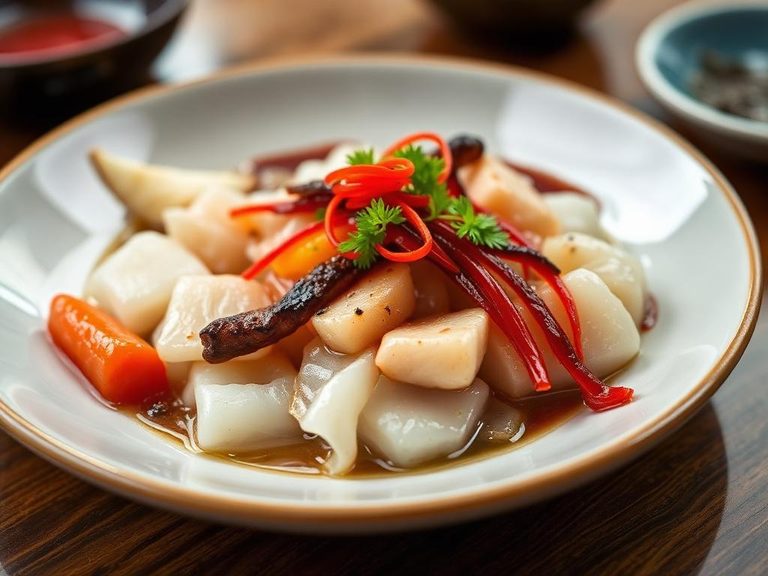
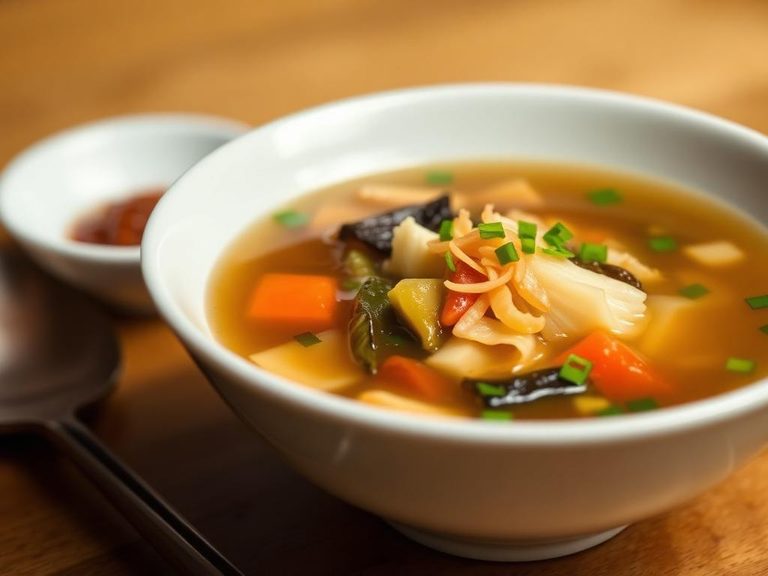
Kenchin-jiru is a traditional Japanese vegetable soup originating from Zen Buddhist temples, known for its hearty, plant-based composition. It typically features root vegetables like daikon, carrots, and taro, along with tofu and konnyaku, simmered in a simple soy sauce or miso-flavored broth. The dish embodies the principles of shōjin ryōri, or Buddhist vegetarian cuisine, emphasizing seasonal, local ingredients.
🍽️ Nutrition at a glance
Kenchin-jiru is a low-calorie, nutrient-dense soup that is moderate in carbohydrates from root vegetables and provides plant-based protein from tofu. It is rich in dietary fiber, vitamins A and C, and minerals like potassium, making it a nourishing and balanced meal option.
Nutrition breakdown
| Calories | 120 kcal |
| Protein | 6 g |
| Carbs | 18 g |
| Fat | 3 g |
| Fiber | 4 g |
| Sugar | 5 g |
| Sodium | 480 mg |
| Potassium | 400 mg |
| Vitamin A | 80% DV |
| Vitamin C | 25% DV |
| Manganese | 30% DV |
| Iron | 10% DV |
| Calcium | 8% DV |
Per 1 bowl (300 g) · estimated, varies by recipe
💡 What's interesting
Culturally, Kenchin-jiru is a cornerstone of shōjin ryōri, reflecting the Buddhist emphasis on mindfulness, simplicity, and non-waste cooking. Nutritionally, its combination of high-fiber vegetables and protein-rich tofu makes it exceptionally satiating and supportive of digestive health.
🍽️ Related dishes
AI estimate may be inaccurate · Terms