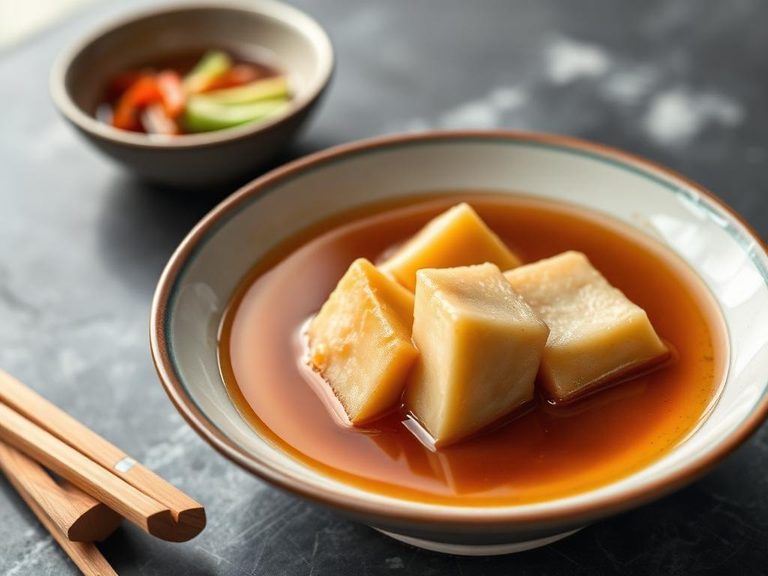
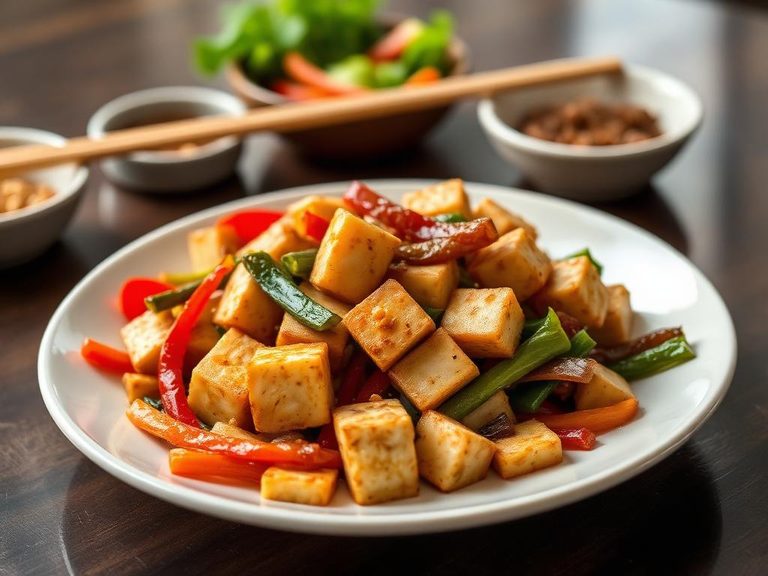
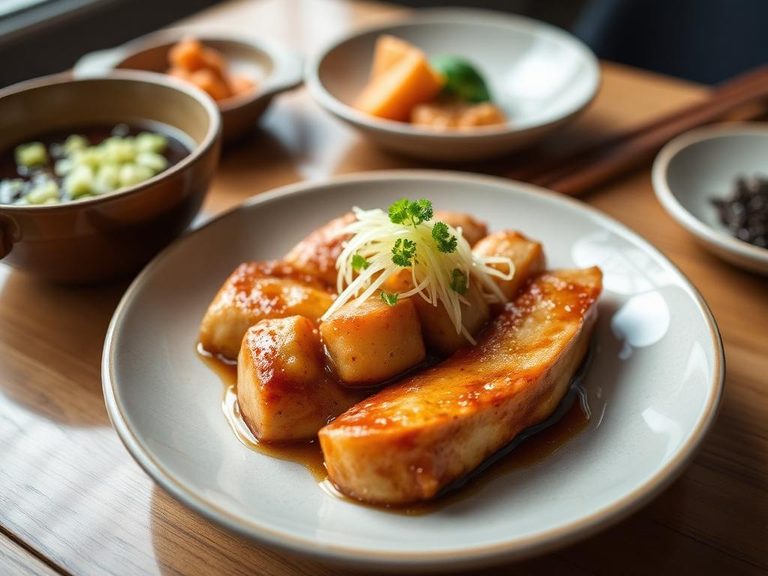
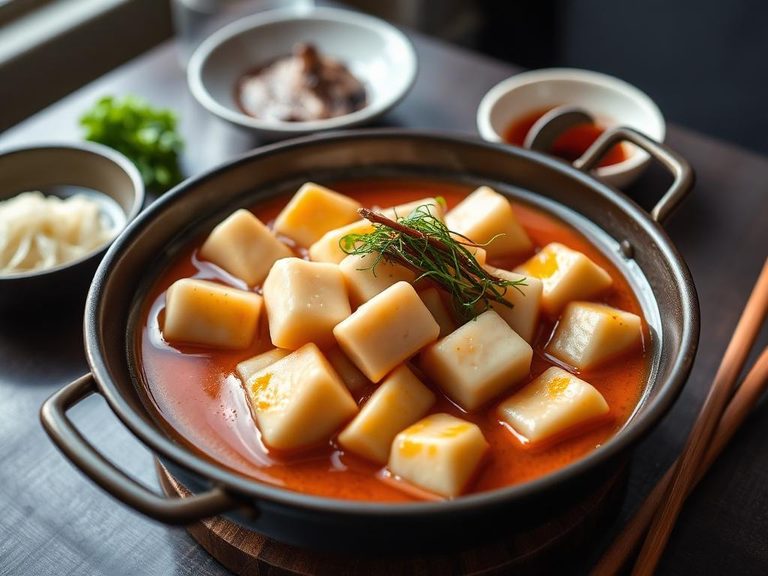
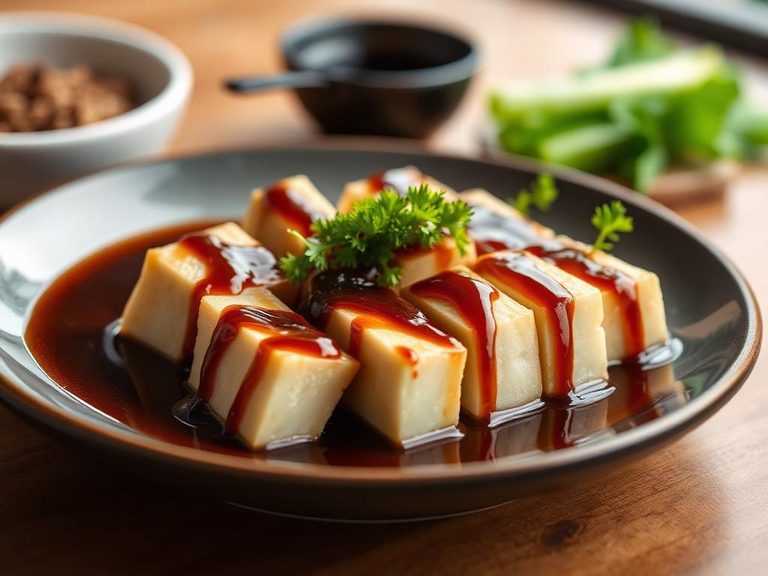
Simmered Koyadofu with vegetables
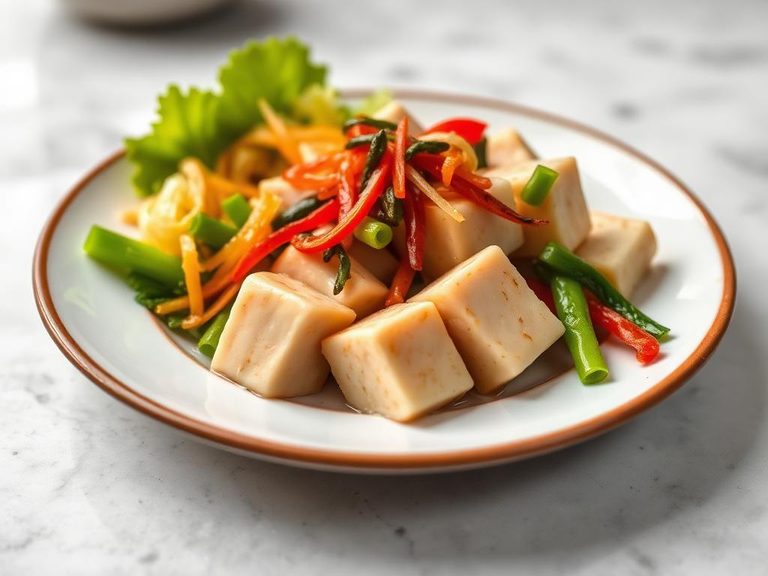
Simmered Koyadofu with vegetables is a classic Japanese dish featuring freeze-dried tofu (koyadofu) that has been rehydrated and gently simmered in a savory broth with vegetables like carrots, shiitake mushrooms, and konnyaku. It's a staple of Japanese home cooking and Buddhist temple cuisine (shōjin ryōri), prized for its ability to absorb rich flavors. The dish is typically seasoned with soy sauce, mirin, and sugar, creating a balanced sweet and savory taste.
🍽️ Nutrition at a glance
This dish is a good source of plant-based protein and dietary fiber, with a moderate carbohydrate content from the tofu and vegetables. A typical serving provides a range of essential minerals, including iron and calcium, and is relatively low in fat, with a calorie count generally between 200-300 kcal per serving.
Nutrition breakdown
| Calories | 220 kcal |
| Protein | 18 g |
| Carbs | 12 g |
| Fat | 8 g |
| Fiber | 5 g |
| Sugar | 4 g |
| Sodium | 650 mg |
| Iron | 4.5 mg |
| Calcium | 350 mg |
| Potassium | 400 mg |
| Magnesium | 80 mg |
| Phosphorus | 220 mg |
| Manganese | 1.2 mg |
| Copper | 0.4 mg |
| Selenium | 12 mcg |
Per 1 cup (240 g) · estimated, varies by recipe
💡 What's interesting
Koyadofu is a remarkable ingredient because its freeze-dried, porous texture acts like a sponge, soaking up the surrounding broth and seasonings to become incredibly flavorful. Nutritionally, it's a concentrated source of soy protein, making it a highly valued meat substitute in traditional vegetarian Japanese cuisine.