

Squash, winter, acorn, cooked, baked, without salt
Whole food · Vegetables and Vegetable Products

Photo: Wikipedia
Baked acorn squash is a sweet, nutty winter squash with a tender, velvety flesh that deepens in flavor when roasted. Its vibrant orange interior is rich in fiber and complex carbs, offering a satisfying, naturally sweet side dish with minimal fat. The texture is creamy yet slightly firm, making it a versatile base for both savory and sweet preparations.
Calorie split: 7% protein · 91% carbs · 2% fat
↓ Full nutrition💚 Why it's loved
People love its caramelized, buttery sweetness when baked, which pairs beautifully with herbs like sage and thyme. Its distinctive acorn shape and edible skin make it a visually appealing centerpiece for autumn meals and holiday tables.
⚠️ Watch-outs & how to enjoy it better
Its natural sugars can cause blood-sugar spikes if eaten in large portions alone; pair with protein (like lentils or chicken) or healthy fats (like olive oil or nuts) to slow absorption. The tough skin can be hard to digest for some, so peeling before cooking is an option, though the skin is edible when baked soft.
Key benefits
- High in dietary fiber (4.4g per 100g) for digestive health
- Low in calories (56 kcal per 100g) and virtually fat-free
- Good source of complex carbohydrates for sustained energy
- Contains vitamin A and potassium from its orange flesh
- Naturally gluten-free and suitable for plant-based diets
🍽️ Popular dishes
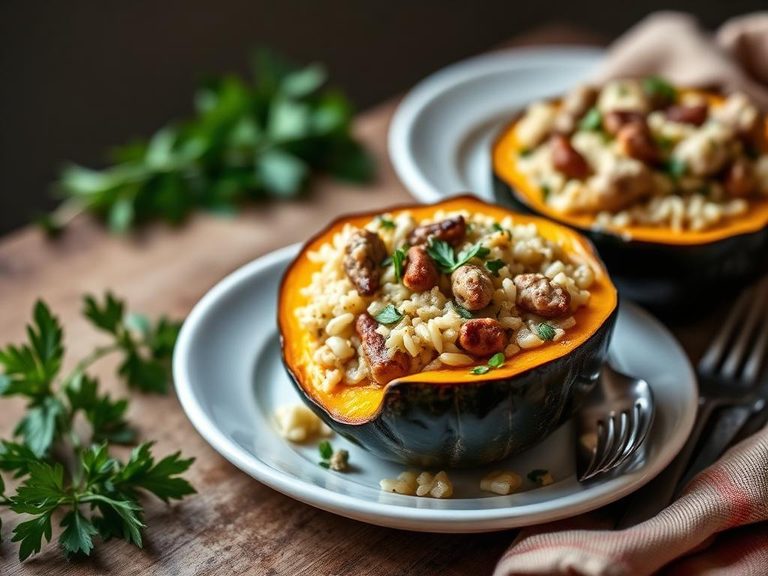
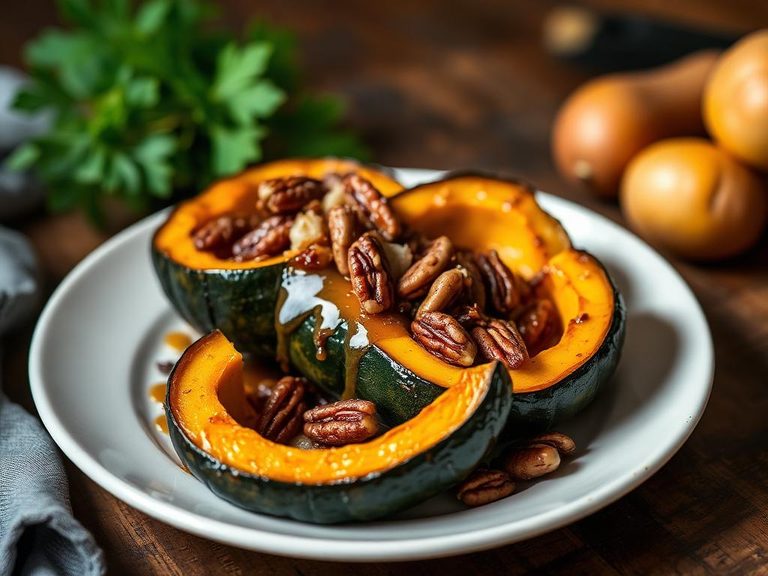
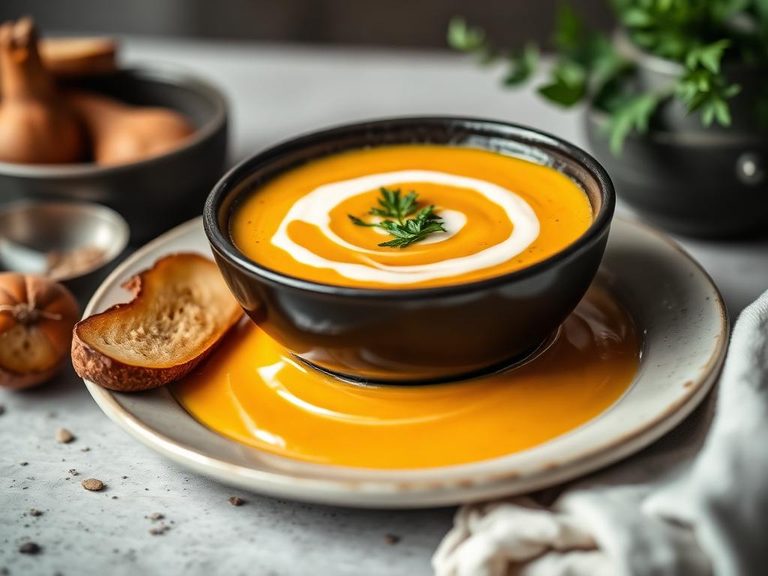
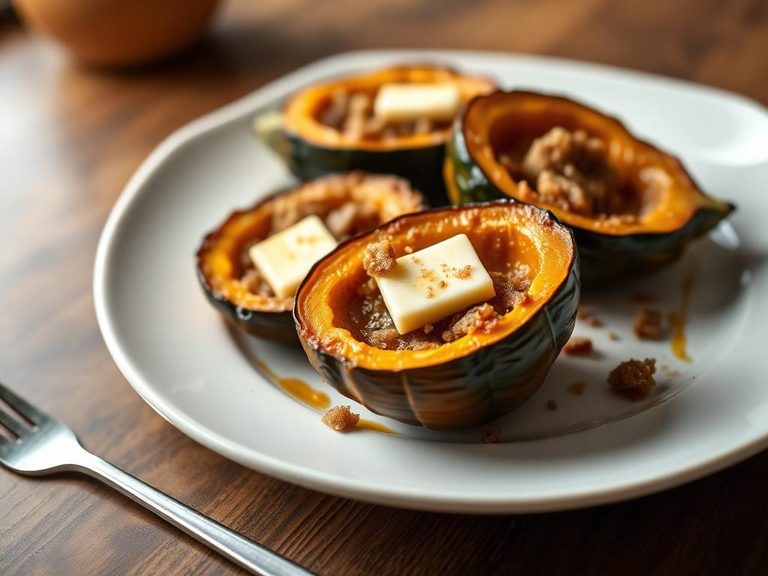
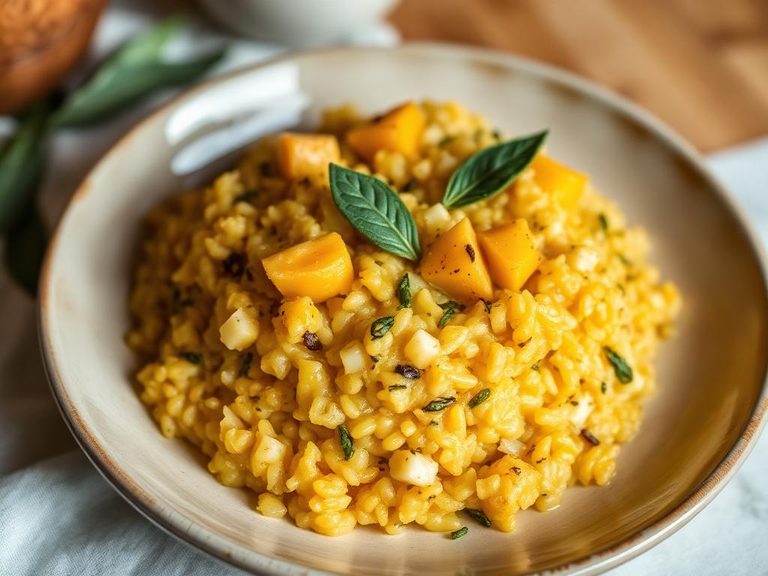
🌍 Where it's eaten
💡 Did you know?
Acorn squash was cultivated by Native American tribes long before European contact, and its name comes from its acorn-like shape, not its flavor.
Full nutrition (USDA data · scales with serving)
| Water | 82.9 g |
| Energy | 56.0 kcal |
| Energy | 234 kj |
| Protein | 1.1 g |
| Total lipid (fat) | 0.14 g |
| Ash | 1.3 g |
| Carbohydrate, by difference | 14.6 g |
| Fiber, total dietary | 4.4 g |
| Calcium, Ca | 44.0 mg |
| Iron, Fe | 0.93 mg |
| Magnesium, Mg | 43.0 mg |
| Phosphorus, P | 45.0 mg |
| Potassium, K | 437 mg |
| Sodium, Na | 4.0 mg |
| Zinc, Zn | 0.17 mg |
| Copper, Cu | 0.09 mg |
| Manganese, Mn | 0.24 mg |
| Selenium, Se | 0.70 ug |
| Vitamin C, total ascorbic acid | 10.8 mg |
| Thiamin | 0.17 mg |
| Riboflavin | 0.01 mg |
| Niacin | 0.88 mg |
| Pantothenic acid | 0.50 mg |
| Vitamin B-6 | 0.19 mg |
| Folate, total | 19.0 ug |
| Folic acid | 0.00 ug |
| Folate, food | 19.0 ug |
| Folate, DFE | 19.0 ug |
| Vitamin B-12 | 0.00 ug |
| Vitamin A, RAE | 21.0 ug |
| Retinol | 0.00 ug |
| Vitamin A, IU | 428 iu |
| Vitamin D (D2 + D3), International Units | 0.00 iu |
| Vitamin D (D2 + D3) | 0.00 ug |
Fat & fatty acid profile (per 100g)
| Fatty acids, total saturated | 0.03 g |
| SFA 12:0 | 0.00 g |
| SFA 14:0 | 0.00 g |
| SFA 16:0 | 0.03 g |
| SFA 18:0 | 0.00 g |
| Fatty acids, total monounsaturated | 0.01 g |
| MUFA 16:1 | 0.00 g |
| MUFA 18:1 | 0.01 g |
| Fatty acids, total polyunsaturated | 0.06 g |
| PUFA 18:2 | 0.02 g |
| PUFA 18:3 | 0.04 g |
| Fatty acids, total trans | 0.00 g |
| Cholesterol | 0.00 mg |
Amino acid profile (per 100g)
| Tryptophan | 0.02 g |
| Threonine | 0.03 g |
| Isoleucine | 0.04 g |
| Leucine | 0.06 g |
| Lysine | 0.04 g |
| Methionine | 0.01 g |
| Cystine | 0.01 g |
| Phenylalanine | 0.04 g |
| Tyrosine | 0.04 g |
| Valine | 0.05 g |
| Arginine | 0.06 g |
| Histidine | 0.02 g |
| Alanine | 0.05 g |
| Aspartic acid | 0.12 g |
| Glutamic acid | 0.20 g |
| Glycine | 0.04 g |
| Proline | 0.04 g |
| Serine | 0.04 g |
FAQ
Is the skin of acorn squash edible?
Yes, the skin becomes tender when baked and is safe to eat, though some prefer to peel it for a smoother texture.
How does baked acorn squash compare nutritionally to other winter squashes?
It's similar to butternut or spaghetti squash in calories and carbs, but slightly higher in fiber and lower in sugar per 100g.
Can I freeze baked acorn squash?
Yes, baked and mashed acorn squash freezes well for up to 3 months; store in airtight containers or freezer bags.
Nutrient density (calculated · NRF9.3)
Nutrient Rich Foods index: beneficial nutrients (protein, fiber, vitamins, minerals) minus saturated fat, added sugar & sodium, per 100 kcal.
NRF9.3 index — Fulgoni, Keast & Drewnowski, 2009. Computed from USDA nutrients.
Weight-loss friendliness (composite index)
Energy density 0.56 kcal/g · 8% calories from protein · 4.4 g fiber · 0.0 g sugar per 100 g.
Composite of energy density (Rolls et al., 1999), protein & fiber satiety, minus sugar. A calculated heuristic — ranks satiety-per-calorie, not a clinical measure.
Dietary load (calculated from USDA values)
Potential renal acid load. Positive = acid-forming, negative = alkaline-forming.
Sodium-to-potassium ratio: 0.01 (lower is better — aim for ≤ 1)
Sodium:potassium per WHO potassium guidance. Computed from USDA nutrients.