

Shallots, bulb, peeled, root removed, raw
Whole food · Vegetables and Vegetable Products
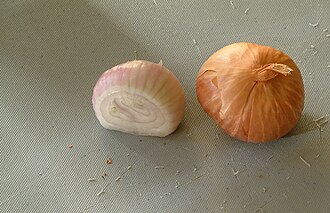
Photo: Wikipedia
The shallot bulb is a delicate, elongated member of the allium family, prized for its complex flavor that blends the sweetness of garlic with a mild, sophisticated onion bite. When raw and peeled, its crisp, layered texture releases a sharp, aromatic pungency that mellows into a sweet, savory depth when cooked. Nutritionally, it is a low-calorie powerhouse, offering a significant 2.2g of fiber per 100g to support digestion and gut health without adding any sugar, fat, or carbohydrates.
Calorie split: 100% protein · 0% carbs · 0% fat
↓ Full nutrition💚 Why it's loved
People love shallots for their refined, multi-layered flavor that adds a subtle, sweet complexity without the harshness of regular onions. They are the secret weapon of chefs, prized for their versatility in raw salsas, delicate vinaigrettes, and as the aromatic foundation for countless sauces and stews.
⚠️ Watch-outs & how to enjoy it better
Raw shallots can be quite pungent and may cause mild digestive discomfort or heartburn for some individuals, particularly those with sensitive stomachs. To counteract this, you can soak sliced raw shallots in cold water or vinegar for 10-15 minutes to mellow their bite, or cook them thoroughly to bring out their natural sweetness.
Key benefits
- Excellent source of dietary fiber (2.2g per 100g) for digestive health.
- Contains beneficial sulfur compounds and antioxidants like quercetin.
- Provides a flavorful, low-calorie base for countless dishes.
- Naturally free of fat, sugar, and cholesterol.
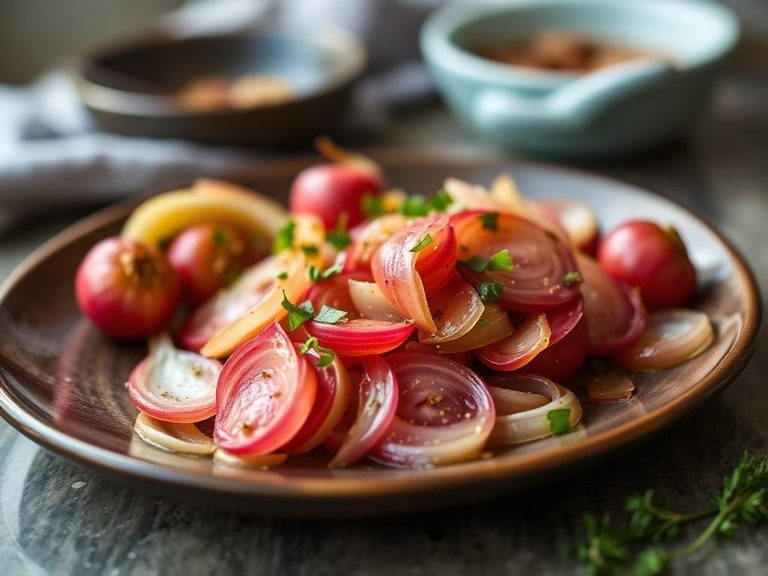
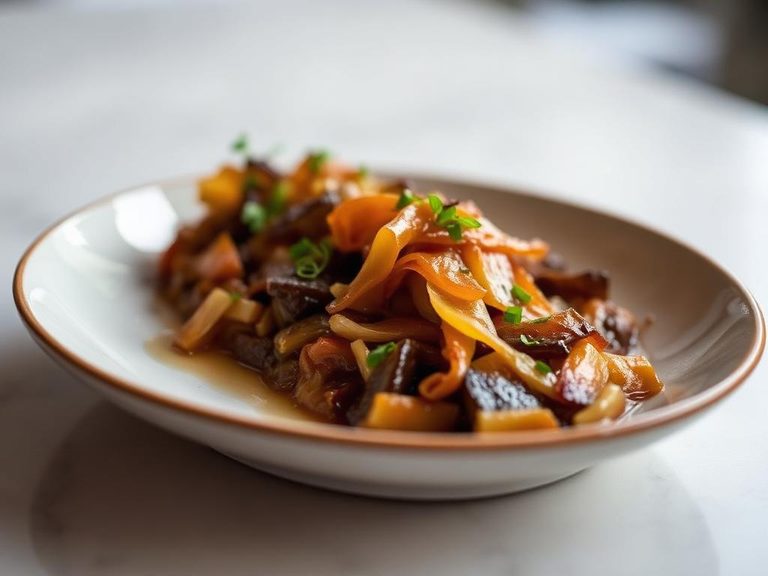
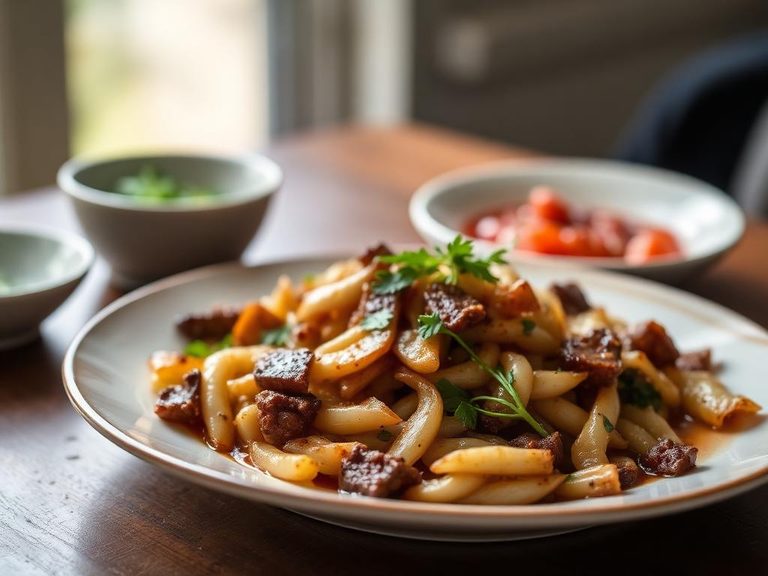
🍽️ Popular dishes
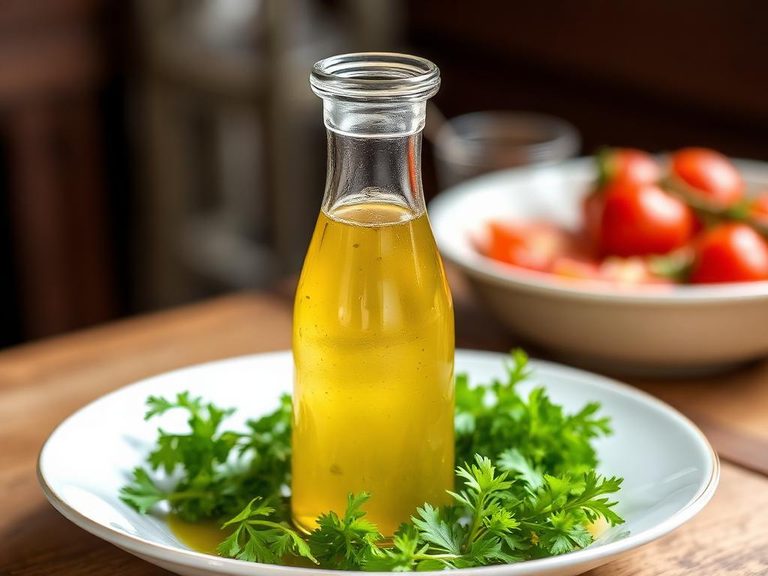
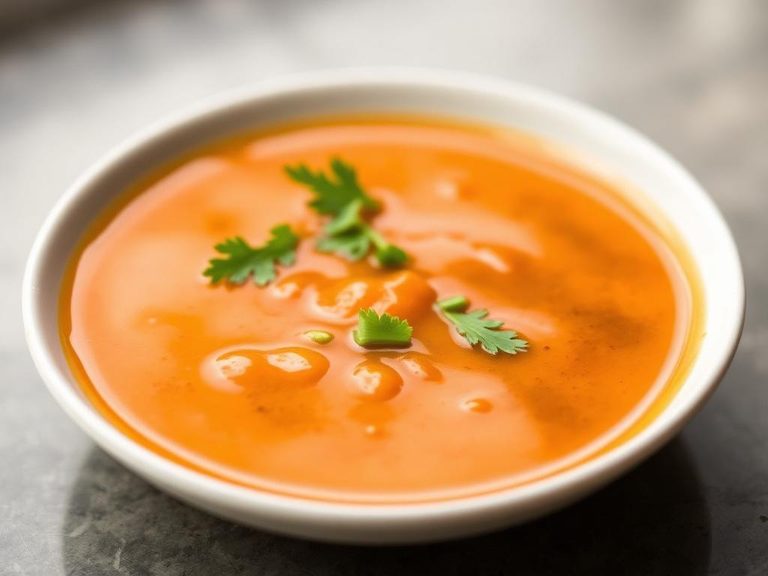
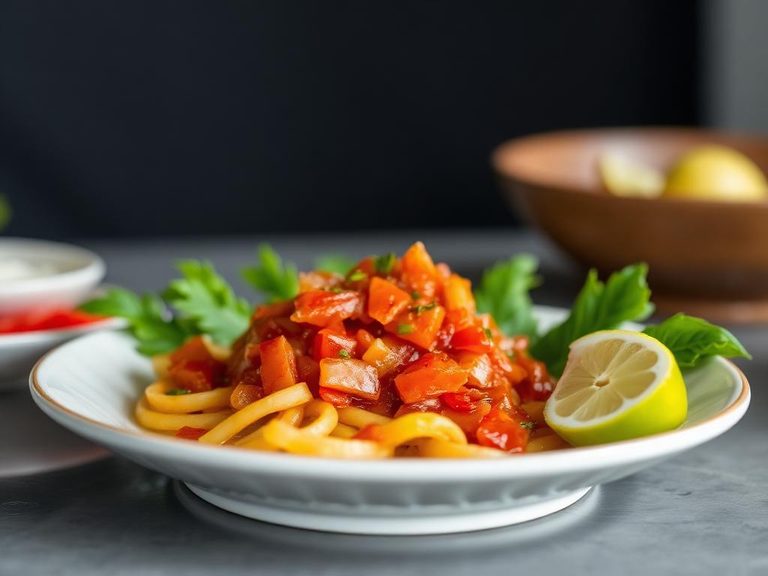
🌍 Where it's eaten
💡 Did you know?
The name 'shallot' comes from the ancient city of Ashkelon (in modern-day Israel), where they were first cultivated and introduced to Europe by returning Crusaders.
Full nutrition (USDA data · scales with serving)
| Water | 83.5 g |
| Nitrogen | 0.22 g |
| Protein | 1.4 g |
| Ash | 0.63 g |
| Fiber, total dietary | 2.2 g |
| Sugars, Total | 4.4 g |
| Sucrose | 1.9 g |
| Glucose | 0.50 g |
| Fructose | 1.9 g |
| Lactose | 0.03 g |
| Maltose | 0.03 g |
| Calcium, Ca | 26.1 mg |
| Iron, Fe | 0.33 mg |
| Magnesium, Mg | 15.1 mg |
| Phosphorus, P | 54.6 mg |
| Potassium, K | 252 mg |
| Sodium, Na | 3.6 mg |
| Zinc, Zn | 0.28 mg |
| Copper, Cu | 0.08 mg |
| Manganese, Mn | 0.15 mg |
| Vitamin B-6 | 0.18 mg |
| Biotin | 1.4 ug |
Fat & fatty acid profile (per 100g)
Estimated from Shallots, freeze-dried — USDA does not publish this profile for Shallots.
| Fatty acids, total saturated | 0.08 g |
| SFA 4:0 | 0.00 g |
| SFA 6:0 | 0.00 g |
| SFA 8:0 | 0.00 g |
| SFA 10:0 | 0.00 g |
| SFA 12:0 | 0.00 g |
| SFA 14:0 | 0.00 g |
| SFA 16:0 | 0.07 g |
| SFA 18:0 | 0.01 g |
| Fatty acids, total monounsaturated | 0.07 g |
| MUFA 16:1 | 0.00 g |
| MUFA 18:1 | 0.07 g |
| MUFA 20:1 | 0.00 g |
| MUFA 22:1 | 0.00 g |
| Fatty acids, total polyunsaturated | 0.20 g |
| PUFA 18:2 | 0.18 g |
| PUFA 18:3 | 0.01 g |
| PUFA 18:4 | 0.00 g |
| PUFA 20:4 | 0.00 g |
| PUFA 20:5 n-3 (EPA) | 0.00 g |
| PUFA 22:5 n-3 (DPA) | 0.00 g |
| PUFA 22:6 n-3 (DHA) | 0.00 g |
| Fatty acids, total trans | 0.00 g |
| Cholesterol | 0.00 mg |
Amino acid profile (per 100g)
Estimated from Shallots, freeze-dried — USDA does not publish this profile for Shallots.
| Tryptophan | 0.14 g |
| Threonine | 0.48 g |
| Isoleucine | 0.52 g |
| Leucine | 0.73 g |
| Lysine | 0.61 g |
| Methionine | 0.13 g |
| Phenylalanine | 0.40 g |
| Tyrosine | 0.36 g |
| Valine | 0.54 g |
| Arginine | 0.89 g |
| Histidine | 0.21 g |
| Alanine | 0.56 g |
| Aspartic acid | 1.1 g |
| Glutamic acid | 2.5 g |
| Glycine | 0.61 g |
| Proline | 0.81 g |
| Serine | 0.56 g |
FAQ
What's the difference between a shallot and an onion?
Shallots are smaller, milder, and have a more complex, slightly sweet and garlicky flavor compared to the sharper, more pungent taste of regular onions. They also have a more delicate, layered texture.
Can I substitute shallots with onions or garlic?
Yes, but the flavor will differ. A mix of equal parts minced onion and garlic can approximate the flavor, but it won't be identical. For the closest substitute, use a mild red onion in a smaller quantity.
How should I store peeled shallots?
Once peeled, shallots should be used quickly. Store them in an airtight container in the refrigerator for up to 3-4 days. For longer storage, you can freeze them or preserve them in oil or vinegar.
Dietary load (calculated from USDA values)
Potential renal acid load. Positive = acid-forming, negative = alkaline-forming.
Sodium-to-potassium ratio: 0.01 (lower is better — aim for ≤ 1)
Sodium:potassium per WHO potassium guidance. Computed from USDA nutrients.