

Raspberries, frozen
Common food

Photo: Wikipedia
Frozen raspberries are flash-frozen at peak ripeness, preserving their vibrant, ruby-red color and intense, sweet-tart flavor. The texture softens upon thawing, releasing a jewel-toned juice, making them ideal for sauces and baking. They are a low-calorie, high-fiber powerhouse, offering nearly 7 grams of fiber per 100-gram serving.
Calorie split: 7% protein · 90% carbs · 3% fat
↓ Full nutrition💚 Why it's loved
People love frozen raspberries for their year-round availability and intense berry flavor, which is perfect for smoothies, desserts, and sauces. They offer a convenient way to enjoy a summer fruit in any season, from a quick snack to elegant culinary creations.
⚠️ Watch-outs & how to enjoy it better
The high fiber and natural sugar content may cause digestive discomfort or a blood sugar spike in sensitive individuals if consumed in large quantities. To counteract this, pair them with a source of protein or healthy fat (like yogurt or nuts) to slow sugar absorption and practice portion control.
Key benefits
- Excellent source of dietary fiber for digestive health.
- Rich in antioxidants like vitamin C and ellagic acid.
- Low in calories and naturally fat-free.
- Provides a quick, natural source of energy from carbohydrates.
- Frozen at peak ripeness, locking in nutrients and flavor.
🍽️ Popular dishes
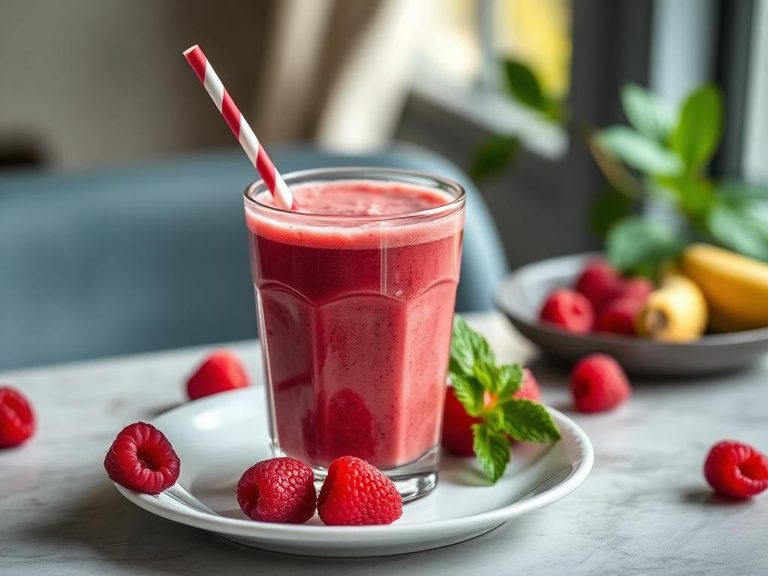
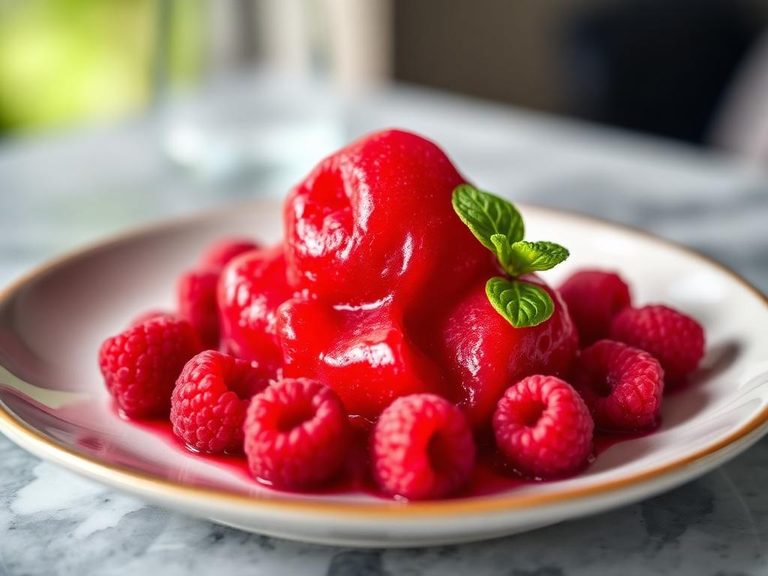
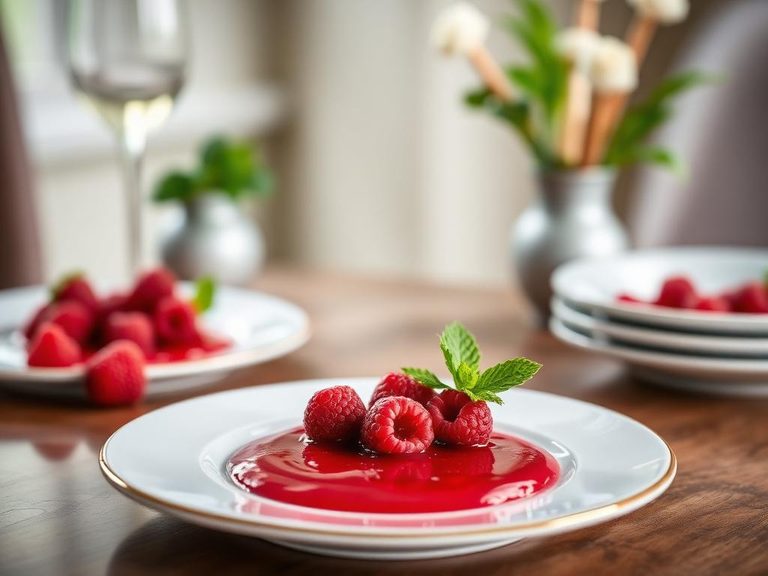
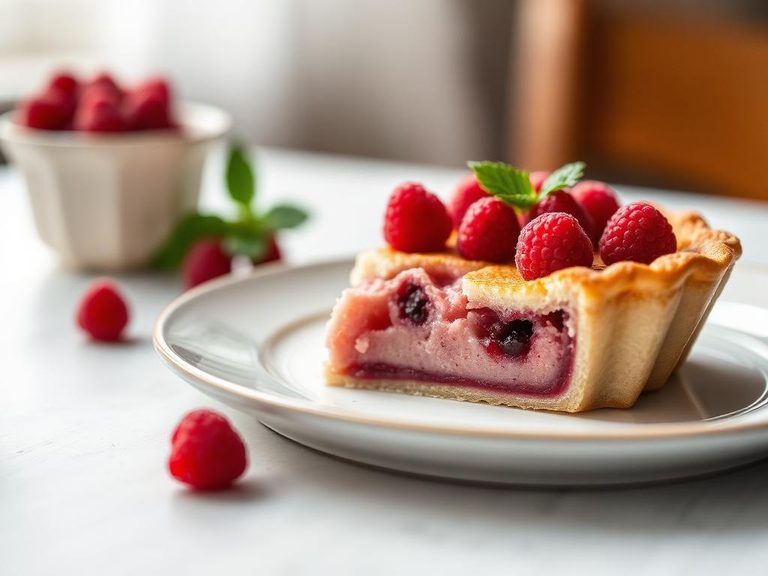
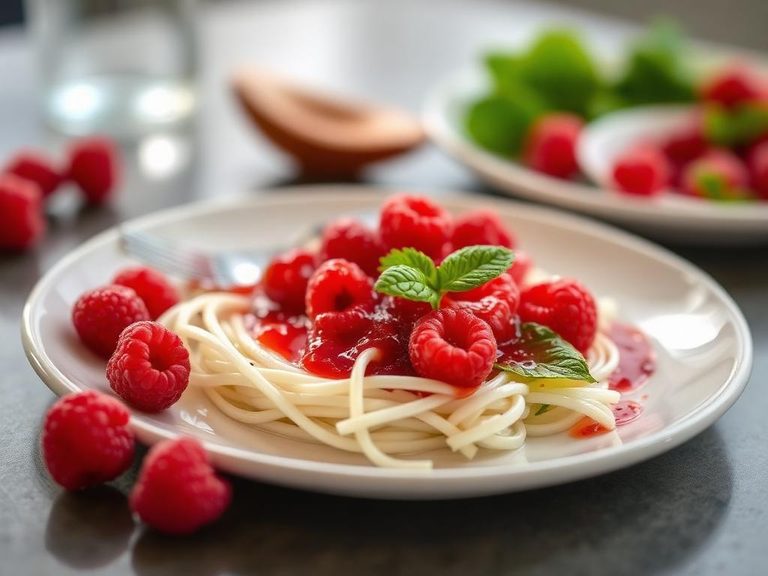
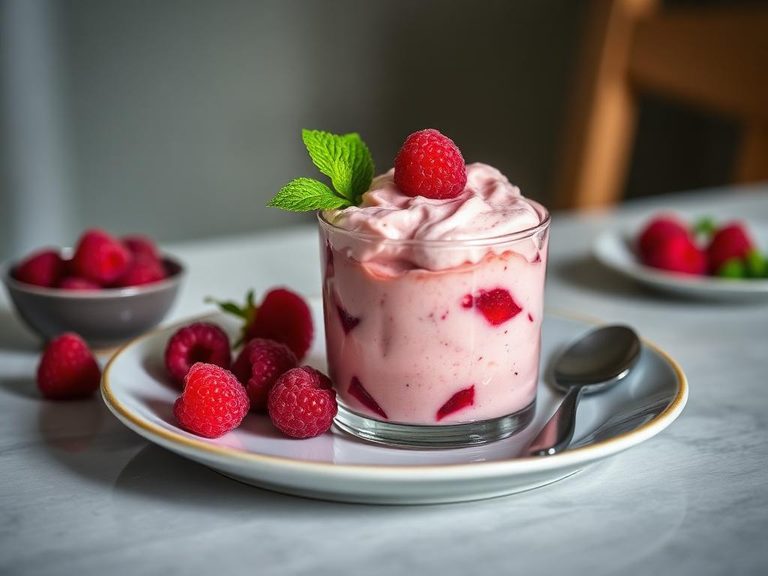
🌍 Where it's eaten
💡 Did you know?
A single raspberry is actually an aggregate fruit, made up of 75-125 tiny individual fruits called drupelets, each containing its own seed.
Full nutrition (USDA data · scales with serving)
| Water | 85.5 g |
| Energy | 57.0 kcal |
| Protein | 1.0 g |
| Total lipid (fat) | 0.19 g |
| Carbohydrate, by difference | 12.9 g |
| Fiber, total dietary | 6.5 g |
| Total Sugars | 2.7 g |
| Calcium, Ca | 16.0 mg |
| Iron, Fe | 0.45 mg |
| Magnesium, Mg | 19.0 mg |
| Phosphorus, P | 27.0 mg |
| Potassium, K | 156 mg |
| Sodium, Na | 0.00 mg |
| Zinc, Zn | 0.22 mg |
| Copper, Cu | 0.05 mg |
| Selenium, Se | 0.20 ug |
| Vitamin C, total ascorbic acid | 23.0 mg |
| Thiamin | 0.03 mg |
| Riboflavin | 0.04 mg |
| Niacin | 0.60 mg |
| Vitamin B-6 | 0.06 mg |
| Folate, total | 21.0 ug |
| Folic acid | 0.00 ug |
| Folate, food | 21.0 ug |
| Folate, DFE | 21.0 ug |
| Choline, total | 12.3 mg |
| Vitamin B-12 | 0.00 ug |
| Vitamin B-12, added | 0.00 ug |
| Vitamin A, RAE | 2.0 ug |
| Retinol | 0.00 ug |
| Carotene, beta | 12.0 ug |
| Carotene, alpha | 16.0 ug |
| Cryptoxanthin, beta | 0.00 ug |
| Lycopene | 0.00 ug |
| Lutein + zeaxanthin | 136 ug |
| Vitamin E (alpha-tocopherol) | 0.87 mg |
| Vitamin E, added | 0.00 mg |
| Vitamin D (D2 + D3) | 0.00 ug |
| Vitamin K (phylloquinone) | 7.8 ug |
| Alcohol, ethyl | 0.00 g |
| Caffeine | 0.00 mg |
| Theobromine | 0.00 mg |
Fat & fatty acid profile (per 100g)
| Fatty acids, total saturated | 0.02 g |
| SFA 4:0 | 0.00 g |
| SFA 6:0 | 0.00 g |
| SFA 8:0 | 0.00 g |
| SFA 10:0 | 0.00 g |
| SFA 12:0 | 0.00 g |
| SFA 14:0 | 0.00 g |
| SFA 16:0 | 0.02 g |
| SFA 18:0 | 0.00 g |
| Fatty acids, total monounsaturated | 0.06 g |
| MUFA 16:1 | 0.00 g |
| MUFA 18:1 | 0.06 g |
| MUFA 20:1 | 0.01 g |
| MUFA 22:1 | 0.00 g |
| Fatty acids, total polyunsaturated | 0.38 g |
| PUFA 18:2 | 0.25 g |
| PUFA 18:3 | 0.13 g |
| PUFA 18:4 | 0.00 g |
| PUFA 20:4 | 0.00 g |
| PUFA 20:5 n-3 (EPA) | 0.00 g |
| PUFA 22:5 n-3 (DPA) | 0.00 g |
| PUFA 22:6 n-3 (DHA) | 0.00 g |
| Cholesterol | 0.00 mg |
FAQ
Are frozen raspberries as nutritious as fresh?
Yes, they are often more nutritious. Flash-freezing shortly after harvest locks in vitamins and antioxidants that can degrade in fresh berries during transport and storage.
Should I thaw them before using?
It depends on the recipe. For smoothies or baking, use them frozen. For eating as a snack or in yogurt, thawing in the refrigerator for a few hours gives a softer texture and releases more juice.
Can I refreeze thawed raspberries?
It's not recommended. Refreezing will significantly break down their cell structure, resulting in a mushy texture. It's best to thaw only what you need.
Nutrient density (calculated · NRF9.3)
Nutrient Rich Foods index: beneficial nutrients (protein, fiber, vitamins, minerals) minus saturated fat, added sugar & sodium, per 100 kcal.
NRF9.3 index — Fulgoni, Keast & Drewnowski, 2009. Computed from USDA nutrients.
Weight-loss friendliness (composite index)
Energy density 0.57 kcal/g · 7% calories from protein · 6.5 g fiber · 2.7 g sugar per 100 g.
Composite of energy density (Rolls et al., 1999), protein & fiber satiety, minus sugar. A calculated heuristic — ranks satiety-per-calorie, not a clinical measure.
Dietary load (calculated from USDA values)
Potential renal acid load. Positive = acid-forming, negative = alkaline-forming.
Sodium-to-potassium ratio: 0.00 (lower is better — aim for ≤ 1)
Sodium:potassium per WHO potassium guidance. Computed from USDA nutrients.