

Pie, fried pies, cherry
Whole food · Baked Products

Photo: Wikipedia
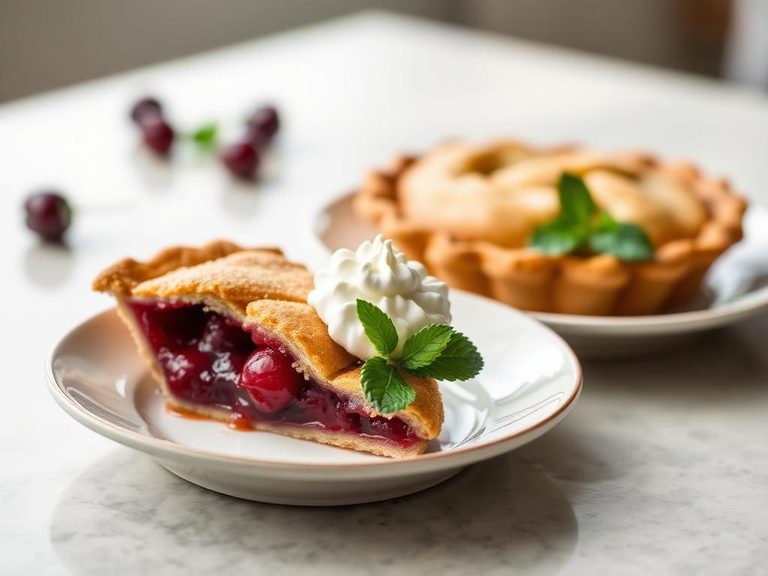
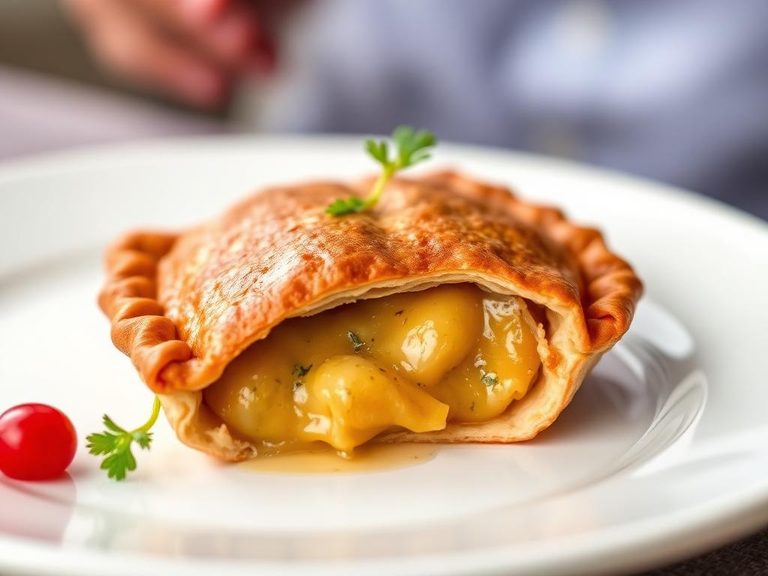
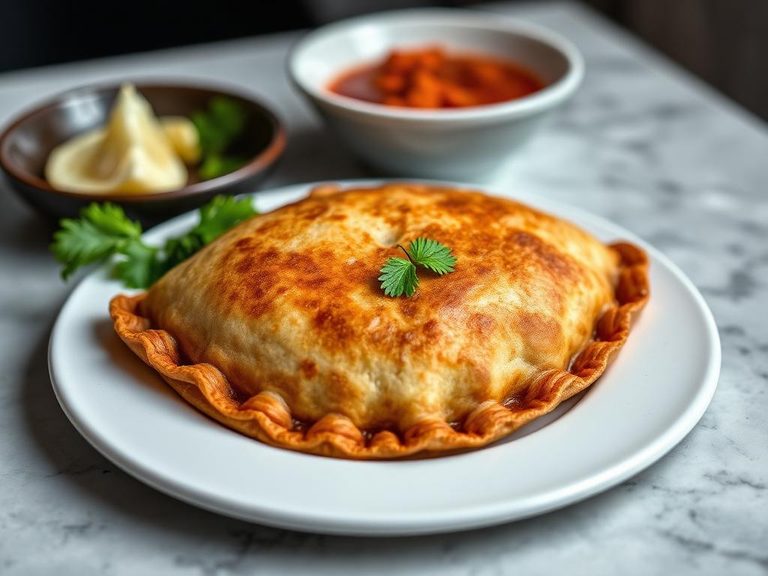
A fried pie is a hand-held pastry pocket, typically made with a flaky or biscuit-like dough, deep-fried to a golden, crispy exterior that gives way to a warm, sweet, and often gooey fruit filling. The cherry version is particularly beloved for its bright, tangy-sweet flavor that contrasts beautifully with the rich, buttery crust. Nutritionally, it is a calorie-dense treat, with a significant portion of its energy coming from carbohydrates and fat, offering a quick but fleeting energy boost.
Calorie split: 4% protein · 52% carbs · 44% fat
↓ Full nutrition💚 Why it's loved
People love fried cherry pies for the irresistible contrast of a shattering, crispy crust and a warm, jammy, sweet-tart filling. It's a nostalgic comfort food, often associated with state fairs, Southern U.S. cuisine, and homemade family recipes, evoking a sense of tradition and indulgence.
⚠️ Watch-outs & how to enjoy it better
The high fat and carbohydrate content can lead to a rapid blood sugar spike and subsequent crash, making it a poor choice for those managing diabetes or insulin resistance. To counteract this, pair a small portion with a source of protein or healthy fat (like a handful of nuts or a glass of milk) to slow digestion, and be mindful of portion control, enjoying it as an occasional treat rather than a regular snack. Those with gluten or dairy sensitivities should also be cautious, as the dough typically contains wheat flour and may be fried in shared oil.
Key benefits
- Provides a quick source of energy from carbohydrates.
- Offers a small amount of dietary fiber from the fruit filling.
- A convenient, portable, and satisfying comfort food.
- Can be a morale-boosting treat or dessert.
🍽️ Popular dishes
🌍 Where it's eaten
💡 Did you know?
The tradition of frying fruit-filled pastries dates back to medieval Europe, but the American fried pie gained immense popularity during the Great Depression as an affordable, portable, and filling dessert made with simple ingredients.
Full nutrition (USDA data · scales with serving)
| Water | 37.6 g |
| Energy | 316 kcal |
| Energy | 1322 kj |
| Protein | 3.0 g |
| Total lipid (fat) | 16.1 g |
| Ash | 1.1 g |
| Carbohydrate, by difference | 42.6 g |
| Fiber, total dietary | 2.6 g |
| Calcium, Ca | 22.0 mg |
| Iron, Fe | 1.2 mg |
| Magnesium, Mg | 10.0 mg |
| Phosphorus, P | 43.0 mg |
| Potassium, K | 65.0 mg |
| Sodium, Na | 374 mg |
| Zinc, Zn | 0.23 mg |
| Copper, Cu | 0.05 mg |
| Manganese, Mn | 0.22 mg |
| Selenium, Se | 2.4 ug |
| Vitamin C, total ascorbic acid | 1.3 mg |
| Thiamin | 0.14 mg |
| Riboflavin | 0.11 mg |
| Niacin | 1.4 mg |
| Pantothenic acid | 0.11 mg |
| Vitamin B-6 | 0.03 mg |
| Folate, total | 18.0 ug |
| Folic acid | 15.0 ug |
| Folate, food | 3.0 ug |
| Folate, DFE | 29.0 ug |
| Vitamin B-12 | 0.08 ug |
| Vitamin A, RAE | 9.0 ug |
| Retinol | 0.00 ug |
| Vitamin A, IU | 172 iu |
Fat & fatty acid profile (per 100g)
| Fatty acids, total saturated | 2.5 g |
| SFA 4:0 | 0.00 g |
| SFA 10:0 | 0.00 g |
| SFA 12:0 | 0.00 g |
| SFA 14:0 | 0.03 g |
| SFA 16:0 | 1.5 g |
| SFA 18:0 | 0.83 g |
| Fatty acids, total monounsaturated | 7.4 g |
| MUFA 16:1 | 0.01 g |
| MUFA 18:1 | 7.3 g |
| MUFA 20:1 | 0.09 g |
| MUFA 22:1 | 0.03 g |
| Fatty acids, total polyunsaturated | 5.4 g |
| PUFA 18:2 | 4.8 g |
| PUFA 18:3 | 0.57 g |
| Cholesterol | 0.00 mg |
Amino acid profile (per 100g)
| Tryptophan | 0.04 g |
| Threonine | 0.09 g |
| Isoleucine | 0.12 g |
| Leucine | 0.21 g |
| Lysine | 0.12 g |
| Methionine | 0.05 g |
| Cystine | 0.06 g |
| Phenylalanine | 0.14 g |
| Tyrosine | 0.09 g |
| Valine | 0.14 g |
| Arginine | 0.11 g |
| Histidine | 0.06 g |
| Alanine | 0.09 g |
| Aspartic acid | 0.16 g |
| Glutamic acid | 0.91 g |
| Glycine | 0.10 g |
| Proline | 0.31 g |
| Serine | 0.15 g |
FAQ
Are fried cherry pies baked or fried?
As the name suggests, fried cherry pies are deep-fried, which gives them their characteristic crispy, golden-brown crust, unlike baked pies which have a more flaky or crumbly texture.
What is the difference between a fried pie and a turnover?
While similar, a turnover is typically a folded pastry that can be baked or fried, often with a more open or decorative edge. A fried pie is specifically a sealed pocket of dough that is deep-fried, resulting in a more uniform, crispy exterior.
Can I make fried cherry pies at home?
Yes, you can make them at home by preparing a simple dough (like biscuit or pie crust dough), filling it with cherry pie filling, sealing it, and deep-frying it in oil until golden. It's a popular homemade treat, especially in the Southern United States.
Nutrient density (calculated · NRF9.3)
Nutrient Rich Foods index: beneficial nutrients (protein, fiber, vitamins, minerals) minus saturated fat, added sugar & sodium, per 100 kcal.
NRF9.3 index — Fulgoni, Keast & Drewnowski, 2009. Computed from USDA nutrients.
Weight-loss friendliness (composite index)
Energy density 3.16 kcal/g · 4% calories from protein · 2.6 g fiber · 0.0 g sugar per 100 g.
Composite of energy density (Rolls et al., 1999), protein & fiber satiety, minus sugar. A calculated heuristic — ranks satiety-per-calorie, not a clinical measure.
Dietary load (calculated from USDA values)
Potential renal acid load. Positive = acid-forming, negative = alkaline-forming.
Sodium-to-potassium ratio: 5.75 (lower is better — aim for ≤ 1)
Sodium:potassium per WHO potassium guidance. Computed from USDA nutrients.