

Pears, raw, bosc (Includes foods for USDA's Food Distribution Program)
Whole food · Fruits and Fruit Juices

Photo: Wikipedia
The Bosc pear is an elegant, long-necked variety prized for its firm, dense, and slightly grainy texture that holds up beautifully when cooked or eaten fresh. Its skin is a warm, russeted bronze, and the flesh is sweet with a complex, honeyed flavor and subtle notes of spice. Nutritionally, it's a low-calorie, high-fiber fruit that provides a good source of natural sugars for energy.
Calorie split: 2% protein · 97% carbs · 1% fat
↓ Full nutrition💚 Why it's loved
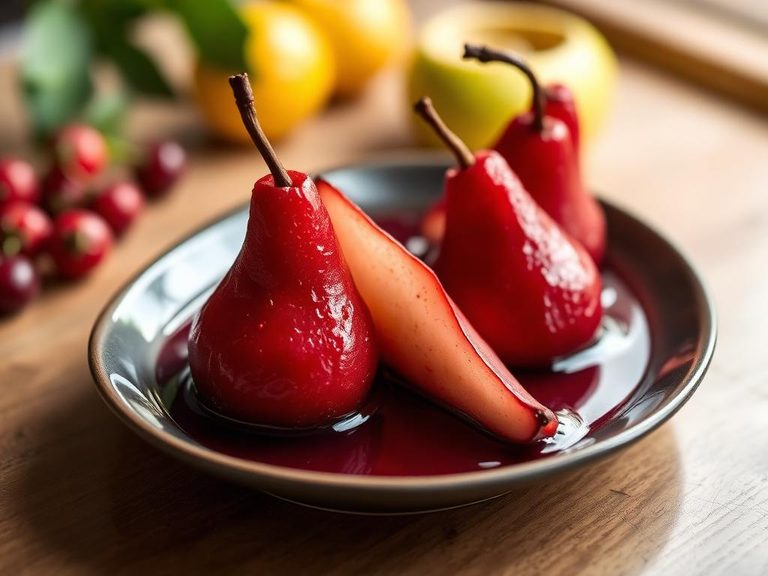
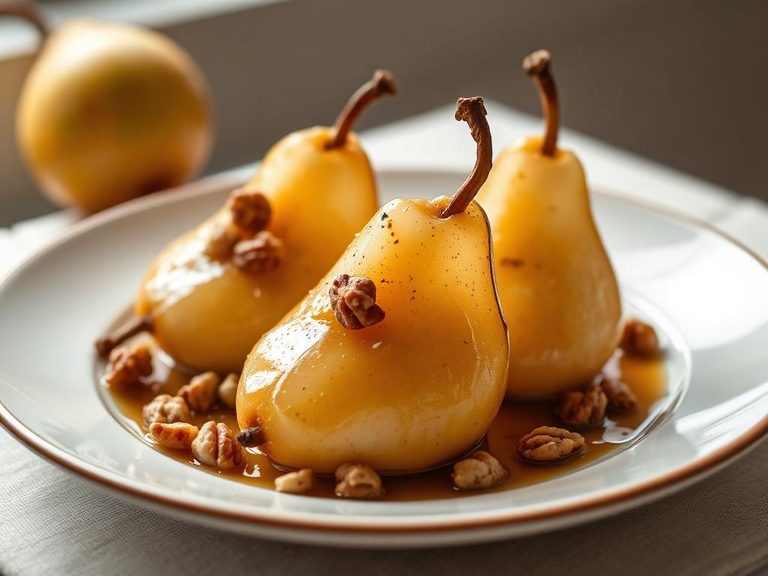
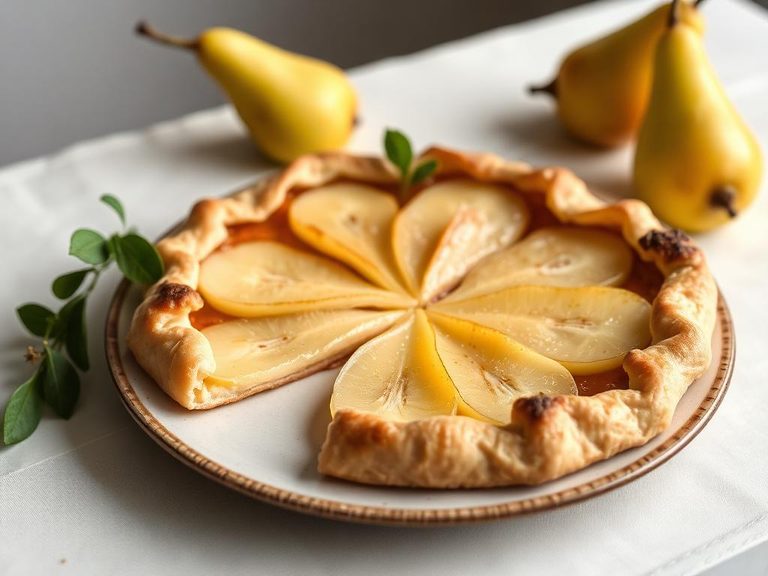
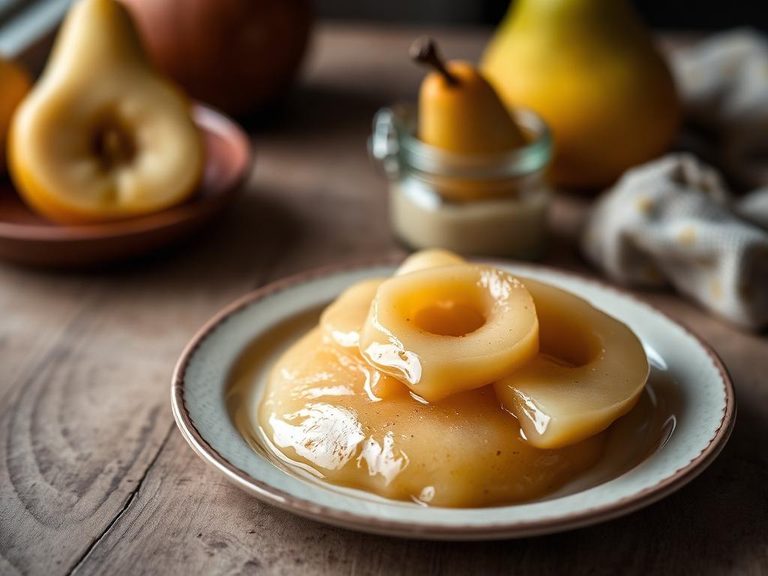
People love the Bosc pear for its uniquely firm, non-gritty texture and rich, aromatic sweetness that deepens as it ripens. Its ability to maintain its shape when baked or poached makes it a favorite in both rustic and refined desserts.
⚠️ Watch-outs & how to enjoy it better
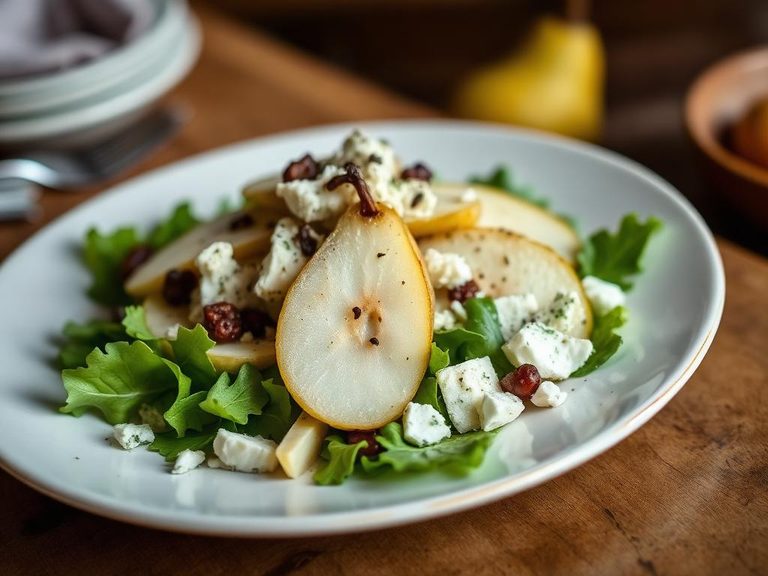
The Bosc pear's natural sugars can cause blood-sugar spikes if eaten in large quantities, especially by those with insulin sensitivity. To counteract this, pair it with a source of protein or healthy fat, like a handful of almonds or a slice of cheese, to slow sugar absorption. Also, its firm texture can be less appealing to those who prefer softer, juicier pear varieties.
Key benefits
- High in dietary fiber (3.1g per 100g), aiding digestion and satiety.
- Low in fat and calories, making it a light, nutrient-dense snack.
- Good source of natural sugars for quick energy without added sweeteners.
- Contains antioxidants like vitamin C and flavonoids.
- Versatile for both raw and cooked preparations.
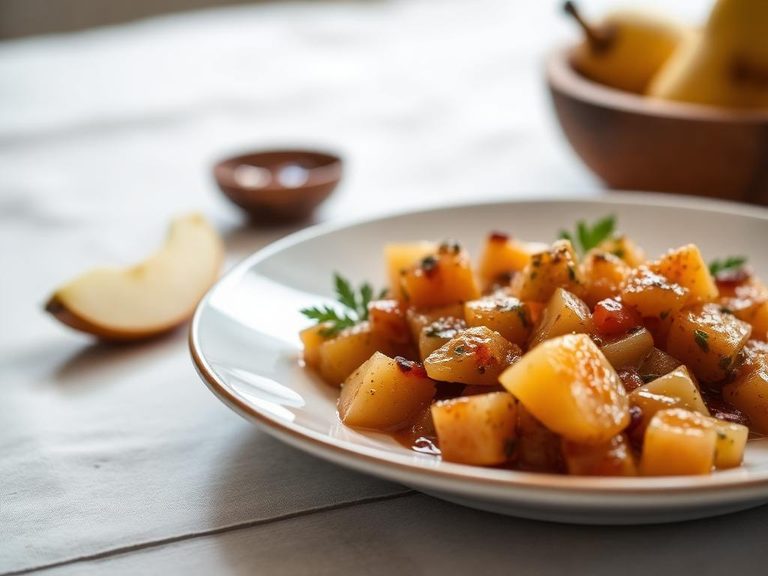
🍽️ Popular dishes
🌍 Where it's eaten
💡 Did you know?
The Bosc pear is named after the French horticulturist Louis Bosc, and its distinctive russeted skin is not a sign of being overripe but is a natural characteristic of the variety.
Full nutrition (USDA data · scales with serving)
| Water | 83.2 g |
| Energy | 67.0 kcal |
| Energy | 279 kj |
| Protein | 0.36 g |
| Total lipid (fat) | 0.09 g |
| Ash | 0.28 g |
| Carbohydrate, by difference | 16.1 g |
| Fiber, total dietary | 3.1 g |
| Total Sugars | 10.2 g |
| Sucrose | 2.1 g |
| Glucose | 2.5 g |
| Fructose | 5.6 g |
| Lactose | 0.00 g |
| Maltose | 0.00 g |
| Galactose | 0.00 g |
| Calcium, Ca | 10.0 mg |
| Iron, Fe | 0.15 mg |
| Magnesium, Mg | 7.0 mg |
| Phosphorus, P | 14.0 mg |
| Potassium, K | 122 mg |
| Sodium, Na | 1.0 mg |
| Zinc, Zn | 0.13 mg |
| Copper, Cu | 0.10 mg |
| Manganese, Mn | 0.05 mg |
| Selenium, Se | 0.00 ug |
| Vitamin C, total ascorbic acid | 2.8 mg |
| Thiamin | 0.01 mg |
| Riboflavin | 0.02 mg |
| Niacin | 0.15 mg |
| Pantothenic acid | 0.06 mg |
| Vitamin B-6 | 0.02 mg |
| Folate, total | 7.0 ug |
| Folate, food | 7.0 ug |
| Choline, total | 5.1 mg |
| Vitamin A, RAE | 1.0 ug |
| Carotene, beta | 11.0 ug |
| Carotene, alpha | 0.00 ug |
| Cryptoxanthin, beta | 0.00 ug |
| Vitamin A, IU | 19.0 iu |
| Lycopene | 0.00 ug |
| Lutein + zeaxanthin | 11.0 ug |
| Vitamin E (alpha-tocopherol) | 0.12 mg |
| Vitamin K (phylloquinone) | 5.2 ug |
| Vitamin K (Dihydrophylloquinone) | 0.00 ug |
Fat & fatty acid profile (per 100g)
| Fatty acids, total trans | 0.00 g |
Amino acid profile (per 100g)
| Tryptophan | 0.00 g |
| Threonine | 0.01 g |
| Isoleucine | 0.01 g |
| Leucine | 0.02 g |
| Lysine | 0.02 g |
| Methionine | 0.00 g |
| Cystine | 0.00 g |
| Phenylalanine | 0.01 g |
| Tyrosine | 0.00 g |
| Valine | 0.02 g |
| Arginine | 0.01 g |
| Histidine | 0.00 g |
| Alanine | 0.01 g |
| Aspartic acid | 0.10 g |
| Glutamic acid | 0.03 g |
| Glycine | 0.01 g |
| Proline | 0.02 g |
| Serine | 0.01 g |
FAQ
How do I know when a Bosc pear is ripe?
A Bosc pear is ripe when the flesh near the stem yields to gentle pressure. Unlike other pears, its russeted skin doesn't change color significantly as it ripens.
Can I eat the skin of a Bosc pear?
Yes, the skin is edible and contains fiber and nutrients. Simply wash it well before eating.
What's the best way to store Bosc pears?
Store unripe pears at room temperature until they soften slightly, then refrigerate to slow further ripening. They can last up to a week in the fridge.
Nutrient density (calculated · NRF9.3)
Nutrient Rich Foods index: beneficial nutrients (protein, fiber, vitamins, minerals) minus saturated fat, added sugar & sodium, per 100 kcal.
NRF9.3 index — Fulgoni, Keast & Drewnowski, 2009. Computed from USDA nutrients.
Weight-loss friendliness (composite index)
Energy density 0.67 kcal/g · 2% calories from protein · 3.1 g fiber · 10.2 g sugar per 100 g.
Composite of energy density (Rolls et al., 1999), protein & fiber satiety, minus sugar. A calculated heuristic — ranks satiety-per-calorie, not a clinical measure.
Dietary load (calculated from USDA values)
Potential renal acid load. Positive = acid-forming, negative = alkaline-forming.
Sodium-to-potassium ratio: 0.01 (lower is better — aim for ≤ 1)
Sodium:potassium per WHO potassium guidance. Computed from USDA nutrients.