

Nuts, coconut milk, canned (liquid expressed from grated meat and water)
Whole food · Nut and Seed Products
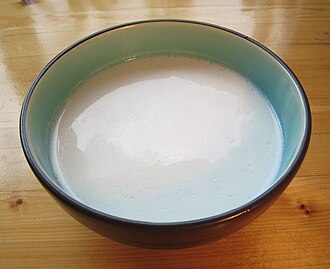
Photo: Wikipedia
Canned coconut milk is the rich, creamy liquid expressed from grated coconut meat and water, offering a luxurious, velvety texture and a subtly sweet, nutty flavor. It's a high-fat, low-protein staple that provides a significant source of energy and a distinctive tropical richness to both sweet and savory dishes.
Calorie split: 4% protein · 5% carbs · 91% fat
↓ Full nutrition💚 Why it's loved
People love it for its unparalleled ability to add a rich, creamy body and a hint of tropical sweetness to curries, soups, and desserts. It's a cornerstone of many cuisines, valued for its versatility in creating both savory depth and sweet indulgence.
⚠️ Watch-outs & how to enjoy it better
Its high saturated fat content means it should be used in moderation, especially for those monitoring heart health or calorie intake. The canned version can also be high in sodium; look for 'no salt added' varieties or rinse the thick cream if concerned. Tip: Use it as a flavor accent rather than the main liquid, and balance meals with plenty of vegetables and lean proteins.
Key benefits
- Rich source of medium-chain triglycerides (MCTs) for quick energy
- Contains lauric acid, a fatty acid studied for its antimicrobial properties
- Provides essential minerals like manganese and copper
- Lactose-free and dairy-free alternative for creamy textures
- High in calories, making it useful for energy-dense meals
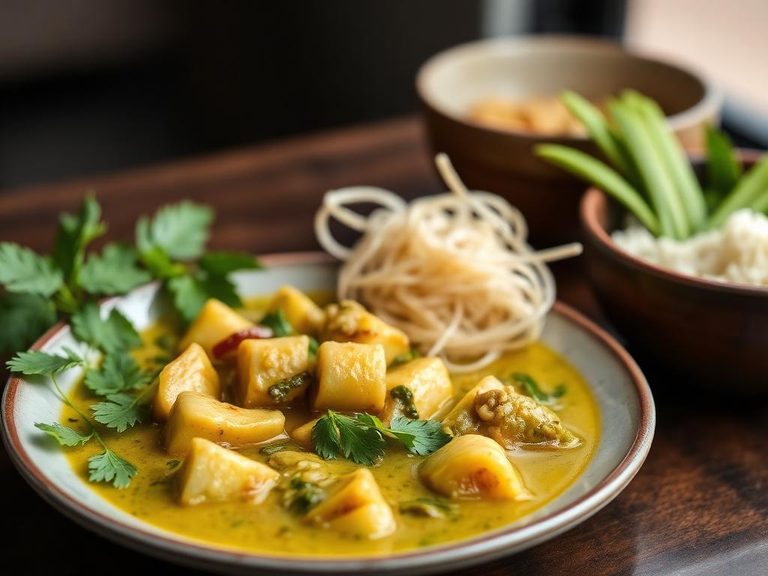
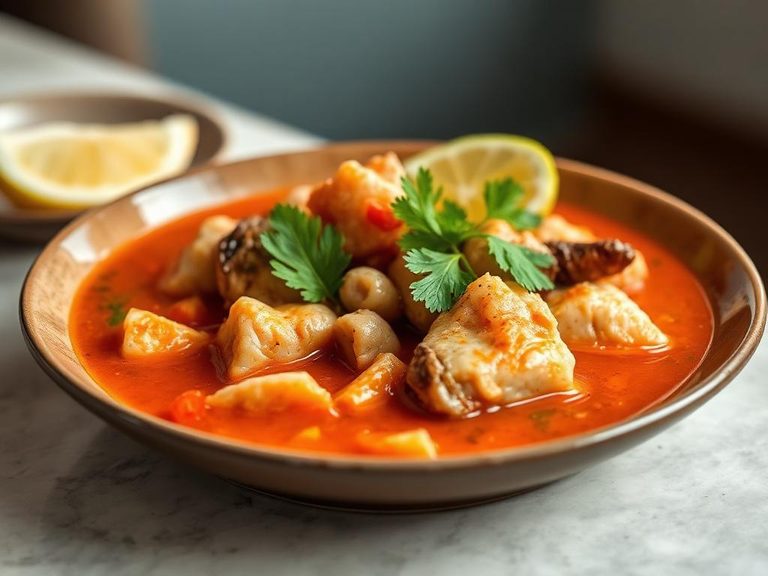
🍽️ Popular dishes



🌍 Where it's eaten
💡 Did you know?
When chilled, the thick coconut cream naturally separates and solidifies at the top of the can, a property cooks often exploit by scooping it off to make whipped 'coconut cream' desserts or to start a curry with a rich, fatty base.
Full nutrition (USDA data · scales with serving)
| Water | 72.9 g |
| Energy | 197 kcal |
| Energy | 824 kj |
| Protein | 2.0 g |
| Total lipid (fat) | 21.3 g |
| Ash | 0.97 g |
| Carbohydrate, by difference | 2.8 g |
| Calcium, Ca | 18.0 mg |
| Iron, Fe | 3.3 mg |
| Magnesium, Mg | 46.0 mg |
| Phosphorus, P | 96.0 mg |
| Potassium, K | 220 mg |
| Sodium, Na | 13.0 mg |
| Zinc, Zn | 0.56 mg |
| Copper, Cu | 0.22 mg |
| Manganese, Mn | 0.77 mg |
| Vitamin C, total ascorbic acid | 1.0 mg |
| Thiamin | 0.02 mg |
| Riboflavin | 0.00 mg |
| Niacin | 0.64 mg |
| Pantothenic acid | 0.15 mg |
| Vitamin B-6 | 0.03 mg |
| Folate, total | 14.0 ug |
| Folic acid | 0.00 ug |
| Folate, food | 14.0 ug |
| Folate, DFE | 14.0 ug |
| Choline, total | 8.5 mg |
| Betaine | 0.00 mg |
| Vitamin B-12 | 0.00 ug |
| Vitamin A, RAE | 0.00 ug |
| Retinol | 0.00 ug |
| Vitamin A, IU | 0.00 iu |
| Vitamin D (D2 + D3), International Units | 0.00 iu |
| Vitamin D (D2 + D3) | 0.00 ug |
Fat & fatty acid profile (per 100g)
| Fatty acids, total saturated | 18.9 g |
| SFA 6:0 | 0.12 g |
| SFA 8:0 | 1.5 g |
| SFA 10:0 | 1.2 g |
| SFA 12:0 | 9.5 g |
| SFA 14:0 | 3.7 g |
| SFA 16:0 | 1.8 g |
| SFA 18:0 | 1.1 g |
| Fatty acids, total monounsaturated | 0.91 g |
| MUFA 18:1 | 0.91 g |
| Fatty acids, total polyunsaturated | 0.23 g |
| PUFA 18:2 | 0.23 g |
| Cholesterol | 0.00 mg |
Amino acid profile (per 100g)
| Tryptophan | 0.02 g |
| Threonine | 0.07 g |
| Isoleucine | 0.08 g |
| Leucine | 0.15 g |
| Lysine | 0.09 g |
| Methionine | 0.04 g |
| Cystine | 0.04 g |
| Phenylalanine | 0.10 g |
| Tyrosine | 0.06 g |
| Valine | 0.12 g |
| Arginine | 0.33 g |
| Histidine | 0.05 g |
| Alanine | 0.10 g |
| Aspartic acid | 0.20 g |
| Glutamic acid | 0.46 g |
| Glycine | 0.10 g |
| Proline | 0.08 g |
| Serine | 0.10 g |
FAQ
What's the difference between coconut milk, coconut cream, and coconut water?
Coconut milk is the pressed liquid from grated meat (high fat). Coconut cream is a thicker, higher-fat concentration of the same. Coconut water is the clear, hydrating liquid from inside young coconuts (low fat, contains electrolytes).
Why does canned coconut milk sometimes have a solid layer on top?
That's the coconut cream (fat) separating from the water. It's normal! Shake the can well before using to recombine, or scoop the cream off to use as a thickener or whipped topping.
Is canned coconut milk healthy?
It's a calorie-dense, high-fat food. While it contains beneficial MCTs and minerals, its high saturated fat content means it's best used in moderation as part of a balanced diet, not as a primary beverage.
Nutrient density (calculated · NRF9.3)
Nutrient Rich Foods index: beneficial nutrients (protein, fiber, vitamins, minerals) minus saturated fat, added sugar & sodium, per 100 kcal.
NRF9.3 index — Fulgoni, Keast & Drewnowski, 2009. Computed from USDA nutrients.
Weight-loss friendliness (composite index)
Energy density 1.97 kcal/g · 4% calories from protein · 0.0 g fiber · 0.0 g sugar per 100 g.
Composite of energy density (Rolls et al., 1999), protein & fiber satiety, minus sugar. A calculated heuristic — ranks satiety-per-calorie, not a clinical measure.
Dietary load (calculated from USDA values)
Potential renal acid load. Positive = acid-forming, negative = alkaline-forming.
Sodium-to-potassium ratio: 0.06 (lower is better — aim for ≤ 1)
Sodium:potassium per WHO potassium guidance. Computed from USDA nutrients.