

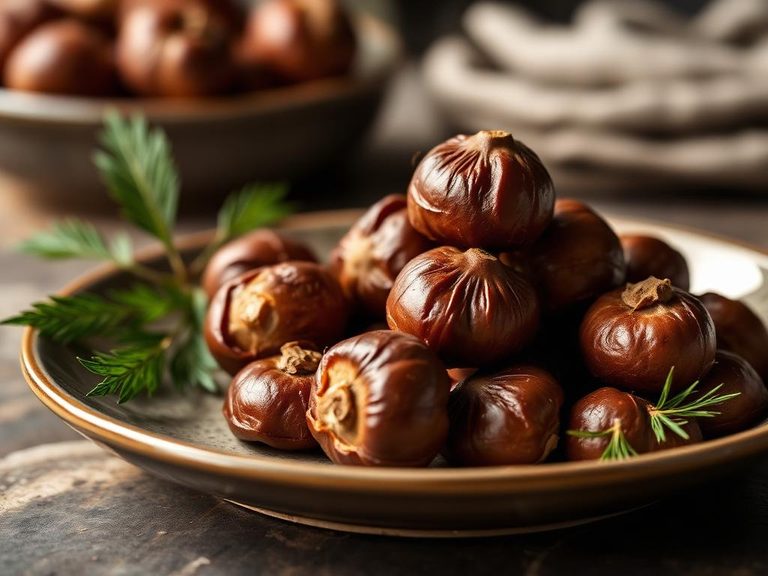
Nuts, chestnuts, european, raw, unpeeled
Whole food · Nut and Seed Products

Photo: Wikipedia
The European chestnut, or sweet chestnut, is a starchy, nut-like seed with a rich, sweet flavor and a tender, floury texture when cooked. Unlike most nuts, it is low in fat and high in complex carbohydrates, offering a unique nutritional profile. Its natural sweetness and satisfying bite make it a beloved seasonal treat.
Calorie split: 5% protein · 86% carbs · 10% fat
↓ Full nutrition💚 Why it's loved
People cherish chestnuts for their sweet, chestnutty aroma and versatile, comforting flavor that evokes autumn and winter traditions. They are a culinary staple in festive dishes, from roasted street snacks to creamy desserts.
⚠️ Watch-outs & how to enjoy it better
Raw chestnuts contain tannins that can be bitter and astringent, and their high carbohydrate content may impact blood sugar. They are also a tree nut allergen for some. To counteract, always cook them thoroughly (roasting, boiling, or steaming) to reduce tannins and improve digestibility, and pair with protein or fat in a dish to moderate blood sugar response.
Key benefits
- Good source of dietary fiber for digestive health.
- Provides complex carbohydrates for sustained energy.
- Contains vitamin C, an antioxidant rare among nuts.
- Rich in minerals like manganese, copper, and potassium.
- Naturally low in fat compared to other nuts.
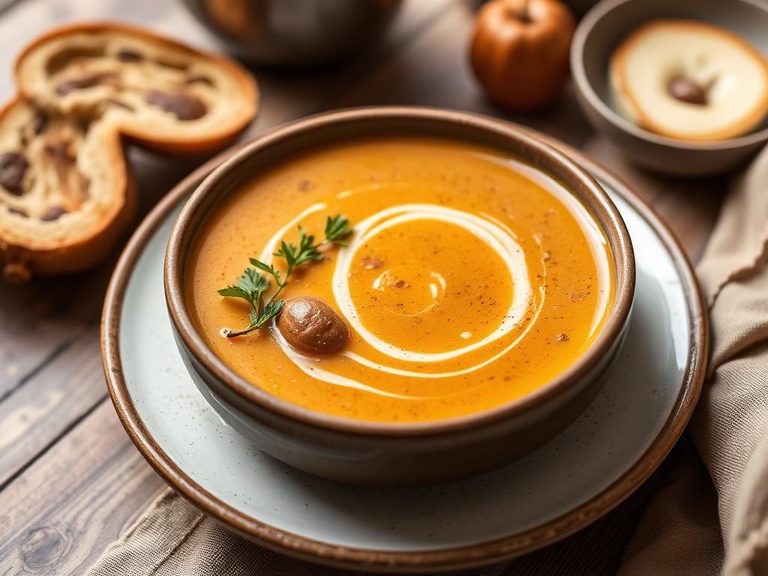
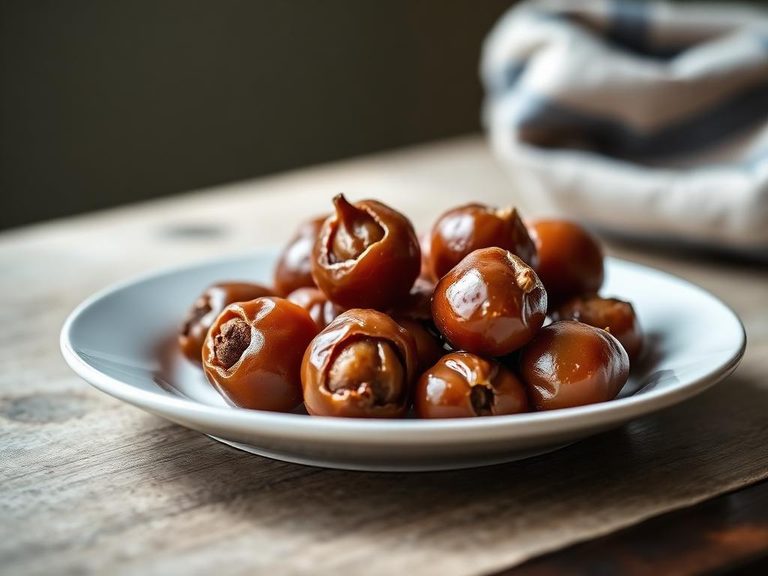
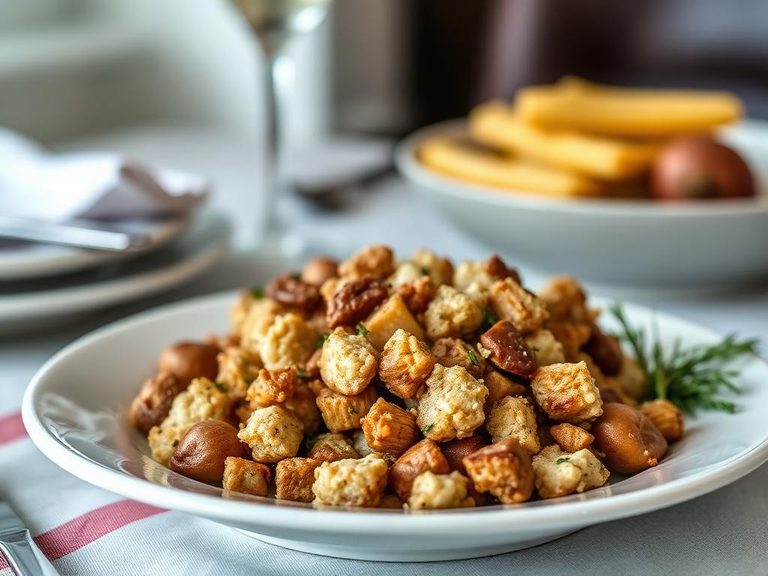
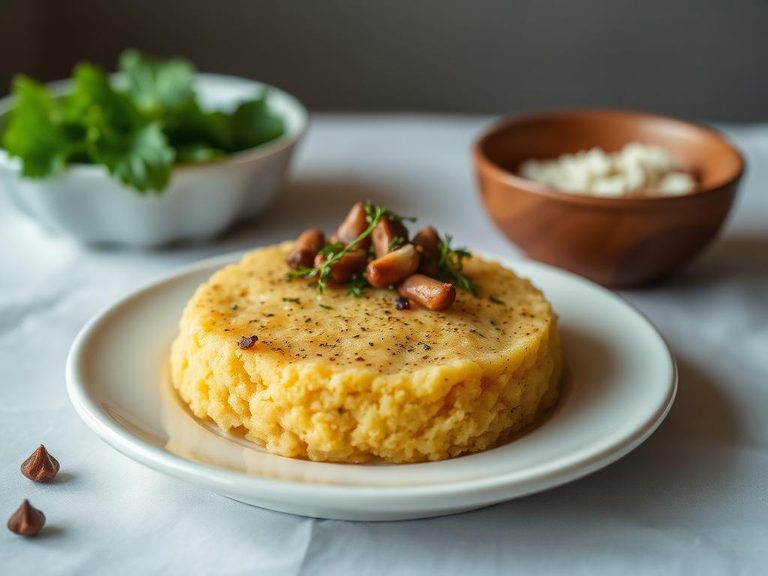
🍽️ Popular dishes

🌍 Where it's eaten
💡 Did you know?
Unlike true nuts, chestnuts are technically the fruit of a tree and are one of the few nuts with a significant vitamin C content, comparable to that of a lemon by weight.
Full nutrition (USDA data · scales with serving)
| Water | 48.6 g |
| Energy | 213 kcal |
| Energy | 891 kj |
| Protein | 2.4 g |
| Total lipid (fat) | 2.3 g |
| Ash | 1.1 g |
| Carbohydrate, by difference | 45.5 g |
| Fiber, total dietary | 8.1 g |
| Calcium, Ca | 27.0 mg |
| Iron, Fe | 1.0 mg |
| Magnesium, Mg | 32.0 mg |
| Phosphorus, P | 93.0 mg |
| Potassium, K | 518 mg |
| Sodium, Na | 3.0 mg |
| Zinc, Zn | 0.52 mg |
| Copper, Cu | 0.45 mg |
| Manganese, Mn | 0.95 mg |
| Vitamin C, total ascorbic acid | 43.0 mg |
| Thiamin | 0.24 mg |
| Riboflavin | 0.17 mg |
| Niacin | 1.2 mg |
| Pantothenic acid | 0.51 mg |
| Vitamin B-6 | 0.38 mg |
| Folate, total | 62.0 ug |
| Folic acid | 0.00 ug |
| Folate, food | 62.0 ug |
| Folate, DFE | 62.0 ug |
| Vitamin B-12 | 0.00 ug |
| Vitamin A, RAE | 1.0 ug |
| Retinol | 0.00 ug |
| Vitamin A, IU | 28.0 iu |
| Vitamin D (D2 + D3), International Units | 0.00 iu |
| Vitamin D (D2 + D3) | 0.00 ug |
Fat & fatty acid profile (per 100g)
| Fatty acids, total saturated | 0.42 g |
| SFA 14:0 | 0.01 g |
| SFA 16:0 | 0.38 g |
| SFA 18:0 | 0.02 g |
| Fatty acids, total monounsaturated | 0.78 g |
| MUFA 16:1 | 0.02 g |
| MUFA 18:1 | 0.75 g |
| MUFA 20:1 | 0.01 g |
| Fatty acids, total polyunsaturated | 0.89 g |
| PUFA 18:2 | 0.80 g |
| PUFA 18:3 | 0.10 g |
| Cholesterol | 0.00 mg |
| Phytosterols | 22.0 mg |
Amino acid profile (per 100g)
| Tryptophan | 0.03 g |
| Threonine | 0.09 g |
| Isoleucine | 0.10 g |
| Leucine | 0.14 g |
| Lysine | 0.14 g |
| Methionine | 0.06 g |
| Cystine | 0.08 g |
| Phenylalanine | 0.10 g |
| Tyrosine | 0.07 g |
| Valine | 0.14 g |
| Arginine | 0.17 g |
| Histidine | 0.07 g |
| Alanine | 0.16 g |
| Aspartic acid | 0.42 g |
| Glutamic acid | 0.31 g |
| Glycine | 0.12 g |
| Proline | 0.13 g |
| Serine | 0.12 g |
FAQ
What is the difference between sweet chestnuts and horse chestnuts?
Sweet chestnuts (Castanea sativa) are edible and have a pointed tip with a tuft. Horse chestnuts (Aesculus hippocastanum) are toxic if eaten, are rounder, and have a smoother, darker shell.
How do you peel raw chestnuts easily?
Score an 'X' on the flat side, then soak in hot water for 5-10 minutes. The shell and inner skin will loosen as they cool, making them easier to peel.
Can you eat chestnuts raw?
While not poisonous, raw chestnuts are tough, bitter due to tannins, and harder to digest. Cooking is strongly recommended for flavor, texture, and nutritional availability.
Nutrient density (calculated · NRF9.3)
Nutrient Rich Foods index: beneficial nutrients (protein, fiber, vitamins, minerals) minus saturated fat, added sugar & sodium, per 100 kcal.
NRF9.3 index — Fulgoni, Keast & Drewnowski, 2009. Computed from USDA nutrients.
Weight-loss friendliness (composite index)
Energy density 2.13 kcal/g · 5% calories from protein · 8.1 g fiber · 0.0 g sugar per 100 g.
Composite of energy density (Rolls et al., 1999), protein & fiber satiety, minus sugar. A calculated heuristic — ranks satiety-per-calorie, not a clinical measure.
Dietary load (calculated from USDA values)
Potential renal acid load. Positive = acid-forming, negative = alkaline-forming.
Sodium-to-potassium ratio: 0.01 (lower is better — aim for ≤ 1)
Sodium:potassium per WHO potassium guidance. Computed from USDA nutrients.