Stuffing with Chestnuts
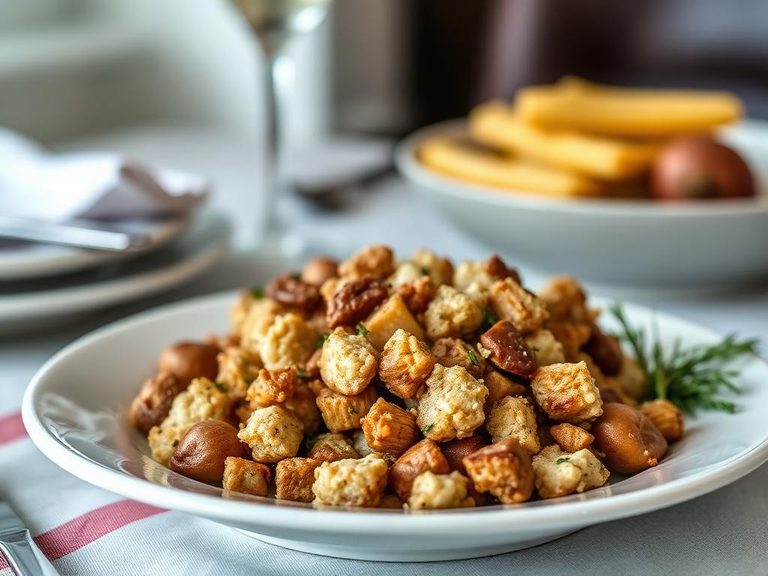
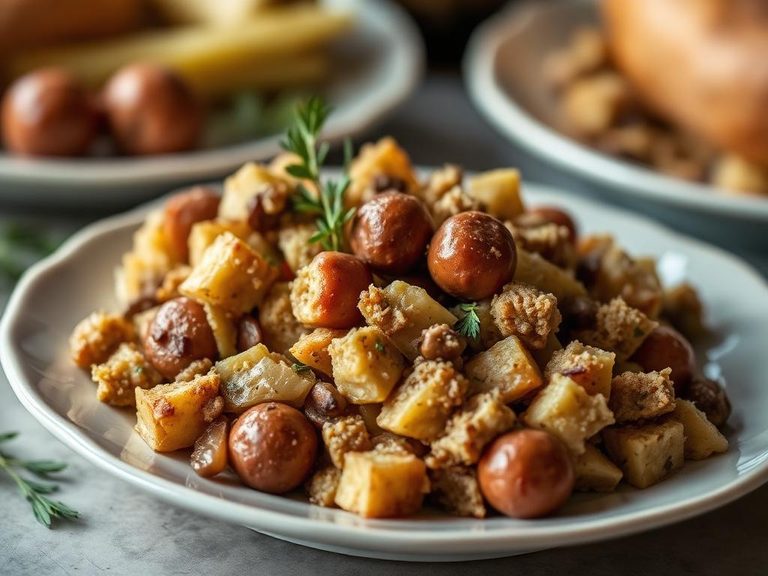
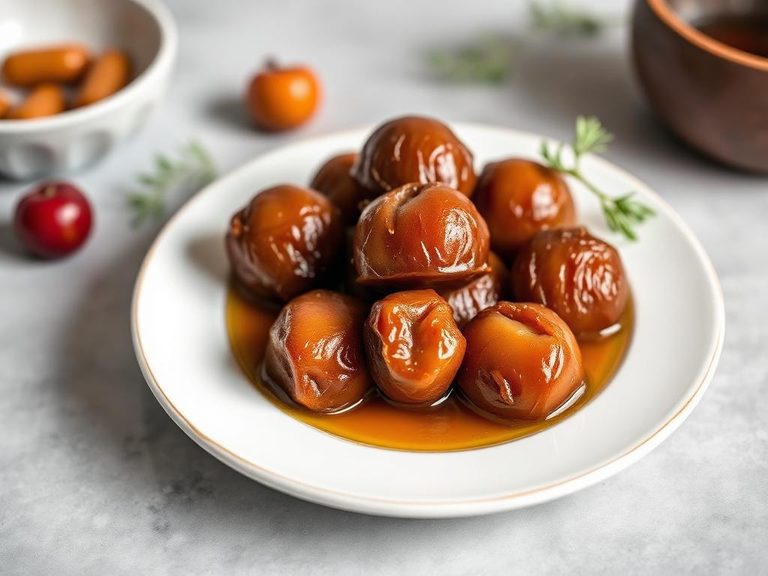
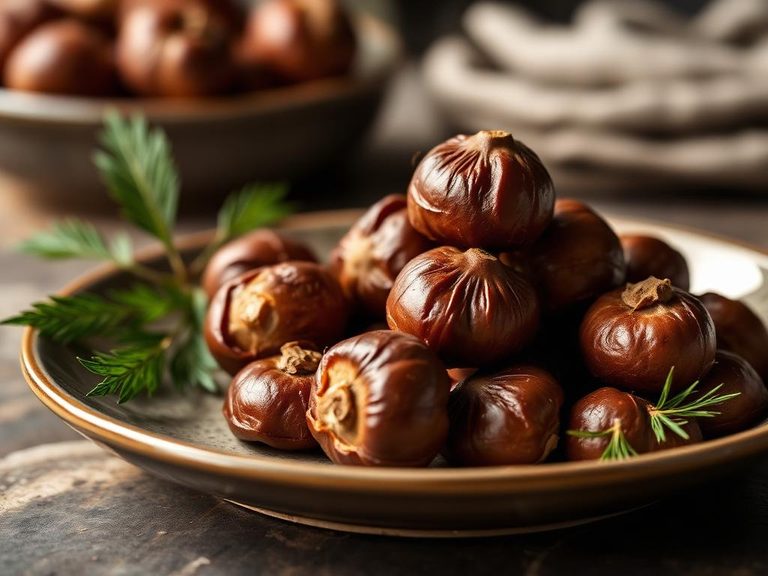
Stuffing with Chestnuts is a savory, hearty dish often associated with holiday meals, particularly in North America and parts of Europe. It typically features a base of bread cubes or crumbs mixed with sautéed onions, celery, herbs like sage and thyme, and the star ingredient: sweet, tender chestnuts. The mixture is usually moistened with broth and baked until golden on top.
🍽️ Nutrition at a glance
This dish is generally high in carbohydrates from the bread and chestnuts, with a moderate amount of fat from butter or oil used in sautéing. It provides key nutrients like dietary fiber, B vitamins, and minerals such as manganese and copper from the chestnuts, with a typical serving containing around 300-400 calories.
Nutrition breakdown
| Calories | 380 kcal |
| Protein | 9.5 g |
| Carbs | 52 g |
| Fat | 16 g |
| Fiber | 5 g |
| Sugar | 8 g |
| Sodium | 680 mg |
| Potassium | 350 mg |
| Iron | 3.2 mg |
| Vitamin B6 | 0.4 mg |
| Folate | 60 mcg |
| Magnesium | 45 mg |
| Phosphorus | 150 mg |
| Thiamin (B1) | 0.3 mg |
| Manganese | 1.1 mg |
Per 1 cup (240 g) · estimated, varies by recipe
💡 What's interesting
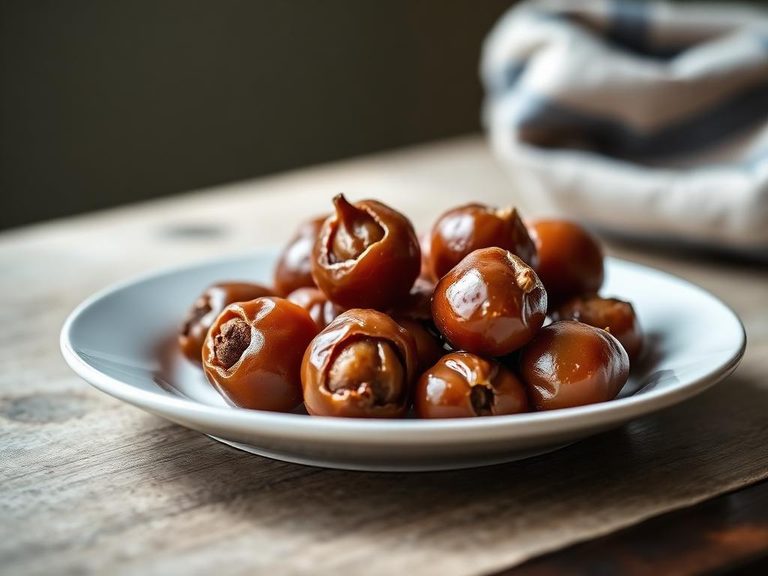
Culturally, chestnut stuffing is a festive staple that elevates a simple side dish into a celebratory centerpiece, reflecting the historical importance of chestnuts as a winter food source. Nutritionally, chestnuts are unique among nuts for being low in fat and high in complex carbohydrates, giving the stuffing a subtly sweet, earthy depth that sets it apart from grain-only versions.