

Lamb, variety meats and by-products, pancreas, cooked, braised
Whole food · Lamb, Veal, and Game Products
Lamb pancreas, when braised, transforms into a surprisingly tender and rich morsel, offering a delicate, slightly mineral flavor with a smooth, creamy texture. Nutritionally, it's a powerhouse of high-quality protein and healthy fats, with virtually no carbohydrates, making it a standout for low-carb and ketogenic diets.
Calorie split: 40% protein · 0% carbs · 60% fat
↓ Full nutrition💚 Why it's loved
Culinary enthusiasts prize it for its unique, luxurious texture that melts in the mouth and its ability to absorb complex flavors from braising liquids. It holds a special place in traditional cuisines where utilizing the whole animal is a mark of respect and skill.
⚠️ Watch-outs & how to enjoy it better
The strong, distinct flavor and unfamiliar texture can be off-putting to those unaccustomed to organ meats. As an offal product, it is high in purines, which individuals with gout or certain kidney conditions should consume with caution. To mitigate this, pair it with plenty of water and low-purine vegetables, and practice strict portion control.
Key benefits
- Excellent source of complete, high-quality protein.
- Rich in essential B vitamins, particularly B12 for nerve health.
- Provides key minerals like selenium and zinc for immune function.
- Zero carbohydrates, ideal for strict low-carb dietary patterns.
- Contains healthy monounsaturated fats.
🍽️ Popular dishes
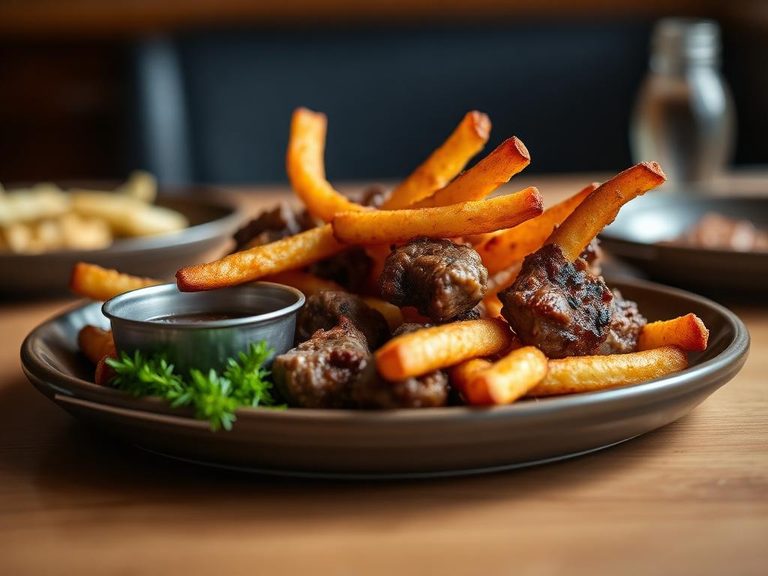
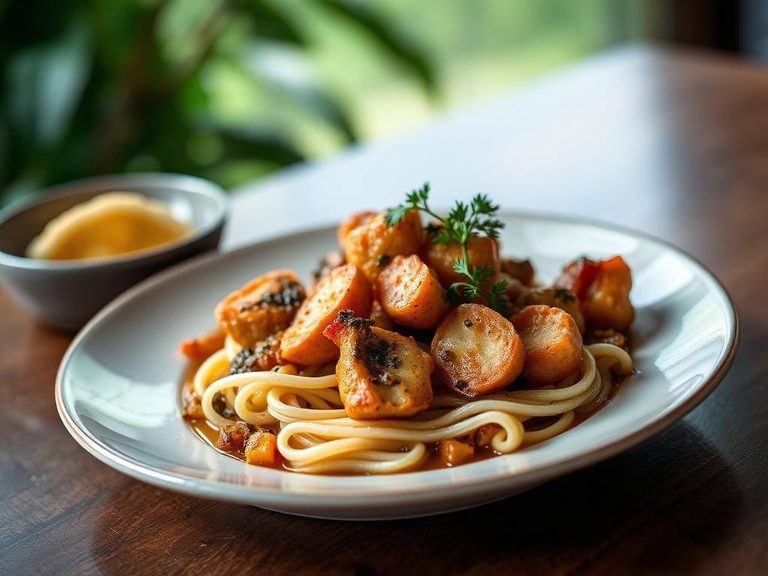
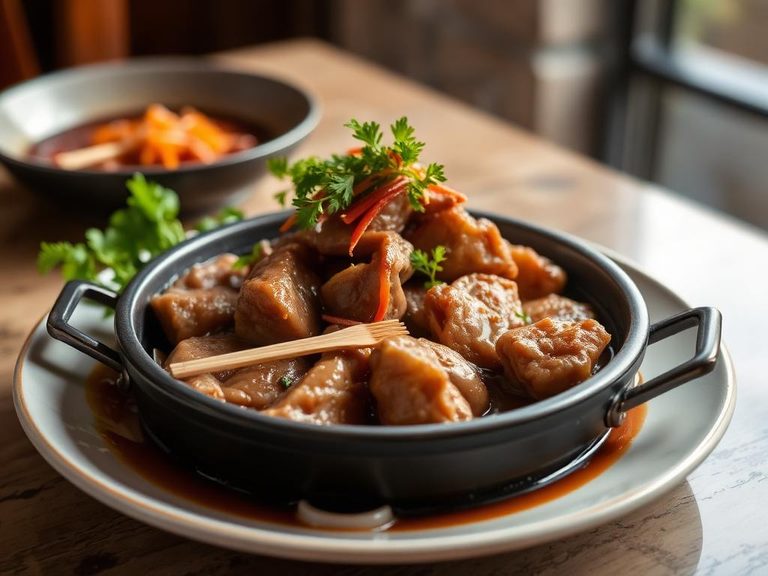
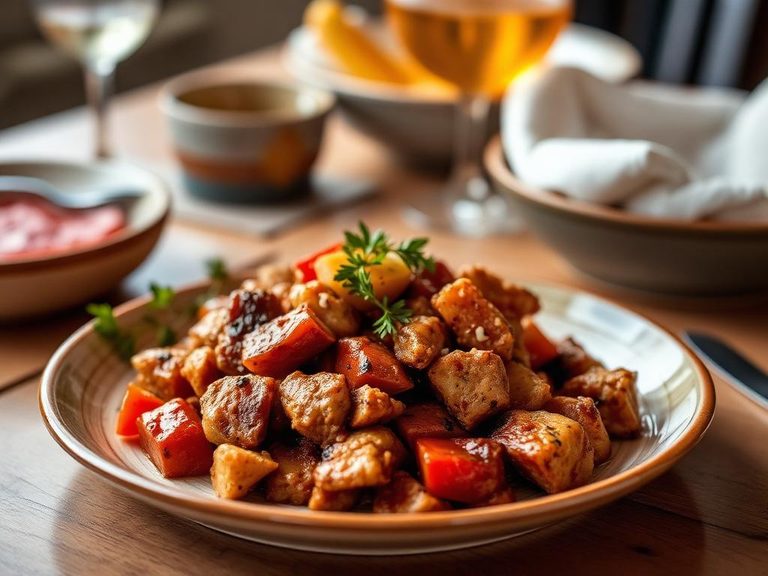
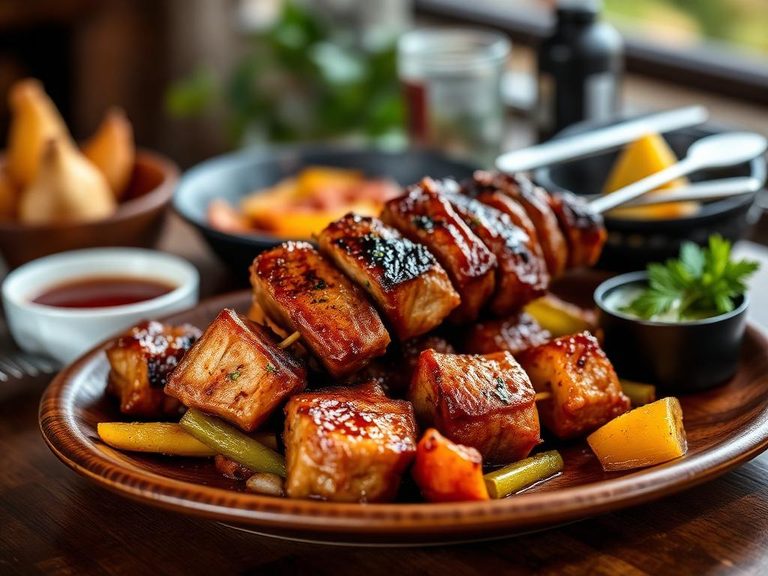
🌍 Where it's eaten
💡 Did you know?
In some historical culinary traditions, lamb pancreas was known as 'sweetbreads' alongside the thymus gland, but modern butchery often distinguishes between the two, with the pancreas sometimes called 'heartbreads.'
Full nutrition (USDA data · scales with serving)
| Water | 59.6 g |
| Energy | 234 kcal |
| Energy | 979 kj |
| Protein | 22.8 g |
| Total lipid (fat) | 15.1 g |
| Ash | 2.1 g |
| Carbohydrate, by difference | 0.00 g |
| Fiber, total dietary | 0.00 g |
| Calcium, Ca | 12.0 mg |
| Iron, Fe | 2.1 mg |
| Magnesium, Mg | 19.0 mg |
| Phosphorus, P | 431 mg |
| Potassium, K | 291 mg |
| Sodium, Na | 52.0 mg |
| Zinc, Zn | 2.7 mg |
| Copper, Cu | 0.08 mg |
| Manganese, Mn | 0.04 mg |
| Selenium, Se | 64.8 ug |
| Vitamin C, total ascorbic acid | 20.0 mg |
| Thiamin | 0.02 mg |
| Riboflavin | 0.21 mg |
| Niacin | 2.6 mg |
| Pantothenic acid | 0.85 mg |
| Vitamin B-6 | 0.05 mg |
| Folate, total | 13.0 ug |
| Folic acid | 0.00 ug |
| Folate, food | 13.0 ug |
| Folate, DFE | 13.0 ug |
| Vitamin B-12 | 5.5 ug |
| Vitamin A, RAE | 0.00 ug |
| Retinol | 0.00 ug |
| Vitamin A, IU | 0.00 iu |
Fat & fatty acid profile (per 100g)
| Fatty acids, total saturated | 6.8 g |
| SFA 12:0 | 0.09 g |
| SFA 14:0 | 0.65 g |
| SFA 16:0 | 2.9 g |
| SFA 18:0 | 3.0 g |
| Fatty acids, total monounsaturated | 5.5 g |
| MUFA 16:1 | 0.35 g |
| MUFA 18:1 | 4.9 g |
| MUFA 20:1 | 0.00 g |
| Fatty acids, total polyunsaturated | 0.74 g |
| PUFA 18:2 | 0.28 g |
| PUFA 18:3 | 0.29 g |
| PUFA 20:4 | 0.17 g |
| Cholesterol | 400 mg |
Amino acid profile (per 100g)
| Tryptophan | 0.29 g |
| Threonine | 0.84 g |
| Isoleucine | 0.80 g |
| Leucine | 1.5 g |
| Lysine | 2.0 g |
| Methionine | 0.33 g |
| Cystine | 0.29 g |
| Phenylalanine | 0.77 g |
| Tyrosine | 0.55 g |
| Valine | 0.99 g |
| Arginine | 1.4 g |
| Histidine | 0.66 g |
| Alanine | 1.2 g |
| Aspartic acid | 1.6 g |
| Glutamic acid | 3.2 g |
| Glycine | 1.4 g |
| Proline | 1.2 g |
| Serine | 0.91 g |
FAQ
How is the taste different from lamb muscle meat?
Lamb pancreas has a milder, less 'gamey' flavor than muscle meat, with a subtle sweetness and a pronounced mineral note. Its texture is softer and creamier, lacking the fibrous chew of steak or roast.
Is it safe to eat?
Yes, when sourced from a reputable butcher and cooked thoroughly to an internal temperature of at least 145°F (63°C), followed by a rest period. As with all organ meats, freshness is key.
How do I prepare it at home?
The most forgiving method is braising. Briefly sear the pieces, then simmer them slowly in a flavorful liquid (like wine, stock, and aromatics) for 1-2 hours until tender. It can also be grilled quickly if sliced thin and marinated.
Nutrient density (calculated · NRF9.3)
Nutrient Rich Foods index: beneficial nutrients (protein, fiber, vitamins, minerals) minus saturated fat, added sugar & sodium, per 100 kcal.
NRF9.3 index — Fulgoni, Keast & Drewnowski, 2009. Computed from USDA nutrients.
Weight-loss friendliness (composite index)
Energy density 2.34 kcal/g · 39% calories from protein · 0.0 g fiber · 0.0 g sugar per 100 g.
Composite of energy density (Rolls et al., 1999), protein & fiber satiety, minus sugar. A calculated heuristic — ranks satiety-per-calorie, not a clinical measure.
Dietary load (calculated from USDA values)
Potential renal acid load. Positive = acid-forming, negative = alkaline-forming.
Sodium-to-potassium ratio: 0.18 (lower is better — aim for ≤ 1)
Sodium:potassium per WHO potassium guidance. Computed from USDA nutrients.