

Infant formula, MEAD JOHNSON, NEXT STEP PROSOBEE, powder, not reconstituted
Whole food · Baby Foods

Photo: Wikipedia
This is a specialized soy-based infant formula powder designed for babies with cow's milk protein allergy or sensitivity. The fine, pale powder mixes into a smooth, creamy liquid with a mild, slightly sweet, and distinctly beany flavor profile. Nutritionally, it's a complete meal replacement, delivering a dense 480 kcal per 100g, with a significant 15.6g of protein and 21g of fat to support growth, but notably contains 56g of sugar per 100g.
Calorie split: 13% protein · 48% carbs · 39% fat
↓ Full nutrition💚 Why it's loved
Parents and caregivers love it for providing peace of mind and a safe, life-sustaining nutritional option for infants who cannot tolerate standard formulas. Its reliability and complete nutrition make it a trusted staple in managing specific dietary needs.
⚠️ Watch-outs & how to enjoy it better
The high sugar content (56g per 100g) is a primary concern, potentially contributing to excessive sweetness and a preference for sugary tastes. Some infants may also dislike the characteristic soy-based flavor. Tip: Always prepare exactly as directed to avoid over-concentration, and consult a pediatrician about the appropriate duration of use.
Key benefits
- Complete nutrition for infants with cow's milk protein allergy
- Soy protein isolate as a hypoallergenic protein source
- Fortified with essential vitamins, minerals, and DHA/ARA
- Provides all necessary macronutrients for infant development
- Lactose-free formulation for easy digestion
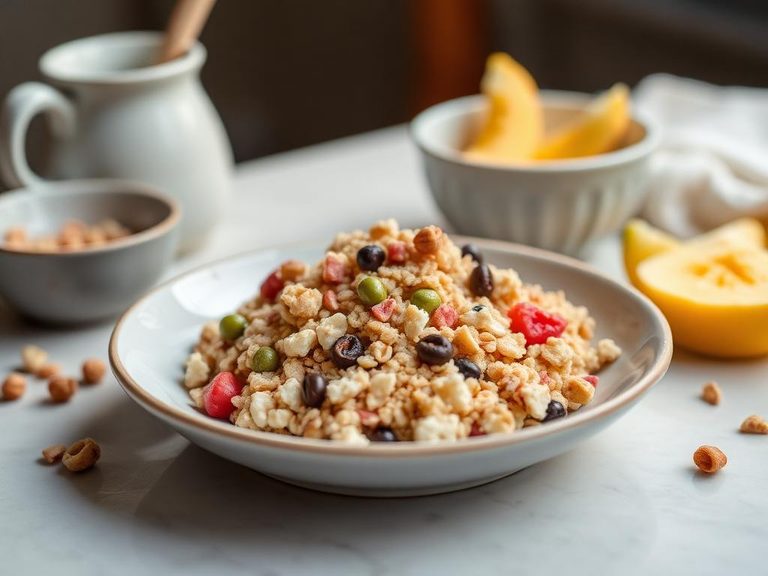
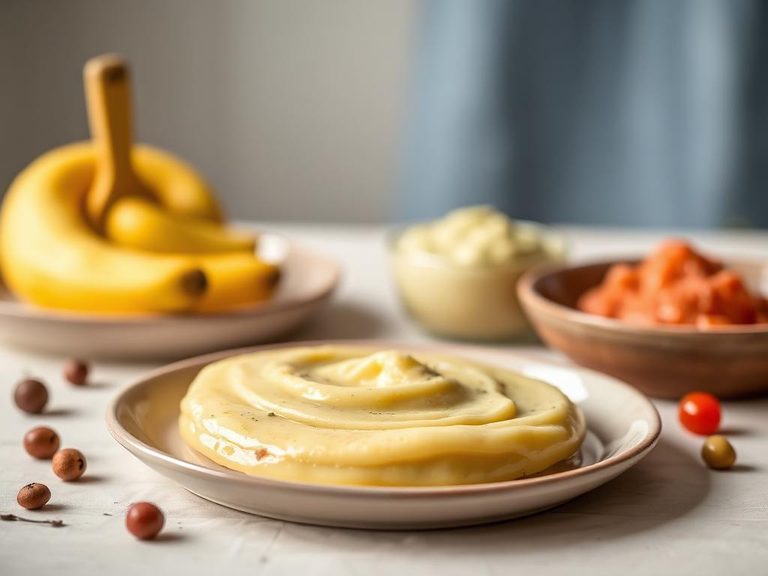
🍽️ Popular dishes



🌍 Where it's eaten
💡 Did you know?
Mead Johnson, the manufacturer, was founded in 1905 by a pediatrician, and their first product was a milk-based formula, making them one of the earliest pioneers in the specialized infant nutrition industry.
Full nutrition (USDA data · scales with serving)
| Water | 3.0 g |
| Energy | 480 kcal |
| Energy | 2007 kj |
| Protein | 15.6 g |
| Total lipid (fat) | 21.0 g |
| Ash | 3.3 g |
| Carbohydrate, by difference | 57.1 g |
| Fiber, total dietary | 0.00 g |
| Total Sugars | 56.0 g |
| Calcium, Ca | 920 mg |
| Iron, Fe | 9.5 mg |
| Magnesium, Mg | 52.0 mg |
| Phosphorus, P | 620 mg |
| Potassium, K | 570 mg |
| Sodium, Na | 171 mg |
| Zinc, Zn | 5.7 mg |
| Copper, Cu | 0.36 mg |
| Manganese, Mn | 0.24 mg |
| Selenium, Se | 13.3 ug |
| Vitamin C, total ascorbic acid | 57.0 mg |
| Thiamin | 0.38 mg |
| Riboflavin | 0.43 mg |
| Niacin | 4.7 mg |
| Vitamin B-6 | 0.28 mg |
| Folate, total | 76.0 ug |
| Folic acid | 76.0 ug |
| Folate, food | 0.00 ug |
| Folate, DFE | 129 ug |
| Choline, total | 62.0 mg |
| Vitamin B-12 | 1.4 ug |
| Vitamin B-12, added | 1.4 ug |
| Vitamin A, RAE | 430 ug |
| Retinol | 430 ug |
| Carotene, beta | 0.00 ug |
| Carotene, alpha | 0.00 ug |
| Cryptoxanthin, beta | 0.00 ug |
| Vitamin A, IU | 1420 iu |
| Lycopene | 0.00 ug |
| Lutein + zeaxanthin | 0.00 ug |
| Vitamin E (alpha-tocopherol) | 4.3 mg |
| Vitamin E, added | 4.3 mg |
| Vitamin D (D2 + D3), International Units | 284 iu |
| Vitamin D (D2 + D3) | 7.1 ug |
| Vitamin D3 (cholecalciferol) | 7.1 ug |
| Vitamin K (phylloquinone) | 38.0 ug |
| Alcohol, ethyl | 0.00 g |
| Caffeine | 0.00 mg |
| Theobromine | 0.00 mg |
Fat & fatty acid profile (per 100g)
| Fatty acids, total saturated | 8.9 g |
| SFA 4:0 | 0.00 g |
| SFA 6:0 | 0.02 g |
| SFA 8:0 | 0.33 g |
| SFA 10:0 | 0.25 g |
| SFA 12:0 | 1.9 g |
| SFA 14:0 | 0.86 g |
| SFA 16:0 | 4.6 g |
| SFA 18:0 | 0.86 g |
| Fatty acids, total monounsaturated | 7.8 g |
| MUFA 16:1 | 0.02 g |
| MUFA 18:1 | 7.8 g |
| MUFA 20:1 | 0.00 g |
| MUFA 22:1 | 0.00 g |
| Fatty acids, total polyunsaturated | 4.2 g |
| PUFA 18:2 | 3.6 g |
| PUFA 18:3 | 0.34 g |
| PUFA 18:4 | 0.00 g |
| PUFA 20:4 | 0.16 g |
| PUFA 20:5 n-3 (EPA) | 0.00 g |
| PUFA 22:5 n-3 (DPA) | 0.00 g |
| PUFA 22:6 n-3 (DHA) | 0.00 g |
| Cholesterol | 0.00 mg |
FAQ
Why is this formula soy-based?
It is specifically designed for infants diagnosed with cow's milk protein allergy (CMPA) or lactose intolerance. Soy protein isolate serves as a hypoallergenic alternative to dairy proteins.
Is the high sugar content safe for a baby?
The 'sugar' listed includes naturally occurring lactose (or its equivalent in this formula) and added carbohydrates. It is formulated to meet strict regulatory standards for infant nutrition and provide necessary energy, but it should be used under medical guidance.
Can I use this for a baby without allergies?
This is a specialty medical formula. It should only be used under the direction of a pediatrician or healthcare professional for infants with a specific diagnosed need.
Nutrient density (calculated · NRF9.3)
Nutrient Rich Foods index: beneficial nutrients (protein, fiber, vitamins, minerals) minus saturated fat, added sugar & sodium, per 100 kcal.
NRF9.3 index — Fulgoni, Keast & Drewnowski, 2009. Computed from USDA nutrients.
Weight-loss friendliness (composite index)
Energy density 4.80 kcal/g · 13% calories from protein · 0.0 g fiber · 56.0 g sugar per 100 g.
Composite of energy density (Rolls et al., 1999), protein & fiber satiety, minus sugar. A calculated heuristic — ranks satiety-per-calorie, not a clinical measure.
Dietary load (calculated from USDA values)
Potential renal acid load. Positive = acid-forming, negative = alkaline-forming.
Sodium-to-potassium ratio: 0.30 (lower is better — aim for ≤ 1)
Sodium:potassium per WHO potassium guidance. Computed from USDA nutrients.