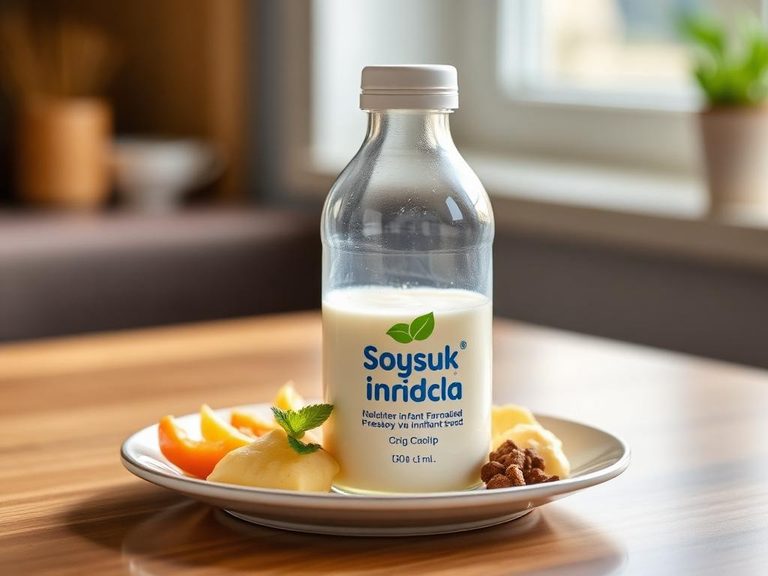
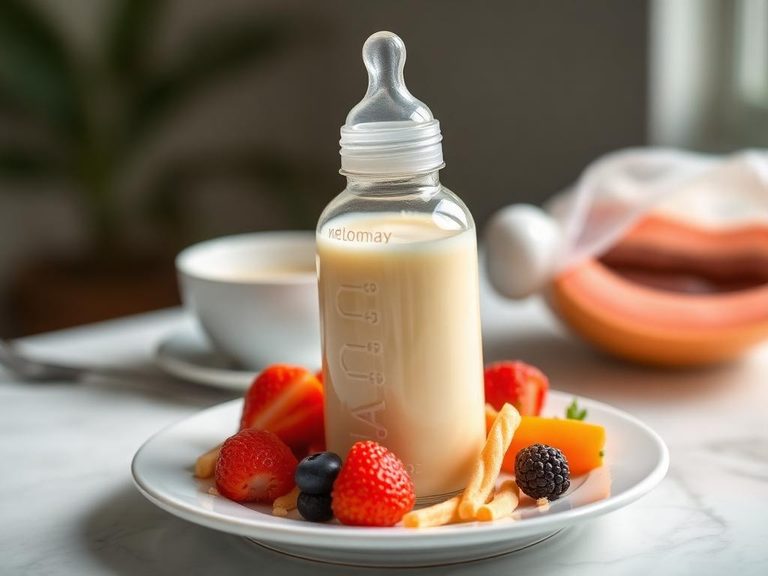
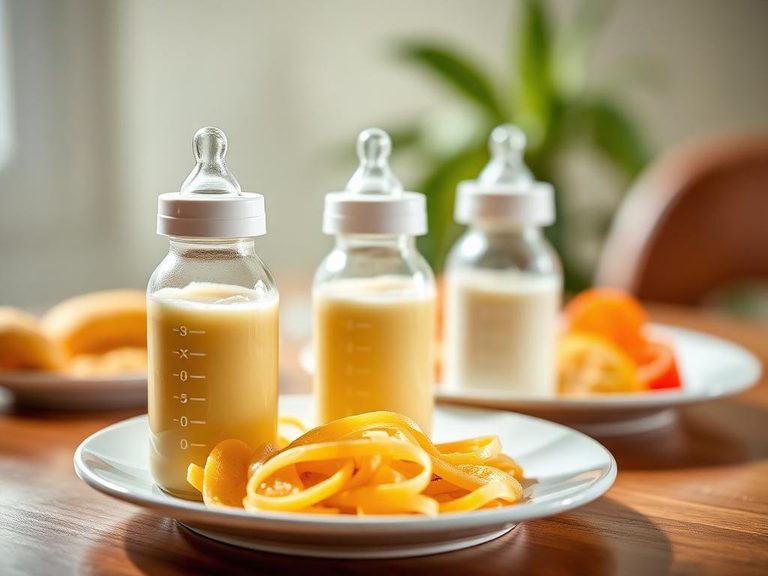
Prepared infant formula bottle
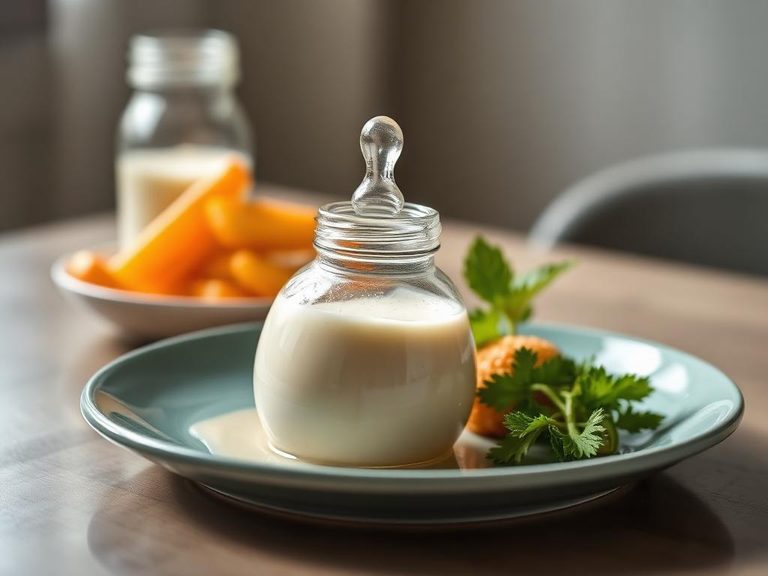
A prepared infant formula bottle is a ready-to-feed or mixed liquid nutrition designed specifically for babies who are not breastfed or are supplementing breast milk. It typically contains a blend of proteins (often from cow's milk or soy), fats, carbohydrates, vitamins, and minerals formulated to mimic the nutritional profile of breast milk. It is a globally standardized product, though formulations can vary by brand and region.
🍽️ Nutrition at a glance
This is a balanced, nutrient-dense liquid providing a mix of carbohydrates, fats, and proteins, with a rough calorie range of 20-25 calories per ounce (60-70 kcal per 100ml). It is fortified with essential vitamins and minerals like iron, calcium, and DHA to support infant growth and development.
Nutrition breakdown
| Calories | 130 kcal |
| Protein | 3.3 g |
| Carbs | 14 g |
| Fat | 6.8 g |
| Fiber | 0 g |
| Sugar | 14 g |
| Sodium | 55 mg |
| Calcium | 130 mg |
| Iron | 1.8 mg |
| Potassium | 160 mg |
| Phosphorus | 80 mg |
| Vitamin A | 100 µg RAE |
| Vitamin D | 2.5 µg |
| Vitamin E | 1.5 mg |
| Vitamin C | 10 mg |
Per 1 bottle (240 mL / ~245 g) · estimated, varies by recipe
💡 What's interesting
Infant formula is a remarkable example of food science, as it is one of the most heavily regulated and nutritionally precise products in the world, designed to be a complete food source for the first year of life. Its composition is constantly evolving to more closely match the complex and dynamic properties of human breast milk.