

Infant formula, ABBOTT NUTRITION, SIMILAC, with iron, liquid concentrate, not reconstituted
Whole food · Baby Foods

Photo: Wikipedia
This is a nutrient-dense, liquid concentrate infant formula from Abbott Nutrition's Similac line, designed to be diluted with water before feeding. It has a smooth, creamy texture and a mild, slightly sweet taste, characteristic of milk-based formulas. Nutritionally, it provides a balanced mix of protein, fats, and carbohydrates, with added iron to support infant development.
Calorie split: 8% protein · 43% carbs · 49% fat
↓ Full nutrition💚 Why it's loved
Parents and caregivers appreciate its reliable, science-backed nutrition and the convenience of a liquid concentrate that can be easily mixed to the correct strength. It's a trusted staple in many households for its consistent quality and role in supporting healthy infant growth.
⚠️ Watch-outs & how to enjoy it better
As a formula, it lacks the dynamic immunological benefits of breastfeeding and can be a significant expense for families. It contains lactose and milk proteins, which are common allergens, and the sweet taste may potentially influence early flavor preferences. For infants with specific sensitivities, consulting a pediatrician is essential.
Key benefits
- Provides a complete nutritional foundation for infants
- Iron-fortified to support cognitive and blood health
- Concentrated format allows for customizable caloric density
- Contains a blend of essential vitamins and minerals
- Formulated to be gentle on developing digestive systems
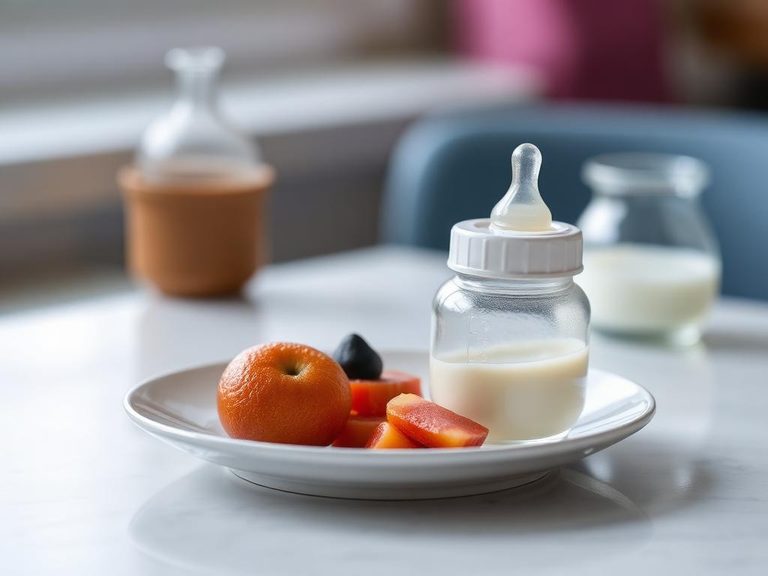
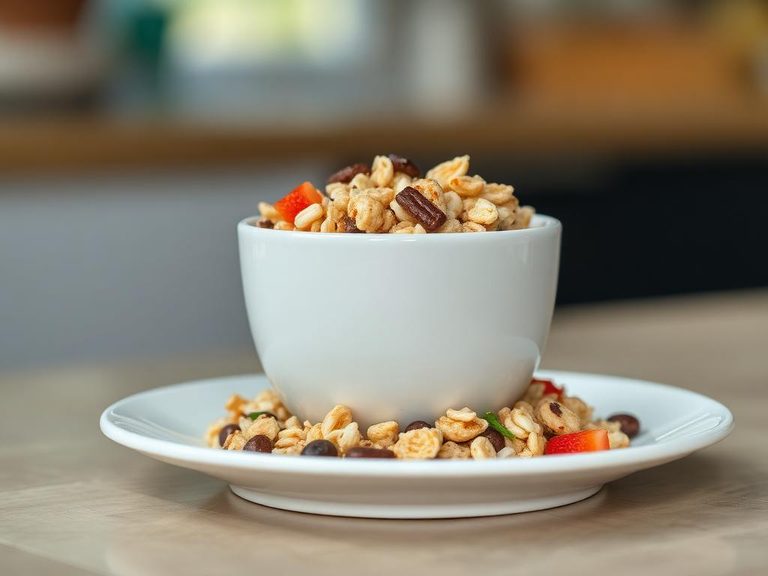
🍽️ Popular dishes



🌍 Where it's eaten
💡 Did you know?
The 'not reconstituted' label means this is a thick, syrupy concentrate—typically a 1:1 mix with water is required, making one can yield twice its volume in ready-to-feed formula.
Full nutrition (USDA data · scales with serving)
| Water | 76.2 g |
| Energy | 127 kcal |
| Energy | 530 kj |
| Protein | 2.6 g |
| Total lipid (fat) | 6.9 g |
| Ash | 0.79 g |
| Carbohydrate, by difference | 13.8 g |
| Fiber, total dietary | 0.00 g |
| Total Sugars | 13.8 g |
| Lactose | 13.8 g |
| Calcium, Ca | 99.0 mg |
| Iron, Fe | 2.3 mg |
| Magnesium, Mg | 8.0 mg |
| Phosphorus, P | 54.0 mg |
| Potassium, K | 134 mg |
| Sodium, Na | 31.0 mg |
| Zinc, Zn | 0.96 mg |
| Copper, Cu | 0.12 mg |
| Manganese, Mn | 0.01 mg |
| Selenium, Se | 2.8 ug |
| Vitamin C, total ascorbic acid | 11.5 mg |
| Thiamin | 0.13 mg |
| Riboflavin | 0.19 mg |
| Niacin | 1.3 mg |
| Pantothenic acid | 0.57 mg |
| Vitamin B-6 | 0.08 mg |
| Folate, total | 19.0 ug |
| Folic acid | 19.0 ug |
| Folate, food | 0.00 ug |
| Folate, DFE | 33.0 ug |
| Choline, total | 15.6 mg |
| Vitamin B-12 | 0.32 ug |
| Vitamin B-12, added | 0.32 ug |
| Vitamin A, RAE | 114 ug |
| Retinol | 114 ug |
| Carotene, beta | 0.00 ug |
| Carotene, alpha | 0.00 ug |
| Cryptoxanthin, beta | 0.00 ug |
| Vitamin A, IU | 382 iu |
| Lycopene | 0.00 ug |
| Lutein + zeaxanthin | 0.00 ug |
| Vitamin E (alpha-tocopherol) | 1.3 mg |
| Vitamin E, added | 1.3 mg |
| Vitamin D (D2 + D3), International Units | 76.0 iu |
| Vitamin D (D2 + D3) | 1.9 ug |
| Vitamin K (phylloquinone) | 10.2 ug |
| Alcohol, ethyl | 0.00 g |
| Caffeine | 0.00 mg |
| Theobromine | 0.00 mg |
Fat & fatty acid profile (per 100g)
| Fatty acids, total saturated | 2.4 g |
| SFA 4:0 | 0.00 g |
| SFA 6:0 | 0.01 g |
| SFA 8:0 | 0.21 g |
| SFA 10:0 | 0.15 g |
| SFA 12:0 | 0.94 g |
| SFA 14:0 | 0.35 g |
| SFA 16:0 | 0.50 g |
| SFA 18:0 | 0.22 g |
| Fatty acids, total monounsaturated | 2.6 g |
| MUFA 16:1 | 0.01 g |
| MUFA 18:1 | 2.5 g |
| MUFA 20:1 | 0.01 g |
| MUFA 22:1 | 0.00 g |
| Fatty acids, total polyunsaturated | 1.6 g |
| PUFA 18:2 | 1.4 g |
| PUFA 18:3 | 0.15 g |
| PUFA 18:4 | 0.00 g |
| PUFA 20:4 | 0.00 g |
| PUFA 20:5 n-3 (EPA) | 0.00 g |
| PUFA 22:5 n-3 (DPA) | 0.00 g |
| PUFA 22:6 n-3 (DHA) | 0.00 g |
| Cholesterol | 3.0 mg |
FAQ
What does 'liquid concentrate' mean for preparation?
It means the formula is a thick liquid that must be mixed with an equal amount of clean water (usually 1:1 ratio) before feeding to achieve the correct nutrient balance and consistency.
Is this formula suitable for newborns?
Yes, this type of iron-fortified, milk-based formula is designed for infants from birth onward, but always follow a pediatrician's advice for individual feeding plans.
Why is iron added to infant formula?
Iron is crucial for an infant's developing brain and for preventing iron-deficiency anemia. Breast milk contains iron in a highly absorbable form, so formulas are fortified to meet similar nutritional needs.
How should opened concentrate be stored?
Once opened, the unused concentrate should be covered and refrigerated. It is typically used within 48 hours. Never freeze the concentrate.
Nutrient density (calculated · NRF9.3)
Nutrient Rich Foods index: beneficial nutrients (protein, fiber, vitamins, minerals) minus saturated fat, added sugar & sodium, per 100 kcal.
NRF9.3 index — Fulgoni, Keast & Drewnowski, 2009. Computed from USDA nutrients.
Weight-loss friendliness (composite index)
Energy density 1.27 kcal/g · 8% calories from protein · 0.0 g fiber · 13.8 g sugar per 100 g.
Composite of energy density (Rolls et al., 1999), protein & fiber satiety, minus sugar. A calculated heuristic — ranks satiety-per-calorie, not a clinical measure.
Dietary load (calculated from USDA values)
Potential renal acid load. Positive = acid-forming, negative = alkaline-forming.
Sodium-to-potassium ratio: 0.23 (lower is better — aim for ≤ 1)
Sodium:potassium per WHO potassium guidance. Computed from USDA nutrients.