

Halibut, frozen, wild caught
Whole food · Finfish and Shellfish Products
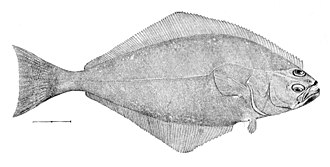
Photo: Wikipedia
Wild-caught frozen halibut is a premium, lean white fish prized for its dense, meaty texture and mild, sweet flavor that flakes into large, satisfying pieces. Nutritionally, it is a powerhouse of high-quality protein with virtually zero carbohydrates or fat, making it an exceptionally clean and efficient fuel source. Its firm flesh holds up beautifully to various cooking methods, from grilling to poaching, without falling apart.
Calorie split: 93% protein · 0% carbs · 7% fat
↓ Full nutrition💚 Why it's loved
People love halibut for its clean, subtly sweet flavor that acts as a perfect canvas for sauces and seasonings, and its firm, steak-like texture that appeals even to those who are wary of softer fish. Its versatility makes it a star in everything from simple grilled fillets to elegant poached dishes, often serving as a centerpiece in coastal and fine-dining cuisines.
⚠️ Watch-outs & how to enjoy it better
While low in fat, halibut can be dry if overcooked, which is a common pitfall for home cooks. To counteract this, it's best cooked using moist-heat methods like poaching or steaming, or by basting with butter or oil during grilling or broiling. Additionally, as a large predatory fish, it can contain trace amounts of mercury, so pregnant women and young children should consume it in moderation as part of a varied diet.
Key benefits
- Exceptionally high in lean protein (19g per 100g) for muscle maintenance and satiety.
- Extremely low in fat (0.6g per 100g) and calories (81 kcal per 100g).
- Naturally carbohydrate-free, making it ideal for low-carb and ketogenic diets.
- A good source of essential nutrients like selenium, niacin, and vitamin B12.
- Wild-caught status often indicates a more natural diet and potentially better fatty acid profile.
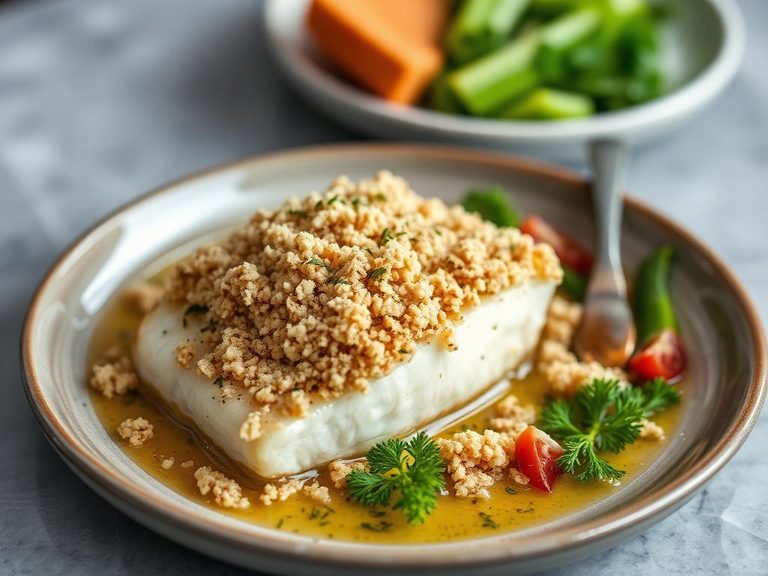
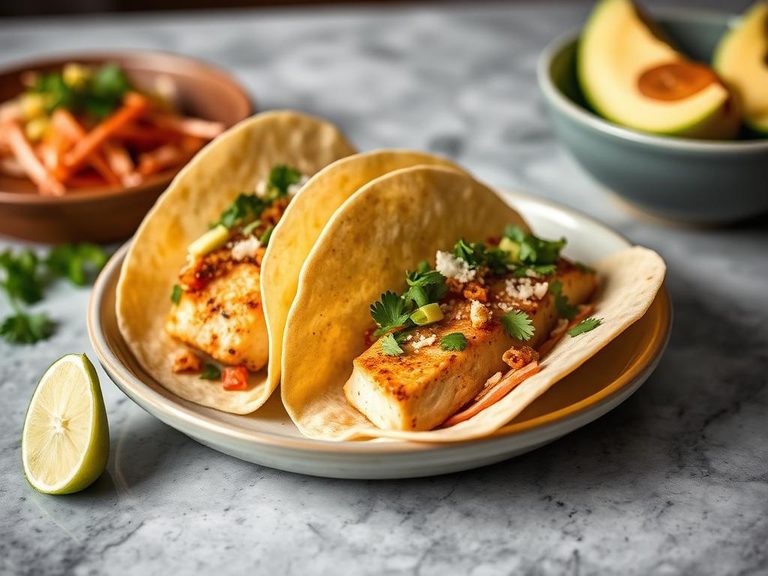
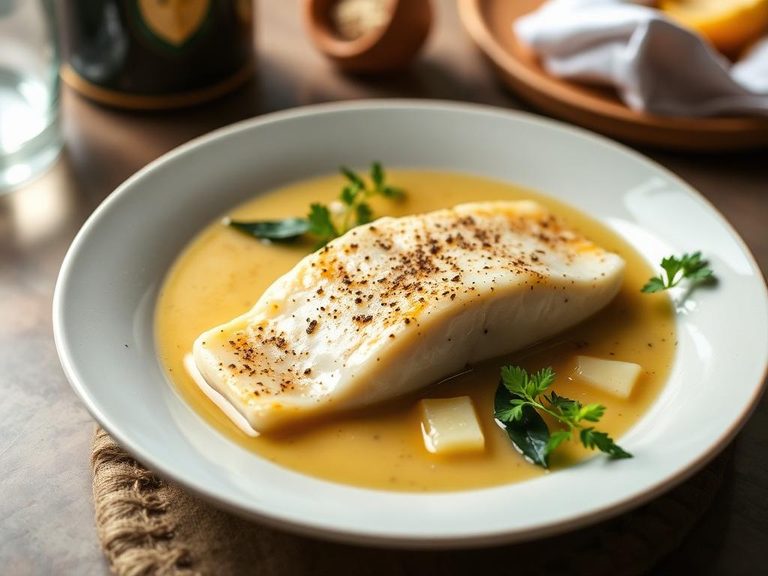
🍽️ Popular dishes
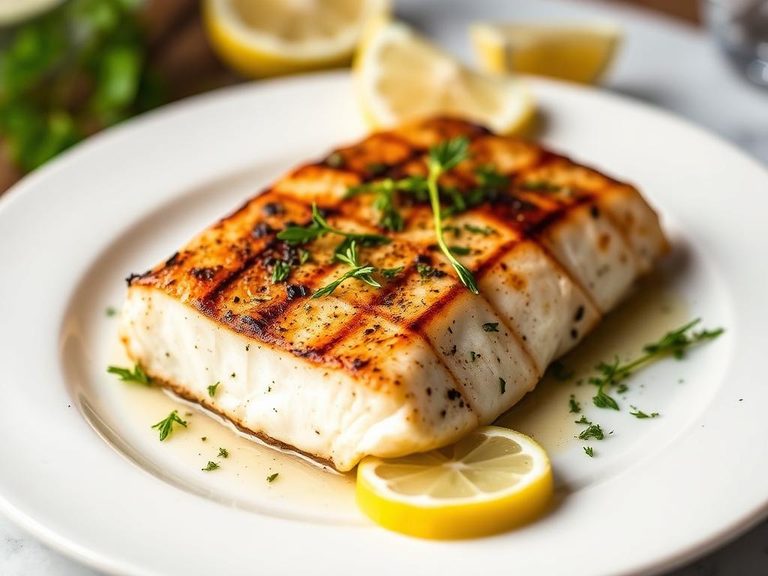
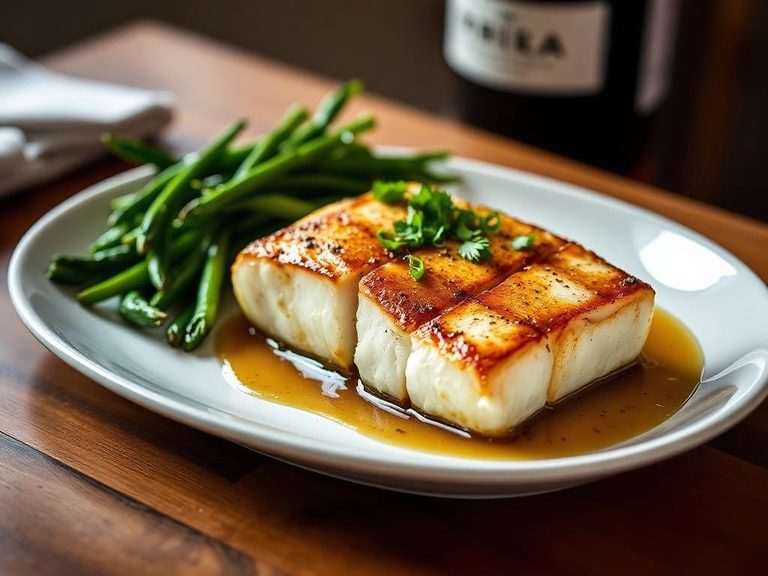
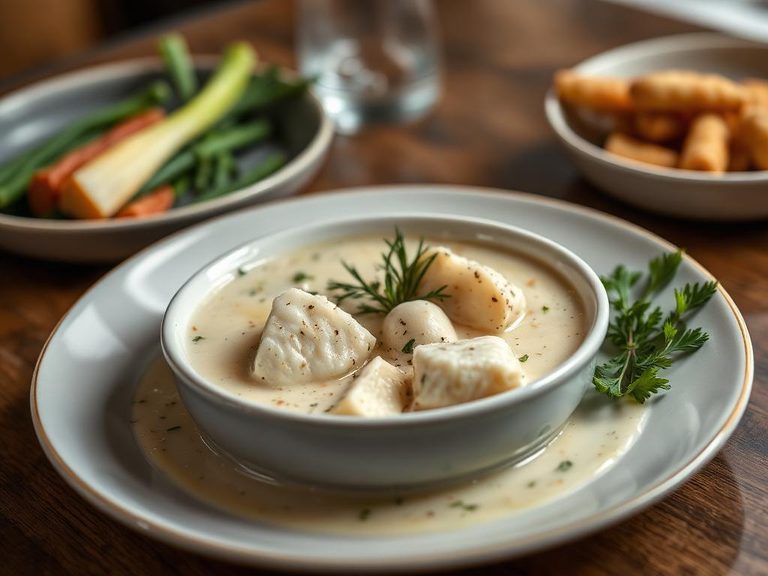
🌍 Where it's eaten
💡 Did you know?
Halibut is one of the largest bony fish in the world, with some individuals reaching over 2.5 meters (8 feet) in length and weighing over 300 kilograms (700 pounds), though commercial catches are typically much smaller.
Full nutrition (USDA data · scales with serving)
| Water | 79.0 g |
| Energy (Atwater General Factors) | 81.3 kcal |
| Nitrogen | 3.0 g |
| Protein | 19.1 g |
| Total lipid (fat) | 0.59 g |
| Ash | 1.4 g |
| Carbohydrate, by difference | -0.06 g |
| Calcium, Ca | 4.1 mg |
| Iron, Fe | 0.00 mg |
| Magnesium, Mg | 23.1 mg |
| Phosphorus, P | 217 mg |
| Potassium, K | 430 mg |
| Sodium, Na | 108 mg |
| Zinc, Zn | 0.33 mg |
| Copper, Cu | 0.00 mg |
| Manganese, Mn | 0.00 mg |
| Selenium, Se | 53.7 ug |
| Vitamin B-12 | 0.58 ug |
Fat & fatty acid profile (per 100g)
Estimated from Fish, halibut, Greenland, raw — USDA does not publish this profile for Halibut.
| Fatty acids, total saturated | 2.4 g |
| SFA 4:0 | 0.00 g |
| SFA 6:0 | 0.00 g |
| SFA 8:0 | 0.00 g |
| SFA 10:0 | 0.00 g |
| SFA 12:0 | 0.01 g |
| SFA 14:0 | 0.75 g |
| SFA 16:0 | 1.4 g |
| SFA 18:0 | 0.19 g |
| Fatty acids, total monounsaturated | 8.4 g |
| MUFA 16:1 | 1.8 g |
| MUFA 18:1 | 2.4 g |
| MUFA 20:1 | 2.2 g |
| MUFA 22:1 | 2.0 g |
| Fatty acids, total polyunsaturated | 1.4 g |
| PUFA 18:2 | 0.12 g |
| PUFA 18:3 | 0.04 g |
| PUFA 18:4 | 0.13 g |
| PUFA 20:4 | 0.06 g |
| PUFA 20:5 n-3 (EPA) | 0.53 g |
| PUFA 22:5 n-3 (DPA) | 0.09 g |
| PUFA 22:6 n-3 (DHA) | 0.39 g |
| Cholesterol | 46.0 mg |
Amino acid profile (per 100g)
Estimated from Fish, halibut, Greenland, raw — USDA does not publish this profile for Halibut.
| Tryptophan | 0.16 g |
| Threonine | 0.63 g |
| Isoleucine | 0.66 g |
| Leucine | 1.2 g |
| Lysine | 1.3 g |
| Methionine | 0.42 g |
| Cystine | 0.15 g |
| Phenylalanine | 0.56 g |
| Tyrosine | 0.48 g |
| Valine | 0.74 g |
| Arginine | 0.86 g |
| Histidine | 0.42 g |
| Alanine | 0.87 g |
| Aspartic acid | 1.5 g |
| Glutamic acid | 2.1 g |
| Glycine | 0.69 g |
| Proline | 0.51 g |
| Serine | 0.59 g |
FAQ
Is frozen halibut as good as fresh?
Yes, when properly frozen and thawed, frozen wild-caught halibut is often indistinguishable from fresh, as it's typically flash-frozen at sea to preserve quality and texture.
How should I thaw frozen halibut?
The best method is to thaw it overnight in the refrigerator. For a quicker thaw, place the sealed fish in a bowl of cold water, changing the water every 30 minutes. Never thaw at room temperature.
What's the best way to cook halibut without drying it out?
Use a meat thermometer to avoid overcooking; halibut is done when it reaches an internal temperature of 130-135°F (54-57°C). Moist-heat methods like poaching or baking en papillote (in parchment) are also excellent for retaining moisture.
Nutrient density (calculated · NRF9.3)
Nutrient Rich Foods index: beneficial nutrients (protein, fiber, vitamins, minerals) minus saturated fat, added sugar & sodium, per 100 kcal.
NRF9.3 index — Fulgoni, Keast & Drewnowski, 2009. Computed from USDA nutrients.
Weight-loss friendliness (composite index)
Energy density 0.81 kcal/g · 94% calories from protein · 0.0 g fiber · 0.0 g sugar per 100 g.
Composite of energy density (Rolls et al., 1999), protein & fiber satiety, minus sugar. A calculated heuristic — ranks satiety-per-calorie, not a clinical measure.
Dietary load (calculated from USDA values)
Potential renal acid load. Positive = acid-forming, negative = alkaline-forming.
Sodium-to-potassium ratio: 0.25 (lower is better — aim for ≤ 1)
Sodium:potassium per WHO potassium guidance. Computed from USDA nutrients.