

Grapefruit, raw, pink and red, California and Arizona
Whole food · Fruits and Fruit Juices
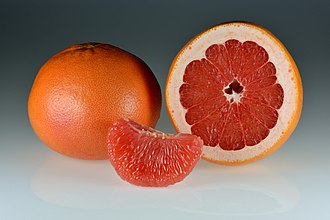
Photo: Wikipedia
This is the vibrant, ruby-fleshed grapefruit, a citrus hybrid prized for its bold, bittersweet flavor and juicy, segmented texture. Its striking pink-to-red color comes from lycopene, a powerful antioxidant. Nutritionally, it's a low-calorie powerhouse, offering a notable dose of vitamin C and A with minimal calories.
Calorie split: 5% protein · 93% carbs · 2% fat
↓ Full nutrition💚 Why it's loved
People love it for its invigorating, complex flavor that balances tartness, sweetness, and a pleasant bitter edge. It's a versatile fruit, enjoyed simply halved for breakfast, juiced, or used to add a bright, acidic punch to savory dishes and cocktails.
⚠️ Watch-outs & how to enjoy it better
The main caution is its furanocoumarin content, which can interact with numerous prescription medications (like statins and some blood pressure drugs) by affecting their metabolism. To counteract this, always consult a doctor or pharmacist about specific food interactions, and consider consuming grapefruit at a different time of day from medication.
Key benefits
- Excellent source of immune-boosting Vitamin C
- Rich in antioxidant lycopene
- Very low in calories and fat
- Provides a good amount of Vitamin A
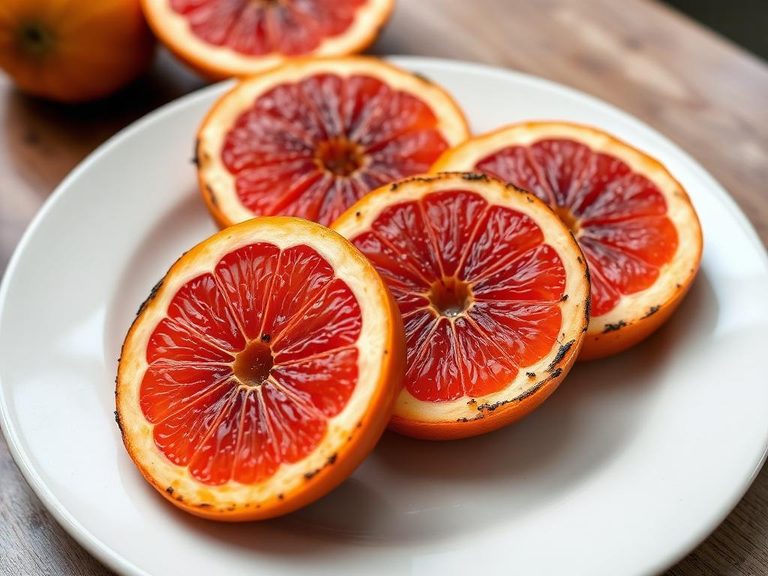
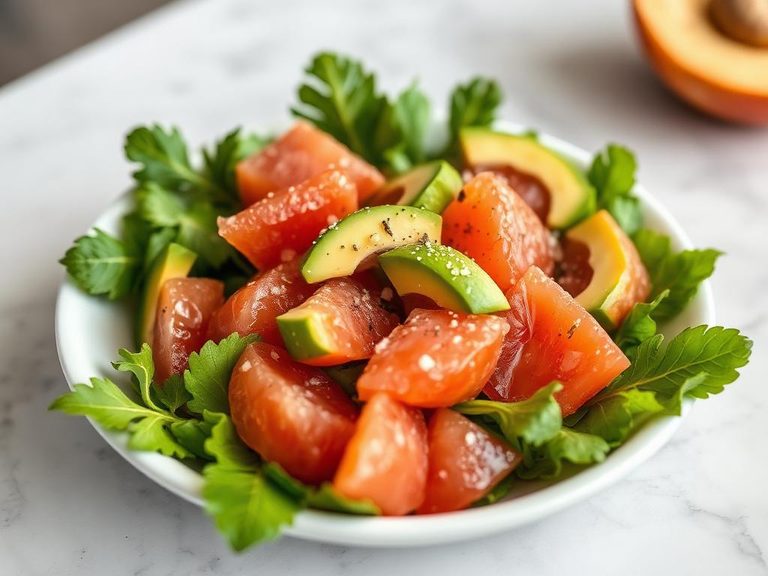
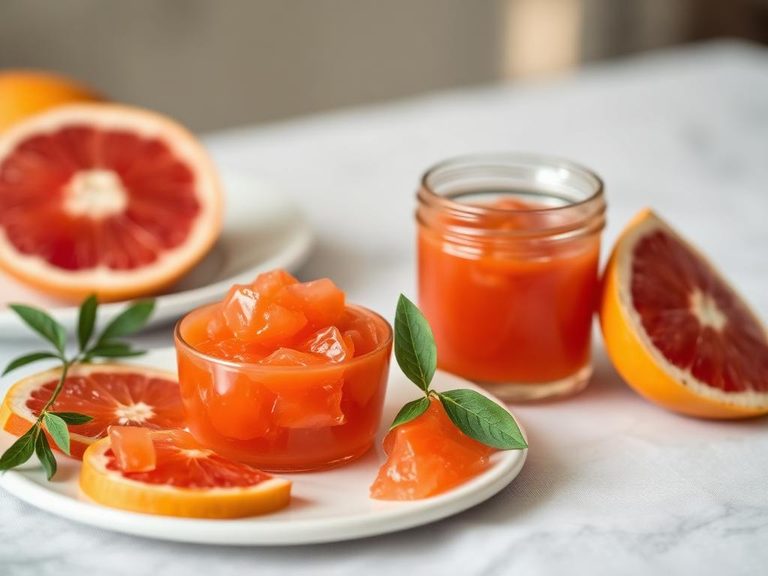
🍽️ Popular dishes

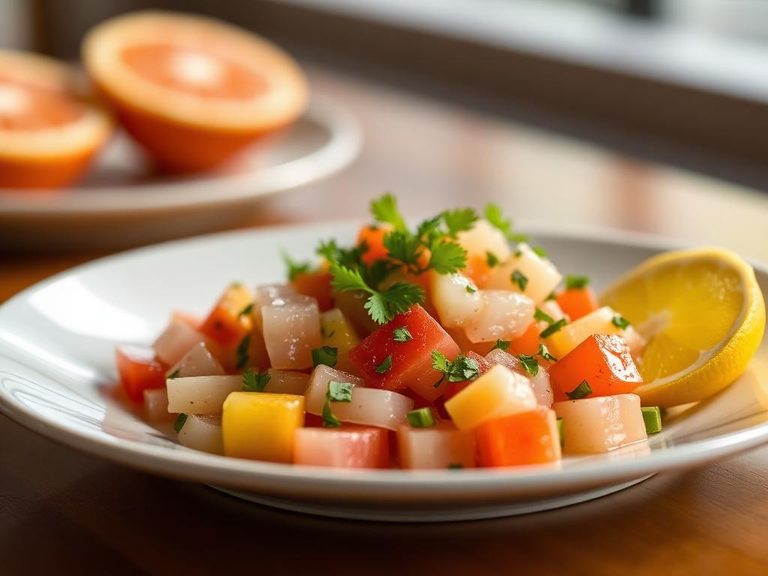
🌍 Where it's eaten
💡 Did you know?
The 'ruby' red color in pink and red grapefruits is due to lycopene, the same antioxidant that gives tomatoes their red hue, but it develops here only under specific temperature conditions during ripening.
Full nutrition (USDA data · scales with serving)
| Water | 89.3 g |
| Energy | 37.0 kcal |
| Energy | 155 kj |
| Protein | 0.50 g |
| Total lipid (fat) | 0.10 g |
| Ash | 0.40 g |
| Carbohydrate, by difference | 9.7 g |
| Calcium, Ca | 11.0 mg |
| Iron, Fe | 0.08 mg |
| Magnesium, Mg | 9.0 mg |
| Phosphorus, P | 12.0 mg |
| Potassium, K | 147 mg |
| Sodium, Na | 1.0 mg |
| Zinc, Zn | 0.07 mg |
| Copper, Cu | 0.03 mg |
| Manganese, Mn | 0.02 mg |
| Vitamin C, total ascorbic acid | 38.1 mg |
| Thiamin | 0.03 mg |
| Riboflavin | 0.02 mg |
| Niacin | 0.19 mg |
| Pantothenic acid | 0.28 mg |
| Vitamin B-6 | 0.04 mg |
| Folate, total | 12.0 ug |
| Folic acid | 0.00 ug |
| Folate, food | 12.0 ug |
| Folate, DFE | 12.0 ug |
| Vitamin B-12 | 0.00 ug |
| Vitamin A, RAE | 13.0 ug |
| Retinol | 0.00 ug |
| Vitamin A, IU | 259 iu |
| Vitamin D (D2 + D3), International Units | 0.00 iu |
| Vitamin D (D2 + D3) | 0.00 ug |
Fat & fatty acid profile (per 100g)
| Fatty acids, total saturated | 0.01 g |
| SFA 16:0 | 0.01 g |
| SFA 18:0 | 0.00 g |
| Fatty acids, total monounsaturated | 0.01 g |
| MUFA 16:1 | 0.00 g |
| MUFA 18:1 | 0.01 g |
| Fatty acids, total polyunsaturated | 0.02 g |
| PUFA 18:2 | 0.02 g |
| PUFA 18:3 | 0.01 g |
| Fatty acids, total trans | 0.00 g |
| Cholesterol | 0.00 mg |
Amino acid profile (per 100g)
| Tryptophan | 0.01 g |
| Threonine | 0.01 g |
| Isoleucine | 0.01 g |
| Leucine | 0.01 g |
| Lysine | 0.01 g |
| Methionine | 0.01 g |
| Cystine | 0.01 g |
| Phenylalanine | 0.03 g |
| Tyrosine | 0.01 g |
| Valine | 0.01 g |
| Arginine | 0.06 g |
| Histidine | 0.01 g |
| Alanine | 0.02 g |
| Aspartic acid | 0.09 g |
| Glutamic acid | 0.13 g |
| Glycine | 0.01 g |
| Proline | 0.04 g |
| Serine | 0.02 g |
FAQ
Why is my grapefruit more bitter?
The perceived bitterness can vary based on the specific variety (e.g., Ruby Red is sweeter than White), ripeness, and temperature. Chilling the fruit before eating can sometimes reduce the perception of bitterness.
Is grapefruit juice as nutritious as the whole fruit?
While juice retains vitamins and antioxidants, it lacks the beneficial fiber found in the pulp and membranes of the whole fruit, which aids digestion and helps moderate sugar absorption.
How do I pick a good grapefruit?
Choose fruit that feels heavy for its size, indicating juiciness. The skin should be smooth and firm, without soft spots or excessive blemishes.
Nutrient density (calculated · NRF9.3)
Nutrient Rich Foods index: beneficial nutrients (protein, fiber, vitamins, minerals) minus saturated fat, added sugar & sodium, per 100 kcal.
NRF9.3 index — Fulgoni, Keast & Drewnowski, 2009. Computed from USDA nutrients.
Weight-loss friendliness (composite index)
Energy density 0.37 kcal/g · 5% calories from protein · 0.0 g fiber · 0.0 g sugar per 100 g.
Composite of energy density (Rolls et al., 1999), protein & fiber satiety, minus sugar. A calculated heuristic — ranks satiety-per-calorie, not a clinical measure.
Dietary load (calculated from USDA values)
Potential renal acid load. Positive = acid-forming, negative = alkaline-forming.
Sodium-to-potassium ratio: 0.01 (lower is better — aim for ≤ 1)
Sodium:potassium per WHO potassium guidance. Computed from USDA nutrients.