

Game meat, rabbit, domesticated, composite of cuts, cooked, roasted
Whole food · Lamb, Veal, and Game Products

Photo: Wikipedia
Domesticated rabbit, roasted to a tender finish, offers a lean, mild-flavored white meat with a texture often compared to chicken but slightly finer and more delicate. Its nutritional profile is a powerhouse of high-quality protein with virtually no carbohydrates or sugar, making it a staple for low-carb and high-protein diets. The meat is low in fat, providing a clean, savory taste that readily absorbs herbs and marinades.
Calorie split: 62% protein · 0% carbs · 38% fat
↓ Full nutrition💚 Why it's loved
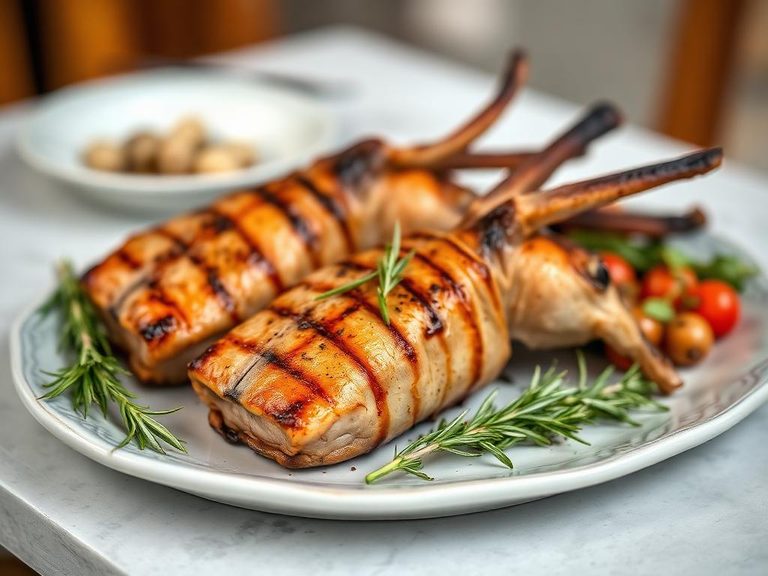
People love rabbit for its subtle, sweet flavor and versatility—it can be braised, grilled, or roasted and pairs beautifully with everything from rosemary to white wine. In many cultures, it's a cherished centerpiece for family meals and traditional feasts, symbolizing rustic, hearty cooking.
⚠️ Watch-outs & how to enjoy it better
Its leanness can lead to dryness if overcooked, so careful preparation is key. Some may find its mild taste less distinctive than stronger meats, and those with specific dietary restrictions should note it's a source of purines. To counteract dryness, use moist-heat cooking methods like braising or marinate before roasting, and pair it with a flavorful sauce or side.
Key benefits
- Exceptionally high in protein for muscle maintenance.
- Very low in fat and calories, supporting weight management.
- Naturally carbohydrate-free, ideal for ketogenic diets.
- Rich in essential minerals like selenium and phosphorus.
- A sustainable and efficient source of animal protein.
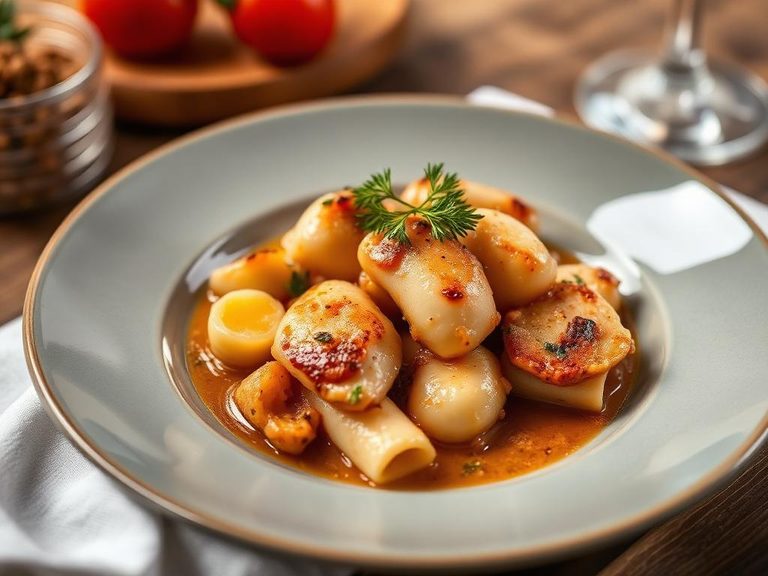
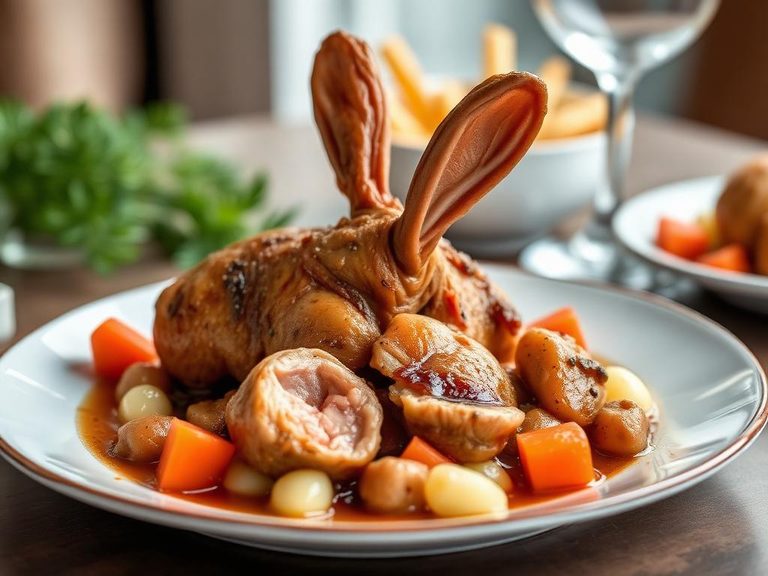
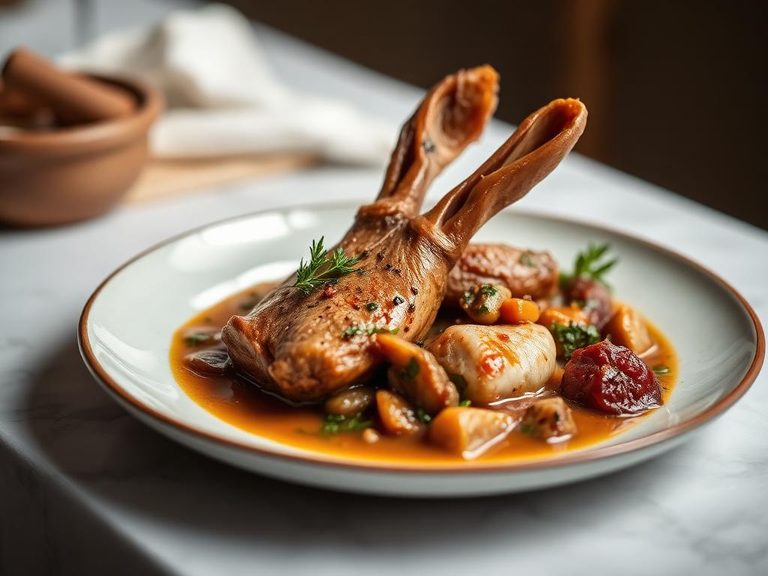
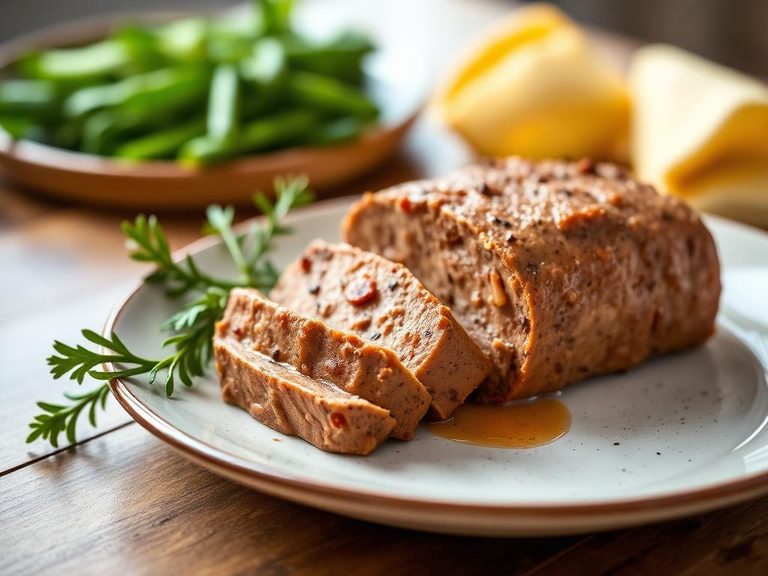
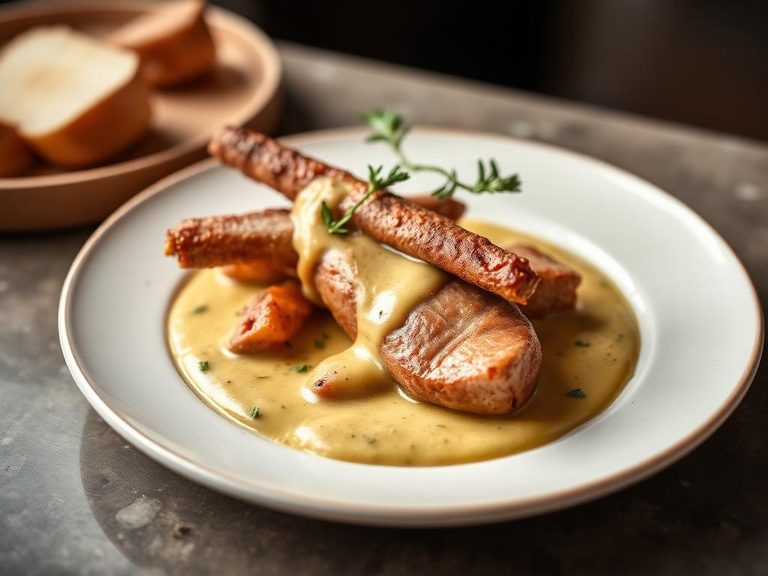
🍽️ Popular dishes
🌍 Where it's eaten
💡 Did you know?
Rabbit was a primary source of protein for Roman legions, who were known to carry rabbits on campaigns for a reliable, easy-to-raise meat supply.
Full nutrition (USDA data · scales with serving)
| Water | 60.6 g |
| Energy | 197 kcal |
| Energy | 824 kj |
| Protein | 29.1 g |
| Total lipid (fat) | 8.1 g |
| Ash | 1.0 g |
| Carbohydrate, by difference | 0.00 g |
| Fiber, total dietary | 0.00 g |
| Calcium, Ca | 19.0 mg |
| Iron, Fe | 2.3 mg |
| Magnesium, Mg | 21.0 mg |
| Phosphorus, P | 263 mg |
| Potassium, K | 383 mg |
| Sodium, Na | 47.0 mg |
| Zinc, Zn | 2.3 mg |
| Copper, Cu | 0.19 mg |
| Manganese, Mn | 0.03 mg |
| Selenium, Se | 38.5 ug |
| Vitamin C, total ascorbic acid | 0.00 mg |
| Thiamin | 0.09 mg |
| Riboflavin | 0.21 mg |
| Niacin | 8.4 mg |
| Pantothenic acid | 0.93 mg |
| Vitamin B-6 | 0.47 mg |
| Folate, total | 11.0 ug |
| Folic acid | 0.00 ug |
| Folate, food | 11.0 ug |
| Folate, DFE | 11.0 ug |
| Vitamin B-12 | 8.3 ug |
| Vitamin A, RAE | 0.00 ug |
| Retinol | 0.00 ug |
| Vitamin A, IU | 0.00 iu |
Fat & fatty acid profile (per 100g)
| Fatty acids, total saturated | 2.4 g |
| SFA 14:0 | 0.21 g |
| SFA 16:0 | 1.8 g |
| SFA 18:0 | 0.38 g |
| Fatty acids, total monounsaturated | 2.2 g |
| MUFA 16:1 | 0.26 g |
| MUFA 18:1 | 1.9 g |
| Fatty acids, total polyunsaturated | 1.6 g |
| PUFA 18:2 | 1.2 g |
| PUFA 18:3 | 0.32 g |
| Cholesterol | 82.0 mg |
Amino acid profile (per 100g)
| Tryptophan | 0.38 g |
| Threonine | 1.3 g |
| Isoleucine | 1.4 g |
| Leucine | 2.3 g |
| Lysine | 2.5 g |
| Methionine | 0.73 g |
| Cystine | 0.36 g |
| Phenylalanine | 1.2 g |
| Tyrosine | 1.0 g |
| Valine | 1.5 g |
| Arginine | 1.8 g |
| Histidine | 0.81 g |
| Alanine | 1.8 g |
| Aspartic acid | 2.8 g |
| Glutamic acid | 4.7 g |
| Glycine | 1.6 g |
| Proline | 1.4 g |
| Serine | 1.3 g |
FAQ
How does the taste of domesticated rabbit compare to wild rabbit?
Domesticated rabbit has a milder, sweeter, and more delicate flavor. Wild rabbit has a stronger, more gamy taste due to its varied diet and more active lifestyle.
What's the best way to cook rabbit to keep it moist?
Braising in liquid (like broth, wine, or tomato sauce) is the most foolproof method. For roasting, marinating first and basting frequently helps, and it's best cooked to an internal temperature of 160°F (71°C) to avoid drying out.
Is rabbit meat considered red meat or white meat?
Rabbit is classified as white meat, similar to chicken and turkey, due to its light color and myoglobin content. However, it's slightly darker than chicken and has a richer nutritional profile.
Nutrient density (calculated · NRF9.3)
Nutrient Rich Foods index: beneficial nutrients (protein, fiber, vitamins, minerals) minus saturated fat, added sugar & sodium, per 100 kcal.
NRF9.3 index — Fulgoni, Keast & Drewnowski, 2009. Computed from USDA nutrients.
Weight-loss friendliness (composite index)
Energy density 1.97 kcal/g · 59% calories from protein · 0.0 g fiber · 0.0 g sugar per 100 g.
Composite of energy density (Rolls et al., 1999), protein & fiber satiety, minus sugar. A calculated heuristic — ranks satiety-per-calorie, not a clinical measure.
Dietary load (calculated from USDA values)
Potential renal acid load. Positive = acid-forming, negative = alkaline-forming.
Sodium-to-potassium ratio: 0.12 (lower is better — aim for ≤ 1)
Sodium:potassium per WHO potassium guidance. Computed from USDA nutrients.