

Fish with tomato-based sauce
Common food
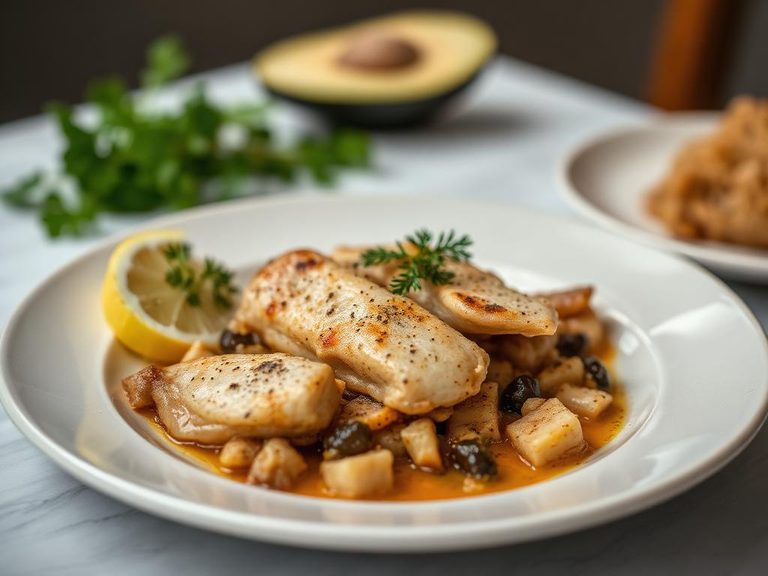
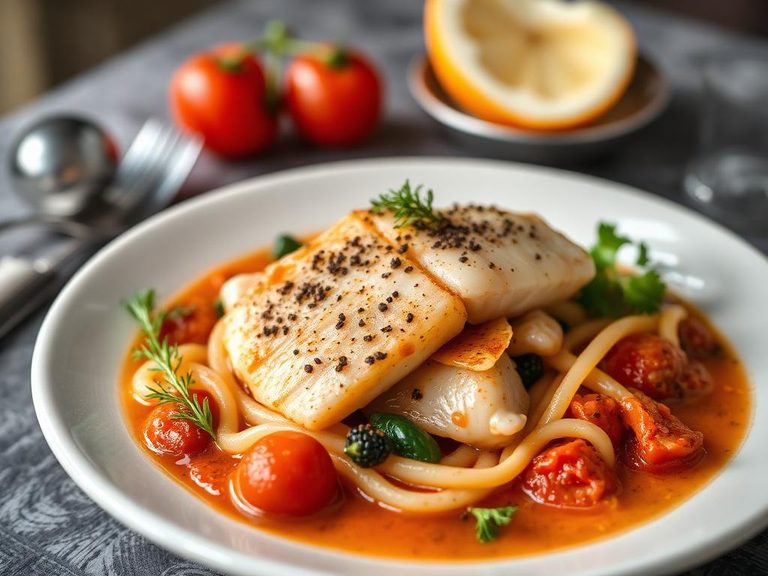
This is a lean, protein-rich dish where tender, flaky white fish is simmered or baked in a vibrant, tangy tomato-based sauce. The texture is a delightful contrast between the soft, delicate fish and the smooth, slightly chunky sauce. Its standout nutritional feature is its exceptional protein-to-calorie ratio, making it a powerhouse for muscle maintenance without excess energy.
Calorie split: 84% protein · 8% carbs · 8% fat
↓ Full nutrition💚 Why it's loved
People adore this dish for its perfect balance of savory, umami-rich fish and the bright, acidic sweetness of the tomato sauce, which cuts through any mild fishiness. It's a globally versatile staple, adaptable to countless herbs, spices, and side dishes from rice to crusty bread.
⚠️ Watch-outs & how to enjoy it better
The primary concern is the potential for high sodium content from canned tomatoes, broth, or added salt, which can be an issue for those monitoring blood pressure. To counteract this, use no-salt-added tomatoes and broth, and boost flavor with garlic, onions, and fresh herbs like basil or oregano. Also, ensure the fish is fully cooked to avoid foodborne illness.
Key benefits
- Excellent source of high-quality, complete protein
- Very low in fat and calories
- Rich in lycopene, an antioxidant from cooked tomatoes
- Provides B vitamins like niacin and B12 for energy metabolism
- A light yet satisfying meal option
🍽️ Popular dishes
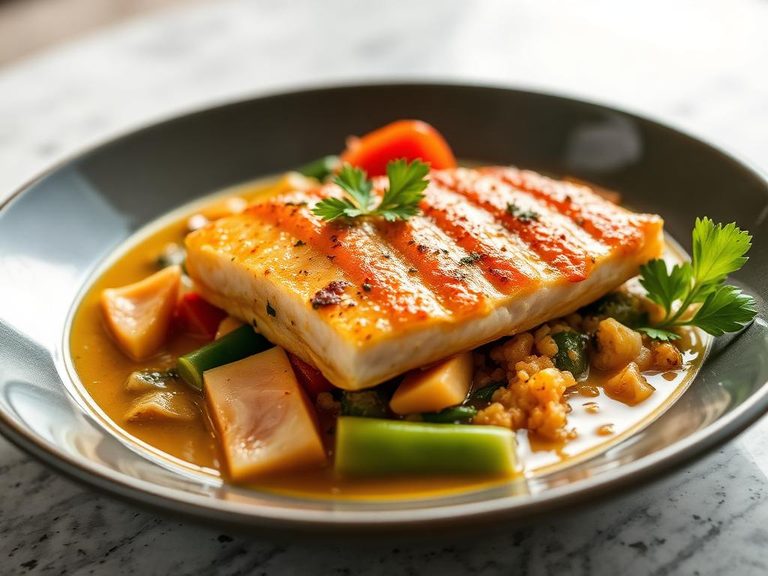
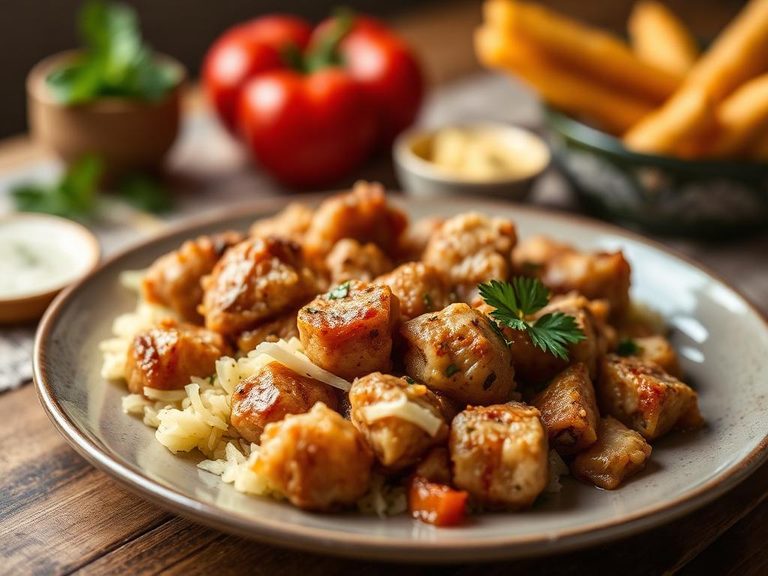
🌍 Where it's eaten
💡 Did you know?
Cooking tomatoes in a sauce, especially with a little oil, dramatically increases the bioavailability of the antioxidant lycopene, making your body absorb more of it than from raw tomatoes.
Full nutrition (USDA data · scales with serving)
| Water | 80.2 g |
| Energy | 80.0 kcal |
| Protein | 16.3 g |
| Total lipid (fat) | 0.69 g |
| Carbohydrate, by difference | 1.6 g |
| Fiber, total dietary | 0.40 g |
| Total Sugars | 1.1 g |
| Calcium, Ca | 14.0 mg |
| Iron, Fe | 0.63 mg |
| Magnesium, Mg | 34.0 mg |
| Phosphorus, P | 104 mg |
| Potassium, K | 259 mg |
| Sodium, Na | 350 mg |
| Zinc, Zn | 0.47 mg |
| Copper, Cu | 0.06 mg |
| Selenium, Se | 26.4 ug |
| Vitamin C, total ascorbic acid | 2.7 mg |
| Thiamin | 0.07 mg |
| Riboflavin | 0.07 mg |
| Niacin | 2.0 mg |
| Vitamin B-6 | 0.23 mg |
| Folate, total | 7.0 ug |
| Folic acid | 0.00 ug |
| Folate, food | 7.0 ug |
| Folate, DFE | 7.0 ug |
| Choline, total | 61.0 mg |
| Vitamin B-12 | 0.73 ug |
| Vitamin B-12, added | 0.00 ug |
| Vitamin A, RAE | 16.0 ug |
| Retinol | 10.0 ug |
| Carotene, beta | 74.0 ug |
| Carotene, alpha | 0.00 ug |
| Cryptoxanthin, beta | 1.0 ug |
| Lycopene | 3944 ug |
| Lutein + zeaxanthin | 7.0 ug |
| Vitamin E (alpha-tocopherol) | 1.0 mg |
| Vitamin E, added | 0.00 mg |
| Vitamin D (D2 + D3) | 0.80 ug |
| Vitamin K (phylloquinone) | 0.90 ug |
| Alcohol, ethyl | 0.00 g |
| Caffeine | 0.00 mg |
| Theobromine | 0.00 mg |
Fat & fatty acid profile (per 100g)
| Fatty acids, total saturated | 0.13 g |
| SFA 4:0 | 0.00 g |
| SFA 6:0 | 0.00 g |
| SFA 8:0 | 0.00 g |
| SFA 10:0 | 0.00 g |
| SFA 12:0 | 0.00 g |
| SFA 14:0 | 0.01 g |
| SFA 16:0 | 0.09 g |
| SFA 18:0 | 0.03 g |
| Fatty acids, total monounsaturated | 0.10 g |
| MUFA 16:1 | 0.01 g |
| MUFA 18:1 | 0.07 g |
| MUFA 20:1 | 0.01 g |
| MUFA 22:1 | 0.00 g |
| Fatty acids, total polyunsaturated | 0.24 g |
| PUFA 18:2 | 0.04 g |
| PUFA 18:3 | 0.00 g |
| PUFA 18:4 | 0.00 g |
| PUFA 20:4 | 0.02 g |
| PUFA 20:5 n-3 (EPA) | 0.00 g |
| PUFA 22:5 n-3 (DPA) | 0.01 g |
| PUFA 22:6 n-3 (DHA) | 0.11 g |
| Cholesterol | 38.0 mg |
FAQ
What kind of fish is best for tomato-based sauces?
Firm, white-fleshed fish like cod, halibut, sea bass, or tilapia hold up well. Delicate fish like sole or flounder can work but require very gentle cooking.
Can I make this dish ahead of time?
Yes, it often tastes even better the next day as flavors meld. Cool it quickly, refrigerate for up to 2 days, and reheat gently on the stovetop or in the microwave.
How can I prevent the fish from falling apart?
Pat the fish dry before cooking, use a thick fillet, and avoid moving it too much. Simmering gently (rather than boiling) in the sauce helps keep it intact.
Nutrient density (calculated · NRF9.3)
Nutrient Rich Foods index: beneficial nutrients (protein, fiber, vitamins, minerals) minus saturated fat, added sugar & sodium, per 100 kcal.
NRF9.3 index — Fulgoni, Keast & Drewnowski, 2009. Computed from USDA nutrients.
Weight-loss friendliness (composite index)
Energy density 0.80 kcal/g · 81% calories from protein · 0.4 g fiber · 1.1 g sugar per 100 g.
Composite of energy density (Rolls et al., 1999), protein & fiber satiety, minus sugar. A calculated heuristic — ranks satiety-per-calorie, not a clinical measure.
Dietary load (calculated from USDA values)
Potential renal acid load. Positive = acid-forming, negative = alkaline-forming.
Sodium-to-potassium ratio: 1.35 (lower is better — aim for ≤ 1)
Sodium:potassium per WHO potassium guidance. Computed from USDA nutrients.