

Fish and vegetables including carrots, broccoli, and/or dark-green leafy; no potatoes, tomato-based sauce
Common food
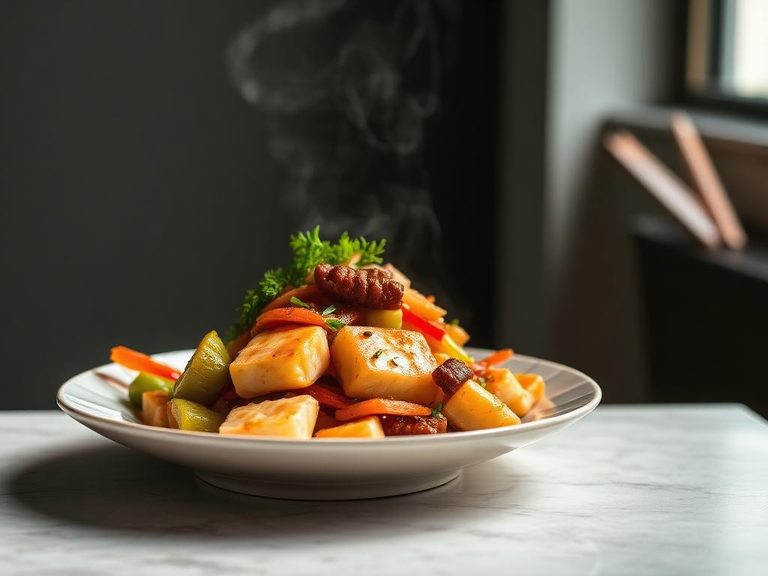
This is a light, savory dish of tender fish fillets paired with a vibrant medley of carrots, broccoli, and dark leafy greens, all cooked without heavy sauces. The fish offers a delicate, flaky texture that contrasts beautifully with the crisp-tender vegetables. It's a low-calorie, high-protein meal that emphasizes clean, natural flavors.
Calorie split: 23% protein · 16% carbs · 60% fat
↓ Full nutrition💚 Why it's loved
People appreciate its simplicity and the way it lets the fresh, oceanic taste of the fish shine through the earthy sweetness of the vegetables. It's a versatile base that can be seasoned in countless ways, from lemon-herb to garlic-butter, making it a staple in health-conscious and traditional cuisines alike.
⚠️ Watch-outs & how to enjoy it better
Those with fish or shellfish allergies must avoid it entirely. The dark leafy greens can be high in oxalates, which may concern individuals prone to certain kidney stones; pairing this dish with calcium-rich foods can help mitigate oxalate absorption. For optimal freshness and safety, ensure fish is sourced and stored properly.
Key benefits
- Excellent source of lean protein for muscle maintenance
- Rich in fiber and micronutrients from diverse vegetables
- Low in carbohydrates, suitable for low-carb diets
- Contains healthy fats, likely from the fish and cooking oil
- Provides key vitamins like A, C, and K from the vegetable mix
🍽️ Popular dishes
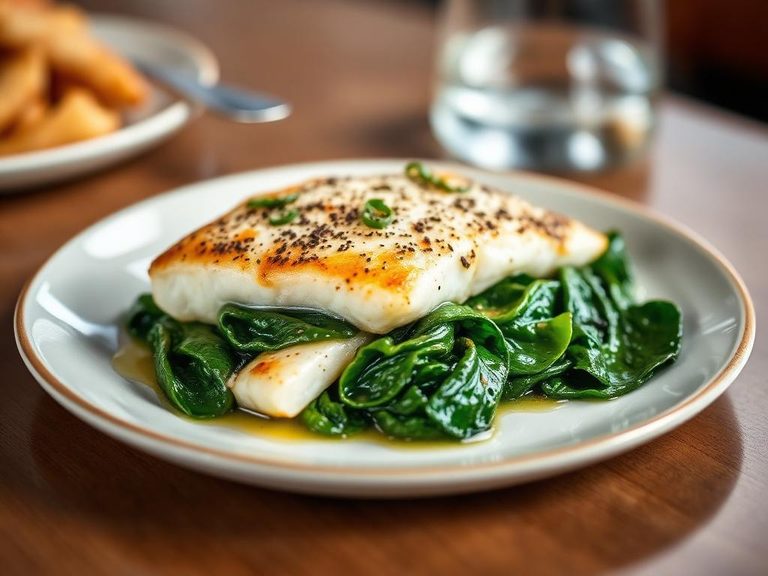
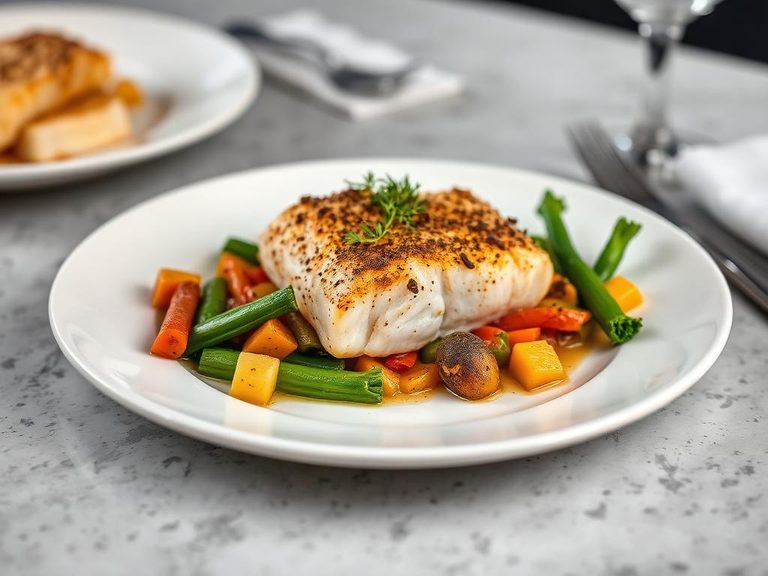
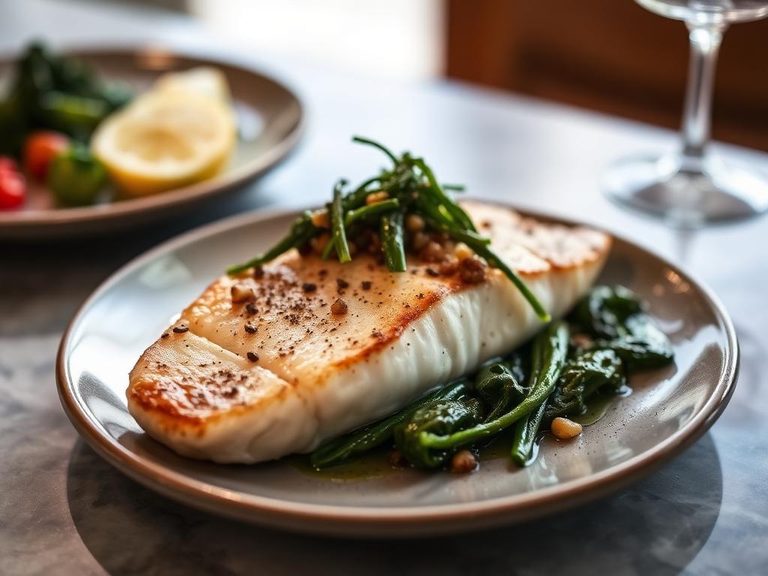
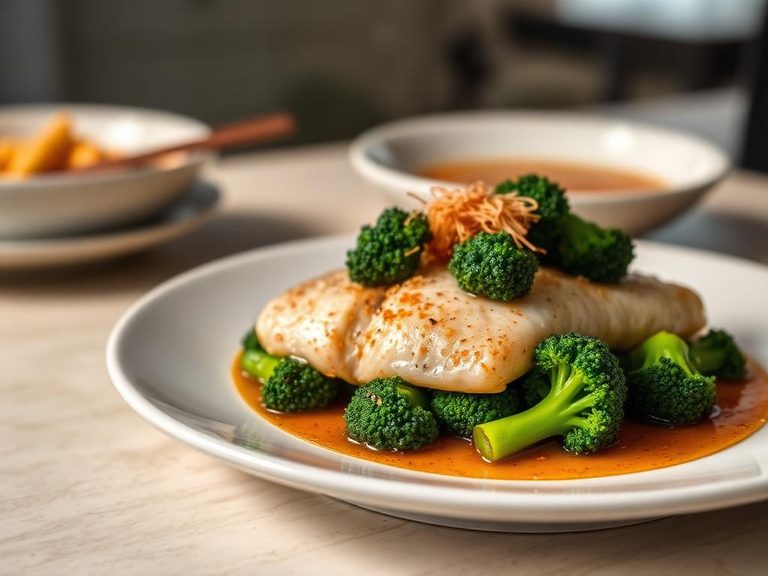
🌍 Where it's eaten
💡 Did you know?
The practice of pairing fish with leafy greens like spinach (as in Fish Florentine) is often attributed to the Renaissance, with the name 'Florentine' suggesting a connection to Catherine de' Medici's Italian influence on French cuisine.
Full nutrition (USDA data · scales with serving)
| Water | 80.8 g |
| Energy | 106 kcal |
| Protein | 6.3 g |
| Total lipid (fat) | 7.3 g |
| Carbohydrate, by difference | 4.4 g |
| Fiber, total dietary | 1.6 g |
| Total Sugars | 2.5 g |
| Calcium, Ca | 20.0 mg |
| Iron, Fe | 0.73 mg |
| Magnesium, Mg | 20.0 mg |
| Phosphorus, P | 56.0 mg |
| Potassium, K | 241 mg |
| Sodium, Na | 302 mg |
| Zinc, Zn | 0.33 mg |
| Copper, Cu | 0.08 mg |
| Selenium, Se | 9.0 ug |
| Vitamin C, total ascorbic acid | 9.8 mg |
| Thiamin | 0.04 mg |
| Riboflavin | 0.07 mg |
| Niacin | 1.2 mg |
| Vitamin B-6 | 0.14 mg |
| Folate, total | 16.0 ug |
| Folic acid | 0.00 ug |
| Folate, food | 16.0 ug |
| Folate, DFE | 16.0 ug |
| Choline, total | 27.2 mg |
| Vitamin B-12 | 0.24 ug |
| Vitamin B-12, added | 0.00 ug |
| Vitamin A, RAE | 149 ug |
| Retinol | 3.0 ug |
| Carotene, beta | 1448 ug |
| Carotene, alpha | 565 ug |
| Cryptoxanthin, beta | 2.0 ug |
| Lycopene | 6304 ug |
| Lutein + zeaxanthin | 279 ug |
| Vitamin E (alpha-tocopherol) | 2.5 mg |
| Vitamin E, added | 0.00 mg |
| Vitamin D (D2 + D3) | 0.30 ug |
| Vitamin K (phylloquinone) | 23.5 ug |
| Alcohol, ethyl | 0.00 g |
| Caffeine | 0.00 mg |
| Theobromine | 0.00 mg |
Fat & fatty acid profile (per 100g)
| Fatty acids, total saturated | 0.99 g |
| SFA 4:0 | 0.00 g |
| SFA 6:0 | 0.00 g |
| SFA 8:0 | 0.00 g |
| SFA 10:0 | 0.00 g |
| SFA 12:0 | 0.00 g |
| SFA 14:0 | 0.01 g |
| SFA 16:0 | 0.71 g |
| SFA 18:0 | 0.21 g |
| Fatty acids, total monounsaturated | 2.9 g |
| MUFA 16:1 | 0.03 g |
| MUFA 18:1 | 2.9 g |
| MUFA 20:1 | 0.05 g |
| MUFA 22:1 | 0.00 g |
| Fatty acids, total polyunsaturated | 2.8 g |
| PUFA 18:2 | 2.4 g |
| PUFA 18:3 | 0.31 g |
| PUFA 18:4 | 0.00 g |
| PUFA 20:4 | 0.01 g |
| PUFA 20:5 n-3 (EPA) | 0.00 g |
| PUFA 22:5 n-3 (DPA) | 0.00 g |
| PUFA 22:6 n-3 (DHA) | 0.04 g |
| Cholesterol | 12.0 mg |
FAQ
Is this dish suitable for a keto diet?
Yes, it's very keto-friendly. With only 4.39g of carbs per 100g and no starchy potatoes, it fits well within low-carb, high-fat dietary frameworks, especially if prepared with healthy fats like olive oil.
How can I prevent the vegetables from getting mushy?
Cook the vegetables separately until just crisp-tender, then combine with the fish at the end. Steaming or a quick sauté preserves their texture and color better than prolonged boiling or baking together.
What type of fish works best for this preparation?
Mild, white-fleshed fish like cod, haddock, sole, or tilapia are ideal as they won't overpower the vegetables. For a richer flavor, salmon or trout can be used, though they will increase the fat content.
Nutrient density (calculated · NRF9.3)
Nutrient Rich Foods index: beneficial nutrients (protein, fiber, vitamins, minerals) minus saturated fat, added sugar & sodium, per 100 kcal.
NRF9.3 index — Fulgoni, Keast & Drewnowski, 2009. Computed from USDA nutrients.
Weight-loss friendliness (composite index)
Energy density 1.06 kcal/g · 24% calories from protein · 1.6 g fiber · 2.5 g sugar per 100 g.
Composite of energy density (Rolls et al., 1999), protein & fiber satiety, minus sugar. A calculated heuristic — ranks satiety-per-calorie, not a clinical measure.
Dietary load (calculated from USDA values)
Potential renal acid load. Positive = acid-forming, negative = alkaline-forming.
Sodium-to-potassium ratio: 1.25 (lower is better — aim for ≤ 1)
Sodium:potassium per WHO potassium guidance. Computed from USDA nutrients.