

Fish and vegetables excluding carrots, broccoli, and dark- green leafy; no potatoes, tomato-based sauce
Common food
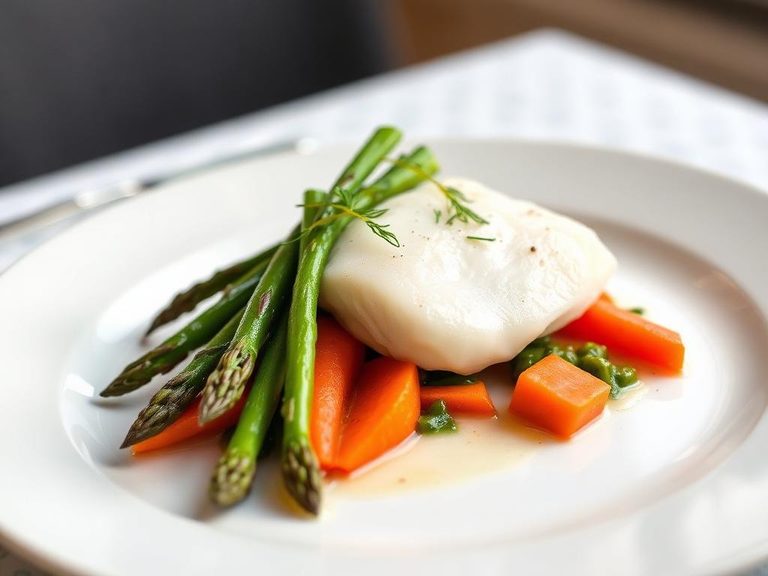
This is a light, clean dish of simply prepared white fish fillets served with a medley of tender, non-starchy vegetables like zucchini, bell peppers, and green beans. The fish offers a delicate, flaky texture and a mild, sweet flavor, while the vegetables provide a crisp-tender bite and a fresh, garden-like taste. Nutritionally, it's a lean, high-protein, low-calorie meal that's rich in vitamins and minerals without being heavy.
Calorie split: 22% protein · 22% carbs · 56% fat
↓ Full nutrition💚 Why it's loved
People love this dish for its clean, uncomplicated flavors that let the natural sweetness of the fish and the freshness of the vegetables shine. It's incredibly versatile, easily adapting to whatever seasonal vegetables are on hand, and fits seamlessly into healthy eating plans without feeling restrictive.
⚠️ Watch-outs & how to enjoy it better
Some may find the mild flavor profile too plain or unexciting if not well-seasoned. For those with specific fish allergies or sensitivities to certain vegetables like nightshades (bell peppers), this dish requires substitution. To counteract blandness, use aromatic herbs like dill or parsley, a squeeze of lemon, or a pinch of salt and pepper. For allergies, simply swap the fish for a tolerated protein like chicken breast and choose safe vegetables.
Key benefits
- Excellent source of lean, complete protein for muscle maintenance.
- Low in calories and carbohydrates, suitable for weight management.
- Provides essential micronutrients like Vitamin C, potassium, and B vitamins.
- High in dietary fiber from the vegetables, aiding digestion.
- Heart-healthy preparation, low in saturated fat.
🍽️ Popular dishes
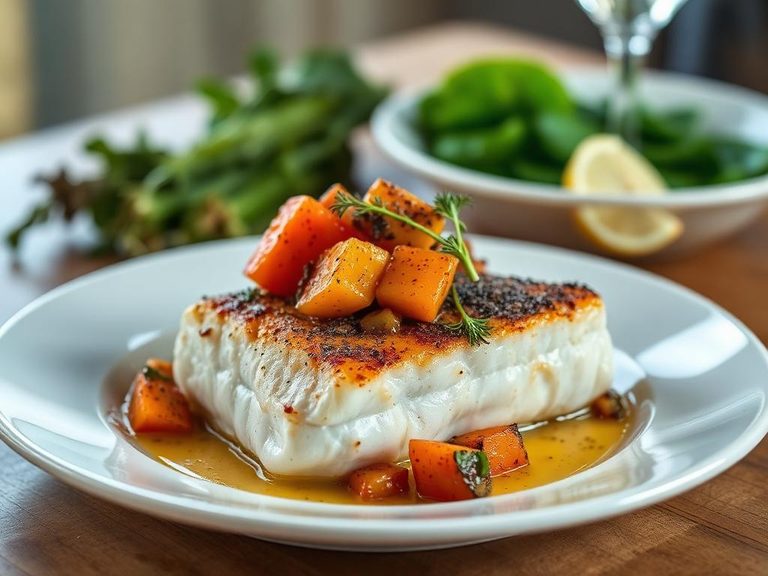
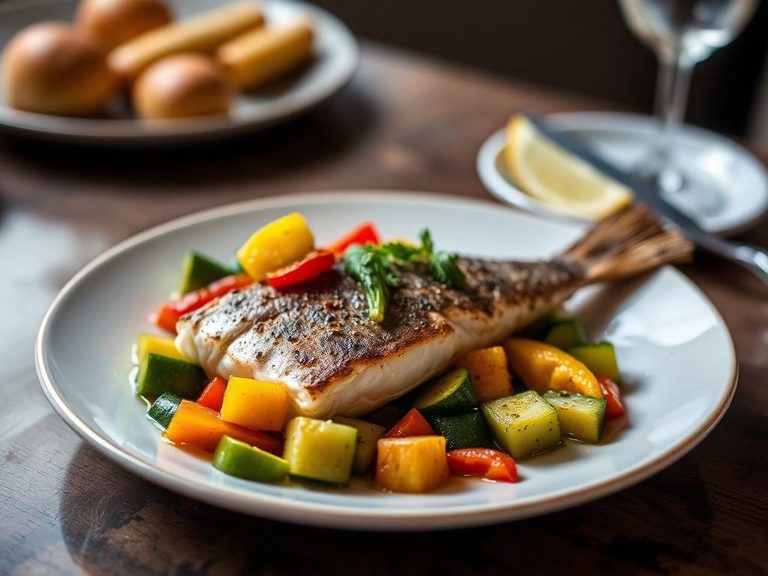
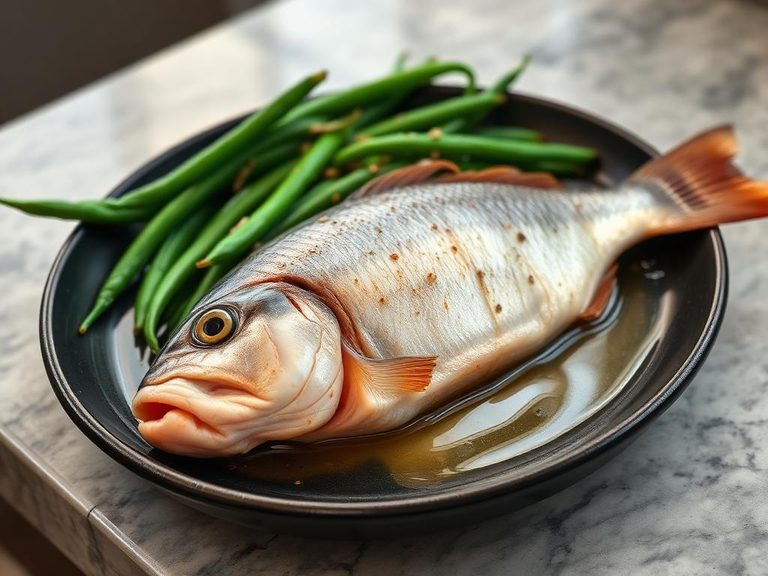
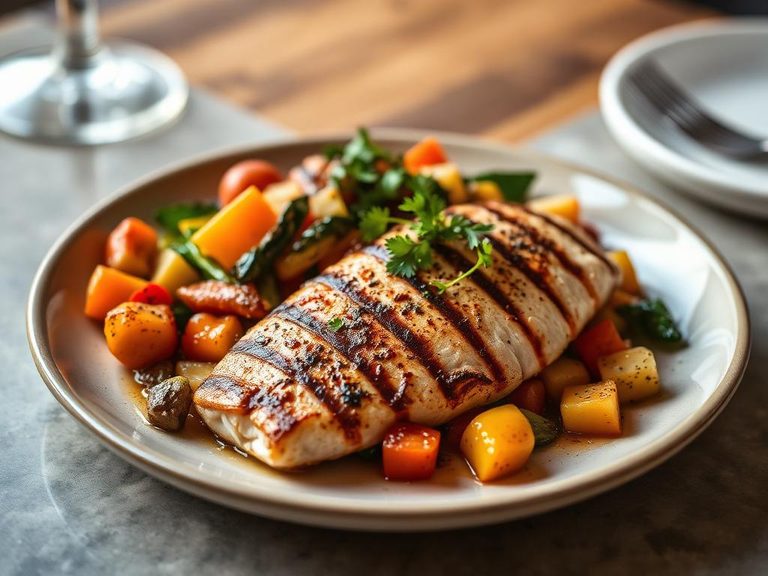
🌍 Where it's eaten
💡 Did you know?
The 'flakiness' of cooked fish is due to the muscle structure, which is arranged in short, layered segments called myotomes, held together by thin sheets of connective tissue (collagen) that melt when cooked, allowing the layers to separate easily.
Full nutrition (USDA data · scales with serving)
| Water | 78.8 g |
| Energy | 112 kcal |
| Protein | 6.3 g |
| Total lipid (fat) | 7.3 g |
| Carbohydrate, by difference | 6.3 g |
| Fiber, total dietary | 1.5 g |
| Total Sugars | 2.4 g |
| Calcium, Ca | 16.0 mg |
| Iron, Fe | 0.73 mg |
| Magnesium, Mg | 23.0 mg |
| Phosphorus, P | 60.0 mg |
| Potassium, K | 249 mg |
| Sodium, Na | 303 mg |
| Zinc, Zn | 0.36 mg |
| Copper, Cu | 0.08 mg |
| Selenium, Se | 9.0 ug |
| Vitamin C, total ascorbic acid | 4.6 mg |
| Thiamin | 0.04 mg |
| Riboflavin | 0.07 mg |
| Niacin | 1.3 mg |
| Vitamin B-6 | 0.13 mg |
| Folate, total | 15.0 ug |
| Folic acid | 0.00 ug |
| Folate, food | 15.0 ug |
| Folate, DFE | 15.0 ug |
| Choline, total | 28.9 mg |
| Vitamin B-12 | 0.24 ug |
| Vitamin B-12, added | 0.00 ug |
| Vitamin A, RAE | 18.0 ug |
| Retinol | 3.0 ug |
| Carotene, beta | 159 ug |
| Carotene, alpha | 11.0 ug |
| Cryptoxanthin, beta | 20.0 ug |
| Lycopene | 6303 ug |
| Lutein + zeaxanthin | 191 ug |
| Vitamin E (alpha-tocopherol) | 2.1 mg |
| Vitamin E, added | 0.00 mg |
| Vitamin D (D2 + D3) | 0.30 ug |
| Vitamin K (phylloquinone) | 13.9 ug |
| Alcohol, ethyl | 0.00 g |
| Caffeine | 0.00 mg |
| Theobromine | 0.00 mg |
Fat & fatty acid profile (per 100g)
| Fatty acids, total saturated | 0.99 g |
| SFA 4:0 | 0.00 g |
| SFA 6:0 | 0.00 g |
| SFA 8:0 | 0.00 g |
| SFA 10:0 | 0.00 g |
| SFA 12:0 | 0.00 g |
| SFA 14:0 | 0.01 g |
| SFA 16:0 | 0.71 g |
| SFA 18:0 | 0.21 g |
| Fatty acids, total monounsaturated | 3.0 g |
| MUFA 16:1 | 0.03 g |
| MUFA 18:1 | 2.9 g |
| MUFA 20:1 | 0.05 g |
| MUFA 22:1 | 0.00 g |
| Fatty acids, total polyunsaturated | 2.8 g |
| PUFA 18:2 | 2.4 g |
| PUFA 18:3 | 0.31 g |
| PUFA 18:4 | 0.00 g |
| PUFA 20:4 | 0.01 g |
| PUFA 20:5 n-3 (EPA) | 0.00 g |
| PUFA 22:5 n-3 (DPA) | 0.00 g |
| PUFA 22:6 n-3 (DHA) | 0.04 g |
| Cholesterol | 12.0 mg |
FAQ
How do I prevent the fish from drying out?
Cook it just until it turns opaque and flakes easily with a fork. Methods like baking en papillote (in parchment), steaming, or poaching help retain moisture. Avoid overcooking.
Can I use frozen fish and vegetables?
Yes, both work well. Thaw fish properly in the refrigerator before cooking. Frozen vegetables can often be cooked directly from frozen, though they may release more water.
What's a good way to add more flavor without adding calories?
Use fresh or dried herbs (dill, thyme, rosemary), citrus zest and juice, garlic, ginger, a splash of vinegar, or a sprinkle of paprika or chili flakes.
Nutrient density (calculated · NRF9.3)
Nutrient Rich Foods index: beneficial nutrients (protein, fiber, vitamins, minerals) minus saturated fat, added sugar & sodium, per 100 kcal.
NRF9.3 index — Fulgoni, Keast & Drewnowski, 2009. Computed from USDA nutrients.
Weight-loss friendliness (composite index)
Energy density 1.12 kcal/g · 23% calories from protein · 1.5 g fiber · 2.4 g sugar per 100 g.
Composite of energy density (Rolls et al., 1999), protein & fiber satiety, minus sugar. A calculated heuristic — ranks satiety-per-calorie, not a clinical measure.
Dietary load (calculated from USDA values)
Potential renal acid load. Positive = acid-forming, negative = alkaline-forming.
Sodium-to-potassium ratio: 1.22 (lower is better — aim for ≤ 1)
Sodium:potassium per WHO potassium guidance. Computed from USDA nutrients.