

Fish and rice with tomato-based sauce
Common food
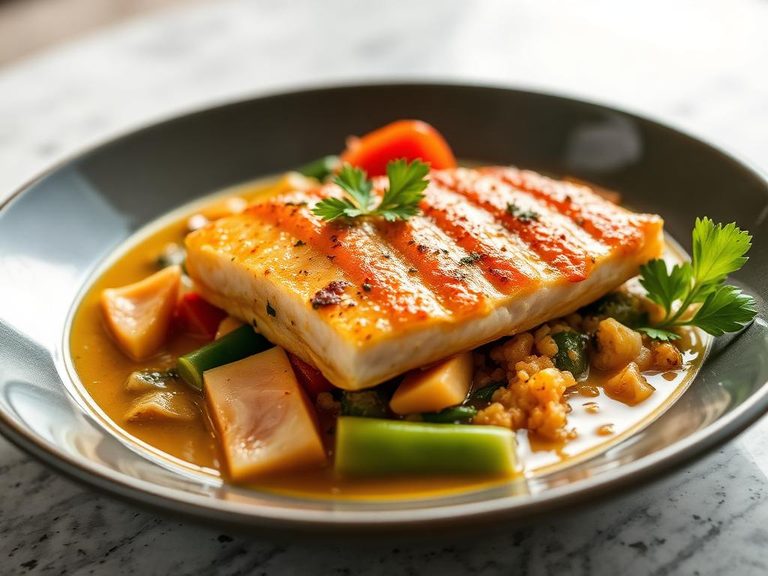
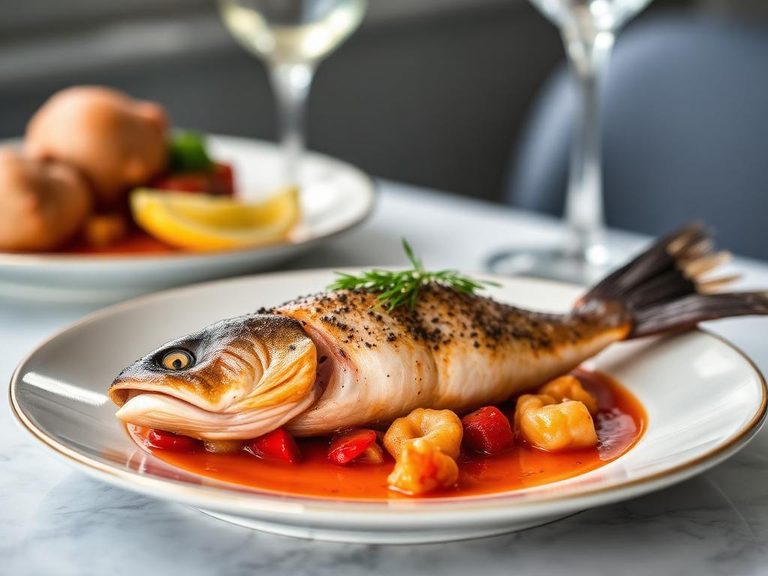
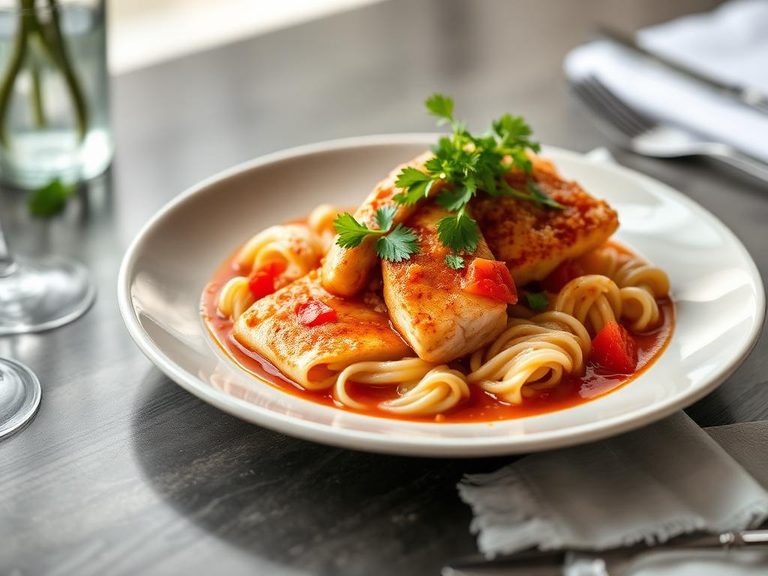
This is a comforting, savory dish where tender flakes of fish are simmered in a rich, tangy tomato sauce and served alongside fluffy rice. The texture is a delightful contrast between the soft, flaky protein and the distinct grains of rice, all coated in a bright, umami-rich sauce. Nutritionally, it's a lean, high-protein meal that provides sustained energy from complex carbohydrates.
Calorie split: 16% protein · 49% carbs · 34% fat
↓ Full nutrition💚 Why it's loved
People love this dish for its perfect harmony of savory, tangy, and mild flavors, and its ability to be a hearty yet light meal. It's a globally beloved comfort food that's both simple to prepare and satisfying to eat, often evoking a sense of home cooking.
⚠️ Watch-outs & how to enjoy it better
The tomato-based sauce can be acidic, potentially aggravating acid reflux or heartburn in sensitive individuals. To counteract this, ensure the tomatoes are well-cooked to reduce acidity, and consider pairing with a small amount of healthy fat like olive oil. Those monitoring sodium intake should be mindful, as sauces and broths can be high in salt; using low-sodium canned tomatoes and herbs for flavor is a good tip.
Key benefits
- Excellent source of lean protein for muscle maintenance.
- Provides complex carbohydrates for steady energy release.
- Rich in lycopene, a powerful antioxidant from cooked tomatoes.
- Naturally low in saturated fat.
- A balanced, complete meal in one dish.
🍽️ Popular dishes
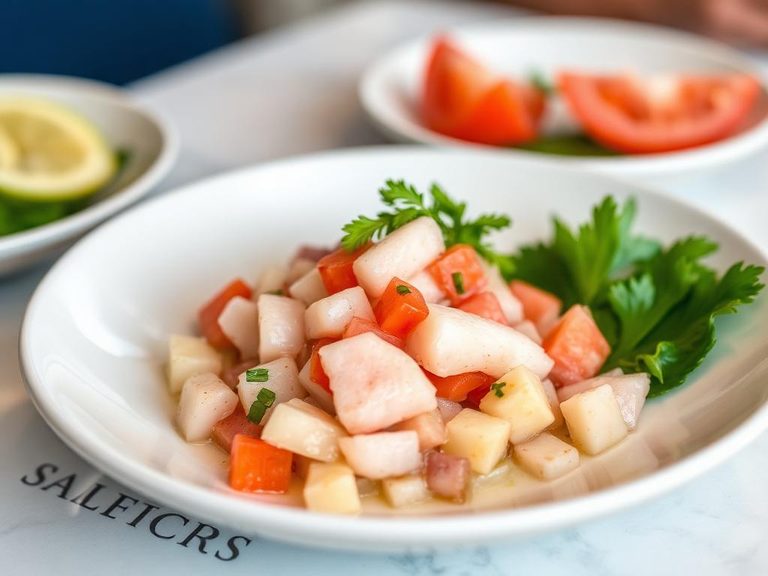
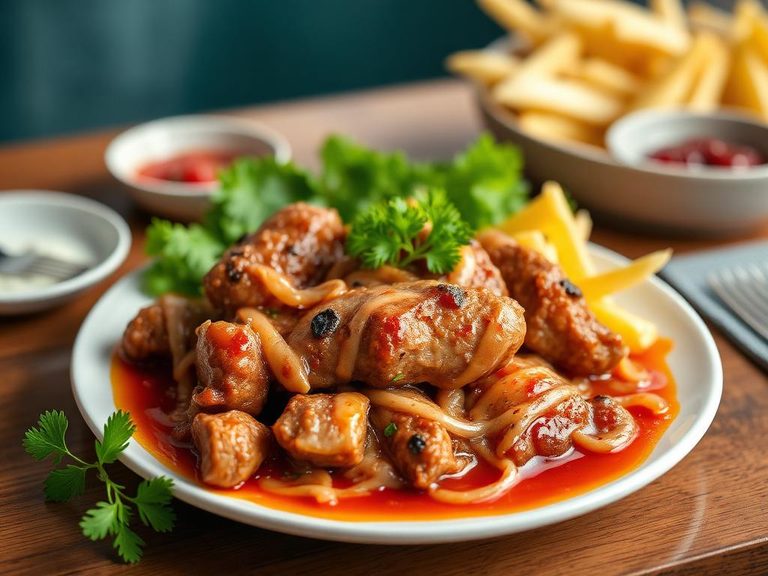
🌍 Where it's eaten
💡 Did you know?
The lycopene antioxidant in tomatoes becomes significantly more bioavailable when cooked, especially with a small amount of oil, meaning your body can absorb more of it from this sauce than from raw tomatoes.
Full nutrition (USDA data · scales with serving)
| Water | 71.7 g |
| Energy | 135 kcal |
| Protein | 5.4 g |
| Total lipid (fat) | 5.1 g |
| Carbohydrate, by difference | 16.5 g |
| Fiber, total dietary | 0.70 g |
| Total Sugars | 1.1 g |
| Calcium, Ca | 12.0 mg |
| Iron, Fe | 1.0 mg |
| Magnesium, Mg | 18.0 mg |
| Phosphorus, P | 53.0 mg |
| Potassium, K | 151 mg |
| Sodium, Na | 310 mg |
| Zinc, Zn | 0.42 mg |
| Copper, Cu | 0.08 mg |
| Selenium, Se | 10.1 ug |
| Vitamin C, total ascorbic acid | 2.4 mg |
| Thiamin | 0.11 mg |
| Riboflavin | 0.04 mg |
| Niacin | 1.5 mg |
| Vitamin B-6 | 0.13 mg |
| Folate, total | 35.0 ug |
| Folic acid | 29.0 ug |
| Folate, food | 6.0 ug |
| Folate, DFE | 55.0 ug |
| Choline, total | 17.5 mg |
| Vitamin B-12 | 0.17 ug |
| Vitamin B-12, added | 0.00 ug |
| Vitamin A, RAE | 9.0 ug |
| Retinol | 2.0 ug |
| Carotene, beta | 82.0 ug |
| Carotene, alpha | 0.00 ug |
| Cryptoxanthin, beta | 1.0 ug |
| Lycopene | 4394 ug |
| Lutein + zeaxanthin | 8.0 ug |
| Vitamin E (alpha-tocopherol) | 1.5 mg |
| Vitamin E, added | 0.00 mg |
| Vitamin D (D2 + D3) | 0.20 ug |
| Vitamin K (phylloquinone) | 5.7 ug |
| Alcohol, ethyl | 0.00 g |
| Caffeine | 0.00 mg |
| Theobromine | 0.00 mg |
Fat & fatty acid profile (per 100g)
| Fatty acids, total saturated | 0.71 g |
| SFA 4:0 | 0.00 g |
| SFA 6:0 | 0.00 g |
| SFA 8:0 | 0.00 g |
| SFA 10:0 | 0.00 g |
| SFA 12:0 | 0.00 g |
| SFA 14:0 | 0.01 g |
| SFA 16:0 | 0.52 g |
| SFA 18:0 | 0.15 g |
| Fatty acids, total monounsaturated | 2.1 g |
| MUFA 16:1 | 0.02 g |
| MUFA 18:1 | 2.0 g |
| MUFA 20:1 | 0.04 g |
| MUFA 22:1 | 0.00 g |
| Fatty acids, total polyunsaturated | 1.9 g |
| PUFA 18:2 | 1.7 g |
| PUFA 18:3 | 0.22 g |
| PUFA 18:4 | 0.00 g |
| PUFA 20:4 | 0.01 g |
| PUFA 20:5 n-3 (EPA) | 0.00 g |
| PUFA 22:5 n-3 (DPA) | 0.00 g |
| PUFA 22:6 n-3 (DHA) | 0.02 g |
| Cholesterol | 9.0 mg |
FAQ
What type of fish works best for this dish?
Firm, white-fleshed fish like cod, halibut, snapper, or sea bass are ideal as they hold their shape well in the sauce. Softer fish like tilapia or sole can also be used but require more gentle handling.
Can I make this dish ahead of time?
Yes, it often tastes even better the next day as the flavors meld. Store the fish and sauce separately from the rice to prevent the rice from becoming soggy, and reheat gently.
How can I add more fiber to this meal?
You can increase the fiber content by using brown rice or a whole-grain rice blend instead of white rice. Adding vegetables like bell peppers, spinach, or chickpeas to the tomato sauce is another excellent way to boost fiber.
Nutrient density (calculated · NRF9.3)
Nutrient Rich Foods index: beneficial nutrients (protein, fiber, vitamins, minerals) minus saturated fat, added sugar & sodium, per 100 kcal.
NRF9.3 index — Fulgoni, Keast & Drewnowski, 2009. Computed from USDA nutrients.
Weight-loss friendliness (composite index)
Energy density 1.35 kcal/g · 16% calories from protein · 0.7 g fiber · 1.1 g sugar per 100 g.
Composite of energy density (Rolls et al., 1999), protein & fiber satiety, minus sugar. A calculated heuristic — ranks satiety-per-calorie, not a clinical measure.
Dietary load (calculated from USDA values)
Potential renal acid load. Positive = acid-forming, negative = alkaline-forming.
Sodium-to-potassium ratio: 2.05 (lower is better — aim for ≤ 1)
Sodium:potassium per WHO potassium guidance. Computed from USDA nutrients.