

Fish, pompano, florida, cooked, dry heat
Whole food · Finfish and Shellfish Products

Photo: Wikipedia
Florida pompano is a prized, silvery fish celebrated for its firm, white flesh that flakes in delicate, buttery sheets when cooked. Its mild, sweet flavor is often compared to mahi-mahi or mackerel, but with a distinctly clean, oceanic finish. Nutritionally, it's a powerhouse of high-quality protein with virtually no carbohydrates.
Calorie split: 46% protein · 0% carbs · 54% fat
↓ Full nutrition💚 Why it's loved
Pompano is adored for its rich, buttery flavor that stands up beautifully to simple preparations like grilling or broiling. Its versatility shines in cuisines from the Caribbean to the Mediterranean, where it's often the star of celebratory meals.
⚠️ Watch-outs & how to enjoy it better
As a fatty fish, it contains purines, which individuals with gout or certain kidney conditions may need to moderate. To manage this, pair it with low-purine vegetables like leafy greens or cucumbers, and ensure adequate hydration. Its delicate flavor can also be overpowered by very strong sauces.
Key benefits
- Excellent source of complete protein for muscle maintenance
- Rich in heart-healthy omega-3 fatty acids (EPA & DHA)
- Provides essential minerals like selenium and phosphorus
- Low in carbohydrates, suitable for ketogenic diets
- Contains B vitamins, particularly niacin and B12
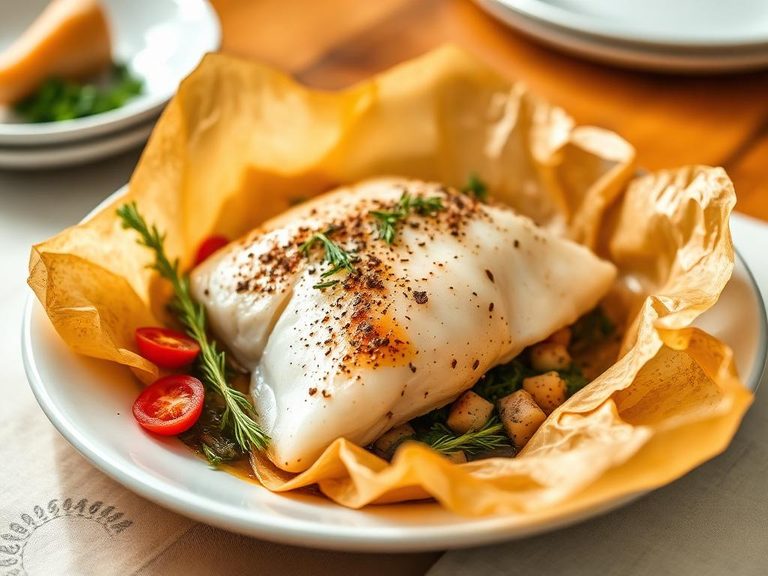
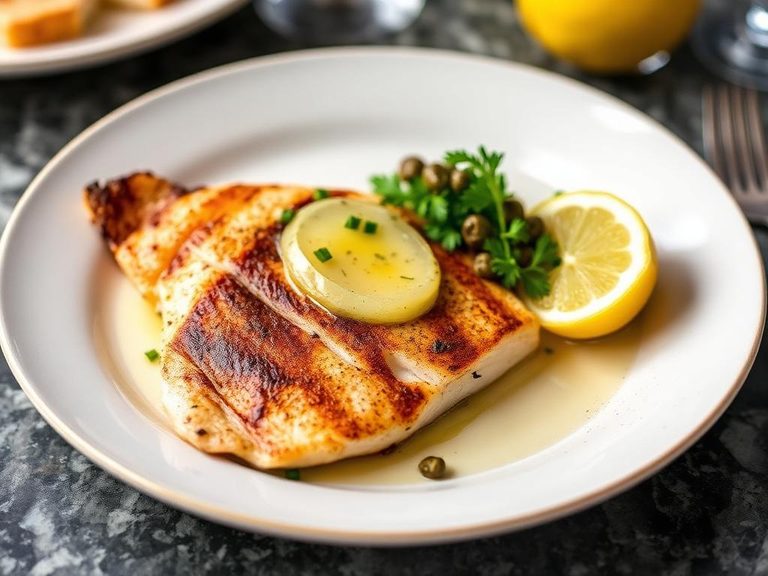
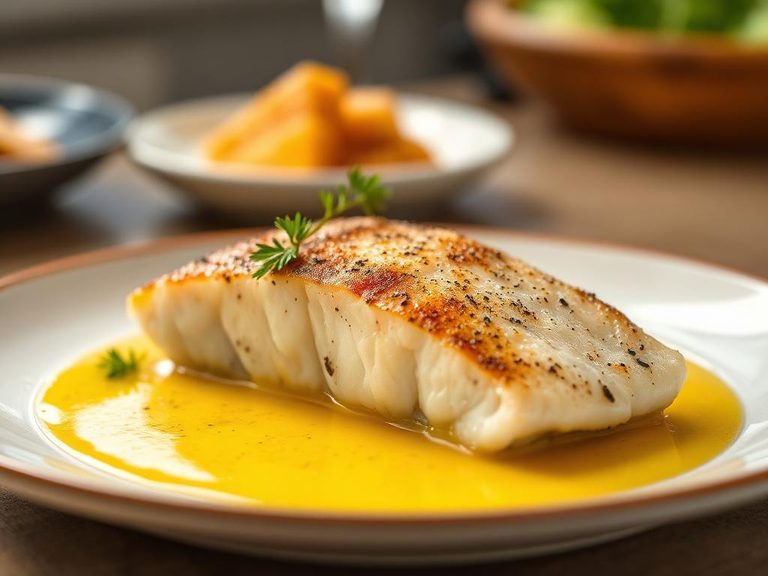
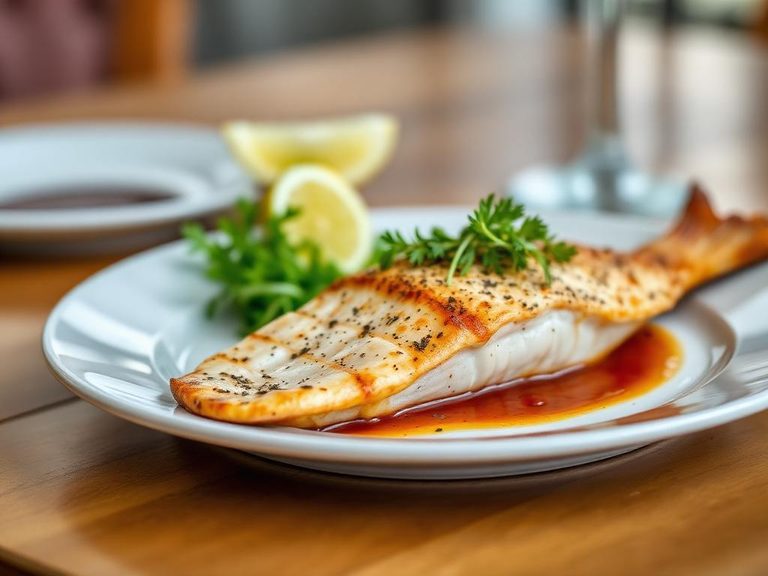
🍽️ Popular dishes
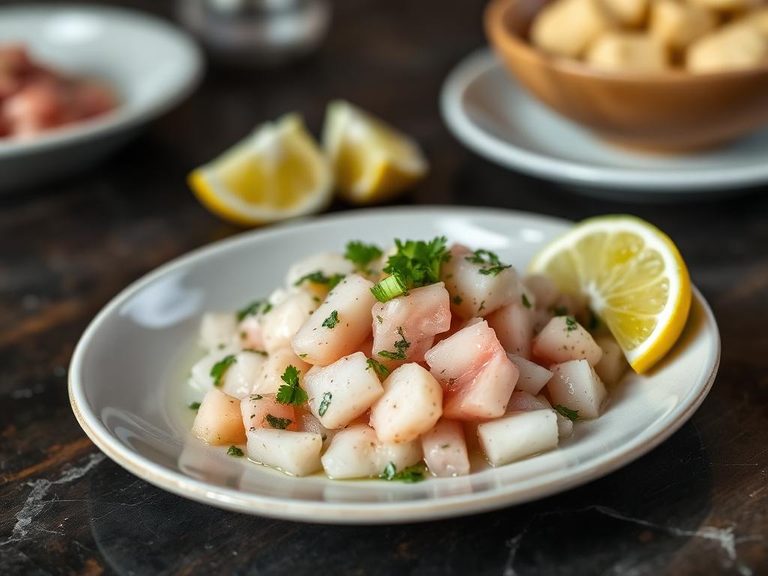
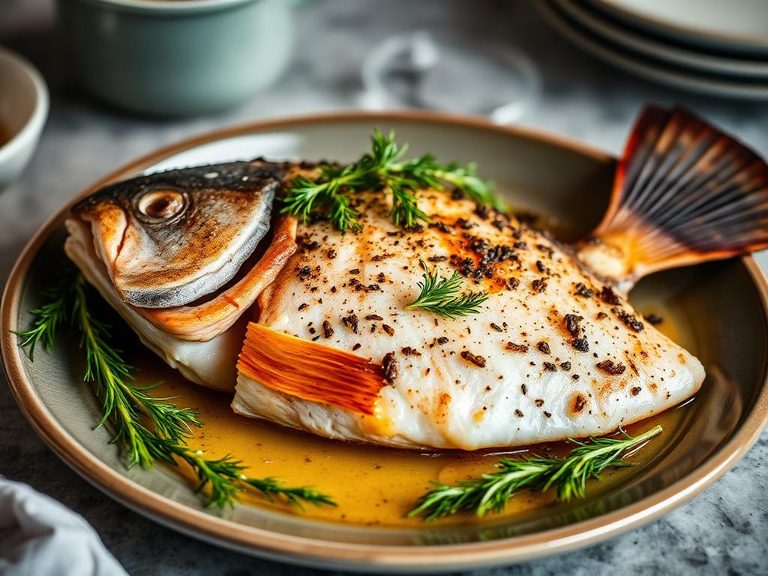
🌍 Where it's eaten
💡 Did you know?
The Florida pompano is so revered in its home waters that it has its own dedicated festival in Fort Pierce, Florida, celebrating the fish with boat parades, cooking contests, and the crowning of a 'Pompano Queen.'
Full nutrition (USDA data · scales with serving)
| Water | 63.0 g |
| Energy | 211 kcal |
| Energy | 883 kj |
| Protein | 23.7 g |
| Total lipid (fat) | 12.1 g |
| Ash | 1.4 g |
| Carbohydrate, by difference | 0.00 g |
| Fiber, total dietary | 0.00 g |
| Calcium, Ca | 43.0 mg |
| Iron, Fe | 0.67 mg |
| Magnesium, Mg | 31.0 mg |
| Phosphorus, P | 341 mg |
| Potassium, K | 636 mg |
| Sodium, Na | 76.0 mg |
| Zinc, Zn | 0.69 mg |
| Copper, Cu | 0.08 mg |
| Manganese, Mn | 0.03 mg |
| Selenium, Se | 46.8 ug |
| Vitamin C, total ascorbic acid | 0.00 mg |
| Thiamin | 0.68 mg |
| Riboflavin | 0.15 mg |
| Niacin | 3.8 mg |
| Pantothenic acid | 0.87 mg |
| Vitamin B-6 | 0.23 mg |
| Folate, total | 17.0 ug |
| Folic acid | 0.00 ug |
| Folate, food | 17.0 ug |
| Folate, DFE | 17.0 ug |
| Vitamin B-12 | 1.2 ug |
| Vitamin A, RAE | 36.0 ug |
| Retinol | 36.0 ug |
| Vitamin A, IU | 120 iu |
Fat & fatty acid profile (per 100g)
| Fatty acids, total saturated | 4.5 g |
| SFA 14:0 | 0.53 g |
| SFA 16:0 | 2.8 g |
| SFA 18:0 | 1.1 g |
| Fatty acids, total monounsaturated | 3.3 g |
| MUFA 16:1 | 0.72 g |
| MUFA 18:1 | 2.6 g |
| Fatty acids, total polyunsaturated | 1.5 g |
| PUFA 18:2 | 0.15 g |
| PUFA 20:4 | 0.32 g |
| PUFA 20:5 n-3 (EPA) | 0.22 g |
| PUFA 22:5 n-3 (DPA) | 0.26 g |
| PUFA 22:6 n-3 (DHA) | 0.50 g |
| Cholesterol | 64.0 mg |
Amino acid profile (per 100g)
| Tryptophan | 0.27 g |
| Threonine | 1.0 g |
| Isoleucine | 1.1 g |
| Leucine | 1.9 g |
| Lysine | 2.2 g |
| Methionine | 0.70 g |
| Cystine | 0.25 g |
| Phenylalanine | 0.93 g |
| Tyrosine | 0.80 g |
| Valine | 1.2 g |
| Arginine | 1.4 g |
| Histidine | 0.70 g |
| Alanine | 1.4 g |
| Aspartic acid | 2.4 g |
| Glutamic acid | 3.5 g |
| Glycine | 1.1 g |
| Proline | 0.84 g |
| Serine | 0.97 g |
FAQ
How is pompano different from other similar fish like mahi-mahi or mackerel?
Pompano has a finer, more delicate flake and a sweeter, less 'fishy' taste than mackerel. It's generally milder and more buttery than mahi-mahi, which has a firmer, meatier texture.
What's the best way to cook pompano to preserve its flavor?
Dry-heat methods like grilling, broiling, or pan-searing are ideal. They caramelize the exterior while keeping the interior moist. Avoid overcooking; the flesh should just turn opaque and flake easily.
Is pompano a sustainable seafood choice?
Sustainability varies by source. Wild-caught Florida pompano from the U.S. Atlantic is generally well-managed. For the most eco-friendly option, look for certifications like the Marine Stewardship Council (MSC) or consult the Monterey Bay Aquarium Seafood Watch guide.
Nutrient density (calculated · NRF9.3)
Nutrient Rich Foods index: beneficial nutrients (protein, fiber, vitamins, minerals) minus saturated fat, added sugar & sodium, per 100 kcal.
NRF9.3 index — Fulgoni, Keast & Drewnowski, 2009. Computed from USDA nutrients.
Weight-loss friendliness (composite index)
Energy density 2.11 kcal/g · 45% calories from protein · 0.0 g fiber · 0.0 g sugar per 100 g.
Composite of energy density (Rolls et al., 1999), protein & fiber satiety, minus sugar. A calculated heuristic — ranks satiety-per-calorie, not a clinical measure.
Dietary load (calculated from USDA values)
Potential renal acid load. Positive = acid-forming, negative = alkaline-forming.
Sodium-to-potassium ratio: 0.12 (lower is better — aim for ≤ 1)
Sodium:potassium per WHO potassium guidance. Computed from USDA nutrients.