

Cornmeal, yellow, self-rising, degermed, enriched
Whole food · Cereal Grains and Pasta

Photo: Wikipedia
This is a finely ground, degermed yellow cornmeal that's been enriched with vitamins and fortified with leavening agents for a quick, fluffy rise. It delivers a bright, sunny color and a mild, sweet corn flavor with a tender, non-gritty texture when cooked. Nutritionally, it's a dense source of carbohydrates and provides a solid 8.41g of protein per 100g, along with 7.1g of fiber.
Calorie split: 10% protein · 86% carbs · 4% fat
↓ Full nutrition💚 Why it's loved
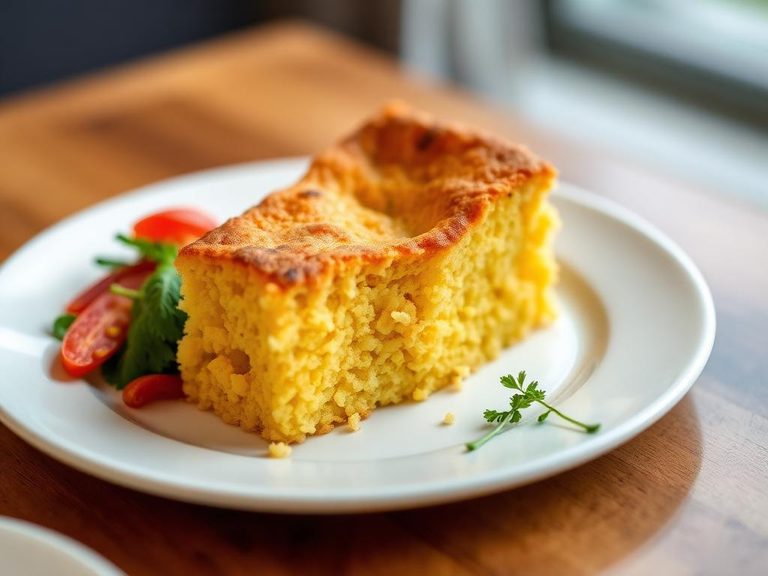
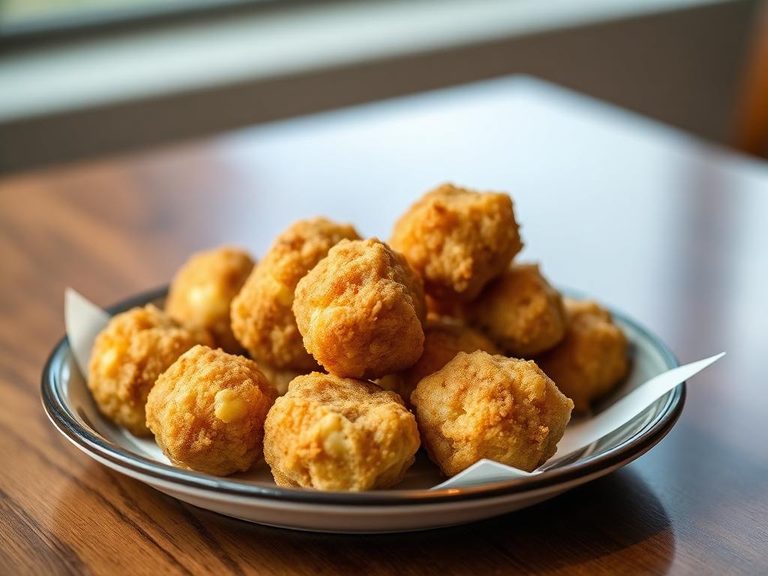
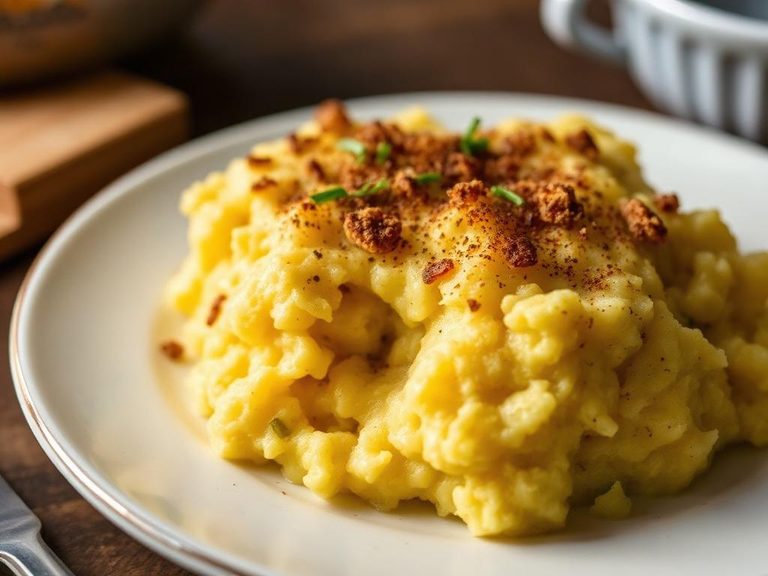
People love it for its incredible versatility and comforting, homey flavor that forms the backbone of Southern American cuisine. It's cherished for making everything from fluffy cornbread and tender hoecakes to creamy polenta with minimal effort.
⚠️ Watch-outs & how to enjoy it better
The degerming process removes the corn's natural oils and some nutrients, and the self-rising formula adds sodium, which can be a concern for some. To counteract potential blood-sugar spikes from the refined carbs, pair it with a protein like beans or cheese, and use it in savory dishes rather than sweet ones.
Key benefits
- Quick-cooking and convenient due to self-rising leavening.
- Good source of complex carbohydrates for sustained energy.
- Provides 7.1g of dietary fiber per 100g for digestive health.
- Enriched with essential B vitamins like thiamin and niacin.
- Naturally low in fat and contains no added sugar.
🍽️ Popular dishes


🌍 Where it's eaten
💡 Did you know?
Self-rising cornmeal was a staple for Civil War soldiers because it required only water to make a quick, filling bread, making it a precursor to modern convenience foods.
Full nutrition (USDA data · scales with serving)
| Water | 10.2 g |
| Energy | 355 kcal |
| Energy | 1485 kj |
| Protein | 8.4 g |
| Total lipid (fat) | 1.7 g |
| Ash | 4.9 g |
| Carbohydrate, by difference | 74.8 g |
| Fiber, total dietary | 7.1 g |
| Calcium, Ca | 350 mg |
| Iron, Fe | 4.7 mg |
| Magnesium, Mg | 49.0 mg |
| Phosphorus, P | 623 mg |
| Potassium, K | 170 mg |
| Sodium, Na | 1348 mg |
| Zinc, Zn | 1.0 mg |
| Copper, Cu | 0.13 mg |
| Manganese, Mn | 0.10 mg |
| Vitamin C, total ascorbic acid | 0.00 mg |
| Thiamin | 0.68 mg |
| Riboflavin | 0.39 mg |
| Niacin | 4.6 mg |
| Pantothenic acid | 0.31 mg |
| Vitamin B-6 | 0.39 mg |
| Folate, total | 233 ug |
| Folic acid | 202 ug |
| Folate, food | 31.0 ug |
| Folate, DFE | 374 ug |
| Vitamin B-12 | 0.00 ug |
| Vitamin A, RAE | 11.0 ug |
| Retinol | 0.00 ug |
| Vitamin A, IU | 214 iu |
| Vitamin D (D2 + D3), International Units | 0.00 iu |
| Vitamin D (D2 + D3) | 0.00 ug |
Fat & fatty acid profile (per 100g)
| Fatty acids, total saturated | 0.23 g |
| SFA 10:0 | 0.00 g |
| SFA 12:0 | 0.00 g |
| SFA 14:0 | 0.00 g |
| SFA 16:0 | 0.19 g |
| SFA 18:0 | 0.03 g |
| Fatty acids, total monounsaturated | 0.43 g |
| MUFA 16:1 | 0.01 g |
| MUFA 18:1 | 0.42 g |
| Fatty acids, total polyunsaturated | 0.74 g |
| PUFA 18:2 | 0.72 g |
| PUFA 18:3 | 0.02 g |
| Cholesterol | 0.00 mg |
Amino acid profile (per 100g)
Estimated from Cornmeal, degermed, unenriched, white — USDA does not publish this profile for Cornmeal.
| Tryptophan | 0.04 g |
| Threonine | 0.17 g |
| Isoleucine | 0.24 g |
| Leucine | 1.0 g |
| Lysine | 0.10 g |
| Methionine | 0.16 g |
| Cystine | 0.16 g |
| Phenylalanine | 0.37 g |
| Tyrosine | 0.19 g |
| Valine | 0.34 g |
| Arginine | 0.24 g |
| Histidine | 0.17 g |
| Alanine | 0.56 g |
| Aspartic acid | 0.47 g |
| Glutamic acid | 1.5 g |
| Glycine | 0.22 g |
| Proline | 0.75 g |
| Serine | 0.34 g |
| Hydroxyproline | 0.00 g |
FAQ
What's the difference between self-rising and regular cornmeal?
Self-rising cornmeal has leavening agents (like baking powder) and salt already mixed in, so it doesn't require additional rising agents. Regular cornmeal is just ground corn and needs separate leavening.
Can I use this for making polenta?
Yes, but note that self-rising cornmeal will have a slightly different texture and may puff up more than traditional polenta cornmeal. It's best for a softer, fluffier result.
Why is it 'degermed' and what does that mean?
Degerming removes the oily germ from the corn kernel, which extends shelf life and prevents rancidity. This process also removes some natural fats and nutrients, which is why it's often enriched.
Nutrient density (calculated · NRF9.3)
Nutrient Rich Foods index: beneficial nutrients (protein, fiber, vitamins, minerals) minus saturated fat, added sugar & sodium, per 100 kcal.
NRF9.3 index — Fulgoni, Keast & Drewnowski, 2009. Computed from USDA nutrients.
Weight-loss friendliness (composite index)
Energy density 3.55 kcal/g · 9% calories from protein · 7.1 g fiber · 0.0 g sugar per 100 g.
Composite of energy density (Rolls et al., 1999), protein & fiber satiety, minus sugar. A calculated heuristic — ranks satiety-per-calorie, not a clinical measure.
Dietary load (calculated from USDA values)
Potential renal acid load. Positive = acid-forming, negative = alkaline-forming.
Sodium-to-potassium ratio: 7.93 (lower is better — aim for ≤ 1)
Sodium:potassium per WHO potassium guidance. Computed from USDA nutrients.