

Chitterlings
Common food

Photo: Wikipedia
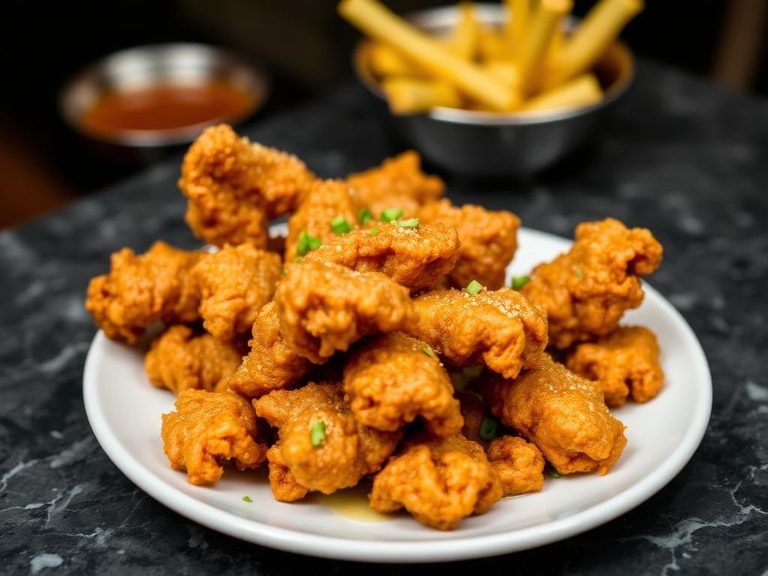
Chitterlings are the cleaned and slow-cooked intestines of a pig, prized for their uniquely tender yet slightly springy texture and rich, savory flavor. Nutritionally, they are a high-fat, zero-carb protein source, providing a substantial 12.39g of protein per 100g with over 20g of fat. Their preparation is a labor of love, requiring meticulous cleaning and long simmering to achieve their signature melt-in-your-mouth quality.
Calorie split: 21% protein · 0% carbs · 79% fat
↓ Full nutrition💚 Why it's loved
People love chitterlings for their deeply savory, porky flavor and the satisfying, almost gelatinous texture that comes from slow cooking. They are a cornerstone of soul food and holiday traditions, often prepared with love and shared in communal settings.
⚠️ Watch-outs & how to enjoy it better
The primary downside is the significant preparation time and effort required for thorough cleaning. They are also very high in fat and cholesterol, and can be high in sodium if seasoned heavily. To counteract this, practice strict portion control, ensure they are rinsed and boiled well, and pair them with fiber-rich, low-fat sides like collard greens or vinegar-based coleslaw.
Key benefits
- Excellent source of high-quality animal protein.
- Contains zero carbohydrates and sugars, making it keto-friendly.
- Provides essential minerals like iron and zinc.
- A traditional, nose-to-tail food that utilizes the whole animal.
- High in dietary fat for sustained energy.
🍽️ Popular dishes
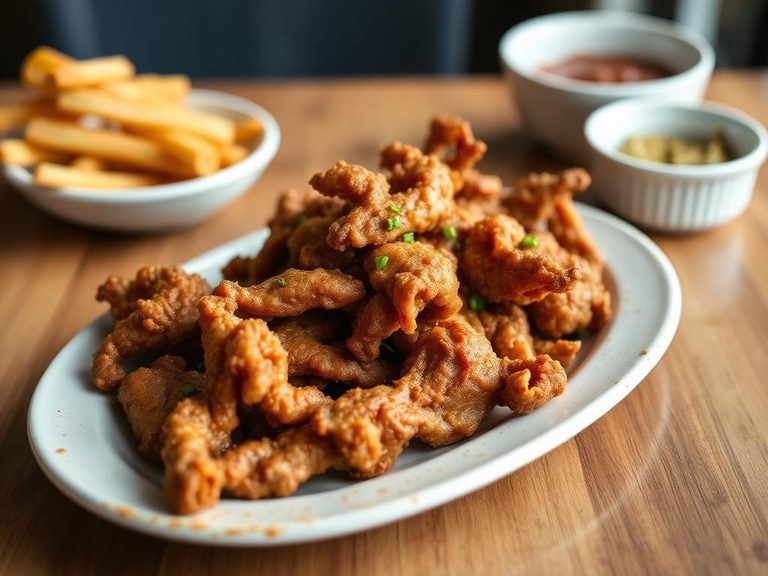
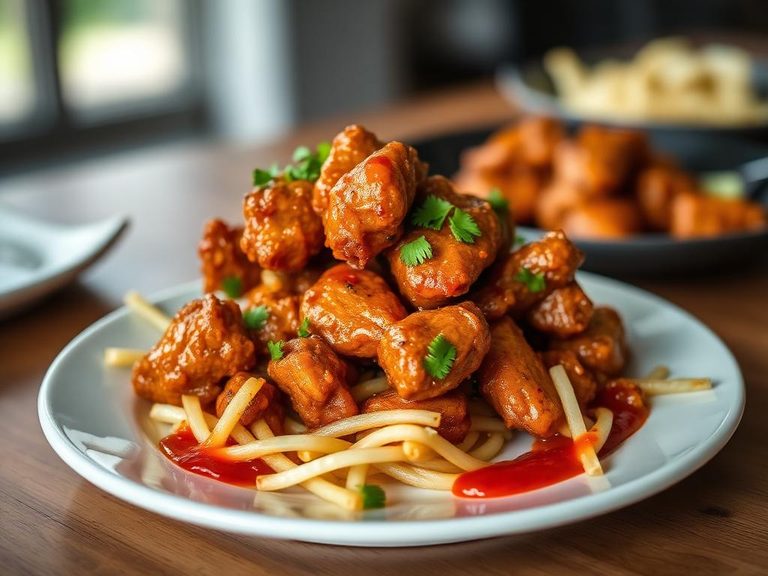
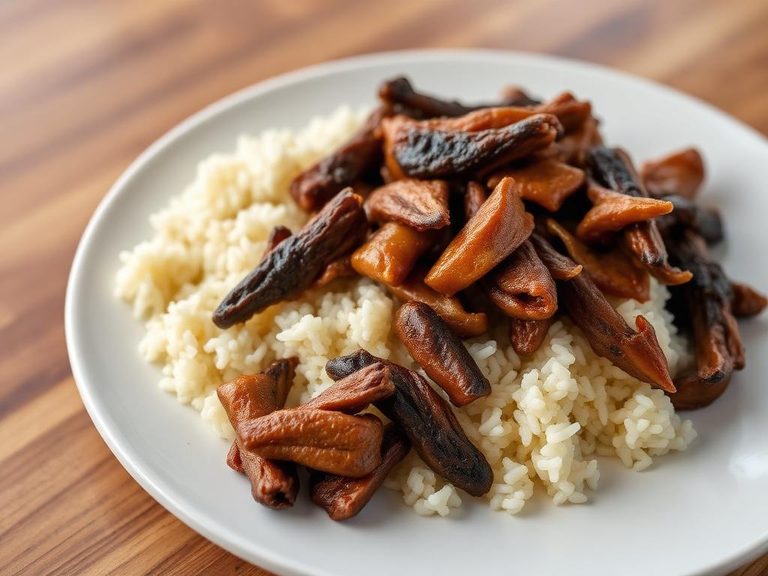
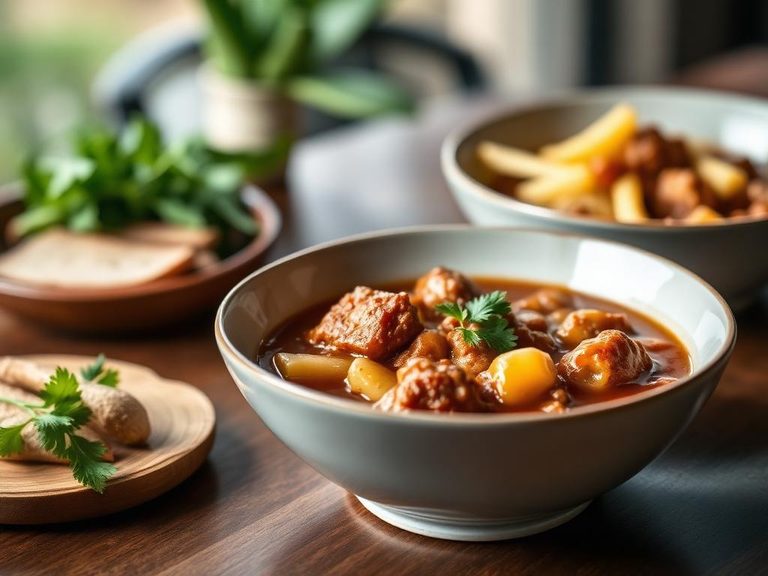
🌍 Where it's eaten
💡 Did you know?
The process of cleaning chitterlings, often called 'picking chitlins,' is a major social event, with families and communities gathering for hours to meticulously turn, scrape, and wash the intestines.
Full nutrition (USDA data · scales with serving)
| Water | 67.3 g |
| Energy | 231 kcal |
| Protein | 12.4 g |
| Total lipid (fat) | 20.2 g |
| Carbohydrate, by difference | 0.00 g |
| Fiber, total dietary | 0.00 g |
| Total Sugars | 0.00 g |
| Calcium, Ca | 25.0 mg |
| Iron, Fe | 1.5 mg |
| Magnesium, Mg | 9.0 mg |
| Phosphorus, P | 65.0 mg |
| Potassium, K | 14.0 mg |
| Sodium, Na | 325 mg |
| Zinc, Zn | 1.8 mg |
| Copper, Cu | 0.05 mg |
| Selenium, Se | 26.8 ug |
| Vitamin C, total ascorbic acid | 0.00 mg |
| Thiamin | 0.01 mg |
| Riboflavin | 0.05 mg |
| Niacin | 0.09 mg |
| Vitamin B-6 | 0.00 mg |
| Folate, total | 1.0 ug |
| Folic acid | 0.00 ug |
| Folate, food | 1.0 ug |
| Folate, DFE | 1.0 ug |
| Choline, total | 467 mg |
| Vitamin B-12 | 0.42 ug |
| Vitamin B-12, added | 0.00 ug |
| Vitamin A, RAE | 0.00 ug |
| Retinol | 0.00 ug |
| Carotene, beta | 0.00 ug |
| Carotene, alpha | 0.00 ug |
| Cryptoxanthin, beta | 0.00 ug |
| Lycopene | 0.00 ug |
| Lutein + zeaxanthin | 0.00 ug |
| Vitamin E (alpha-tocopherol) | 0.23 mg |
| Vitamin E, added | 0.00 mg |
| Vitamin D (D2 + D3) | 0.00 ug |
| Vitamin K (phylloquinone) | 0.00 ug |
| Alcohol, ethyl | 0.00 g |
| Caffeine | 0.00 mg |
| Theobromine | 0.00 mg |
Fat & fatty acid profile (per 100g)
| Fatty acids, total saturated | 9.4 g |
| SFA 4:0 | 0.00 g |
| SFA 6:0 | 0.00 g |
| SFA 8:0 | 0.02 g |
| SFA 10:0 | 0.00 g |
| SFA 12:0 | 0.00 g |
| SFA 14:0 | 0.29 g |
| SFA 16:0 | 5.1 g |
| SFA 18:0 | 3.9 g |
| Fatty acids, total monounsaturated | 7.0 g |
| MUFA 16:1 | 0.36 g |
| MUFA 18:1 | 6.5 g |
| MUFA 20:1 | 0.13 g |
| MUFA 22:1 | 0.00 g |
| Fatty acids, total polyunsaturated | 1.2 g |
| PUFA 18:2 | 0.97 g |
| PUFA 18:3 | 0.03 g |
| PUFA 18:4 | 0.00 g |
| PUFA 20:4 | 0.14 g |
| PUFA 20:5 n-3 (EPA) | 0.00 g |
| PUFA 22:5 n-3 (DPA) | 0.00 g |
| PUFA 22:6 n-3 (DHA) | 0.00 g |
| Cholesterol | 275 mg |
FAQ
What do chitterlings taste like?
They have a mild, pork-like flavor that readily absorbs seasonings. The texture is the defining feature: tender and soft when cooked properly, with a slight springiness or chew.
Are chitterlings safe to eat?
Yes, when prepared correctly. The critical step is meticulous cleaning and thorough cooking (boiling for at least 2-3 hours) to eliminate any bacteria. Always buy from a reputable source.
Why are chitterlings associated with holidays?
In the American South, they became a celebratory dish, often prepared for Christmas or New Year's, partly because the labor-intensive process made them a special-occasion food and a symbol of abundance.
Nutrient density (calculated · NRF9.3)
Nutrient Rich Foods index: beneficial nutrients (protein, fiber, vitamins, minerals) minus saturated fat, added sugar & sodium, per 100 kcal.
NRF9.3 index — Fulgoni, Keast & Drewnowski, 2009. Computed from USDA nutrients.
Weight-loss friendliness (composite index)
Energy density 2.31 kcal/g · 21% calories from protein · 0.0 g fiber · 0.0 g sugar per 100 g.
Composite of energy density (Rolls et al., 1999), protein & fiber satiety, minus sugar. A calculated heuristic — ranks satiety-per-calorie, not a clinical measure.
Dietary load (calculated from USDA values)
Potential renal acid load. Positive = acid-forming, negative = alkaline-forming.
Sodium-to-potassium ratio: 23.21 (lower is better — aim for ≤ 1)
Sodium:potassium per WHO potassium guidance. Computed from USDA nutrients.