

Stewed chitterlings, Puerto Rican style
Common food

Photo: Wikipedia
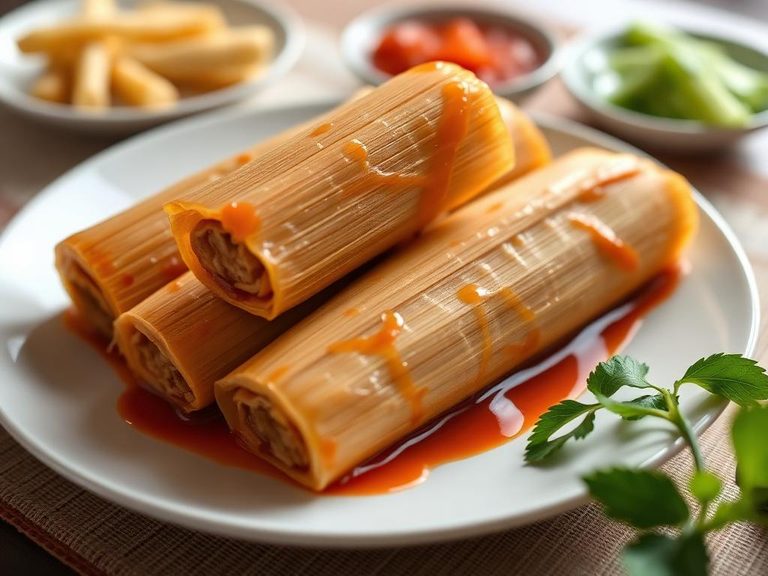
Stewed chitterlings, Puerto Rican style, are tender, slow-cooked pork intestines braised in a rich, savory sofrito-based sauce. They offer a uniquely soft, slightly chewy texture and a deep, meaty flavor, with a notable high-fat content per serving.
Calorie split: 16% protein · 7% carbs · 77% fat
↓ Full nutrition💚 Why it's loved
People love this dish for its deeply savory, soulful flavor and its role as a cherished holiday and family gathering staple in Puerto Rican cuisine, representing tradition and resourcefulness.
⚠️ Watch-outs & how to enjoy it better
The high fat and cholesterol content may be a concern for some, and the preparation requires meticulous cleaning. To mitigate, practice strict portion control and ensure the chitterlings are impeccably cleaned and boiled before the final stew.
Key benefits
- High in protein for muscle maintenance
- Source of B vitamins, especially B12
- Provides iron and zinc
- Traditional comfort food with cultural significance
- Can be made with simple, whole ingredients
🍽️ Popular dishes
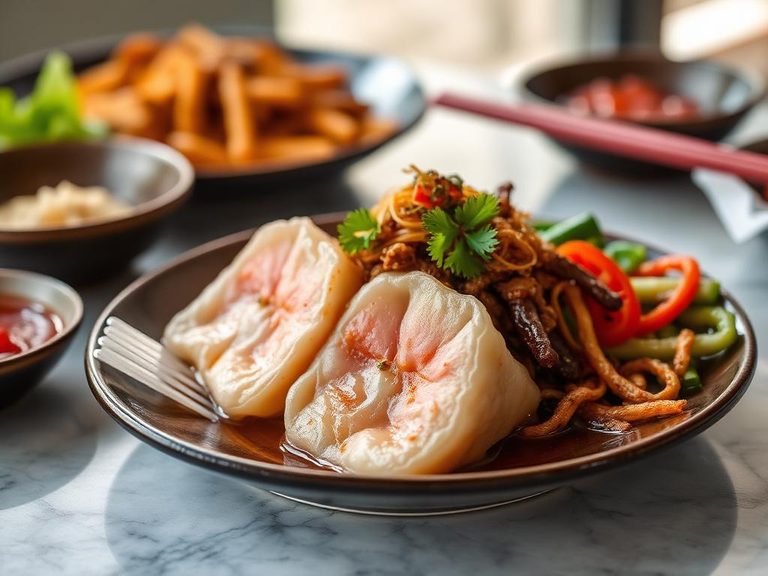
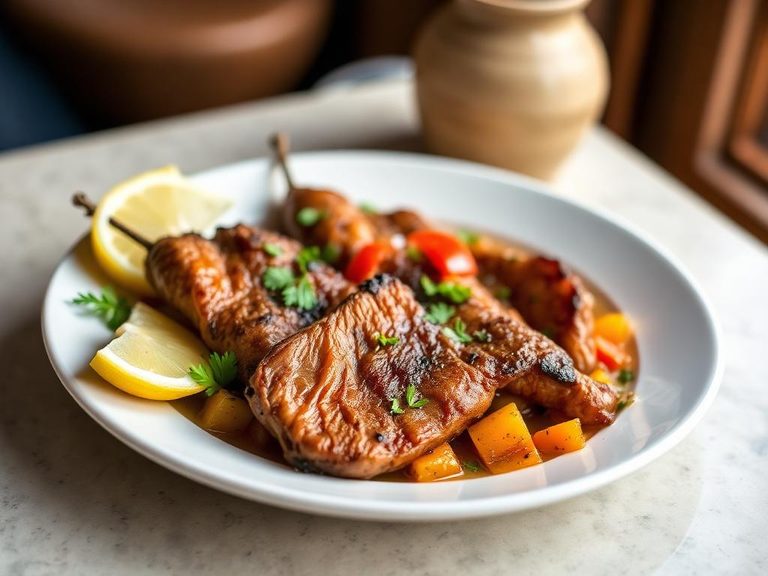
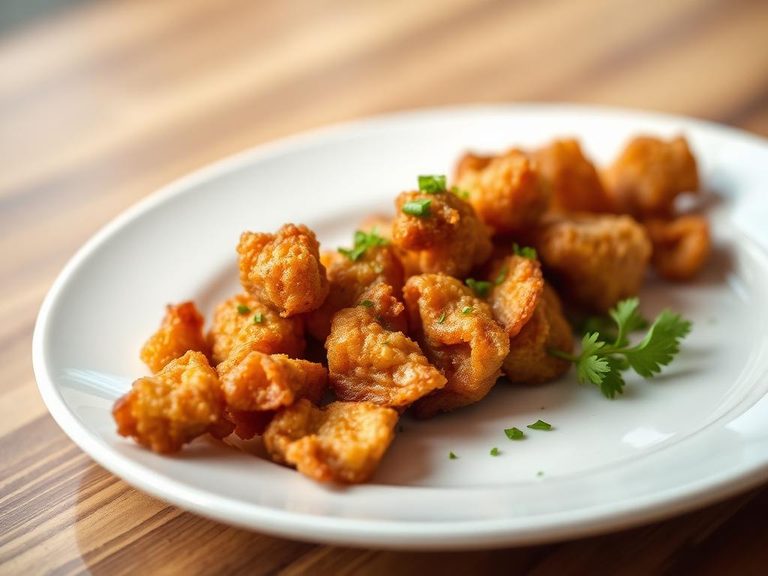
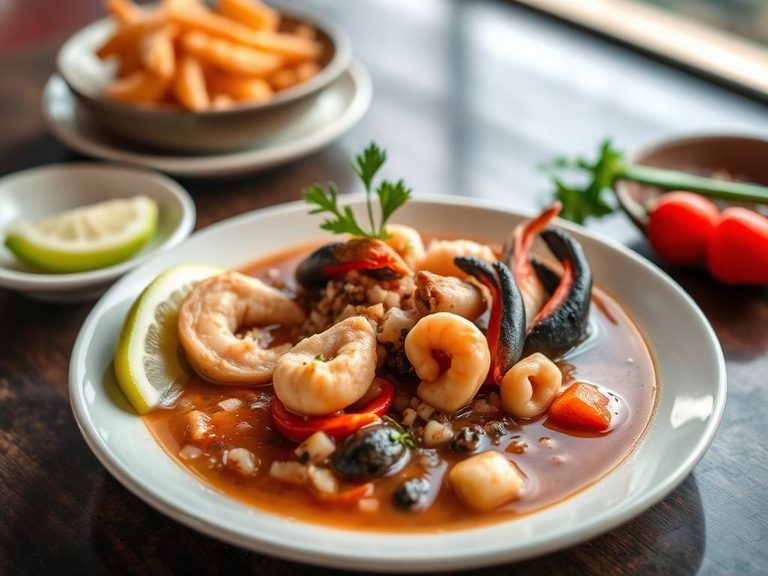
🌍 Where it's eaten
💡 Did you know?
In Puerto Rico, cleaning chitterlings is often a communal, multi-hour family event, involving multiple rinses with salt, vinegar, and citrus to ensure purity before cooking.
Full nutrition (USDA data · scales with serving)
| Water | 69.3 g |
| Energy | 214 kcal |
| Protein | 8.4 g |
| Total lipid (fat) | 18.5 g |
| Carbohydrate, by difference | 3.8 g |
| Fiber, total dietary | 0.90 g |
| Total Sugars | 2.0 g |
| Calcium, Ca | 25.0 mg |
| Iron, Fe | 1.2 mg |
| Magnesium, Mg | 13.0 mg |
| Phosphorus, P | 57.0 mg |
| Potassium, K | 140 mg |
| Sodium, Na | 55.0 mg |
| Zinc, Zn | 1.3 mg |
| Copper, Cu | 0.07 mg |
| Selenium, Se | 17.0 ug |
| Vitamin C, total ascorbic acid | 23.7 mg |
| Thiamin | 0.03 mg |
| Riboflavin | 0.06 mg |
| Niacin | 0.42 mg |
| Vitamin B-6 | 0.10 mg |
| Folate, total | 10.0 ug |
| Folic acid | 0.00 ug |
| Folate, food | 10.0 ug |
| Folate, DFE | 10.0 ug |
| Choline, total | 297 mg |
| Vitamin B-12 | 0.26 ug |
| Vitamin B-12, added | 0.00 ug |
| Vitamin A, RAE | 15.0 ug |
| Retinol | 0.00 ug |
| Carotene, beta | 159 ug |
| Carotene, alpha | 23.0 ug |
| Cryptoxanthin, beta | 7.0 ug |
| Lycopene | 1574 ug |
| Lutein + zeaxanthin | 126 ug |
| Vitamin E (alpha-tocopherol) | 1.9 mg |
| Vitamin E, added | 0.00 mg |
| Vitamin D (D2 + D3) | 0.00 ug |
| Vitamin K (phylloquinone) | 5.5 ug |
| Alcohol, ethyl | 0.00 g |
| Caffeine | 0.00 mg |
| Theobromine | 0.00 mg |
Fat & fatty acid profile (per 100g)
| Fatty acids, total saturated | 6.8 g |
| SFA 4:0 | 0.00 g |
| SFA 6:0 | 0.00 g |
| SFA 8:0 | 0.01 g |
| SFA 10:0 | 0.00 g |
| SFA 12:0 | 0.00 g |
| SFA 14:0 | 0.18 g |
| SFA 16:0 | 3.9 g |
| SFA 18:0 | 2.6 g |
| Fatty acids, total monounsaturated | 8.3 g |
| MUFA 16:1 | 0.29 g |
| MUFA 18:1 | 8.0 g |
| MUFA 20:1 | 0.10 g |
| MUFA 22:1 | 0.00 g |
| Fatty acids, total polyunsaturated | 1.3 g |
| PUFA 18:2 | 1.2 g |
| PUFA 18:3 | 0.06 g |
| PUFA 18:4 | 0.00 g |
| PUFA 20:4 | 0.09 g |
| PUFA 20:5 n-3 (EPA) | 0.00 g |
| PUFA 22:5 n-3 (DPA) | 0.00 g |
| PUFA 22:6 n-3 (DHA) | 0.00 g |
| Cholesterol | 172 mg |
FAQ
What is the texture of stewed chitterlings?
When properly cooked, they are very tender with a soft, slightly springy or chewy bite, similar to a well-braised tripe.
Are chitterlings the same as tripe?
No. Chitterlings specifically refer to the small intestines of a pig, while tripe is the stomach lining. They are different cuts with distinct textures and preparation methods.
How long does it take to prepare and cook them?
The cleaning process alone can take 2-3 hours. The actual stewing time is typically 1.5 to 2 hours until fork-tender.
Nutrient density (calculated · NRF9.3)
Nutrient Rich Foods index: beneficial nutrients (protein, fiber, vitamins, minerals) minus saturated fat, added sugar & sodium, per 100 kcal.
NRF9.3 index — Fulgoni, Keast & Drewnowski, 2009. Computed from USDA nutrients.
Weight-loss friendliness (composite index)
Energy density 2.14 kcal/g · 16% calories from protein · 0.9 g fiber · 2.0 g sugar per 100 g.
Composite of energy density (Rolls et al., 1999), protein & fiber satiety, minus sugar. A calculated heuristic — ranks satiety-per-calorie, not a clinical measure.
Dietary load (calculated from USDA values)
Potential renal acid load. Positive = acid-forming, negative = alkaline-forming.
Sodium-to-potassium ratio: 0.39 (lower is better — aim for ≤ 1)
Sodium:potassium per WHO potassium guidance. Computed from USDA nutrients.